Gentle Strategies for Parents: The Ultimate Guide to Transitioning Toddlers to Independent Sleeping
Are you struggling to transition your toddler to their own sleeping space without causing stress? Implementing a toddler independent sleep transition can be challenging for many parents.
As a life coach, I’ve guided many parents through this challenging phase of sleep training for toddlers. Understanding the importance of a gentle approach can make all the difference in developing healthy toddler sleep habits.
In this article, you’ll discover effective strategies for creating bedtime routines, promoting gradual sleep independence, and ensuring a smooth transition. We’ll explore gentle sleep coaching methods and techniques to address separation anxiety at bedtime.
Let’s dive in and explore how to achieve a successful toddler independent sleep transition.

Understanding the Challenges of Transitioning to Independent Sleep
Transitioning your toddler to independent sleep can be daunting. Many parents face emotional challenges and developmental concerns during this toddler independent sleep transition phase.
It’s common for children to experience separation anxiety at bedtime, which adds to the difficulty of sleep training for toddlers.
Creating a consistent bedtime routine is crucial. This helps signal to your child that it’s time to wind down and supports gradual sleep independence.
In my experience, clients often benefit from a predictable routine when establishing toddler sleep habits.
Moreover, the transition impacts parents too. The emotional strain of hearing your child cry out can be overwhelming when transitioning from co-sleeping.
That’s why a gentle approach is essential in toddler independent sleep transition.
By understanding these challenges, you can better prepare for a smoother transition. Let’s explore some actionable strategies for gentle sleep coaching methods next.
Key Steps for Gently Transitioning Toddlers to Independent Sleeping
Overcoming this challenge of toddler independent sleep transition requires a few key steps. Here are the main areas to focus on to make progress in sleep training for toddlers:
- Establish a consistent bedtime routine: Set a specific bedtime and include calming activities to reinforce positive toddler sleep habits.
- Gradually move away after child falls asleep: Sit by the bed initially, then gradually move further away to promote gradual sleep independence.
- Use a comfort object for security: Allow the child to choose a comforting item, such as nighttime comfort objects for toddlers.
- Implement a reward system for staying in bed: Create a reward chart and provide small rewards as positive reinforcement for bedtime.
- Create a cozy, inviting sleep environment: Ensure the room is comfortable and free of distractions to support the toddler independent sleep transition.
- Practice daytime separation for confidence: Engage in short periods of separation during the day to address separation anxiety at bedtime.
Let’s dive into these gentle sleep coaching methods!
1: Establish a consistent bedtime routine
A consistent bedtime routine is crucial for helping your toddler transition to independent sleeping, a key step in toddler independent sleep transition.
Actionable Steps:
- Set a specific bedtime and stick to it every night, establishing consistent sleep schedules for toddlers.
- Example: “Start the bedtime routine at 7:30 PM every evening to create predictability.”
- Include calming activities such as reading a story or a warm bath, which are essential elements of toddler bedtime routines.
- Example: “Read a favorite bedtime story to signal the wind-down period.”
- Use soft lighting and soothing music to create a relaxing atmosphere, supporting gradual sleep independence.
- Example: “Dim the lights and play soft lullabies to cue sleepiness.”
Explanation:
Establishing a consistent bedtime routine helps signal to your child that it’s time to wind down, creating predictability and security, which is essential for sleep training for toddlers.
This routine can reduce separation anxiety at bedtime and help your child feel more comfortable in their own space, fostering toddler independent sleep transition.
According to Huckleberry Care, a predictable bedtime routine is essential for successful sleep training.
Key elements of a successful bedtime routine:
- Consistency in timing and sequence, supporting toddler sleep habits
- Calming activities to promote relaxation, a cornerstone of gentle sleep coaching methods
- Clear signals that bedtime is approaching, aiding in transitioning from co-sleeping
These steps lay the foundation for a smoother transition to independent sleeping, incorporating positive reinforcement for bedtime and potentially using nighttime comfort objects for toddlers.
2: Gradually move away after child falls asleep
Gradually moving away after your child falls asleep helps them feel secure and reduces nighttime anxiety, making it an effective toddler independent sleep transition technique.
Actionable Steps:
- Sit by your child’s bed until they fall asleep, then move further each night as part of gentle sleep coaching methods.
- Example: “On the first night, sit by the bed; by the fifth night, sit by the door, promoting gradual sleep independence.”
- Comfort your child with a gentle touch or reassuring words if they wake up, addressing separation anxiety at bedtime.
- Example: “Gently pat their back and whisper soothing words to reassure them, reinforcing positive toddler sleep habits.”
- Use a transitional object to help them feel secure in your absence, an essential part of sleep training for toddlers.
- Example: “Introduce a favorite stuffed animal or blanket as nighttime comfort objects for toddlers.”
Explanation:
These steps help build your child’s confidence in sleeping independently, crucial for transitioning from co-sleeping. Gradually moving away creates a sense of security and reduces dependency on your presence, supporting toddler bedtime routines.
According to Healthy Children, comforting your child in a gradual manner can ease separation anxiety and foster independence, aligning with gentle sleep coaching methods.
This gradual approach can make the toddler independent sleep transition smoother for both you and your child, while maintaining consistent sleep schedules.
3: Use a comfort object for security
Using a comfort object can provide your toddler with a sense of security during the toddler independent sleep transition.
Actionable Steps:
- Let your child choose a comfort object.
- Example: “Allow them to pick between a teddy bear, blanket, or special pillow as part of their toddler bedtime routines.”
- Encourage the use of the comfort object during the bedtime routine.
- Example: “Incorporate the comfort object into storytime or while singing lullabies to support gradual sleep independence.”
- Reinforce the comfort object’s role in providing security.
- Example: “Remind them that their teddy bear will keep them company all night, addressing separation anxiety at bedtime.”
Explanation:
These steps help your child feel more secure and less anxious about sleeping alone. A familiar object can create a sense of comfort and reassurance, supporting toddler sleep habits.
According to Kathryn Stimpson, using comfort objects can significantly reduce separation anxiety during sleep transitions, making it an effective gentle sleep coaching method.
This approach can foster independence while maintaining a sense of security for your child, aiding in the toddler independent sleep transition process.

4: Implement a reward system for staying in bed
Implementing a reward system can motivate your toddler to stay in bed throughout the night, facilitating the toddler independent sleep transition.
Actionable Steps:
- Create a reward chart to track progress in sleep training for toddlers.
- Example: “Place a sticker on the chart for each night they stay in bed until morning.”
- Offer small rewards for achieving milestones in gradual sleep independence.
- Example: “After earning five stickers, they get to choose a special treat or activity.”
- Provide verbal praise and encouragement to reinforce positive toddler sleep habits.
- Example: “Celebrate their success with enthusiastic praise each morning.”
Explanation:
These steps help reinforce positive behavior and create a sense of accomplishment for your child. Reward systems can make the transition to independent sleeping more enjoyable and less stressful, especially when dealing with separation anxiety at bedtime.
According to Huckleberry Care, consistent rewards and praise are effective in promoting good sleep habits.
Benefits of a reward system for sleep training:
- Motivates children to follow toddler bedtime routines
- Builds positive associations with independent sleeping
- Encourages consistency in sleep schedules
Let’s move on to creating a cozy, inviting sleep environment.
5: Create a cozy, inviting sleep environment
Creating a cozy, inviting sleep environment is key to helping your toddler feel safe and comfortable in their own sleeping space, which is crucial for a successful toddler independent sleep transition.
Actionable Steps:
- Make the bed and room comfortable and appealing.
- Example: “Use soft, breathable bedding and adjust room temperature for comfort, supporting positive toddler sleep habits.”
- Decorate the room with items that make your child feel happy and secure.
- Example: “Incorporate their favorite colors and characters into the room decor, which can help with transitioning from co-sleeping.”
- Minimize distractions to create a calm sleep space.
- Example: “Remove toys and electronic devices from the sleeping area to establish consistent sleep schedules.”
Explanation:
These steps help your child feel more at ease in their own bed, promoting better sleep and aiding in sleep training for toddlers. A cozy, inviting environment can reduce bedtime resistance and create positive sleep associations, which are essential for gradual sleep independence.
According to Huckleberry Care, a comforting sleep space is crucial for successful sleep training.
A cozy environment makes the transition smoother and more enjoyable for your toddler, helping to address separation anxiety at bedtime through gentle sleep coaching methods.
6: Practice daytime separation for confidence
Daytime separation helps your toddler build confidence and independence, which is crucial for transitioning to independent sleep. This practice supports your toddler’s independent sleep transition and helps establish healthy toddler sleep habits.
Actionable Steps:
- Start with short periods of separation during the day.
- Example: “Encourage independent playtime while you are in another room for 5 minutes, mimicking the separation during bedtime routines.”
- Gradually increase the duration of these separations.
- Example: “Extend the separation time to 15-20 minutes over a week, supporting gradual sleep independence.”
- Reinforce positive experiences of independence.
- Example: “Praise your child for playing alone and reassure them of your return, using positive reinforcement for bedtime practices.”
Explanation:
These steps help your child get used to being alone, reducing anxiety about sleeping independently. Practicing daytime separation can boost their self-confidence and make nighttime separation easier, aiding in the toddler independent sleep transition process.
According to Healthy Children, gradual separation can ease anxiety and foster a sense of independence in children, which is beneficial for sleep training for toddlers.
Tips for successful daytime separation practice:
- Choose a safe, familiar environment
- Start with short intervals and gradually increase, similar to gentle sleep coaching methods
- Always return when promised to build trust, which helps in transitioning from co-sleeping
This approach ensures a smoother transition to independent sleeping while maintaining your child’s confidence and addressing separation anxiety at bedtime.
Partner with Alleo on Your Journey to Independent Sleeping
We’ve explored the challenges of toddler independent sleep transition. Did you know you can work with Alleo to make this journey easier for sleep training for toddlers?
Sign up for Alleo and create a personalized bedtime plan tailored to your child’s needs, focusing on gradual sleep independence. Alleo’s AI coach provides full support, tracking progress and adjusting toddler bedtime routines as needed.
You’ll receive reminders and encouragement via text and push notifications to maintain consistent sleep schedules.
Ready to get started for free? Let me show you how to begin your toddler’s journey to independent sleeping!
Step 1: Log in or Create Your Account
To begin your journey towards helping your toddler sleep independently, log in to your existing Alleo account or create a new one to access personalized bedtime plans and AI coaching support.

Step 2: Choose “Building better habits and routines”
Select “Building better habits and routines” from the available goals to focus on establishing a consistent bedtime routine for your toddler, which is crucial for a smooth transition to independent sleeping.

Step 3: Select “Personal” as Your Focus Area
Choose the “Personal” life area in Alleo to address your toddler’s sleep transition, as it directly impacts your family’s well-being and daily routines, allowing you to create tailored strategies for establishing healthy sleep habits.

Step 4: Starting a coaching session
Begin your journey with Alleo by scheduling an intake session, where you’ll discuss your toddler’s sleep challenges and create a personalized plan to gently transition them to independent sleeping.

Step 5: Viewing and managing goals after the session
After your coaching session on transitioning your toddler to independent sleeping, open the Alleo app to find your personalized goals displayed on the home page, allowing you to easily track and manage your progress towards a smoother bedtime routine.
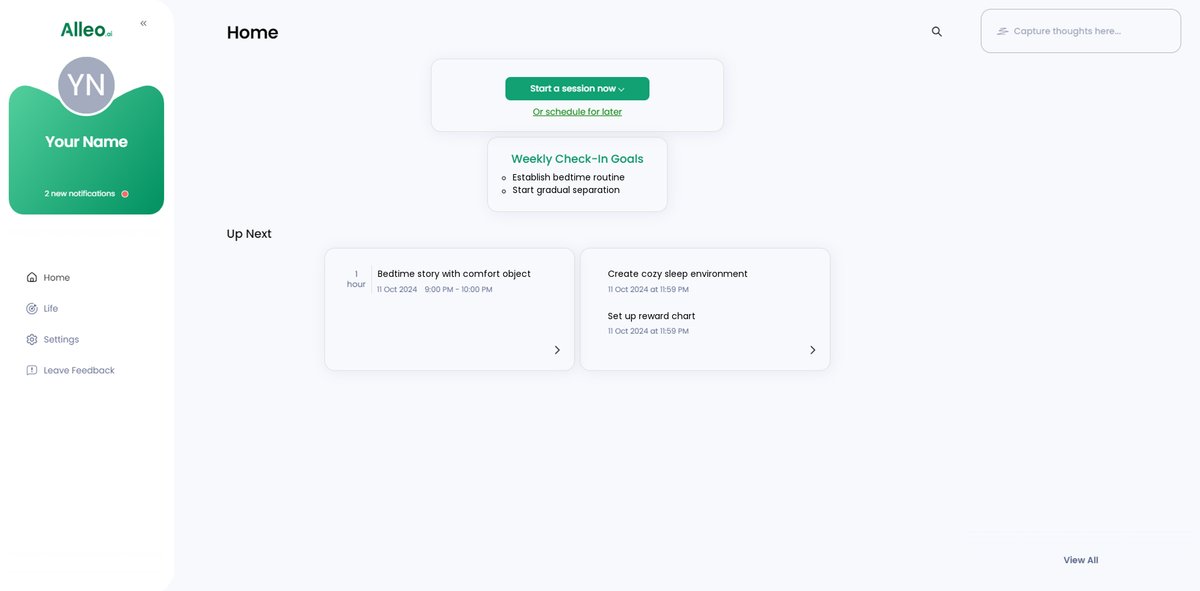
Step 6: Adding events to your calendar or app
Track your toddler’s sleep transition progress by adding bedtime routines and milestones to the Alleo app’s calendar and task features, allowing you to monitor your journey towards independent sleeping.

Embrace the Journey to Independent Sleeping
As we conclude, remember that every step counts in this journey. Transitioning your toddler to independent sleeping is a significant milestone in the toddler independent sleep transition process.
Empathizing with your child’s needs and emotions is key to success when addressing separation anxiety at bedtime.
You’ve learned about creating bedtime routines, using nighttime comfort objects for toddlers, and practicing daytime separation. These gentle sleep coaching methods can make a world of difference in your toddler’s sleep habits.
Consistency is crucial when implementing sleep training for toddlers.
Your patience and dedication to establishing consistent sleep schedules will pay off.
Consider partnering with Alleo for extra support in your toddler independent sleep transition.
Sign up today and embark on this journey of gradual sleep independence with confidence.
You got this!