3 Essential Strategies for Office Workers to Improve Posture and Take Regular Breaks
Are you struggling to improve posture at work and take regular breaks during your busy workday?
As a life coach, I’ve helped many professionals navigate these challenges. In my experience, addressing these issues can significantly improve both physical and mental well-being, especially when it comes to proper sitting posture and workplace wellness tips.
In this article, you’ll learn effective strategies to enhance your posture and incorporate regular breaks into your routine. These methods can help prevent burnout and boost your overall health, including back pain prevention and the benefits of using a standing desk.
Let’s dive in.

Understanding the Root of the Problem
Let’s dive deeper into why poor posture and lack of breaks are significant issues for healthcare professionals. Many clients initially struggle to improve posture at work due to long hours of sitting and intense focus on tasks.
This often leads to musculoskeletal disorders, back pain, and a heavy mental toll.
Physical discomfort isn’t the only consequence. The mental strain from these issues can lead to burnout, making it harder for you to stay productive and focused throughout the day.
I often see clients benefit from addressing these problems head-on, which underscores the importance of making changes now to improve posture at work.
Taking regular breaks, using screen break reminders, and maintaining proper sitting posture can alleviate these physical and mental burdens. It’s about creating sustainable habits that support your overall well-being and workplace wellness.
Key Strategies to Improve Posture and Take Regular Breaks
Overcoming this challenge to improve posture at work requires a few key steps. Here are the main areas to focus on to make progress and enhance workplace wellness.
- Implement the Pomodoro Technique for timed breaks: Set a timer for focused work and take short breaks, using screen break reminders to maintain proper sitting posture.
- Use a standing desk for part of the workday: Alternate between sitting and standing every 30 minutes to maximize standing desk benefits and create an active workstation.
- Practice desk yoga micro-breaks every hour: Perform simple stretches and breathing exercises regularly, incorporating neck and shoulder exercises for back pain prevention.
Let’s dive into these ergonomic office setup strategies!
1: Implement the Pomodoro Technique for timed breaks
Using the Pomodoro Technique can significantly help improve your posture at work and encourage regular breaks during your workday.
Actionable Steps:
- Set a timer for 25 minutes of focused work.
- Download a Pomodoro timer app or use a simple kitchen timer as a screen break reminder.
- Take a 5-minute break after each 25-minute session.
- Stand up, stretch, and walk around during these breaks to improve posture at work.
- After four Pomodoro sessions, take a longer 15-30 minute break.
- Use this time for more extended activities like a short walk or light office exercise routines.
Explanation: Following these steps can help prevent the physical strain associated with prolonged sitting. Regular breaks allow you to move and stretch, which can alleviate discomfort and promote proper sitting posture.
According to Logitech, integrating short breaks into your routine can also boost productivity and reduce stress, contributing to overall workplace wellness.
This simple technique can transform your work habits, enhancing both your physical and mental well-being. Here are some benefits of the Pomodoro Technique:
- Increased focus and concentration
- Reduced physical strain from prolonged sitting, helping to improve posture at work
- Improved time management skills
This technique can transform your work habits, enhancing both your physical and mental well-being.

2: Use a standing desk for part of the workday
Utilizing a standing desk can substantially improve your posture at work and reduce the strain of prolonged sitting.
Actionable Steps:
- Alternate between sitting and standing every 30 minutes.
- Set screen break reminders using a phone alarm or a dedicated app.
- Adjust the standing desk height correctly.
- Ensure your monitor is at eye level and your arms are at a 90-degree angle for proper sitting posture.
Explanation: These steps help maintain a neutral spine and prevent discomfort, contributing to an ergonomic office setup.
According to Back Intelligence, alternating between sitting and standing can alleviate back pain and enhance overall well-being, highlighting the standing desk benefits.
This adjustment not only supports your physical health but also improves productivity and focus, aligning with workplace wellness tips.
Transitioning to the next strategy will further enhance your ergonomics and well-being.
3: Practice desk yoga micro-breaks every hour
Incorporating desk yoga micro-breaks every hour can significantly enhance your posture and reduce physical strain during the workday, helping you improve posture at work.
Actionable Steps:
- Perform simple stretches like neck rolls, shoulder shrugs, and seated twists.
- Allocate 2-3 minutes every hour for these desk stretches.
- Integrate breathing exercises to reduce stress and improve focus.
- Practice deep breathing or alternate nostril breathing during screen break reminders.
- Use desk yoga videos or apps for guided sessions.
- Follow along with short, guided videos that fit into your office exercise routines.
Explanation: Taking these steps helps alleviate physical discomfort and enhances mental clarity, contributing to workplace wellness tips.
Regular movement and stretching can prevent the stiffness and pain associated with prolonged sitting, which is crucial to improve posture at work.
According to Springhill Premier Chiropractic, integrating desk yoga into your routine can also boost overall well-being and productivity, supporting back pain prevention.
Consider these simple desk yoga poses to get started:
- Seated cat-cow stretch
- Wrist and finger stretches
- Seated spinal twist
- Chair pigeon pose
Transitioning to these strategies can make a significant difference in your daily work life and help improve posture at work.
Partner with Alleo to Improve Your Workday
We’ve explored the challenges of maintaining good posture at work and taking breaks, and the steps to overcome them. But did you know you can work directly with Alleo to make this journey easier and faster?
Anecdote: One of our clients, Sarah, transformed her workday with Alleo’s help. Struggling with back pain and burnout, she integrated our workplace wellness tips seamlessly into her routine.
Step 1: Use Alleo to set and track Pomodoro sessions and screen break reminders.
- Action: Alleo sends reminders and provides insights on productivity patterns to improve posture at work.
Step 2: Customize your standing desk routine with Alleo’s scheduling feature to maximize standing desk benefits.
- Action: Plan alternating sitting and standing periods based on your workday for proper sitting posture.
Step 3: Access desk stretches and office exercise routines through Alleo’s health habit library.
- Action: Receive personalized recommendations for neck and shoulder exercises and track your progress.
Ready to get started for free? Let me show you how to improve posture at work!
Step 1: Logging in or Creating an Account
To begin improving your posture and work habits with Alleo, simply Log in to your account or create a new one to access personalized strategies and tracking tools.

Step 2: Choose “Build Better Habits and Routines”
Click on “Build Better Habits and Routines” to focus on creating sustainable practices for improved posture and regular breaks, addressing the core issues discussed in the article and setting the foundation for a healthier, more productive workday.

Step 3: Select “Health” as Your Focus Area
Choose “Health” as your primary focus area in Alleo to receive tailored strategies for improving posture and integrating regular breaks, directly addressing the physical and mental well-being challenges discussed in the article.

Step 4: Starting a Coaching Session
Begin your journey with Alleo by scheduling an initial intake session to assess your current posture and break habits, allowing our AI coach to create a personalized plan for improving your workday wellness.

Step 5: Viewing and Managing Goals After the Session
After your coaching session, open the Alleo app and check your home page to find the goals you discussed, allowing you to easily track and manage your progress towards improving posture and taking regular breaks throughout your workday.
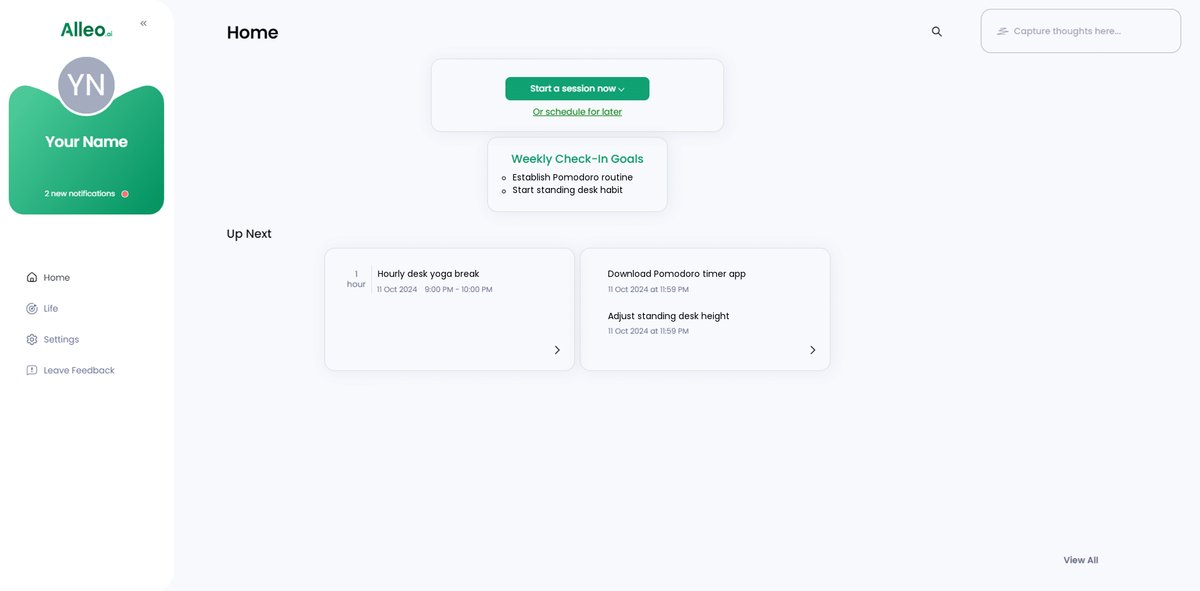
Step 6: Adding events to your calendar or app
Use Alleo’s calendar and task features to schedule and track your Pomodoro sessions, standing desk intervals, and desk yoga breaks, allowing you to monitor your progress in improving posture and taking regular breaks throughout your workday.
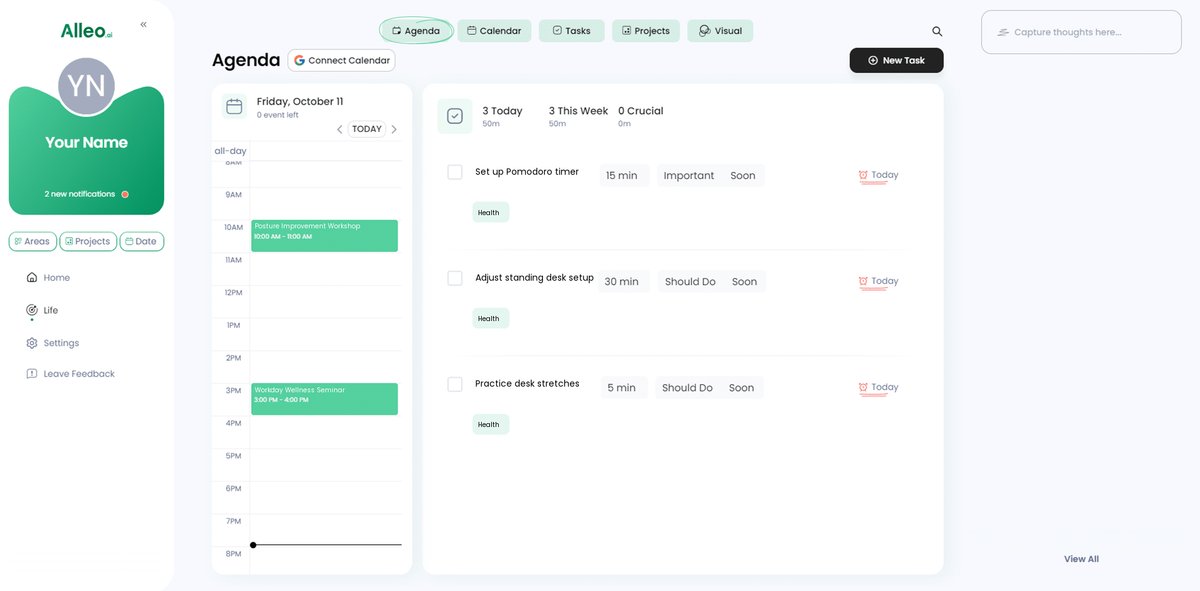
Final Thoughts on Improving Posture and Taking Regular Breaks
Implementing these strategies can make a world of difference in your workday and help improve posture at work.
By using the Pomodoro Technique, you’ll find regular breaks become a natural part of your routine, supporting workplace wellness.
Incorporating a standing desk can help you maintain better posture and reduce discomfort, offering significant standing desk benefits.
And don’t forget desk yoga—it’s a great way to stay flexible and stress-free, serving as an effective office exercise routine.
Remember, making small changes can lead to big improvements in your physical and mental health, including proper sitting posture.
You deserve to work comfortably and efficiently in an ergonomic office setup.
Alleo can support you every step of the way, offering workplace wellness tips.
Try it for free and experience the benefits of an AI life coach today, helping you improve posture at work.