3 Essential Strategies for Healthcare Workers to Manage Emotional Burnout from Difficult Patients
Are you feeling overwhelmed by the emotional toll of dealing with difficult patients? Managing healthcare worker burnout is a critical issue in today’s medical field.
As a life coach, I’ve helped many healthcare professionals navigate these challenges. I understand the emotional exhaustion you face, particularly when it comes to compassion fatigue in healthcare and patient-caregiver relationship challenges.
In this article, I’ll guide you through practical strategies to manage compassion fatigue and healthcare worker burnout. You’ll learn about mindfulness, building support networks, and self-care techniques for medical professionals to enhance your emotional resilience in nursing.
Let’s dive in and explore effective coping mechanisms for healthcare burnout.

Understanding the Emotional Toll on Healthcare Professionals
Dealing with difficult patients can be incredibly draining. Emotional exhaustion often stems from high-stress situations and challenging patient interactions, contributing to healthcare worker burnout.
Many healthcare workers face this daily. The relentless pressure leads to burnout and compassion fatigue in healthcare, affecting the patient-caregiver relationship.
I’ve seen this happen frequently. Nurses and doctors struggle to maintain their well-being and emotional resilience in nursing.
They need effective strategies for managing healthcare worker burnout and stress management for doctors and nurses.
It’s crucial to address this issue. Emotional burnout affects patient care and personal health, highlighting the importance of work-life balance in healthcare careers.

Steps to Manage Emotional Burnout for Healthcare Workers
Overcoming this challenge of managing healthcare worker burnout requires a few key steps. Here are the main areas to focus on to make progress in dealing with compassion fatigue in healthcare.
- Practice mindfulness and emotional regulation: Engage in mindfulness exercises and emotional regulation techniques to manage stress and build emotional resilience in nursing.
- Establish a strong support network at work: Build a supportive environment through peer groups and mentorship programs to address patient-caregiver relationship challenges.
- Implement self-care routines and stress breaks: Prioritize regular breaks and healthy lifestyle habits for overall well-being, incorporating self-care techniques for medical professionals.
Let’s dive into these strategies for managing healthcare worker burnout!
1: Practice mindfulness and emotional regulation
Practicing mindfulness and emotional regulation is crucial for managing healthcare worker burnout and dealing with the emotional toll of difficult patients.
Actionable Steps:
- Set aside 10 minutes daily for mindfulness meditation using apps like Headspace or Insight Timer to combat compassion fatigue in healthcare.
- Practice deep breathing exercises during stressful moments to calm your mind and body, enhancing emotional resilience in nursing.
- Keep a journal to track emotional triggers and responses, helping you understand and manage your reactions better, addressing patient-caregiver relationship challenges.
Explanation:
These self-care techniques for medical professionals are essential because they help you stay calm and manage stress effectively. Mindfulness and emotional regulation can significantly reduce burnout and improve your overall well-being, supporting work-life balance in healthcare careers.
According to the IntelyCare, managing emotions at work is vital for maintaining professionalism and avoiding mental health problems.
Key benefits of mindfulness and emotional regulation for managing healthcare worker burnout:
- Reduces stress and anxiety
- Improves focus and decision-making
- Enhances emotional resilience
By incorporating these practices, you’ll find it easier to handle challenging patient interactions and maintain your emotional health, effectively dealing with demanding patients and managing healthcare worker burnout.
2: Establish a strong support network at work
Creating a strong support network at work is vital for managing healthcare worker burnout and maintaining emotional resilience in nursing.
Actionable Steps:
- Participate in peer support groups: Join regular meetings to share experiences and coping mechanisms for healthcare burnout with colleagues.
- Seek or become a mentor: Engage in mentorship programs to foster a supportive work environment and improve work-life balance in healthcare careers.
- Encourage open communication: Have regular dialogues with supervisors and team members about workload, patient-caregiver relationship challenges, and stressors.
Explanation:
These steps are essential because they help build a sense of community and mutual support among healthcare workers, which is crucial for managing healthcare worker burnout.
According to Provo College, discussing challenges with peers who understand can significantly reduce burnout and compassion fatigue in healthcare.
Taking these actions will make it easier to manage stress and improve overall job satisfaction for doctors and nurses.
With a strong support network, you can navigate the challenges of healthcare work more effectively and develop stress management techniques for medical professionals.

3: Implement self-care routines and stress breaks
Incorporating self-care routines and regular stress breaks is essential for managing healthcare worker burnout and maintaining emotional well-being in high-stress healthcare environments.
Actionable Steps:
- Schedule short, regular breaks: Take a 5-minute break every hour to walk, stretch, or have a quick snack, promoting stress management for doctors and nurses.
- Adopt healthy lifestyle habits: Prioritize balanced meals, stay hydrated, and engage in regular physical activity to support work-life balance in healthcare careers.
- Utilize personal time off: Make sure to use your paid time off to rest and rejuvenate when needed, addressing compassion fatigue in healthcare.
Explanation:
These steps matter because they help sustain your energy and mental health, reducing the risk of burnout and enhancing emotional resilience in nursing.
According to Provo College, maintaining a healthy lifestyle and taking breaks can significantly alleviate stress and aid in managing healthcare worker burnout.
Following these practices will improve your overall well-being and job satisfaction, helping you cope with patient-caregiver relationship challenges.
Simple self-care techniques for medical professionals to try:
- Practice a quick meditation
- Take a short walk outdoors
- Connect with a supportive colleague
Implementing these self-care routines will make it easier to handle the daily pressures of healthcare work and develop effective coping mechanisms for healthcare burnout.
Partner with Alleo to Manage Emotional Burnout
We’ve explored the challenges of managing healthcare worker burnout and how solving them can benefit your well-being and patient care. But did you know you can work directly with Alleo to make this journey easier and faster?
Alleo, your AI life coach, offers affordable, tailored coaching support for healthcare professionals dealing with compassion fatigue in healthcare. With full coaching sessions like any human coach and a free 14-day trial, Alleo is designed to help you manage compassion fatigue effectively and improve your emotional resilience in nursing.
Setting Up with Alleo:
- Create an Account: Sign up on Alleo’s platform and start your free 14-day trial. No credit card required.
- Personalized Plan: Alleo will help you create a plan tailored to your specific needs and challenges, including stress management for doctors and nurses.
- Coaching Sessions: Engage in full coaching sessions to learn strategies for managing healthcare worker burnout and coping mechanisms for healthcare burnout.
- Progress Tracking: Alleo follows up on your progress and keeps you accountable via text and push notifications, helping you maintain work-life balance in healthcare careers.
Stay Accountable:
Alleo ensures you stay on track, adapt to changes, and achieve your self-care goals. By using Alleo, you can navigate the emotional toll of healthcare work more effectively, including dealing with demanding patients and improving patient-caregiver relationship challenges.
Ready to get started for free? Let me show you how!
Step 1: Log In or Create Your Account
To begin your journey towards managing emotional burnout, log in to your Alleo account or create a new one to access personalized coaching support tailored for healthcare professionals.

Step 2: Choose “Improving overall well-being and life satisfaction” as your goal
Select “Improving overall well-being and life satisfaction” as your primary goal to address the emotional burnout and compassion fatigue you’re experiencing in healthcare, helping you develop strategies for self-care and resilience in challenging patient interactions.

Step 3: Select “Health” as Your Focus Area
Choose “Health” as your primary focus area in Alleo to address emotional burnout and compassion fatigue, allowing you to develop personalized strategies for managing stress, improving self-care, and enhancing your overall well-being as a healthcare professional.

Step 4: Starting a Coaching Session
Begin your journey with Alleo by scheduling an intake session, where you’ll discuss your challenges with emotional burnout and work together to create a personalized plan for managing compassion fatigue.

Step 5: Viewing and Managing Goals After the Session
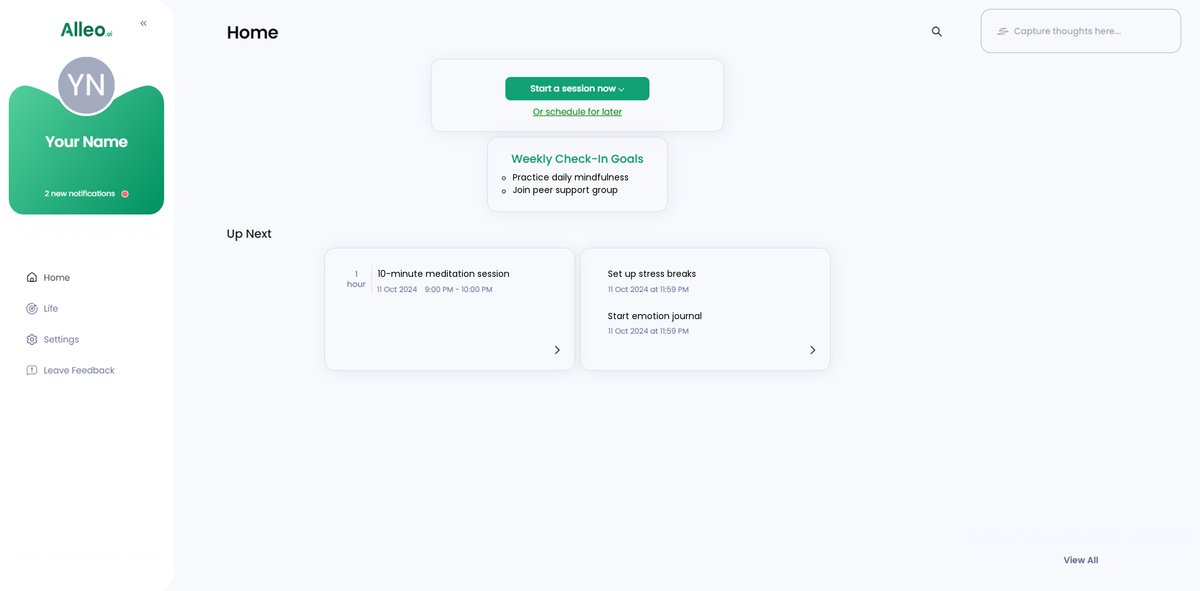
After your coaching session with Alleo, you’ll find the goals you discussed displayed on the app’s home page, allowing you to easily track and manage your progress in addressing emotional burnout and implementing self-care strategies.
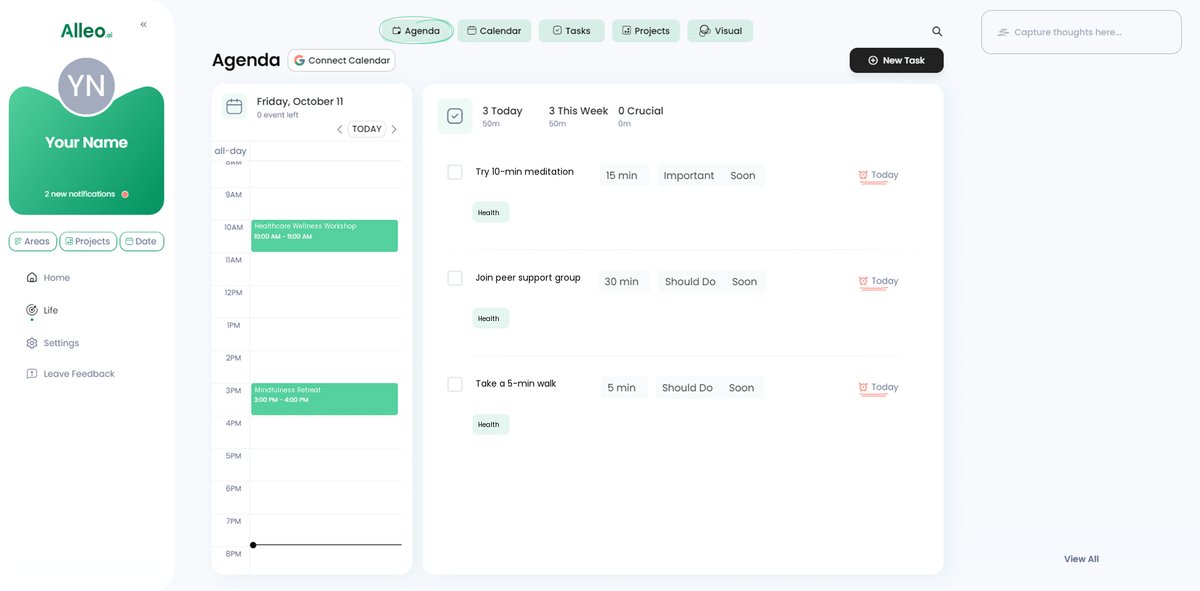
Step 6: Adding events to your calendar or app
Use Alleo’s calendar and task features to schedule and track your self-care activities, mindfulness sessions, and support group meetings, helping you stay accountable and measure your progress in managing emotional burnout.
Take Charge of Your Emotional Well-Being
We’ve covered essential strategies to help you manage healthcare worker burnout from challenging patient interactions. From practicing mindfulness to building a strong support network and implementing self-care techniques for medical professionals, these steps are designed to support your well-being and improve the patient-caregiver relationship.
Remember, taking care of yourself is vital. Your emotional health directly impacts your ability to provide high-quality patient care and maintain emotional resilience in nursing and other healthcare roles.
Don’t wait to make a change. Start incorporating these strategies today to see improvements in your emotional resilience and work-life balance in healthcare careers.
If you need extra support in managing healthcare worker burnout, Alleo is here for you. Try it for free and take the first step towards a healthier, more balanced life and effective stress management for doctors and nurses.