4 Powerful Strategies for Nurses to Stay Motivated During Challenging Patient Interactions
Are you struggling to stay motivated as a nurse during challenging patient interactions?
As a life coach, I’ve helped many healthcare professionals navigate these challenges. In my experience, compassion fatigue and burnout are all too common among nurses, affecting their ability to provide patient-centered communication.
In this article, you’ll discover proven strategies for staying motivated as a nurse, including:
- Mindfulness for healthcare workers
- Building a support network
- Setting boundaries
- Self-care practices for nurses
Let’s dive into these nurse resilience techniques.

The Struggle with Compassion Fatigue and Burnout
Let’s talk about compassion fatigue. Many nurses find themselves emotionally drained from constant patient care, affecting their ability to stay motivated as a nurse.
It affects your motivation and well-being, making nurse resilience techniques crucial.
Compassion fatigue isn’t just emotionally exhausting; it’s also physically taxing. You might feel worn out, disoriented, or even helpless, highlighting the importance of stress management for healthcare professionals.
Several clients report feeling overwhelmed by continuous stressful patient interactions. This constant strain can lead to burnout, affecting your ability to provide quality care and maintain patient-centered communication skills.
The impact is severe. Nurses experiencing compassion fatigue often struggle to stay motivated as a nurse.
This can negatively affect both patient care and personal health, emphasizing the need for self-care practices for nurses.
Addressing these challenges is crucial. By understanding the problem, we can start exploring effective strategies to overcome it and improve emotional intelligence in nursing.

Your Roadmap to Staying Motivated During Challenging Patient Interactions
Overcoming this challenge requires a few key steps for staying motivated as a nurse. Here are the main areas to focus on to make progress:
- Practice mindfulness before patient interactions: Set aside time for mindfulness sessions to reduce stress and enhance nurse resilience techniques.
- Build a support network with fellow nurses: Regular check-ins and peer support can provide emotional relief and improve emotional intelligence in nursing.
- Set clear boundaries while maintaining empathy: Communicate your limits clearly to manage stress and develop patient-centered communication skills.
- Engage in regular self-care activities: Prioritize activities that enhance your well-being and support stress management for healthcare professionals.
Let’s dive in to explore these strategies for staying motivated as a nurse!
1: Practice mindfulness before patient interactions
Practicing mindfulness before patient interactions can greatly enhance your focus and reduce stress levels, contributing to staying motivated as a nurse.
Actionable Steps:
- Set aside 5-10 minutes before your shift for a mindfulness session.
- Create a quiet space where you can focus without interruptions.
- Use guided mindfulness apps or videos to help you get started.
- Incorporate breathing exercises during breaks.
- Practice deep breathing techniques to reduce stress and refocus.
- Use a timer to remind yourself to take short mindfulness breaks.
- Attend a mindfulness workshop or class.
- Find local or online sessions tailored to healthcare professionals.
- Share experiences and learn new techniques from peers.
Explanation:
These steps are essential because mindfulness can help you manage stress and improve your overall well-being. By setting aside time for mindfulness, you create a mental buffer that can make a significant difference in your interactions with patients and contribute to nurse resilience techniques.
According to Unitek College, mindfulness practices can enhance emotional intelligence in nursing and resilience, which are crucial for maintaining motivation in high-pressure environments.
Key benefits of mindfulness for healthcare workers:
- Reduces stress and anxiety
- Improves focus and decision-making
- Enhances empathy and patient-centered communication skills
By implementing these mindfulness techniques, you will be better equipped to handle the emotional demands of nursing and provide the best care for your patients while staying motivated as a nurse.
2: Build a support network with fellow nurses
Building a support network with fellow nurses is crucial for staying motivated as a nurse and maintaining emotional well-being.
Actionable Steps:
- Organize regular check-ins with colleagues.
- Schedule weekly or bi-weekly meetings to discuss challenges and share support, enhancing nurse resilience techniques.
- Use these sessions to brainstorm solutions and build camaraderie, improving stress management for healthcare professionals.
- Join or create a peer support group.
- Look for existing groups within your workplace or professional organizations focused on staying motivated as a nurse.
- Start your own group if none exist, focusing on mutual support and advice for developing emotional intelligence in nursing.
- Seek mentorship from experienced nurses.
- Identify senior nurses who can offer guidance and support on patient-centered communication skills.
- Set up regular one-on-one meetings to discuss your progress and challenges in professional development for nurses.
Explanation:
Building a support network is essential because it provides emotional relief and practical advice. Regular check-ins and peer support can help you feel less isolated and more connected to your colleagues, promoting self-care practices for nurses.
According to Trustaff, having a strong support network can significantly enhance your ability to cope with difficult patient interactions. This connection helps you stay motivated as a nurse and maintain high-quality patient care.
With a support network in place, you can better handle the emotional demands of nursing and focus on providing excellent care while practicing conflict resolution in healthcare settings.
3: Set clear boundaries while maintaining empathy
Setting clear boundaries while maintaining empathy is crucial for staying motivated as a nurse and ensuring high-quality patient care.
Actionable Steps:
- Communicate your limits clearly to patients and colleagues.
- Practice assertive communication to express your boundaries.
- Use patient-centered communication skills to ensure patients feel understood despite the limits.
- Develop a personal script for difficult conversations.
- Prepare and rehearse phrases that help you maintain professionalism and empathy.
- Use these scripts to manage expectations and reduce stress during interactions, enhancing nurse resilience techniques.
- Balance work and personal life.
- Set strict work hours and stick to them to avoid burnout and stay motivated as a nurse.
- Prioritize self-care practices for nurses that help you unwind and recharge outside of work.
Explanation:
These steps help manage stress and maintain motivation. Clear communication and prepared scripts reduce misunderstandings and emotional strain, contributing to stress management for healthcare professionals.
Balancing work and personal life ensures you have time to recharge. According to Pollack Peacebuilding, assertive communication and empathy are key to effective de-escalation in nursing, which is crucial for staying motivated as a nurse.
By implementing these strategies, you can maintain your well-being and provide the best care for your patients.
Essential components of effective boundary-setting:
- Clear and respectful communication
- Consistency in enforcing boundaries
- Flexibility to adapt to different situations, utilizing emotional intelligence in nursing
4: Engage in regular self-care activities
Engaging in regular self-care activities is vital for staying motivated as a nurse and maintaining your well-being.
Actionable Steps:
- Schedule regular physical activity.
- Incorporate at least 30 minutes of exercise into your daily routine, which is crucial for nurse resilience.
- Choose activities you enjoy, such as walking, yoga, or swimming, as part of stress management for healthcare professionals.
- Practice a hobby that brings you joy.
- Dedicate time each week to engage in a hobby, whether it’s reading, painting, or gardening, to enhance emotional intelligence in nursing.
- Use this time to disconnect from work and focus on yourself, promoting self-care practices for nurses.
- Prioritize mental health.
- Seek professional help if needed, such as therapy or counseling, to maintain motivation as a nurse.
- Use relaxation techniques like meditation or journaling to manage stress and prevent empathy burnout.
Explanation:
These steps matter because regular self-care helps prevent burnout and improves life satisfaction for nurses. Physical activity can boost your mood, while hobbies and mental health practices offer a necessary escape from work stress, contributing to positive psychology in nursing.
According to Southern New Hampshire University, practicing self-care can enhance mental and emotional well-being. By incorporating these activities, you create a balanced routine that supports both your personal and professional life, essential for staying motivated as a nurse.
Self-care strategies for nurses:
- Establish a consistent sleep schedule
- Practice mindful eating habits
- Cultivate meaningful relationships outside of work, enhancing conflict resolution skills in healthcare settings
Taking care of yourself ensures you can provide the best care for your patients and maintain motivation as a nurse.
Partner with Alleo to Stay Motivated
We’ve explored the challenges of staying motivated as a nurse during tough patient interactions. Did you know you can work with Alleo to make this journey easier and enhance your nurse resilience techniques?
Set up your Alleo account, and create a personalized plan. Alleo’s AI coach helps you practice mindfulness for healthcare workers, build support networks, set boundaries, and engage in self-care practices for nurses. This approach supports stress management for healthcare professionals and fosters emotional intelligence in nursing.
The coach follows up on your progress and keeps you accountable through text and push notifications, promoting professional development for nurses and helping prevent empathy burnout.
Ready to get started for free and boost your patient-centered communication skills? Let me show you how!
Step 1: Logging in or Creating an Account
To start your journey towards staying motivated during challenging patient interactions, log in to your Alleo account or create a new one if you haven’t already.

Step 2: Choose “Improve Overall Well-being and Life Satisfaction” as Your Goal
Select “Improve Overall Well-being and Life Satisfaction” to address compassion fatigue and burnout, helping you stay motivated during challenging patient interactions and enhancing both your personal and professional life.

Step 3: Select “Health” as Your Focus Area
Choose “Health” as your focus area in Alleo to address burnout and compassion fatigue, allowing the AI coach to provide tailored strategies for mindfulness, stress management, and self-care that will help you stay motivated during challenging patient interactions.

Step 4: Starting a coaching session
Begin your journey with Alleo by scheduling an intake session, where you’ll discuss your challenges as a nurse and create a personalized plan to stay motivated during difficult patient interactions.

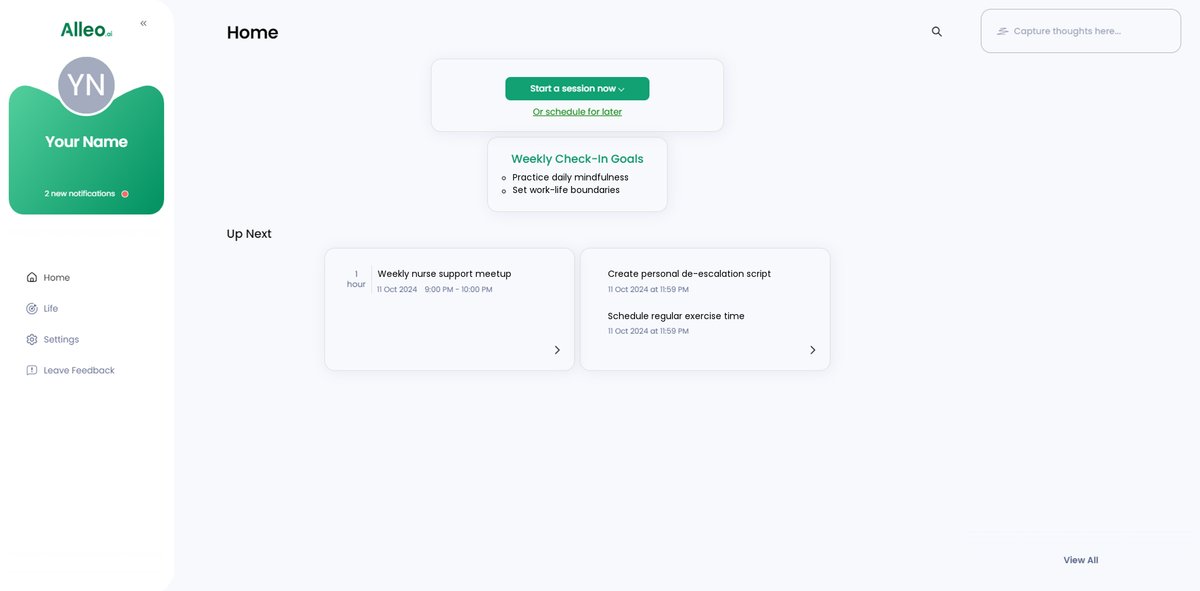
Step 5: Viewing and managing goals after the session
After your coaching session, check the Alleo app’s home page to review and manage the goals you discussed, helping you stay on track with your strategies for maintaining motivation and managing compassion fatigue in nursing.
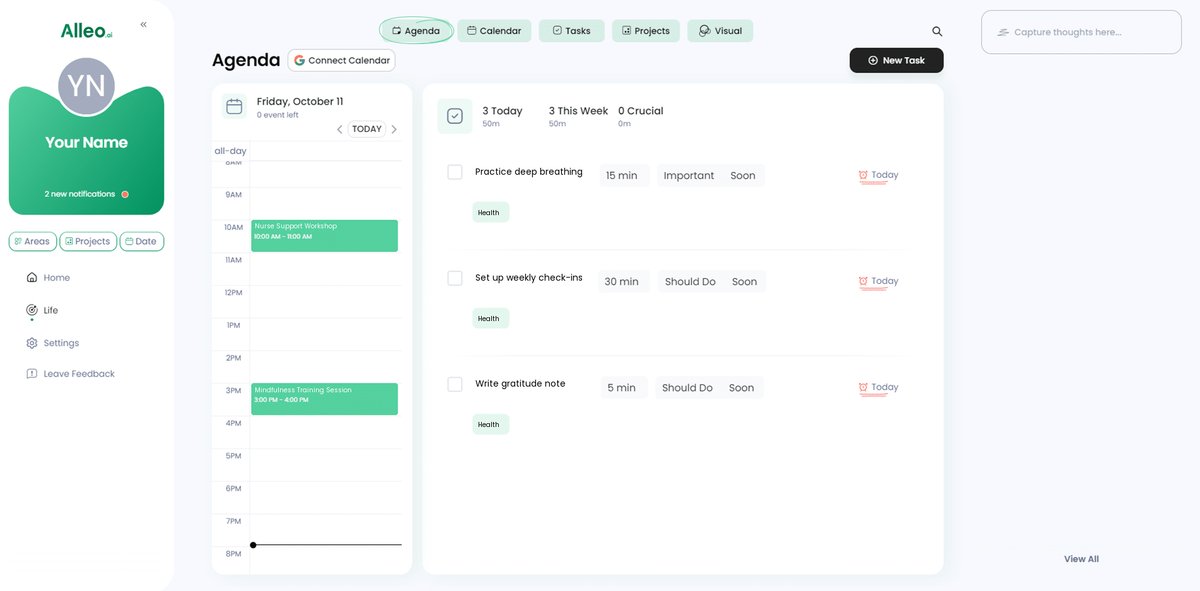
Step 6: Adding events to your calendar or app
Use Alleo’s calendar and task features to schedule and track your self-care activities, mindfulness sessions, and support group meetings, helping you stay accountable and motivated in your journey to overcome compassion fatigue and burnout.
Empowering Your Nursing Journey: A Final Note
You now have powerful strategies for staying motivated as a nurse and managing compassion fatigue.
Remember, practicing mindfulness can create a mental buffer for stressful interactions, enhancing nurse resilience. Building a strong support network offers emotional relief and improves patient-centered communication skills.
Setting clear boundaries helps manage stress for healthcare professionals. Engaging in self-care practices prevents burnout and promotes emotional intelligence in nursing.
I understand the challenges you face. Staying motivated as a nurse isn’t always easy, but it’s possible.
With the right tools and support, you can thrive. Alleo can help you implement these stress management techniques for healthcare professionals and keep you accountable.
Ready to transform your nursing career? Try Alleo for free and take the first step toward a more motivated and fulfilling professional life, focusing on positive psychology in nursing.