3 Essential Strategies for Healthcare Providers to Enhance Mental Health Support and Suicide Prevention
Are you struggling to prioritize mental health strategies for healthcare and effectively support those dealing with mental health issues?
As a life coach, I’ve helped many healthcare providers tackle these challenges head-on. I often see the profound impact that well-implemented mental health strategies can have on patient outcomes.
In this blog, you’ll discover actionable strategies to improve mental health support and suicide prevention. We’ll explore integrating mental health screening tools, implementing collaborative care models, and providing crisis intervention training for healthcare professionals.
Let’s dive in.

Understanding the Mental Health Crisis in Healthcare
Navigating mental health strategies for healthcare is fraught with challenges. Many providers struggle to prioritize mental health services due to resource constraints and workload pressures, hindering the implementation of effective mental health screening tools.
The consequences are dire, affecting patient outcomes significantly, especially when it comes to suicide risk assessment.
In my experience, inadequate mental health care often leads to missed warning signs and untreated conditions. This is especially critical in primary care settings, where early intervention through collaborative care models can save lives.
For instance, rural communities face higher suicide rates due to limited access to mental health professionals and resources, highlighting the need for teletherapy and digital mental health solutions.
Moreover, the stigma surrounding mental health conversations further complicates care delivery. Providers must overcome these barriers to create a supportive environment for patients, emphasizing the importance of patient education on mental health.
Addressing these challenges is essential for improving mental health strategies for healthcare and suicide prevention in healthcare settings, including the adoption of integrated behavioral health services and evidence-based treatment protocols.
Key Strategies to Improve Mental Health Support and Suicide Prevention
Overcoming this challenge requires a few key mental health strategies for healthcare. Here are the main areas to focus on to make progress.
- Integrate Mental Health Screening in Primary Care: Train primary care providers to use mental health screening tools effectively for suicide risk assessment.
- Implement Collaborative Care Models: Establish multidisciplinary teams to provide comprehensive patient care through integrated behavioral health services.
- Provide Crisis Intervention Training for Staff: Conduct workshops to improve crisis response skills and mental health first aid for healthcare staff.
Let’s dive into these mental health strategies for healthcare!
1: Integrate mental health screening in primary care
Integrating mental health screening in primary care is a crucial mental health strategy for healthcare, enabling early detection and intervention.
Actionable Steps:
- Train primary care providers (PCPs) on screening tools: Conduct regular training sessions for PCPs on using mental health screening tools like the PHQ9 and Columbia Suicide Severity Rating Scale for suicide risk assessment.
- Standardize mental health screening protocols: Develop and implement standardized protocols for mental health screenings during routine primary care visits, incorporating evidence-based treatment protocols.
- Incorporate digital health technologies: Utilize teletherapy and digital mental health tools to streamline the screening process and integrate results into electronic health records (EHRs).
Explanation:
These mental health strategies for healthcare ensure that mental health concerns are identified early, leading to timely interventions. Standardized protocols and training enhance the accuracy and consistency of screenings, supporting integrated behavioral health services.
Additionally, integrating digital tools simplifies the process and improves record-keeping. According to CDC, early intervention can significantly reduce the risk of suicide, making these steps vital for effective mental health support and crisis intervention.
Benefits of early mental health screening:
- Improved patient outcomes
- Reduced healthcare costs
- Enhanced overall well-being
Implementing these mental health strategies for healthcare will help you create a robust foundation for mental health care in primary settings, supporting collaborative care models and community outreach programs.

2: Implement collaborative care models
Implementing collaborative care models is essential for providing comprehensive mental health support as part of effective mental health strategies for healthcare.
Actionable Steps:
- Form a multidisciplinary team: Assemble a team of primary care physicians, mental health professionals, and care coordinators to ensure comprehensive patient care and integrated behavioral health services.
- Conduct regular team meetings: Schedule consistent meetings to discuss patient cases, develop care plans, and adjust strategies as needed, including evidence-based treatment protocols.
- Leverage telehealth platforms: Use telehealth tools to facilitate communication and collaboration among team members, enhancing the efficiency of care delivery and supporting teletherapy and digital mental health initiatives.
Explanation:
These steps are crucial for integrating mental health services into primary care settings. Collaborative care models ensure that patients receive holistic support from a team of experts.
Regular meetings and telehealth tools improve coordination and patient outcomes. According to the AIMS Center, implementing these models can significantly enhance the quality of mental health care.
Key components of effective collaborative care:
- Clear communication channels
- Shared decision-making processes
- Continuous quality improvement
Incorporating these strategies can transform mental health support in your practice and lead to better patient outcomes.

3: Provide crisis intervention training for staff
Providing crisis intervention training for staff is essential for effectively managing mental health emergencies in healthcare settings, a crucial aspect of mental health strategies for healthcare.
Actionable Steps:
- Organize crisis intervention training (CIT) workshops: Conduct regular CIT workshops to improve staff skills in identifying and responding to mental health crises, including suicide risk assessment.
- Develop a clear crisis response protocol: Create and implement a step-by-step protocol for handling mental health emergencies, ensuring all staff members are trained on it as part of integrated behavioral health services.
- Establish peer support groups: Set up peer support groups for staff to share experiences and strategies for managing crises, fostering a supportive environment and promoting mental health first aid for healthcare staff.
Explanation:
These steps are critical for ensuring that healthcare staff are well-prepared to handle mental health emergencies. Regular training and clear protocols enhance staff readiness and effectiveness in implementing mental health strategies for healthcare.
Peer support groups promote a collaborative and resilient team culture. According to Anne Arundel County, CIT programs significantly improve crisis response and connect people with needed services, aligning with collaborative care models.
Essential skills for crisis intervention:
- De-escalation techniques
- Active listening
- Risk assessment using mental health screening tools
Implementing these strategies will strengthen your team’s ability to provide immediate and effective mental health support, contributing to comprehensive mental health strategies for healthcare.

Partner with Alleo for Enhanced Mental Health Support
We’ve explored the challenges of improving mental health strategies for healthcare settings. But did you know you can work directly with Alleo to make this journey easier and faster?
How Alleo Can Help
Step 1: Goal Setting and Tracking
Use Alleo to set specific, measurable goals for integrating mental health screening tools and collaborative care models. Track your progress and receive reminders to ensure consistent implementation of mental health strategies for healthcare providers.
Step 2: Decision Support
Leverage Alleo’s AI capabilities to prioritize mental health strategies for healthcare. Access tailored advice and resources based on the latest best practices, including evidence-based treatment protocols and suicide risk assessment techniques.
Step 3: Building Healthy Habits
Utilize Alleo to develop and maintain healthy habits for both healthcare providers and patients. Incorporate daily check-ins and habit-building exercises to support mental well-being, including integrated behavioral health services and teletherapy.
Setting up an account with Alleo is simple. Create a personalized plan and start working with Alleo’s coach to overcome specific challenges in implementing mental health strategies for healthcare.
The AI coach will follow up on your progress, handle changes, and keep you accountable via text and push notifications, ensuring consistent application of mental health strategies in healthcare settings.
Ready to get started for free? Let me show you how!
Step 1: Log In or Create Your Alleo Account
To start improving mental health support in your healthcare practice, log in to your Alleo account or create a new one to access personalized guidance and goal-setting tools.

Step 2: Choose “Building better habits and routines”
Select “Building better habits and routines” to establish consistent practices for mental health screening, collaborative care, and crisis intervention in your healthcare setting, helping you create a more supportive environment for patients and staff.

Step 3: Selecting the life area you want to focus on
Choose “Health” as your focus area in Alleo to address mental health support and suicide prevention strategies in your healthcare practice, aligning your goals with improved patient outcomes and enhanced care delivery.

Step 4: Starting a coaching session
Begin your journey with Alleo by scheduling an initial intake session, where you’ll discuss your mental health support goals and create a personalized plan to improve your healthcare practice’s approach to mental wellness.

Step 5: Viewing and Managing Goals After the Session
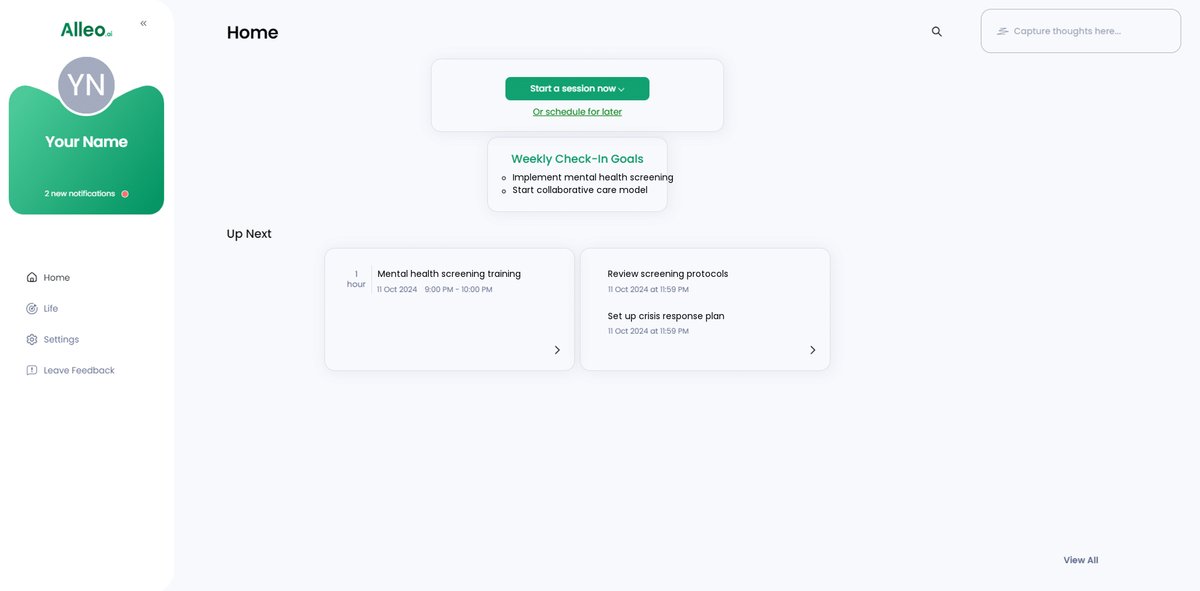
After your coaching session, open the Alleo app to find your discussed mental health support goals displayed on the home page, allowing you to easily track and manage your progress in improving healthcare practices.
Step 6: Adding events to your calendar or app
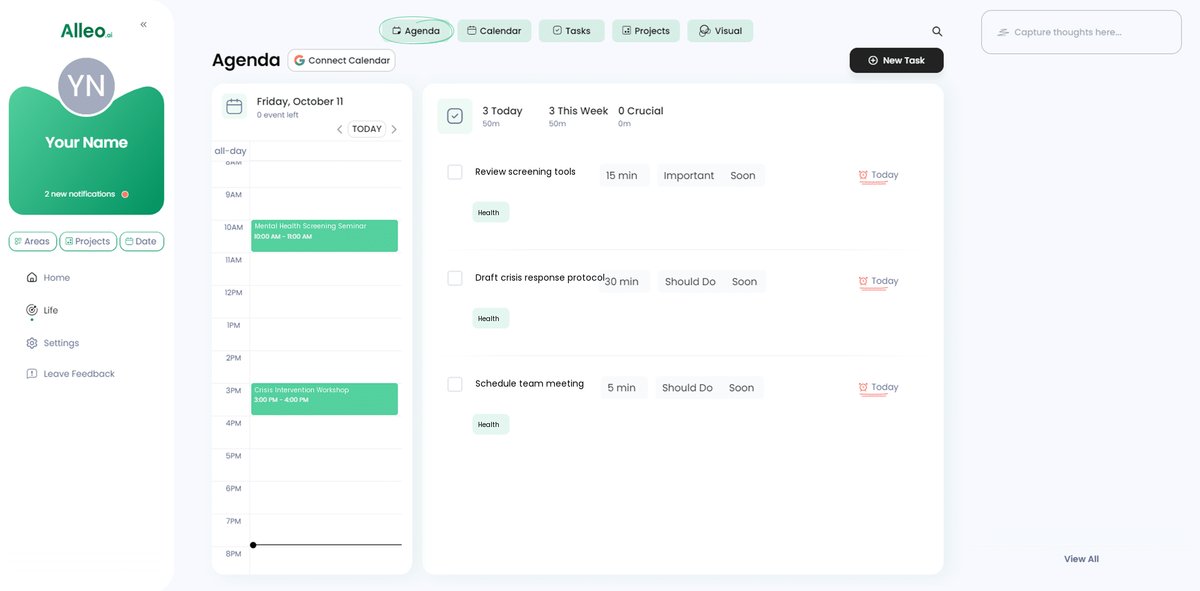
Use Alleo’s calendar and task features to schedule and track important mental health initiatives, such as staff training sessions, collaborative care meetings, and screening protocol implementation, allowing you to monitor your progress in improving mental health support within your healthcare practice.
Conclusion: Taking Action for Better Mental Health Support
You’ve learned how to integrate mental health screening tools, implement collaborative care models, and provide crisis intervention training. These mental health strategies for healthcare can significantly improve mental health support and suicide risk assessment in your practice.
I know it can be overwhelming to start implementing new strategies for integrated behavioral health services. But taking these steps can make a huge difference in patient outcomes and enhance your evidence-based treatment protocols.
Remember, Alleo is here to help you every step of the way with mental health strategies for healthcare. Setting goals, tracking progress, and receiving decision support can streamline your efforts in areas like teletherapy and digital mental health.
Let’s make a positive impact together. Start using Alleo today and see the difference it can make in your practice, from patient education on mental health to community outreach programs.