7 Essential Ways to Improve Communication with Aphasia Patients for Healthcare Professionals
Imagine trying to communicate but being unable to find the words or understand what others are saying. This is the daily reality for many individuals with aphasia, highlighting the importance of improving aphasia patient communication.
As a life coach, I’ve helped many professionals navigate these challenges. In my experience, effective communication is crucial for patient care and recovery. Healthcare professional training for aphasia and developing empathy in aphasia patient care are key components in this process.
In this article, you’ll discover practical strategies and tools to enhance your communication with patients who have aphasia. From using supported conversation techniques to creating communication-accessible environments, we’ll cover it all. We’ll explore aphasia communication strategies, speech therapy techniques for aphasia, and the importance of nonverbal communication in aphasia care.
Let’s dive in to learn about improving aphasia patient communication and the multidisciplinary approach to aphasia treatment.

The Communication Challenge in Aphasia Care
Healthcare professionals often face significant challenges when improving aphasia patient communication. Many clients initially struggle to understand medical instructions, leading to frustration and anxiety. Effective aphasia communication strategies are crucial for patient care.
In my experience, poor communication can drastically affect patient care and outcomes. For example, patients may feel isolated or misunderstood, which can hinder their recovery. Healthcare professional training for aphasia is essential to address these issues.
Effective communication is essential for improving patient satisfaction and recovery. Without it, both patients and healthcare providers can experience increased stress and reduced quality of care. Implementing speech therapy techniques for aphasia and utilizing assistive technology for aphasia patients can greatly enhance communication.
This issue needs immediate attention. Let’s explore how to tackle it and improve aphasia patient communication through a multidisciplinary approach to aphasia treatment.
Key Steps to Enhancing Communication with Aphasia Patients
Improving aphasia patient communication requires a few key steps. Here are the main areas to focus on to make progress in healthcare professional training for aphasia:
- Use Supported Conversation for Adults with Aphasia: Learn and apply SCA techniques in interactions as part of effective aphasia communication strategies.
- Implement the Teach-Back Method for Clarity: Ensure patients understand medical information accurately, enhancing patient-centered care for aphasia.
- Provide Clear Choices and Visual Cues: Use visual aids and simple choices to support communication, incorporating nonverbal communication in aphasia care.
- Collaborate with Speech-Language Pathologists: Work closely with SLPs to enhance patient care and speech therapy techniques for aphasia.
- Create a Communication-Accessible Environment: Modify settings to facilitate better communication, possibly utilizing assistive technology for aphasia patients.
- Practice Active Listening and Patience: Show patients that their efforts to communicate are valued, demonstrating effective listening skills for healthcare providers.
- Offer Emotional Support to Reduce Frustration: Provide resources and validate patients’ emotions, emphasizing empathy in aphasia patient care.
Let’s dive into these strategies for improving aphasia patient communication!
1: Use Supported Conversation for Adults with Aphasia
Supported Conversation for Adults with Aphasia (SCA) is essential for improving aphasia patient communication and enhancing healthcare professional training for aphasia.
Actionable Steps:
- Attend a workshop or training session to learn SCA techniques and effective aphasia communication strategies. Track the number of successful communication interactions post-training.
- Implement SCA techniques in daily interactions with aphasia patients. Set specific goals for using these speech therapy techniques for aphasia with at least three patients per week.
- Mentor a colleague in using SCA techniques. Create a peer support system to share successes and challenges in improving aphasia patient communication.
Explanation:
These steps matter because they provide a structured approach to improving aphasia patient communication. By attending workshops, implementing techniques, and mentoring colleagues, you can ensure consistent and effective communication practices in aphasia care.
This approach aligns with current industry trends emphasizing patient-centered care for aphasia. For more information, visit the Aphasia Institute’s resource page.
Let’s move on to the next strategy.
2: Implement the teach-back method for clarity
The teach-back method ensures patients understand medical information accurately, reducing confusion and improving outcomes, especially when improving aphasia patient communication.
Actionable Steps:
- Use the teach-back method by asking patients to explain their care instructions back to you. Measure success by the percentage of patients who can do this accurately, which is crucial for effective listening skills for healthcare providers.
- Develop a checklist or script to ensure consistency in using the teach-back method. Review and refine it based on patient feedback, incorporating aphasia communication strategies.
- Hold a team meeting to discuss the effectiveness of the teach-back method and share best practices. Collect data on patient outcomes to evaluate the method’s impact, focusing on improving aphasia patient communication.
Explanation:
These steps are crucial because they help standardize communication, ensuring patients understand their care plans, which is essential in healthcare professional training for aphasia.
By consistently using and refining the teach-back method, healthcare providers can improve patient comprehension and satisfaction, contributing to patient-centered care for aphasia.
For more information on this technique, visit the Health Literacy in Healthcare resource page.
Now, let’s explore how to use visual aids to enhance understanding, which can be particularly beneficial for nonverbal communication in aphasia care.
3: Provide clear choices and visual cues
Clear choices and visual cues are vital for improving aphasia patient communication and enhancing their healthcare experience.
Actionable Steps:
- Use visual aids like pictures, diagrams, or written instructions to support verbal communication. Track the reduction in patient confusion or repeated questions, a key aspect of aphasia communication strategies.
- Offer clear and simple choices, avoiding open-ended questions. Measure patient responses to ensure they feel more understood and less frustrated, aligning with effective listening skills for healthcare providers.
- Create personalized communication boards for regular patients. Review their effectiveness in facilitating communication during follow-up visits, incorporating assistive technology for aphasia patients.
Key benefits of using visual cues include:
- Improved patient understanding
- Reduced frustration for both patients and caregivers
- Enhanced ability to express needs and preferences
Explanation:
These steps matter because they simplify communication, making it easier for patients to understand and respond, which is crucial in improving aphasia patient communication.
By integrating visual aids and clear choices, healthcare providers can significantly reduce patient frustration and improve engagement, demonstrating empathy in aphasia patient care.
This approach aligns with the growing emphasis on personalized care and patient-centered care for aphasia. For more insights, visit the MedlinePlus resource on aphasia communication.
Next, let’s discuss collaborating with Speech-Language Pathologists (SLPs) as part of a multidisciplinary approach to aphasia treatment.
4: Collaborate with speech-language pathologists
Collaborating with speech-language pathologists (SLPs) is crucial for improving aphasia patient communication and implementing effective aphasia communication strategies.
Actionable Steps:
- Schedule regular consultations with SLPs to discuss patient progress and refine speech therapy techniques for aphasia. Measure collaboration success by the improvement in patient communication scores.
- Participate in interdisciplinary team meetings to integrate SLP insights into patient care plans, fostering a multidisciplinary approach to aphasia treatment. Set a goal to incorporate SLP recommendations in at least two care plans per month.
- Encourage ongoing education and training for healthcare professionals on speech and language disorders, including nonverbal communication in aphasia care. Track participation and gather feedback to assess the value of these educational sessions.
Explanation:
These steps matter because they ensure that you continuously improve your communication strategies with expert input, enhancing patient-centered care for aphasia. Regular consultations and interdisciplinary meetings foster a team-based approach to patient care, which is essential for improving aphasia patient communication.
Encouraging ongoing education helps keep everyone updated on best practices, including the use of assistive technology for aphasia patients and developing effective listening skills for healthcare providers. For more insights, visit the ASHA practice portal.
Next, let’s explore creating a communication-accessible environment.
5: Create a communication-accessible environment
Creating a communication-accessible environment is crucial for improving aphasia patient communication and facilitating effective interactions.
Actionable Steps:
- Modify the physical environment to reduce distractions and noise. Ensure a calm setting that allows for better communication with aphasia patients.
- Train all staff in basic aphasia communication strategies. Set training completion targets and evaluate healthcare professional training for aphasia and staff confidence post-training.
- Use assistive technology for aphasia patients like tablets with communication apps to support patient interactions. Track the usage and effectiveness of these tools in improving engagement.
Key elements of a communication-accessible environment for improving aphasia patient communication:
- Quiet, well-lit spaces for conversations, supporting effective listening skills for healthcare providers
- Readily available visual aids and communication tools to enhance nonverbal communication in aphasia care
- Clearly labeled areas and signage to support patient-centered care for aphasia
Explanation:
These steps matter because they create a supportive environment that enhances patient communication. By reducing distractions, implementing speech therapy techniques for aphasia, and using technology, you can significantly improve patient interactions.
This approach aligns with current industry trends emphasizing patient-centered care and a multidisciplinary approach to aphasia treatment. For more insights, visit the ASHA practice portal.
Let’s continue improving communication strategies in the next section.

6: Practice active listening and patience
Active listening and patience are essential for improving aphasia patient communication and building trust and understanding with them.
Actionable Steps:
- Dedicate extra time to listen to patients, showing that their communication efforts are valued. Track success with patient satisfaction surveys, a key aspect of patient-centered care for aphasia.
- Use non-verbal communication cues like nodding and eye contact to show understanding. Measure patient responses to ensure they feel heard, enhancing nonverbal communication in aphasia care.
- Reflect on patient interactions and identify areas for improvement in active listening skills. Set personal goals for enhancing effective listening skills for healthcare providers during patient care.
Explanation:
These steps matter because they help create a supportive environment where patients feel understood, which is crucial in aphasia communication strategies.
Active listening and patience can significantly improve patient satisfaction and engagement, key components in speech therapy techniques for aphasia.
For more insights on effective communication, visit the PubMed resource on communication strategies.
Up next, let’s discuss offering emotional support to reduce frustration, an important aspect of healthcare professional training for aphasia.
7: Offer emotional support to reduce frustration
Offering emotional support is essential for reducing frustration and improving aphasia patient communication and well-being.
Actionable Steps:
- Encourage patients to express their feelings and validate their emotions. Track patient mood and engagement levels to measure the impact on improving aphasia patient communication.
- Provide resources and referrals for counseling or support groups. Monitor patient uptake and satisfaction with these additional supports, which can enhance speech therapy techniques for aphasia.
- Develop a compassionate care approach, emphasizing empathy in aphasia patient care and patience in all interactions. Collect feedback from patients and families to evaluate the approach’s effectiveness in healthcare professional training for aphasia.
Ways to demonstrate emotional support:
- Active listening without interruption, a key aspect of effective listening skills for healthcare providers
- Validating patient feelings and experiences, essential in patient-centered care for aphasia
- Offering reassurance and encouragement, supporting nonverbal communication in aphasia care
Explanation:
These steps matter because emotional support can significantly enhance patient engagement and reduce frustration in improving aphasia patient communication.
A compassionate approach fosters a supportive environment, crucial for effective communication and recovery, emphasizing the importance of a multidisciplinary approach to aphasia treatment.
For more insights on compassionate care, visit the PIRATE program resource page.
Next, let’s explore how Alleo can assist in organizing patient care plans, including the use of assistive technology for aphasia patients and enhancing family involvement in aphasia communication.
Partner with Alleo to Enhance Patient Communication
We’ve explored the challenges of improving aphasia patient communication and how to enhance it. But did you know Alleo can make this journey easier for healthcare professionals and families involved in aphasia communication?
Set up an account and create a personalized plan with Alleo. The AI coach provides tailored coaching support for aphasia communication strategies, just like a human coach specializing in speech therapy techniques for aphasia.
Alleo tracks progress, handles changes, and keeps you accountable through text and push notifications, supporting your multidisciplinary approach to aphasia treatment.
Ready to get started for free and improve your skills in nonverbal communication in aphasia care? Let me show you how!
Step 1: Log In or Create Your Alleo Account
To start improving your communication with aphasia patients, log in to your existing Alleo account or create a new one to access personalized coaching and support.

Step 2: Choose “Building better habits and routines”
Click on “Building better habits and routines” to focus on developing consistent communication practices with aphasia patients, helping you integrate the strategies you’ve learned into your daily workflow and improve patient care outcomes.

Step 3: Select “Health” as Your Focus Area
Choose “Health” as your focus area in Alleo to improve your communication skills with aphasia patients, aligning your goals with the strategies discussed in this article for better patient care and outcomes.

Step 4: Starting a coaching session
Begin your journey with Alleo by scheduling an intake session, where you’ll discuss your communication goals with aphasia patients and create a personalized plan to improve your strategies and patient outcomes.

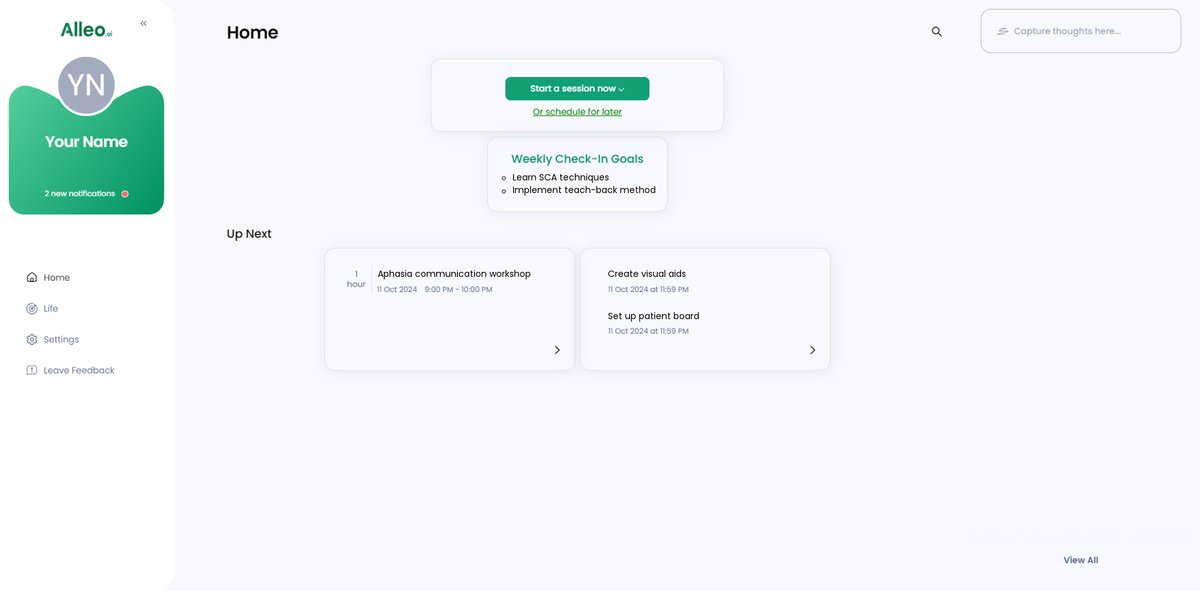
Step 5: Viewing and managing goals after the session
After your coaching session on improving communication with aphasia patients, check the Alleo app’s home page to review and manage the personalized goals you discussed, ensuring you stay on track with implementing strategies like SCA techniques and creating a communication-accessible environment.
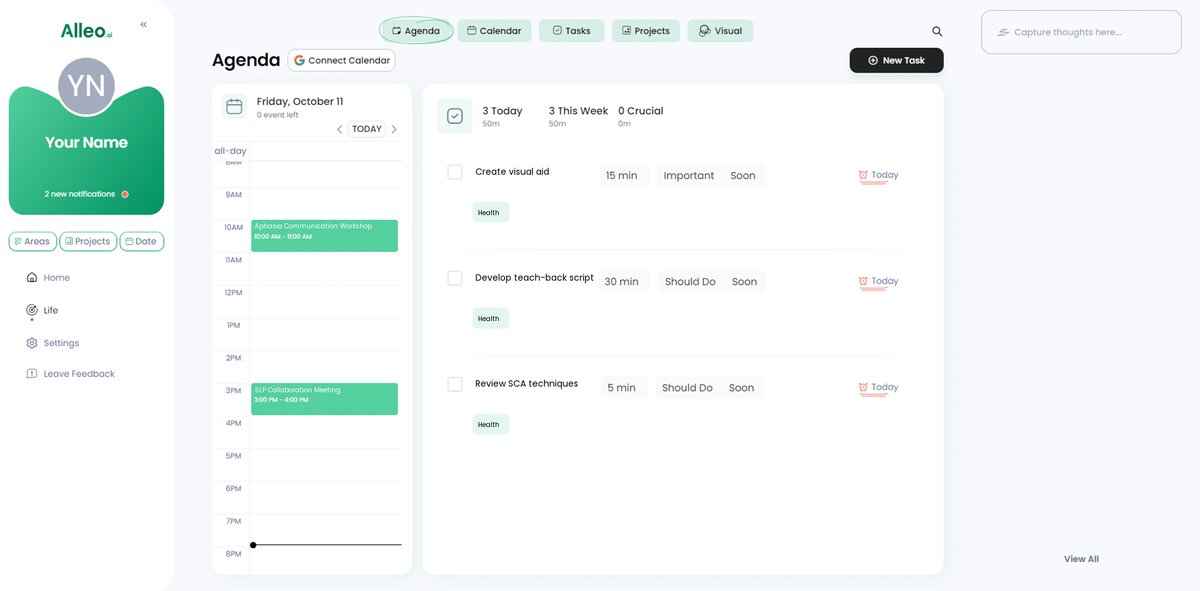
Step 6: Adding events to your calendar or app
Use Alleo’s calendar and task features to schedule and track your progress in implementing communication strategies for aphasia patients, such as SCA techniques or teach-back sessions, ensuring you stay organized and committed to improving patient care.
Bringing It All Together for Better Communication
You’ve learned several key strategies for improving aphasia patient communication. From using SCA techniques to creating a communication-accessible environment, these steps are crucial for healthcare professional training in aphasia care.
Remember, effective communication can transform patient care. Your dedication to mastering aphasia communication strategies can make a significant difference in their recovery journey.
Empathize with your patients, practice effective listening skills for healthcare providers, and offer emotional support. These small actions can lead to meaningful improvements in speech therapy techniques for aphasia.
Lastly, don’t forget about Alleo. This AI coach can help you stay organized and committed to your goals in providing patient-centered care for aphasia.
Ready to make a change? Start your journey with Alleo today, and see the difference it can make in improving aphasia patient communication.