7 Powerful Techniques to Transform Your Bedside Manner as a Medical Professional
Have you ever felt overwhelmed trying to connect with your patients and improve your bedside manner?
As a life coach, I’ve guided many healthcare professionals through the maze of patient communication. I understand the unique pressures you face in ensuring patients feel respected and comfortable while practicing patient-centered care strategies.
In this article, you’ll discover actionable strategies to enhance your bedside manner for doctors. We’ll cover practical techniques like active listening and improving nonverbal communication in medicine to build rapport with patients.
Let’s dive in to explore ways of improving bedside manner for doctors and boosting empathy in healthcare.
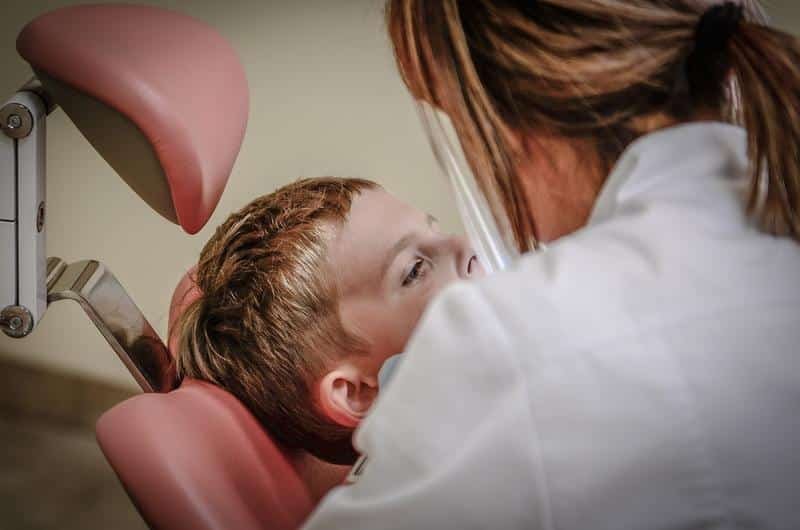
Understanding the Communication Challenges in Healthcare
Let’s discuss the real issues healthcare professionals face in patient communication. Many clients initially struggle with balancing clinical duties and empathetic interactions, which is crucial for improving bedside manner for doctors.
Poor bedside manner can lead to patient dissatisfaction and non-compliance. For instance, patients may feel dehumanized or dismissed during consultations, impacting their treatment adherence. This highlights the importance of patient-centered care strategies and emotional intelligence for healthcare providers.
Continuous improvement in communication skills is crucial. Yet, it often feels overwhelming to identify and address specific shortcomings without guidance. Developing patient communication skills and active listening techniques for doctors can significantly enhance the quality of care.
In my experience, focusing on incremental changes yields the best results. Let’s explore actionable strategies together to enhance empathy in healthcare and build rapport with patients.

A Roadmap to Improving Bedside Manner for Doctors
Overcoming this challenge requires a few key steps. Here are the main areas to focus on to make progress in improving bedside manner for doctors.
- Practice active listening techniques: Attend workshops and engage in peer feedback sessions to enhance patient communication skills.
- Improve non-verbal communication skills: Record and review patient interactions; take a nonverbal communication in medicine course.
- Tailor explanations to patient understanding: Simplify medical jargon and seek patient feedback to build rapport with patients.
- Develop cultural competence in patient care: Attend training and engage in community outreach programs to enhance cultural sensitivity in medical practice.
- Use empathetic language and tone: Participate in role-playing exercises and reflect on patient stories to boost empathy in healthcare.
- Implement role-playing exercises for feedback: Practice with simulated scenarios and join peer support groups to improve patient-centered care strategies.
- Regularly seek patient feedback on interactions: Use surveys and follow-up calls for continuous improvement in managing difficult patient interactions.
Let’s dive in!
1: Practice active listening techniques
Practicing active listening techniques is essential for improving bedside manner for doctors and building trust with patients.
Actionable Steps:
- Attend a workshop on active listening: Join a local or online workshop focused on active listening techniques for doctors. Implement one new technique from the workshop in daily practice to enhance patient communication skills.
- Engage in peer feedback sessions: Pair up with a colleague to practice active listening and provide constructive feedback. Schedule regular sessions to continuously refine skills and improve empathy in healthcare.
Key benefits of active listening in healthcare:
- Enhances patient trust and rapport
- Improves accuracy of diagnoses
- Increases patient satisfaction and compliance
Explanation: These steps matter because active listening helps you understand patients’ concerns better, enhancing their satisfaction and compliance, which are crucial aspects of improving bedside manner for doctors.
According to a study in the Gold Foundation, high-quality physician-patient communication is crucial for patient satisfaction and perceptions of empathy.
By focusing on active listening, you can significantly improve your bedside manner and patient outcomes.
Taking these steps will set a strong foundation for your improved communication skills and help in building rapport with patients.

2: Improve non-verbal communication skills
Improving non-verbal communication skills is crucial for healthcare professionals to convey empathy and build trust with patients, contributing to improving bedside manner for doctors.
Actionable Steps:
- Record and review patient interactions: Record patient interactions (with consent) and review your body language and facial expressions. Identify areas for improvement and set specific goals for nonverbal communication in medicine.
- Participate in a non-verbal communication course: Enroll in a course focused on non-verbal cues and their impact on patient communication skills. Practice techniques learned in the course in real patient interactions to enhance emotional intelligence for healthcare providers.
Explanation: These steps matter because non-verbal communication greatly influences patients’ perceptions of care and is essential for patient-centered care strategies.
According to SHC Cares, non-verbal cues like eye contact and facial expressions are essential in patient communication.
Enhancing these skills can significantly improve how patients feel during their interactions with you, leading to better compliance and satisfaction, ultimately improving bedside manner for doctors.
Taking these steps will help you connect better with your patients on a personal level, fostering empathy in healthcare and building rapport with patients.
3: Tailor explanations to patient understanding
Tailoring explanations to your patient’s level of understanding is essential for improving bedside manner for doctors and ensuring effective communication. This approach helps patients feel respected and comfortable.
Actionable Steps:
- Use simplified medical jargon: Create a list of common medical terms with their simplified explanations. Practice using these during patient consultations to ensure clarity and enhance patient communication skills.
- Seek patient feedback on clarity: Develop a short feedback form to ask patients about the clarity of your explanations. Use this feedback to refine your communication strategies and improve patient-centered care strategies.
Explanation: These steps matter because clear communication improves patient satisfaction and adherence to treatment plans, which are crucial aspects of improving bedside manner for doctors.
According to a study by the Gold Foundation, high-quality physician-patient communication is crucial for enhancing perceptions of empathy and satisfaction in healthcare.
By simplifying medical jargon and seeking feedback, you can ensure your patients fully understand their care plans, demonstrating empathy in healthcare and building rapport with patients.
Taking these steps will significantly enhance your communication effectiveness and contribute to improving bedside manner for doctors.
4: Develop cultural competence in patient care
Developing cultural competence in patient care is vital for improving bedside manner for doctors and delivering personalized and respectful healthcare to diverse populations.
Actionable Steps:
- Attend cultural competence training: Participate in sessions focused on understanding diverse cultural backgrounds and enhancing cultural sensitivity in medical practice. Implement one new cultural competence strategy each month to improve patient-centered care strategies.
- Engage in community outreach programs: Volunteer in community health programs to gain insight into different cultural perspectives and enhance empathy in healthcare. Reflect on experiences and integrate learnings into patient care and communication skills.
Essential aspects of cultural competence in healthcare:
- Understanding diverse health beliefs and practices
- Recognizing cultural influences on healthcare decisions
- Adapting communication styles to cultural norms and improving nonverbal communication in medicine
Explanation: These steps matter because understanding and respecting cultural differences can enhance patient trust and satisfaction, crucial elements in improving bedside manner for doctors.
According to Medscape, cultural competence is increasingly important in providing effective patient care. By attending training and engaging in community outreach, you can develop a deeper understanding of your patients’ backgrounds and enhance your emotional intelligence for healthcare providers.
Taking these steps will help you provide more empathetic and effective care, ultimately improving bedside manner for doctors.
5: Use empathetic language and tone
Using empathetic language and tone is essential for improving bedside manner for doctors and fostering trust and understanding in patient interactions.
Actionable Steps:
- Engage in role-playing exercises: Practice empathy in healthcare with peers through role-playing scenarios. Record these sessions and review them with a mentor for constructive feedback on patient communication skills.
- Read and reflect on patient stories: Read stories or case studies that emphasize patient-centered care strategies. Reflect on how to integrate empathetic language into your daily practice to enhance building rapport with patients.
Explanation: These steps matter because empathy improves patient satisfaction and compliance, which are crucial aspects of improving bedside manner for doctors.
According to Medscape, empathetic communication is crucial for effective patient care.
By practicing empathetic language and reflecting on patient stories, you can enhance your interactions and build stronger relationships with your patients, improving your bedside manner and emotional intelligence as a healthcare provider.
Mastering empathetic communication will significantly elevate your bedside manner and patient rapport.
6: Implement role-playing exercises for feedback
Implementing role-playing exercises for feedback is vital for improving bedside manner for doctors and enhancing patient interactions.
Actionable Steps:
- Participate in simulated patient scenarios: Engage in scenarios that mimic real patient interactions. Seek feedback from peers and instructors to identify areas for improvement in patient communication skills.
- Join a peer support group: Collaborate with healthcare professionals focused on enhancing communication skills and emotional intelligence for healthcare providers. Share experiences and learn from each other’s feedback.
Explanation: These steps matter because practicing in a safe environment helps you refine your skills without the pressure of real patient interactions, improving bedside manner for doctors.
According to Medscape, role-playing and feedback are crucial for developing effective communication techniques and building rapport with patients.
By engaging in these exercises, you can build confidence and improve your bedside manner, including nonverbal communication in medicine.
Role-playing exercises provide a practical way to enhance your communication skills and patient-centered care strategies.
Let’s move on to the next strategy.

7: Regularly seek patient feedback on interactions
Regularly seeking patient feedback on interactions is vital for improving bedside manner for doctors and ensuring patient satisfaction.
Actionable Steps:
- Design and distribute surveys: Create patient satisfaction surveys focused on communication and bedside manner. Analyze results to identify areas for improvement in patient-centered care strategies.
- Conduct follow-up calls: Make follow-up calls to patients to gather feedback on recent interactions. Use insights to refine your patient communication skills.
Key areas to focus on when gathering patient feedback:
- Clarity of explanations and instructions
- Level of empathy in healthcare shown
- Overall satisfaction with the interaction
Explanation: These steps matter because patient feedback provides valuable insights into how you can improve your bedside manner and enhance emotional intelligence for healthcare providers.
According to HCAHPS, patient perspectives are crucial for enhancing healthcare quality.
By actively seeking feedback, you can make informed changes that lead to better patient experiences and outcomes, improving bedside manner for doctors.
Taking these steps will ensure continuous improvement in your patient communication skills and ability to build rapport with patients.
Work with Alleo to Master Bedside Manner
We’ve explored the challenges of improving bedside manner for doctors and the steps to achieve it. But did you know you can work directly with Alleo to make this journey towards enhancing patient communication skills easier and faster?
Set Specific Goals with Alleo
Use Alleo to set and track specific goals for improving bedside manner and building rapport with patients. Receive reminders and motivational messages to stay on track with your patient-centered care strategies.
Plan and Schedule Training Sessions
Utilize Alleo to organize and schedule workshops, courses, and peer sessions focused on empathy in healthcare and active listening techniques for doctors. Keep track of progress and reflect on learnings with Alleo’s journaling feature.
Receive Personalized Recommendations
Based on feedback and progress, Alleo provides personalized recommendations for further improvement in areas such as nonverbal communication in medicine and cultural sensitivity in medical practice.
Ready to get started for free?
Let me show you how!
Step 1: Logging in or Creating an Account
To begin improving your bedside manner with Alleo, Log in to your account or create a new one to access personalized coaching and track your progress.

Step 2: Choose “Building better habits and routines”
Select “Building better habits and routines” to improve your bedside manner through consistent practice of communication techniques, helping you develop a more empathetic and effective approach to patient care.

Step 3: Select “Career” as Your Focus Area
Choose “Career” as your focus area in Alleo to specifically target improving your bedside manner and patient communication skills, which are crucial for advancing your healthcare career and enhancing patient satisfaction.

Step 4: Starting a coaching session
Begin your journey to better bedside manner by scheduling an intake session with Alleo, where you’ll discuss your communication goals and create a personalized improvement plan.

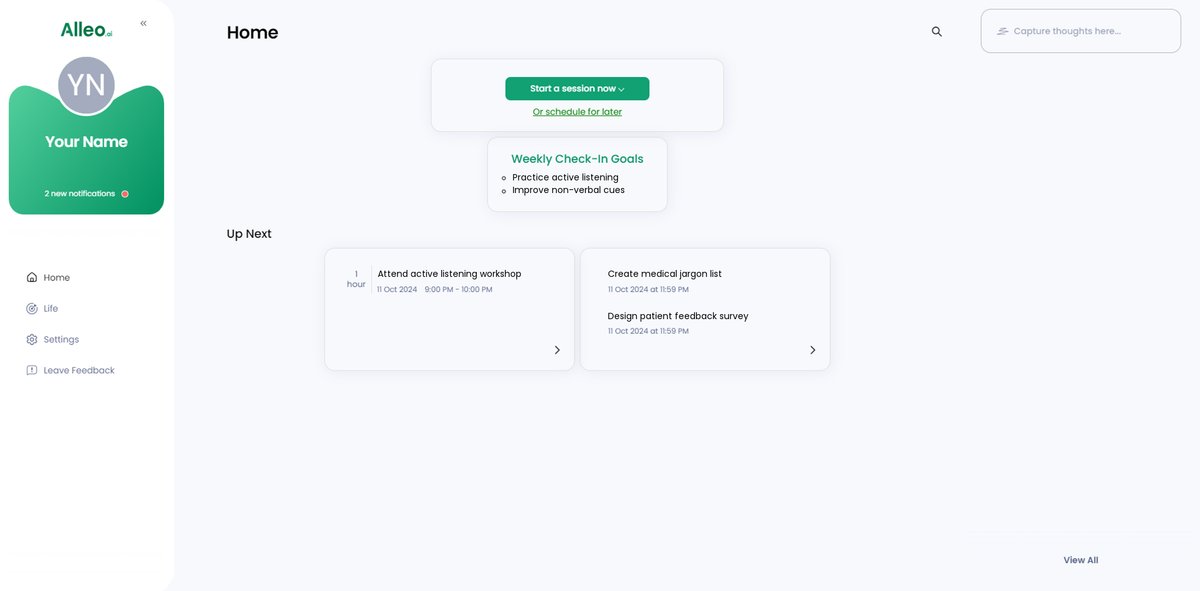
Step 5: Viewing and Managing Goals After the Session
After your coaching session on improving bedside manner, check the Alleo app’s home page to view and manage the specific communication goals you discussed, allowing you to track your progress and stay focused on enhancing patient interactions.
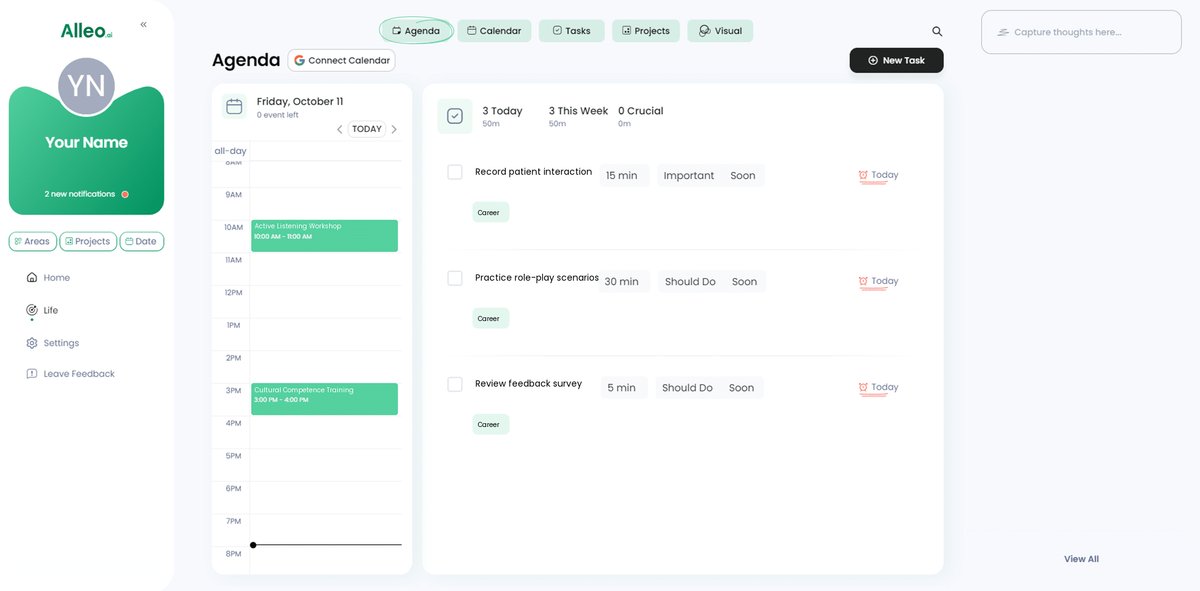
Step 6: Adding events to your calendar or app
Schedule your bedside manner improvement activities using Alleo’s calendar and task features to track your progress and stay accountable. You can easily add workshops, role-playing sessions, and patient feedback meetings to your calendar, ensuring you consistently work on enhancing your communication skills with patients.
Summing Up: Elevate Your Patient Communication
Improving bedside manner for doctors is a journey worth taking. You’ve learned actionable steps to enhance your patient communication skills.
It’s clear that patient satisfaction hinges on empathetic interactions in healthcare. By practicing active listening techniques for doctors, refining nonverbal communication in medicine, and tailoring your explanations, you’re on the right path to building rapport with patients.
Don’t forget to develop cultural sensitivity in medical practice and use empathetic language. Role-playing exercises and patient feedback will further refine your skills in patient-centered care strategies.
Working with Alleo can make this journey smoother. Alleo helps you set goals, plan training, and provides personalized recommendations for improving bedside manner for doctors.
Take the first step today. Improve your bedside manner and transform your patient interactions, enhancing your emotional intelligence for healthcare providers.
Ready to get started? Try Alleo for free and see the difference in managing difficult patient interactions and time management for effective patient care.