5 Essential Strategies for Healthcare Professionals to Balance Sleep and Training
Are you struggling to balance sleep and training as a healthcare professional? Sleep strategies for healthcare professionals are essential for maintaining your well-being and performance.
As a life coach, I’ve helped many professionals navigate these challenges. In my experience, addressing sleep hygiene for medical professionals is crucial for maintaining cognitive function and skill retention. Proper fatigue management in medical training can make a significant difference in your overall performance.
In this article, you’ll find strategies to create a consistent sleep schedule, implement strategic napping, and more. These tips will help you improve both your sleep quality and training efficiency. We’ll explore circadian rhythm optimization for healthcare workers and time management for medical students and sleep.
Let’s dive into these sleep strategies for healthcare professionals.

Understanding the Sleep Dilemma in Healthcare
Balancing sleep and training is a major challenge for healthcare professionals. Sleep quality often suffers, with 27.4% reporting poor sleep. This isn’t just a minor inconvenience for those seeking effective sleep strategies for healthcare professionals.
Inadequate sleep can lead to serious health issues. Many professionals face an increased risk of overweight, obesity, and hormonal changes, highlighting the importance of sleep hygiene for medical professionals.
The impact on performance is significant, especially for those managing night shift sleep.
I’ve seen firsthand how lack of sleep hampers cognitive function. This not only affects learning but also the quality of patient care, emphasizing the need for fatigue management in medical training.
Addressing sleep issues is critical for maintaining both health and professional excellence. Implementing effective sleep strategies for healthcare professionals is essential for work-life balance and optimal patient care.
Key Strategies for Balancing Sleep and Training
Overcoming this challenge requires a few key steps. Here are the main sleep strategies for healthcare professionals to focus on to make progress:
- Create a consistent sleep schedule and routine: Set fixed bedtimes and wake-up times, even on days off, to optimize circadian rhythm for healthcare workers.
- Implement strategic napping during shifts: Schedule short naps to boost alertness and cognitive function, especially for night shift sleep management.
- Prioritize high-yield training activities: Focus on critical training activities for the highest skill improvement, important for fatigue management in medical training.
- Use caffeine wisely to manage alertness: Limit caffeine to early shifts to avoid sleep interference, a key aspect of sleep hygiene for medical professionals.
- Practice mindfulness for stress reduction: Incorporate mindfulness practices into your daily routine to improve sleep quality for healthcare workers.
Let’s dive in!
1: Create a consistent sleep schedule and routine
Creating a consistent sleep schedule and routine is essential for healthcare professionals to maintain optimal performance and health. This is a crucial sleep strategy for healthcare professionals, especially those managing night shifts or on-call duties.
Actionable Steps:
- Set a fixed bedtime and wake-up time, even on days off, to regulate your circadian rhythms and optimize sleep hygiene for medical professionals.
- Develop a pre-sleep routine that includes winding down activities like reading or meditation, which can aid in fatigue management in medical training.
- Track your sleep patterns using a sleep diary or app to identify and address disruptions, improving sleep quality for healthcare workers.
Explanation: Consistently following these steps helps align your body’s internal clock, improving sleep quality and overall health. This is particularly important for night shift sleep management and work-life balance for doctors and nurses.
According to Frontiers in Public Health, consistent sleep schedules can mitigate the risk of sleep disturbances and associated health issues. This approach ensures that healthcare professionals can perform their duties effectively, even when dealing with sleep deprivation in residency programs.
Benefits of a consistent sleep schedule include:
- Improved mood and energy levels
- Enhanced cognitive function
- Better stress management
Balancing your sleep schedule effectively sets a strong foundation, making it easier to implement other sleep strategies for healthcare professionals and recovery techniques for medical professionals.
2: Implement strategic napping during shifts
Strategic napping during shifts is crucial for maintaining alertness and cognitive function, making it an essential sleep strategy for healthcare professionals.
Actionable Steps:
- Schedule short naps (10-20 minutes) during breaks to boost alertness and cognitive function, a key aspect of night shift sleep management.
- Find a quiet and comfortable place for napping, such as a designated rest area or a quiet room, to improve sleep quality for healthcare workers.
- Use an eye mask and earplugs to create an optimal napping environment, minimizing light and noise, which aids in circadian rhythm optimization for healthcare workers.
Explanation: Implementing these steps can significantly enhance your alertness and cognitive performance, addressing sleep deprivation in residency programs.
According to Frontiers in Public Health, short naps can improve mood and productivity, which is especially vital for healthcare professionals managing their sleep hygiene.
This approach ensures you stay sharp and effective during your shifts, supporting work-life balance for doctors and nurses.
Strategic napping can make a substantial difference in managing the demands of your job and is a key sleep strategy for on-call healthcare staff.

3: Prioritize high-yield training activities
Prioritizing high-yield training activities is essential for healthcare professionals striving for skill improvement without compromising sleep. This approach is crucial for effective sleep strategies for healthcare professionals.
Actionable Steps:
- Identify and focus on critical activities: Determine which training exercises yield the most significant skill enhancements and allocate more time to these tasks, supporting better sleep hygiene for medical professionals.
- Use time management techniques: Implement methods like the Pomodoro Technique to break training into focused, productive intervals, aiding in fatigue management in medical training.
- Seek feedback from mentors: Regularly consult with mentors or peers to ensure that your efforts are directed towards high-impact areas, helping manage sleep deprivation in residency programs.
Explanation: Focusing on high-yield training activities ensures that your efforts lead to substantial skill improvements without overextending yourself, supporting work-life balance for doctors and nurses.
According to the American Medical Association, managing time effectively during residency is crucial for balancing service and learning. By optimizing your training, you can maintain high performance while ensuring adequate rest, which is key for sleep quality improvement for healthcare workers.
Key factors in effective training prioritization:
- Aligning activities with career goals
- Focusing on skills with the highest impact
- Regularly reassessing and adjusting priorities
Transitioning to these strategies will help you stay efficient and well-rested, supporting effective sleep strategies for healthcare professionals and circadian rhythm optimization for healthcare workers.

4: Use caffeine wisely to manage alertness
Using caffeine wisely can help maintain your alertness during long shifts without disrupting your sleep, which is crucial for healthcare professionals implementing effective sleep strategies.
Actionable Steps:
- Limit caffeine intake to the early part of your shift to avoid interfering with sleep later, a key aspect of sleep hygiene for medical professionals.
- Opt for lower-caffeine options like green tea or matcha to maintain alertness without the jitters, supporting circadian rhythm optimization for healthcare workers.
- Avoid energy drinks high in sugar, which can lead to energy crashes and disrupt sleep patterns, impacting night shift sleep management.
Explanation: These steps ensure you use caffeine effectively without compromising your sleep quality, an essential component of sleep strategies for healthcare professionals.
According to USA.edu, managing caffeine intake is crucial for maintaining energy and avoiding sleep disruptions, which is vital for fatigue management in medical training.
By following these guidelines, you can stay alert and focused during your shifts while still getting the rest you need, addressing sleep deprivation in residency programs.
Transitioning to mindful caffeine use will set you up for better sleep and training balance, supporting work-life balance for doctors and nurses.
5: Practice mindfulness for stress reduction
Practicing mindfulness can significantly reduce stress and improve your overall well-being, which is crucial for healthcare professionals seeking effective sleep strategies.
Actionable Steps:
- Incorporate deep breathing exercises into your daily routine to calm your mind and reduce stress, enhancing sleep quality for medical professionals.
- Engage in physical activities like yoga or tai chi that combine mindfulness with exercise, aiding in fatigue management for medical training.
- Use mindfulness apps or guided meditation recordings to help you stay consistent with your practice, supporting circadian rhythm optimization for healthcare workers.
Explanation: These steps are crucial for maintaining mental health and managing stress effectively. According to the Saint Mary’s University of Minnesota, mindfulness practices can combat stress and burnout among healthcare professionals, contributing to better sleep strategies for on-call healthcare staff.
By integrating these techniques, you can enhance your resilience and performance, improving work-life balance for doctors and nurses.
Benefits of regular mindfulness practice:
- Reduced anxiety and stress levels, aiding in sleep deprivation management in residency programs
- Improved focus and decision-making, essential for time management for medical students and sleep
- Enhanced emotional regulation, supporting recovery techniques for medical professionals
Taking time for mindfulness ensures you stay grounded and focused, contributing to overall sleep quality improvement for healthcare workers.
Optimize Your Sleep and Training with Alleo
We’ve explored the challenges of balancing sleep and training. Did you know you can work with Alleo to make this journey easier and faster, especially when it comes to sleep strategies for healthcare professionals?
First, set up your account and create a personalized plan. Alleo’s AI coach provides affordable, tailored support, like a human coach, helping with sleep hygiene for medical professionals and fatigue management in medical training.
Next, Alleo will follow up on your progress. It handles changes and keeps you accountable via text and push notifications, aiding in night shift sleep management and circadian rhythm optimization for healthcare workers.
Ready to get started for free? Let me show you how to improve sleep quality for healthcare workers and manage work-life balance for doctors and nurses!
Step 1: Log In or Sign Up
To start balancing your sleep and training with AI coaching, log in to your existing Alleo account or create a new one in just a few clicks.

Step 2: Choose Your Focus – Building Better Habits and Routines
Click on “Building better habits and routines” to start addressing your sleep and training balance challenges – this goal directly tackles the core issues of creating consistent schedules and implementing effective strategies discussed in the article.

Step 3: Select “Health” as Your Focus Area
Choose “Health” as your primary focus area in Alleo to address sleep and training challenges directly, allowing the AI coach to provide personalized strategies for improving your sleep quality and balancing it with your professional development needs.

Step 4: Starting a coaching session
Begin your journey with an intake session to establish your personalized sleep and training balance plan, setting the foundation for improved well-being and performance as a healthcare professional.

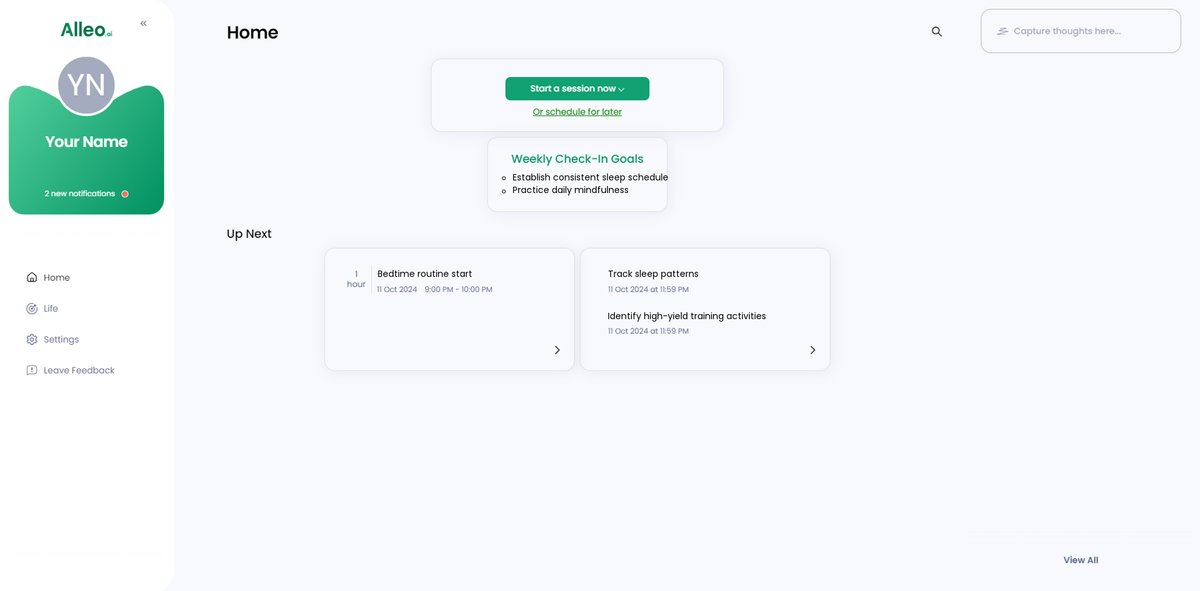
Step 5: Viewing and managing goals after the session
After your coaching session, open the Alleo app to find your discussed goals conveniently displayed on the home page, allowing you to easily review and manage your progress towards balancing sleep and training.
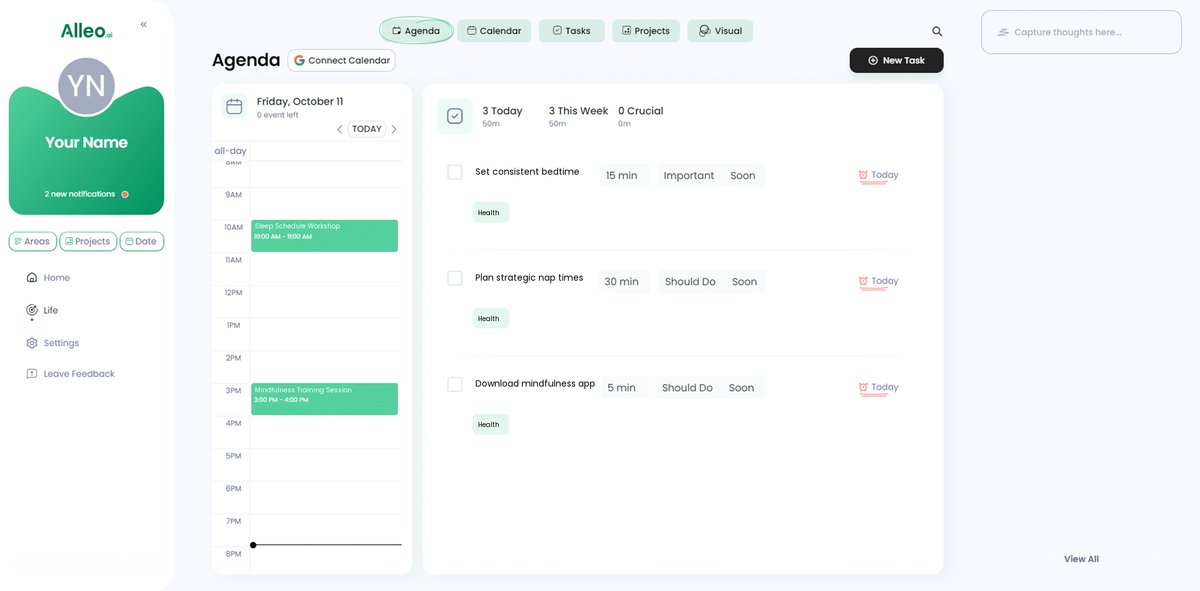
Step 6: Adding events to your calendar or app
Use Alleo’s calendar and task features to schedule and track your sleep routines, training sessions, and mindfulness practices, helping you maintain a balanced approach to your healthcare career and personal well-being.
Bringing It All Together
Balancing sleep and training can be challenging, but it’s essential for your health and performance. Implementing effective sleep strategies for healthcare professionals is crucial.
By creating a consistent sleep schedule, strategic napping, prioritizing high-yield activities, using caffeine wisely, and practicing mindfulness, you can make significant improvements in your sleep hygiene for medical professionals.
Remember, these strategies aren’t just tips; they are steps towards a healthier, more balanced life, helping with fatigue management in medical training.
I know it’s not easy, but you can do this. Optimizing your circadian rhythm as a healthcare worker is achievable.
And remember, Alleo is here to support you every step of the way in improving your sleep quality as a healthcare worker.
Ready to take control of your sleep and training balance? Start using Alleo for free today to enhance your work-life balance as a doctor or nurse!