How Busy Parents Can Address Children’s Emotional Needs Effectively: A Comprehensive Guide
Are you constantly juggling work deadlines, household chores, and still trying to be present for addressing children’s emotional needs? As a working parent, balancing work and family life can be challenging.
As a life coach, I understand the immense pressure busy parents face. Balancing your career and family dynamics while providing emotional support to your children can feel overwhelming.
In this article, you’ll discover effective strategies for addressing children’s emotional needs even with limited time and energy. We’ll explore time management for busy parents and communication strategies to enhance your emotional intelligence in parenting.
Let’s dive in to learn about creating a supportive home environment and quality time with children.

The Hidden Struggles of Busy Parents
Many parents face the daily challenge of addressing children’s emotional needs while managing hectic schedules. The constant juggling act can lead to feelings of guilt and stress, especially when children exhibit behavioral issues or emotional dysregulation. Balancing work and family life often impacts quality time with children.
In my experience, parents often feel they’re falling short despite their best efforts in emotional intelligence in parenting. Neglecting these emotional needs can result in long-term consequences, including increased anxiety and difficulty forming healthy relationships. Time management for busy parents becomes crucial in creating a supportive home environment.
Additionally, the pressure of balancing work and family life can be overwhelming. This is a common struggle among busy parents, but addressing children’s emotional needs is crucial for your child’s well-being. Effective communication strategies for parents and stress management techniques can help in providing emotional support.
Effective Strategies for Busy Parents to Address Children’s Emotional Needs
Addressing children’s emotional needs can be challenging for working parents. Overcoming this challenge requires a few key steps. Here are the main areas to focus on to make progress:
- Establish Consistent Daily Routines: Create a visual daily schedule and set consistent wake-up and bedtime routines to support child development and emotional needs.
- Practice Active Listening During Quality Time: Dedicate 10-15 minutes daily to uninterrupted time with your child and use active listening techniques for parents.
- Use Emotion Labeling to Build Emotional Literacy: Label emotions during interactions and play emotion-related games to enhance emotional intelligence in parenting.
- Implement Quick Mindfulness Exercises Together: Practice deep breathing and guided imagery for relaxation, aiding in stress management for parents and children.
- Set Loving Limits with Clear Communication: Establish clear rules and use natural consequences for teaching, employing effective communication strategies for parents.
- Prioritize Self-Care to Model Emotional Regulation: Take care of your well-being to effectively support your child and balance work and family life.
Let’s dive in to explore these strategies for addressing children’s emotional needs!
1: Establish consistent daily routines
Establishing consistent daily routines is essential for addressing children’s emotional needs and providing them with a sense of stability and security.
Actionable Steps:
- Create a visual daily schedule together.
- Involve your child in making a colorful chart with daily activities.
- Review and check off completed activities each day, promoting quality time with children.
- Set a consistent wake-up and bedtime routine.
- Introduce a calming bedtime routine, like reading a story, to support child development and emotional needs.
- Track sleep patterns and adjust routines as necessary, practicing time management for busy parents.
Explanation:
Consistent daily routines help children feel secure and understand what to expect each day. This stability is crucial for their emotional development and can reduce behavioral issues, which is vital for working parents and emotional support.
According to research, predictable routines support emotional literacy and self-regulation, which are key for long-term well-being and emotional intelligence in parenting.
Key benefits of consistent routines include:
- Reduced anxiety and stress for children
- Improved behavior and cooperation
- Enhanced sense of security and stability, contributing to a supportive home environment
Consistency in routines will make it easier to transition to the next activity or task, aiding in balancing work and family life.
2: Practice active listening during quality time
Active listening during quality time is vital for addressing children’s emotional needs and strengthening their emotional health while building trust.
Actionable Steps:
- Schedule a daily “check-in” time with your child.
- Dedicate 10-15 minutes of uninterrupted attention.
- Use a timer to ensure this time is solely for your child.
- Use reflective listening techniques.
- Mirror back what your child says to show understanding.
- Use phrases like “I hear you saying…” or “It sounds like you feel…”.
Explanation:
Practicing active listening helps your child feel valued and understood, which can improve their willingness to share their feelings. This is crucial for working parents seeking to provide emotional support.
This approach fosters a deeper emotional connection and supports their social-emotional development, enhancing emotional intelligence in parenting.
According to research, active listening techniques can significantly enhance your child’s emotional literacy and overall well-being.
Engage in these practices regularly to create a nurturing environment for open communication, addressing children’s emotional needs effectively.

3: Use emotion labeling to build emotional literacy
Labeling emotions helps children understand and express their feelings, promoting emotional literacy. This is crucial when addressing children’s emotional needs, especially for working parents seeking to provide emotional support.
Actionable Steps:
- Identify and name emotions during interactions.
- Observe your child’s emotional cues and label them, such as “You look happy.”
- Encourage your child to express their feelings verbally, enhancing communication strategies for parents.
- Use a feelings chart for identification.
- Create or buy a chart showing different emotions, supporting child development and emotional needs.
- Refer to the chart during conversations to help your child recognize and name their feelings.
- Play emotion-related games.
- Engage in games like “Feelings Charades” to make learning fun and promote quality time with children.
- Incorporate these games into family time a few times a week, balancing work and family life.
Explanation:
These steps matter because they help children develop emotional awareness, crucial for their social-emotional growth. Emotion labeling supports better self-regulation and empathy, key aspects of emotional intelligence in parenting.
According to research, emotional literacy is linked to improved academic performance and reduced behavioral issues.
Transitioning to the next topic, we will explore mindfulness exercises to enhance relaxation and focus, which are essential for stress management for parents and creating a supportive home environment.
4: Implement quick mindfulness exercises together
Incorporating quick mindfulness exercises can help both you and your child manage stress and enhance focus, which is crucial when addressing children’s emotional needs.
Actionable Steps:
- Practice deep breathing exercises.
- Teach your child a simple technique like “balloon breathing.”
- Practice for a few minutes each day using a visual aid, like a balloon.
- Use guided imagery for relaxation.
- Guide your child through a short, calming visualization.
- Use online resources or apps for guided imagery scripts.
Explanation:
These mindfulness exercises matter because they help reduce stress and improve focus. According to research, mindfulness practices can support emotional regulation and overall well-being, which is essential for working parents and emotional support.
Integrating these exercises into your daily routine can create a calm and supportive home environment for your child, promoting emotional intelligence in parenting.
Benefits of mindfulness exercises for children:
- Improved focus and concentration
- Better emotional regulation
- Reduced stress and anxiety
This mindfulness practice will set a positive tone for the day and can be especially useful before bed, helping with balancing work and family life.

5: Set loving limits with clear communication
Setting loving limits with clear communication is crucial for addressing children’s emotional needs and supporting their emotional regulation and understanding of boundaries.
Actionable Steps:
- Establish clear household rules together.
- Create a list of rules using positive language, like “We use gentle hands.”
- Review and adjust these rules as needed to maintain a supportive home environment.
- Implement natural consequences calmly.
- Allow logical consequences, such as toys being unavailable if not put away.
- Discuss these consequences clearly and calmly, utilizing active listening techniques for parents.
Explanation:
Setting loving limits helps your child understand acceptable behaviors and feel secure, which is essential for child development and emotional needs.
According to research, consistent rules and natural consequences support emotional regulation and positive behavior, enhancing emotional intelligence in parenting.
By doing this, you help your child learn from their actions in a supportive environment, even when balancing work and family life.
These steps will foster a sense of responsibility and self-discipline in your child, contributing to addressing children’s emotional needs effectively.
6: Prioritize self-care to model emotional regulation
Prioritizing self-care is essential for modeling emotional regulation to your child, especially in a busy household. This approach is crucial for addressing children’s emotional needs while balancing work and family life.
Actionable Steps:
- Schedule regular “me-time” for self-care.
- Set aside 10-15 minutes daily for activities you enjoy.
- Use this time to recharge and relax, enhancing your emotional intelligence in parenting.
- Practice mindfulness or meditation.
- Engage in short mindfulness exercises each day for stress management for parents.
- Use apps or online resources to guide your practice.
- Maintain a healthy lifestyle.
- Incorporate regular exercise and balanced meals into your routine, supporting child development and emotional needs.
- Track your progress to stay motivated.
Explanation:
These steps matter because they help you manage stress and demonstrate healthy coping mechanisms to your child, which is vital for working parents and emotional support.
According to research, self-care is crucial for parents’ mental and emotional well-being.
By modeling self-care, you teach your child the importance of taking care of their own emotional health, contributing to a supportive home environment.
Quick self-care ideas for busy parents focused on addressing children’s emotional needs:
- Take a 5-minute stretch break
- Practice gratitude journaling
- Listen to calming music during chores
Taking care of yourself also ensures you have the energy to support your child’s needs effectively, improving communication strategies for parents and active listening techniques.
Partner with Alleo to Support Your Child’s Emotional Needs
We’ve explored the challenges of addressing children’s emotional needs and the steps to manage them. But did you know Alleo can make this journey easier and faster for working parents seeking emotional support?
Alleo’s AI coach offers affordable, tailored coaching support, just like a human coach, to help with balancing work and family life. With a free 14-day trial, you can experience full coaching sessions without a credit card, focusing on child development and emotional needs.
Setting up an account is easy. Create a personalized plan to tackle your specific challenges, including time management for busy parents and quality time with children.
Alleo’s coach will follow up on your progress, handle changes, and keep you accountable via text and push notifications, enhancing your emotional intelligence in parenting.
Ready to get started for free and improve your communication strategies for parents? Let me show you how!
Step 1: Log In or Create Your Account
To start addressing your child’s emotional needs with personalized support, log in to your Alleo account or create a new one in just a few clicks.

Step 2: Choose “Building better habits and routines”
Click on “Building better habits and routines” to establish consistent daily schedules that address your child’s emotional needs while managing your busy life, helping you create a stable environment for your family’s well-being.

Step 3: Select “Personal” as Your Focus Area
Choose “Personal” as your life area to address your child’s emotional needs while balancing your busy schedule, allowing Alleo’s AI coach to provide targeted strategies for improving your parenting skills and family dynamics.

Step 4: Starting a Coaching Session
Begin your journey with Alleo by scheduling an intake session, where you’ll discuss your parenting challenges and set up a personalized plan to address your child’s emotional needs more effectively.

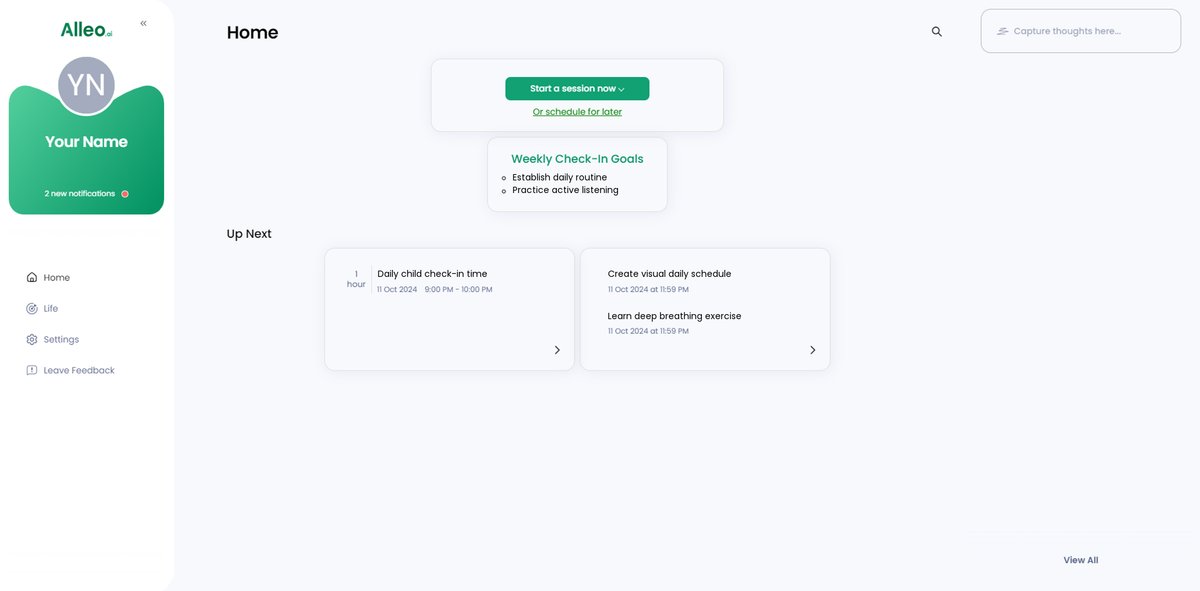
Step 5: Viewing and managing goals after the session
After your coaching session, easily review and manage the goals you discussed by accessing them on the home page of the Alleo app, allowing you to track your progress in addressing your child’s emotional needs while balancing your busy schedule.
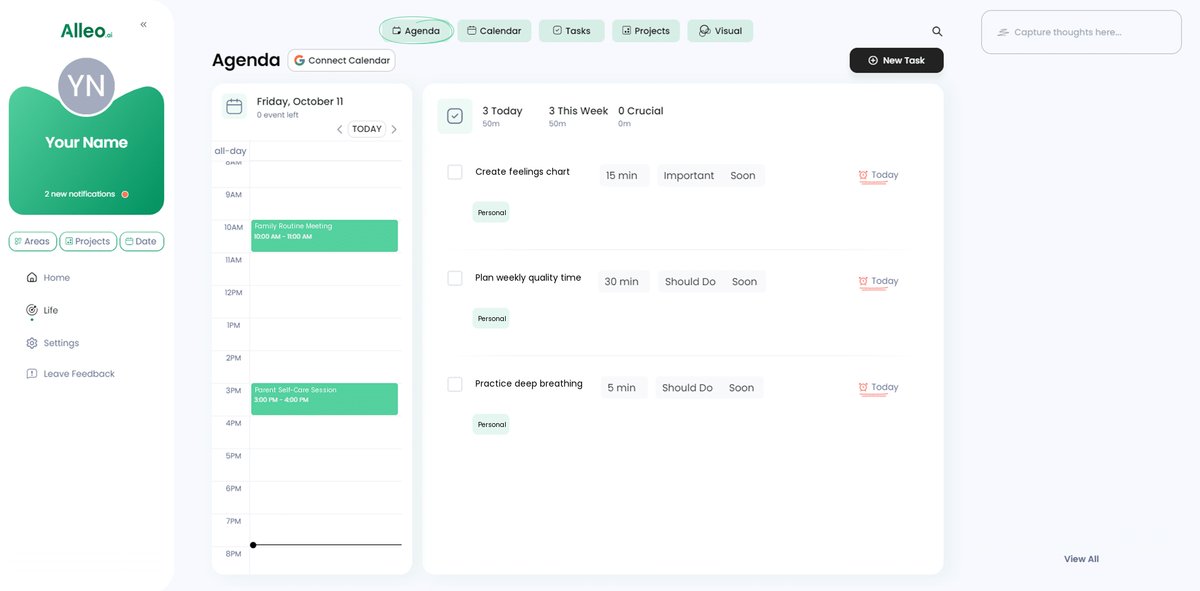
Step 6: Adding events to your calendar or app
To track your progress in addressing your child’s emotional needs, use the calendar and task features in the Alleo app to schedule and monitor key activities like daily check-ins, mindfulness exercises, and self-care routines.
Final Thoughts: Balancing Parenting and Emotional Needs
Finding the balance between work and addressing your child’s emotional needs is challenging but achievable for working parents. By integrating consistent routines, active listening techniques, emotion labeling, mindfulness exercises, setting loving limits, and prioritizing self-care, you can make a significant difference in your child’s emotional development.
Remember, small, consistent actions can create a nurturing environment for your child’s emotional growth and help in balancing work and family life.
You’re not alone in this journey of addressing children’s emotional needs. Alleo’s AI coach is here to support you with personalized, affordable coaching to enhance your emotional intelligence in parenting.
Experience the benefits of quality time with children first-hand with a free 14-day trial.
Take the first step today towards creating a supportive home environment. You and your child deserve it.