How New Moms Can Master Sleep Routines When Their Partner Returns to Work: A Comprehensive Guide
What happens when your partner returns to work, and your carefully established sleep routines after maternity leave are disrupted?
As a life coach, I’ve helped many new parents navigate these challenging transitions. I understand the anxiety and sleep deprivation for new mothers that can arise during this period.
In this article, we’ll explore practical strategies to maintain sleep routines after maternity leave. You’ll learn about shift-based sleep schedules, optimizing your bedroom environment, and more postpartum sleep strategies.
Let’s dive in.

The Struggle with Sleep Deprivation When Your Partner Returns to Work
When your partner returns to work, the balance you’ve created with your sleep routines after maternity leave is often upended. Many new moms face increased anxiety, fearing the onset of extreme sleep deprivation and burnout. Establishing bedtime routines with newborns becomes challenging during this transition.
A common scenario I see is a mother feeling overwhelmed by the nighttime duties that were previously shared. The stress of handling these responsibilities alone can be immense, especially when managing sleep with limited partner support.
It’s not just the lack of sleep—it’s the cumulative exhaustion from constantly being “on call” for your baby. This exhaustion can affect your mental health and overall well-being. Balancing parenting duties and sleep becomes crucial for sleep-deprived moms.
Understanding these challenges is the first step. Let’s explore how to navigate them, including postpartum sleep strategies and coping with sleep regression after partner returns to work.
Key Steps to Maintain Sleep Routines When Your Partner Returns to Work
Overcoming this challenge requires a few key steps to maintain sleep routines after maternity leave. Here are the main areas to focus on to make progress:
- Establish a shift-based sleep schedule: Plan sleep shifts around work schedules to ensure both parents get rest, crucial for managing sleep deprivation for new mothers.
- Optimize bedroom environment for better sleep: Create a cool, dark, and quiet environment to improve sleep quality, an essential postpartum sleep strategy.
- Pump milk for partner to assist with night feeds: Establish a pumping schedule to share feeding responsibilities, helping with night feeding schedule tips.
- Practice sleep hygiene and relaxation techniques: Maintain a consistent bedtime routine and incorporate relaxation exercises, vital for self-care for sleep-deprived moms.
- Communicate openly about workload and concerns: Schedule regular check-ins with your partner to manage tasks and support each other, balancing parenting duties and sleep.
- Create a backup plan for challenging nights: Identify backup caregivers and prepare for unexpected situations, especially when managing sleep with limited partner support.
Let’s dive in!
1: Establish a shift-based sleep schedule
Implementing a shift-based sleep schedule can help both parents get adequate rest when one partner returns to work, which is crucial for establishing effective sleep routines after maternity leave.
Actionable Steps:
- Plan sleep shifts around work schedules: Designate specific sleep shifts, such as the partner taking the first shift from 10 PM to 2 AM and you taking over from 2 AM to 6 AM. This helps in balancing parenting duties and sleep.
- Adjust shifts based on baby’s sleep patterns: Track your baby’s sleep for a week to identify patterns and alter shifts accordingly. This can be particularly helpful when coping with sleep regression after partner returns to work.
- Include flexibility for weekends: Alternate longer sleep periods on weekends to allow both parents to recover, which is essential for self-care for sleep-deprived moms.
Explanation:
These steps help distribute nighttime duties, ensuring both parents get some uninterrupted sleep. This approach reduces burnout and allows both to function better during the day, addressing sleep deprivation for new mothers.
According to Raising Children Network, maintaining routines can manage stress and anxiety in family life.
Establishing this schedule will support your well-being and help you manage the newborn phase effectively, which is crucial for postpartum sleep strategies and time management for solo parenting and rest.
2: Optimize bedroom environment for better sleep
Creating the right bedroom environment is crucial for improving sleep quality, especially during the demanding newborn phase and when establishing sleep routines after maternity leave.
Actionable Steps:
- Create a cool, dark, and quiet environment: Use blackout curtains, a white noise machine, and maintain a room temperature between 60-67°F to combat sleep deprivation for new mothers.
- Invest in supportive pillows and a comfortable mattress: Ensure your bed provides the necessary support for postpartum recovery and helps in balancing parenting duties and sleep.
- Remove electronic devices from the bedroom: Limit screen exposure an hour before bedtime to enhance sleep quality and support postpartum sleep strategies.
Explanation:
These steps help create an ideal sleep environment, promoting better rest despite nighttime interruptions and supporting sleep routines after maternity leave.
According to Canada Public Health, a cool and quiet bedroom is essential for good sleep.
Taking these measures supports your well-being and helps you manage the newborn phase more effectively, especially when establishing bedtime routines with newborns.
Next, let’s explore how pumping milk can assist with night feeds and night feeding schedule tips.
3: Pump milk for partner to assist with night feeds
Pumping milk allows your partner to share night feeding duties, giving you more rest as you establish sleep routines after maternity leave.
Actionable Steps:
- Establish a pumping schedule: Pump right before going to bed to have milk ready for the first night feed, helping manage sleep deprivation for new mothers.
- Store milk safely: Use breast milk storage bags and label them with dates and times, essential for maintaining a night feeding schedule.
- Teach partner how to warm and feed the baby: Ensure your partner is comfortable and confident in feeding the baby at night, balancing parenting duties and sleep.
Key benefits of shared night feeding:
- Reduces maternal fatigue
- Promotes bonding between partner and baby
- Allows for more balanced parental responsibilities
Explanation:
These steps enable you to share night feedings, alleviating some of your nighttime duties and reducing fatigue, which is crucial for postpartum sleep strategies.
According to Raising Children Network, maintaining routines can help manage stress and anxiety in family life.
This approach supports your well-being and helps manage the newborn phase more effectively, contributing to better sleep routines after maternity leave.
Next, let’s explore how practicing sleep hygiene and relaxation techniques can further improve your sleep quality.
4: Practice sleep hygiene and relaxation techniques
Incorporating sleep hygiene and relaxation techniques can significantly enhance your sleep quality during this demanding phase, especially when establishing sleep routines after maternity leave.
Actionable Steps:
- Maintain a consistent bedtime routine: Include relaxing activities such as reading or taking a warm bath before bed, which can help with postpartum sleep strategies.
- Incorporate mindfulness and relaxation exercises: Practice deep breathing, meditation, or gentle yoga to unwind, aiding self-care for sleep-deprived moms.
- Limit caffeine and heavy meals close to bedtime: Avoid stimulants and large meals 2-3 hours before sleep, which is crucial when balancing parenting duties and sleep.
Explanation:
These steps are essential for creating a calming bedtime environment, which promotes better sleep and helps in establishing bedtime routines with newborns.
According to the Canada Public Health, a consistent bedtime routine is crucial for good sleep, particularly when managing sleep with limited partner support.
Taking these measures will support your well-being and help you manage the newborn phase more effectively, including coping with sleep regression after partner returns to work.
Next, let’s explore how communicating openly about workload and concerns can further improve your sleep quality and aid in time management for solo parenting and rest.
5: Communicate openly about workload and concerns
Effective communication about workload and concerns is crucial for maintaining balance and ensuring both partners get adequate rest, especially when establishing sleep routines after maternity leave.
Actionable Steps:
- Schedule regular check-ins with your partner: Set aside time each week to discuss what’s working and what needs adjustment in your postpartum sleep strategies.
- Use a shared calendar for task management: Plan and delegate household responsibilities to ensure a balanced workload, helping with time management for solo parenting and rest.
- Be honest about your needs and feelings: Encourage open dialogue to foster mutual support and understanding, particularly when coping with sleep regression after partner returns to work.
Tips for effective partner communication:
- Use “I” statements to express feelings about sleep deprivation for new mothers
- Practice active listening when discussing balancing parenting duties and sleep
- Avoid blame and focus on solutions for managing sleep with limited partner support
Explanation:
These steps are vital for creating a supportive environment, reducing stress, and ensuring both partners are on the same page when establishing bedtime routines with newborns.
According to Raising Children Network, maintaining routines can help manage stress and anxiety in family life.
Implementing these measures supports your well-being and helps manage the newborn phase more effectively, including self-care for sleep-deprived moms.
Next, let’s explore how creating a backup plan for challenging nights can further support your sleep routine.

6: Create a backup plan for challenging nights
Creating a backup plan for challenging nights is crucial for maintaining your sleep routines after maternity leave when your partner returns to work.
Actionable Steps:
- Identify backup caregivers: Arrange for a family member or friend to be on standby for emergencies, helping manage sleep deprivation for new mothers.
- Prepare a list of quick, healthy meals: Stock the freezer with easy-to-prepare meals for nights when you’re too tired to cook, supporting postpartum sleep strategies.
- Have a contingency plan: Develop a plan for unexpected situations, such as both parents being too exhausted to function, balancing parenting duties and sleep.
Essential elements of a robust backup plan:
- Emergency contact list
- Ready-to-go diaper bag
- Pre-prepared bottle feeding supplies for night feeding schedule tips
Explanation:
These steps ensure you have support and resources when nights get tough, reducing stress and preventing burnout while establishing bedtime routines with newborns.
According to the MCHB, having strong support systems in place significantly improves family well-being.
Implementing these measures will help you manage the newborn phase more effectively, aiding in coping with sleep regression after partner returns to work.
Next, discover how Alleo can further support your sleep routine.
Partner with Alleo to Master Your Sleep Routines After Maternity Leave
We’ve explored the challenges of maintaining sleep routines when your partner returns to work. But did you know you can work directly with Alleo to make this transition smoother, especially when coping with sleep regression after partner returns to work?
Set up an account with Alleo to receive personalized sleep and self-care plans for sleep-deprived moms. Alleo’s AI coach provides tailored support for postpartum sleep strategies, tracks your progress, and keeps you accountable through text and push notifications, helping you balance parenting duties and sleep.
The coach adjusts plans as needed, ensuring you stay on track with establishing bedtime routines with newborns and managing sleep with limited partner support.
Ready to get started for free? Let me show you how to improve your sleep routines after maternity leave!
Step 1: Log In or Create Your Alleo Account
To start your journey towards better sleep routines, log in to your existing Alleo account or create a new one to access personalized sleep and self-care plans tailored to your needs as a new parent.

Step 2: Choose “Building better habits and routines”
Select “Building better habits and routines” from the list of goals to focus on establishing a consistent sleep schedule and developing self-care practices that will help you manage the challenges of parenting when your partner returns to work.

Step 3: Select “Personal” as Your Focus Area
Choose the “Personal” life area to address sleep routines and self-care, which are crucial for managing the challenges of parenthood when your partner returns to work.

Step 4: Starting a coaching session
Begin your journey with Alleo by scheduling an intake session, where you’ll discuss your sleep challenges and goals, allowing the AI coach to create a personalized plan to help you maintain a healthy sleep routine as your partner returns to work.

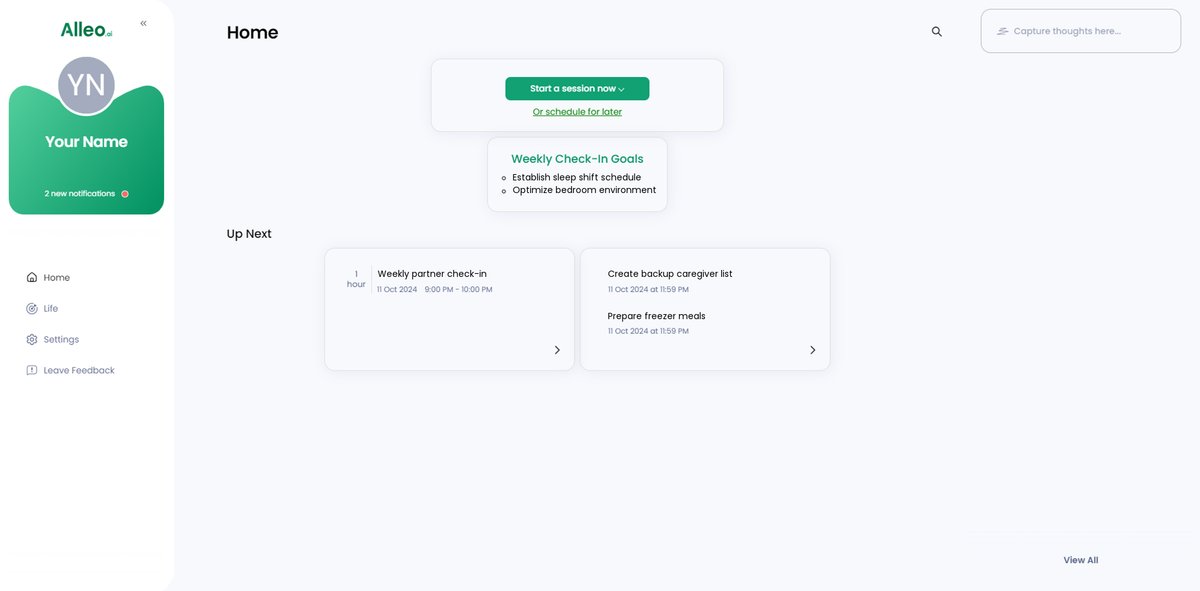
Step 5: Viewing and managing goals after the session
After your coaching session on maintaining sleep routines, check the Alleo app’s home page to view and manage the personalized goals you discussed, helping you stay on track with your new sleep strategy as your partner returns to work.
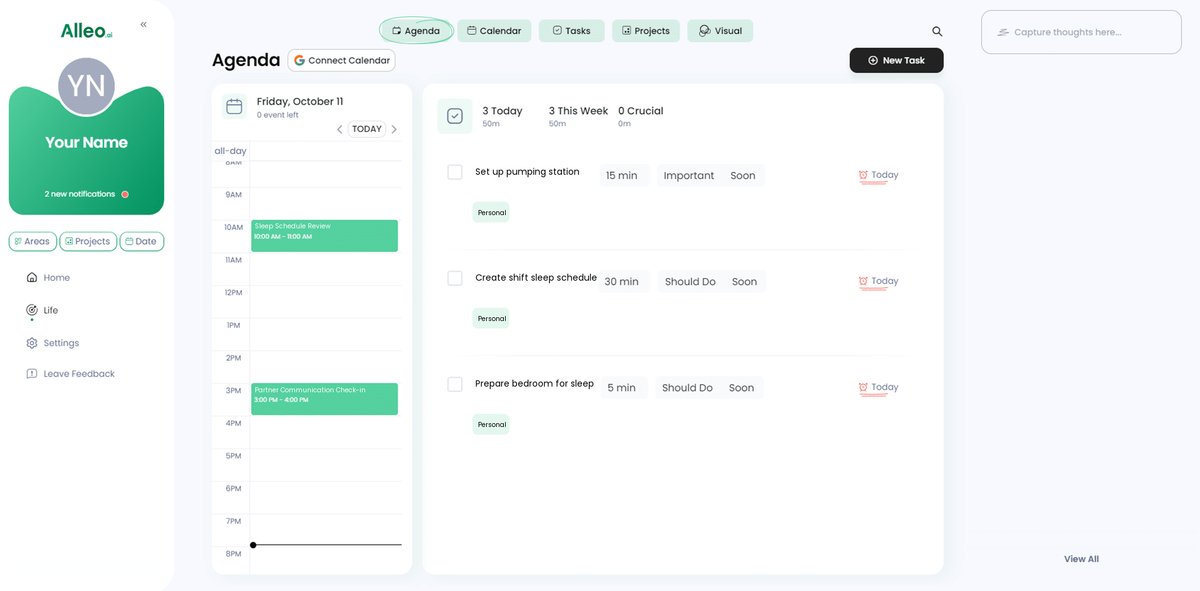
Step 6: Adding events to your calendar or app
Use Alleo’s calendar and task features to add your sleep shifts, pumping schedules, and partner check-ins, allowing you to easily track your progress in maintaining a healthy sleep routine while your partner returns to work.
Wrapping Up Your Sleep Strategy
Balancing sleep routines after maternity leave when your partner returns to work is challenging, but you’re not alone in this journey.
Remember, establishing a shift-based sleep schedule, optimizing your bedroom environment, and practicing good sleep hygiene are key steps for managing sleep with limited partner support.
Communicating openly and having a backup plan can further ease the transition and help with coping with sleep regression after partner returns to work.
You’ve got this.
As your AI life coach, I’ve seen many new parents successfully navigate these challenges with a structured approach to postpartum sleep strategies.
Don’t forget, Alleo is here to help with sleep routines after maternity leave.
Try Alleo for personalized guidance and support in balancing parenting duties and sleep.
You’ve got the tools—now put them to use for establishing bedtime routines with newborns.
Start today for a better night’s sleep and improved time management for solo parenting and rest.