How Teachers Can Prevent Empathy Burnout: 4 Fundamental Principles for Classroom Resilience
Have you ever felt emotionally drained after a long day of teaching, feeling like you have nothing left to give? This is a common experience for educators facing empathy burnout.
As a life coach, I’ve helped many educators navigate these challenges. I understand how compassion fatigue can impact your life and the importance of preventing teacher empathy burnout.
In this article, we’ll explore effective strategies for preventing teacher empathy burnout. You’ll discover actionable steps to maintain your emotional resilience and compassion satisfaction, including teacher self-care strategies and classroom stress management techniques.
Let’s dive into ways to enhance your emotional intelligence in education and create a positive classroom environment.

The Burden of Empathy Burnout in Teaching
Teaching demands high levels of emotional intelligence in education. Many educators feel completely drained after each school day, struggling with preventing teacher empathy burnout.
In my experience, teachers often face overwhelming emotional demands. This constant pressure can lead to empathy burnout and compassion fatigue in teaching, affecting student-teacher relationships.
When you’re always supporting students, your own well-being can suffer. It becomes hard to maintain compassion and effectiveness in the classroom without proper teacher self-care strategies.
Many teachers struggle with balancing emotional engagement and personal resilience. Without proper support and classroom stress management techniques, this can lead to serious burnout.
Understanding and addressing these challenges is crucial for preventing teacher empathy burnout. It helps maintain both your effectiveness as a teacher and your personal well-being, contributing to a positive classroom environment.
Effective Strategies to Prevent Empathy Burnout
Overcoming this challenge of preventing teacher empathy burnout requires a few key steps. Here are the main areas to focus on to make progress in maintaining emotional intelligence in education:
- Practice Mindfulness and Emotional Regulation: Incorporate mindfulness for educators exercises into your routine to reduce stress and improve classroom stress management techniques.
- Set Clear Boundaries with Students and Colleagues: Define your availability and limit extra responsibilities to maintain healthy student-teacher relationships and work-life balance for teachers.
- Engage in Regular Self-Care Activities: Schedule physical exercise and pursue hobbies outside of teaching as part of your teacher self-care strategies.
- Seek Support from Peers and Administrators: Join support groups and advocate for necessary resources to combat compassion fatigue in teaching and implement social-emotional learning (SEL).
Let’s dive in to these strategies for preventing teacher empathy burnout!
1: Practice mindfulness and emotional regulation
Incorporating mindfulness and emotional regulation into your daily routine is essential for managing stress and preventing teacher empathy burnout.
Actionable Steps:
- Dedicate 10 minutes every day to practice mindfulness exercises, like deep breathing or meditation, as part of your teacher self-care strategies.
- Attend a mindfulness seminar or workshop to learn new classroom stress management techniques. Aim to participate in one workshop each quarter.
- Use a mindfulness app daily for guided sessions to track your progress and stay consistent, enhancing your emotional intelligence in education.
Explanation:
These steps are vital because they help you build resilience and reduce stress, key factors in preventing teacher empathy burnout.
Practicing mindfulness can enable you to better cope with the emotional demands of teaching and maintain positive student-teacher relationships.
According to a study by Frontiers in Psychology, mindfulness helps educators manage workplace challenges more peacefully, supporting work-life balance for teachers. Read more about the benefits of mindfulness here.
Taking these steps can set a solid foundation for emotional regulation, ensuring you remain effective and empathetic in the classroom while implementing social-emotional learning (SEL).
2: Set clear boundaries with students and colleagues
Setting clear boundaries with students and colleagues is essential for preventing teacher empathy burnout and maintaining emotional resilience in education.
Actionable Steps:
- Define your availability for student support and communicate it clearly. Set specific office hours and adhere to them, promoting positive student-teacher relationships.
- Practice saying no to extra tasks that exceed your capacity. Limit additional responsibilities to two per week to maintain work-life balance for teachers.
- Establish personal time each day where you disconnect from work-related communications. Dedicate one hour daily to personal activities without checking emails, incorporating teacher self-care strategies.
Key benefits of setting boundaries include:
- Reduced stress and overwhelm, supporting classroom stress management techniques
- Improved work-life balance
- Enhanced professional relationships and positive classroom environment
Explanation:
These steps are crucial because they help manage your workload and ensure you have time for self-care. Clear boundaries protect your emotional well-being and prevent burnout, supporting emotional intelligence in education.
According to the Greater Good Science Center, setting boundaries fosters mutual respect and trust, essential for a healthy work environment. Learn more about setting boundaries as an educator here.
Taking these actions can help you maintain a balanced life while staying effective and compassionate in the classroom, ultimately preventing teacher empathy burnout.

3: Engage in regular self-care activities
Engaging in regular self-care activities is essential to maintain your emotional and physical well-being as a teacher, helping in preventing teacher empathy burnout.
Actionable Steps:
- Schedule regular physical exercise, such as yoga or walking, to reduce stress and improve classroom stress management techniques. Aim for at least 30 minutes, three times a week.
- Pursue hobbies and interests outside of teaching to enhance work-life balance for teachers. Dedicate at least one hour weekly to a hobby you enjoy.
- Ensure adequate sleep by maintaining a consistent bedtime routine. Aim for 7-8 hours of sleep each night by establishing a bedtime routine, which supports emotional intelligence in education.
Explanation:
These steps matter because they help you build resilience and maintain your well-being. Regular exercise and hobbies can reduce stress and improve your mood, contributing to teacher self-care strategies.
According to research by Leslie Hillen, yoga can significantly reduce teacher stress and burnout. Adequate sleep supports emotional regulation, helping you stay effective in the classroom and maintain positive student-teacher relationships.
Taking these actions can help you stay balanced and energized, ensuring you remain passionate and effective in your teaching role while preventing teacher empathy burnout.
4: Seek support from peers and administrators
Seeking support from peers and administrators is crucial for preventing teacher empathy burnout and maintaining emotional resilience in the classroom.
Actionable Steps:
- Join a support group or professional learning community for teachers focused on emotional intelligence in education. Attend one support group meeting per month.
- Foster a mentorship relationship with a more experienced colleague skilled in teacher self-care strategies. Meet with your mentor bi-weekly to discuss challenges and classroom stress management techniques.
- Advocate for administrative support and resources to manage your workload and improve student-teacher relationships. Schedule a meeting with school administration to discuss needed support for implementing trauma-informed teaching practices.
The benefits of seeking support include:
- Shared problem-solving strategies for preventing teacher empathy burnout
- Emotional validation and empathy, crucial for maintaining work-life balance for teachers
- Access to valuable resources and insights on mindfulness for educators
Explanation:
These steps matter because they create a network of support, helping you manage stress and prevent burnout. Engaging with peers and mentors provides valuable insights and emotional relief, essential for maintaining a positive classroom environment.
According to a study on teacher professional development, collaboration and support are key to teacher well-being. Taking these actions can help you feel supported and valued, ensuring you remain effective and compassionate in the classroom while implementing social-emotional learning (SEL) strategies.

Partner with Alleo to Prevent Empathy Burnout
We’ve explored empathy burnout challenges and how to overcome them, including strategies for preventing teacher empathy burnout. But did you know you can work directly with Alleo to make this journey easier?
Alleo provides tailored coaching support, similar to a human coach, with a free 14-day trial. Our approach incorporates emotional intelligence in education and teacher self-care strategies.
Setting up is easy. Create an account and personalize your plan, focusing on classroom stress management techniques and work-life balance for teachers.
Alleo’s AI coach will guide you through actionable steps and track your progress. You’ll receive text and push notifications for accountability, helping you maintain a positive classroom environment and implement social-emotional learning (SEL).
Ready to get started for free and learn more about preventing teacher empathy burnout?
Let me show you how!
Step 1: Log In or Create Your Account
To begin your journey toward emotional resilience, log in to your existing Alleo account or create a new one to access personalized coaching support tailored for educators.

Step 2: Choose Your Focus Area
Select “Improving overall well-being and life satisfaction” as your goal to address empathy burnout and enhance your emotional resilience as an educator, aligning with the strategies discussed in the article.

Step 3: Select “Personal” as Your Focus Area
Choose “Personal” as your focus area to address empathy burnout, as this will help you develop self-care strategies and emotional resilience essential for maintaining your passion and effectiveness in teaching.

Step 4: Starting a coaching session
Begin your journey with Alleo by scheduling an initial intake session, where you’ll discuss your empathy burnout concerns and work together to create a personalized plan for building emotional resilience in your teaching career.

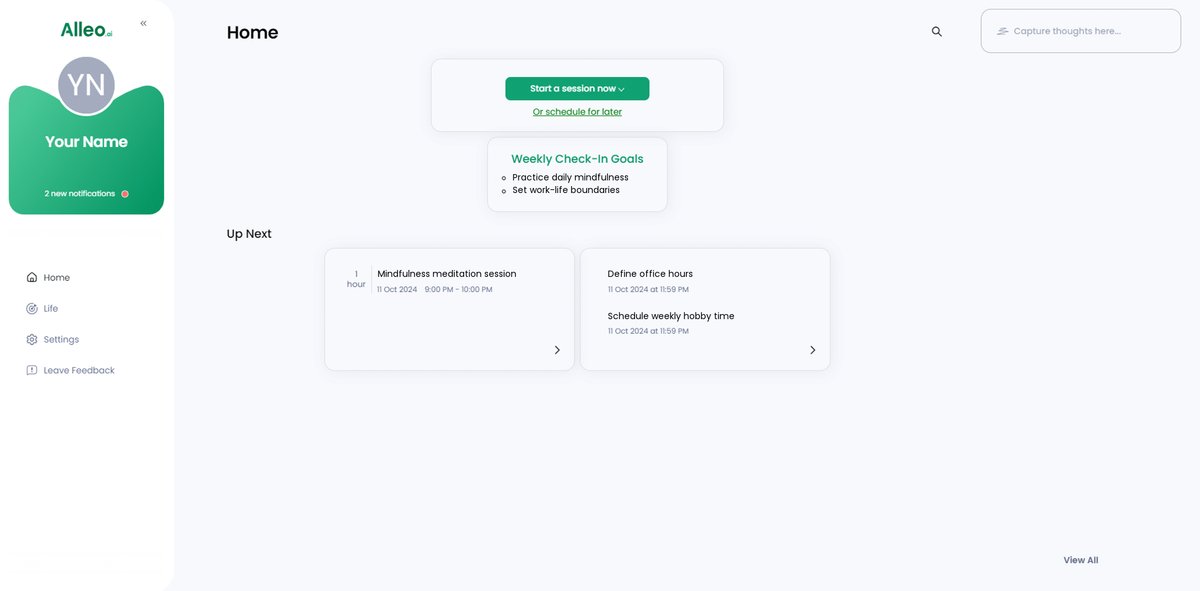
Step 5: Viewing and managing goals after the session
After your coaching session, open the Alleo app to find your discussed goals conveniently displayed on the home page, where you can easily track and manage your progress towards preventing empathy burnout.
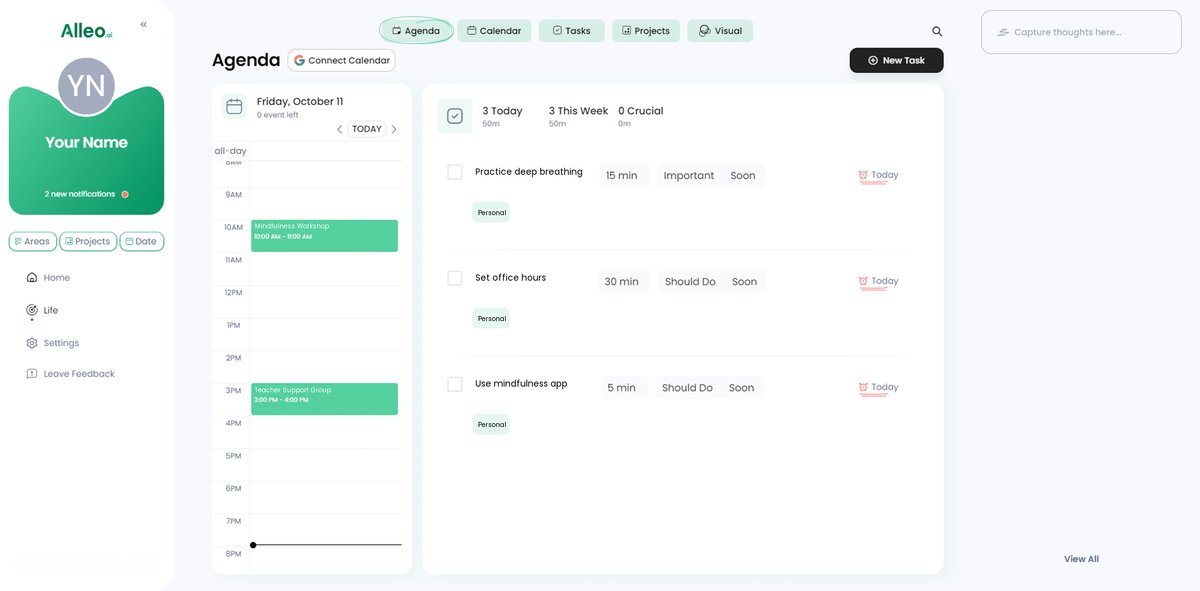
Step 6: Adding events to your calendar or app
Use the app’s calendar feature to schedule and track your progress on mindfulness exercises, self-care activities, and support group meetings, helping you stay accountable in your journey to prevent empathy burnout.
Wrapping Up: Taking Steps Toward Emotional Resilience
In conclusion, preventing teacher empathy burnout is crucial for educators. By practicing mindfulness, setting boundaries, engaging in self-care, and seeking support, you can build emotional resilience and improve your classroom stress management techniques.
Remember, you are not alone in this journey. Every small step you take towards teacher self-care strategies can make a big difference in maintaining work-life balance for teachers.
I encourage you to implement these strategies today to enhance your emotional intelligence in education.
And don’t forget, Alleo is here to support you in preventing teacher empathy burnout. With our free 14-day trial, you can start making a positive change now and improve student-teacher relationships.
Take control of your well-being. Your passion for teaching deserves it, and it’s essential for creating a positive classroom environment.