How Teachers Can Rebuild Empathy for Students After Burnout: 6 Powerful Steps
Are you feeling detached from your students due to burnout? Rebuilding teacher empathy after burnout is crucial for restoring classroom connections and reestablishing positive learning environments.
As a life coach, I’ve helped many professionals navigate these challenges. In my experience, rebuilding empathy is crucial for effective teaching and overcoming compassion fatigue in teaching.
In this blog, you’ll discover specific strategies to reconnect with your students and focus on teacher burnout recovery. We’ll cover mindfulness practices, reflective journaling, and professional development to support emotional resilience for teachers.
Let’s dive into these empathy-building strategies for educators and explore ways for reigniting passion for teaching.

Understanding the Depth of Teacher Burnout and Compassion Fatigue
Many educators experience compassion fatigue, leaving them emotionally drained and detached from their students. This detachment can significantly reduce classroom efficacy and overall job satisfaction, making rebuilding teacher empathy after burnout a critical challenge.
Teacher burnout often results in feeling overwhelmed, anxious, and even depressed. As a result, educators may struggle to maintain positive relationships with their students, highlighting the need for effective teacher burnout recovery strategies.
Emotional and professional consequences are severe. When teachers feel detached, students’ academic performance and behavior can suffer, emphasizing the importance of restoring classroom connections.
It’s a painful cycle that affects everyone involved, calling for empathy-building strategies for educators.
Several clients report struggling to reconnect with their students after experiencing burnout. Addressing this issue is crucial for fostering a healthy and productive educational environment and overcoming compassion fatigue in teaching.
Key Steps to Rebuilding Empathy After Burnout
Overcoming this challenge of rebuilding teacher empathy after burnout requires a few key steps. Here are the main areas to focus on to make progress in teacher burnout recovery:
- Practice mindfulness daily for emotional regulation: Incorporate mindfulness to stay balanced and improve emotional resilience for teachers.
- Engage in reflective journaling on student interactions: Reflect on your daily experiences with students to aid in restoring classroom connections.
- Attend professional development on trauma-informed care: Learn strategies to manage trauma in the classroom and support student-teacher relationship renewal.
- Implement regular self-care activities and boundaries: Prioritize your well-being with self-care to overcome compassion fatigue in teaching.
- Foster peer support groups with fellow educators: Build a support system with your peers for mental health support for educators.
- Use role-playing exercises to build empathy skills: Practice empathy through role-playing as part of empathy-building strategies for educators.
Let’s dive into these steps for rebuilding teacher empathy after burnout and reigniting passion for teaching!
1: Practice mindfulness daily for emotional regulation
Practicing mindfulness daily can help you regulate your emotions and reconnect with your students, which is crucial for rebuilding teacher empathy after burnout.
Actionable Steps:
- Set aside 10 minutes each morning for mindfulness meditation. Use a quiet space to focus on your breathing, aiding in teacher burnout recovery.
- Use guided mindfulness apps or videos to maintain consistency in your practice and support emotional resilience for teachers.
- Track your progress and emotional changes in a mindfulness journal to reflect on your growth and reignite your passion for teaching.
Explanation:
These steps matter because they can help reduce stress and improve emotional regulation, which is crucial for empathetic engagement and restoring classroom connections.
Mindfulness has been shown to enhance well-being and effectiveness in the classroom, supporting the process of rebuilding teacher empathy after burnout. For more insights, check out the Greater Good Science Center.
Incorporating mindfulness into your routine can set the foundation for a more balanced and connected teaching experience, aiding in overcoming compassion fatigue in teaching and reestablishing positive learning environments.

2: Engage in reflective journaling on student interactions
Reflective journaling on student interactions can help you gain insights and build empathy, which is crucial for rebuilding teacher empathy after burnout.
Actionable Steps:
- Set aside 15 minutes after school each day to journal about your interactions with students, focusing on restoring classroom connections.
- Focus on both positive and challenging moments, reflecting on your emotional responses as part of teacher burnout recovery.
- Review your journal entries weekly to identify patterns and areas for growth in overcoming compassion fatigue in teaching.
Key benefits of reflective journaling include:
- Increased self-awareness
- Improved emotional intelligence
- Enhanced problem-solving skills for student-teacher relationship renewal
Explanation:
These steps matter because they promote self-awareness and emotional intelligence. Reflecting on your interactions helps you understand your responses and improve student relationships, which is essential for rebuilding trust in the classroom.
For more guidance, check out the Wondermind article for tips on managing emotional fatigue.
Reflective journaling fosters continuous improvement and reconnects you with your students, reigniting passion for teaching and reestablishing positive learning environments.

3: Attend professional development on trauma-informed care
Attending professional development on trauma-informed care is crucial for managing trauma in the classroom and fostering empathy, which is key to rebuilding teacher empathy after burnout.
Actionable Steps:
- Enroll in a trauma-informed care workshop: Sign up for a course that focuses on understanding and addressing trauma, aiding in teacher burnout recovery.
- Participate in group discussions and role-playing exercises: Engage in interactive sessions during the training to practice new techniques for restoring classroom connections.
- Apply learned techniques in your classroom: Implement the strategies you’ve learned and document the outcomes to track progress in overcoming compassion fatigue in teaching.
Explanation:
These steps matter because they help you better understand and support students who have experienced trauma, contributing to student-teacher relationship renewal.
Trauma-informed care can improve your empathy and effectiveness as a teacher, aiding in rebuilding teacher empathy after burnout. For more insights, consider exploring the resources available on the Boise State Professional Development page.
Implementing these techniques can lead to a more supportive and empathetic classroom environment, essential for reestablishing positive learning environments and reigniting passion for teaching.

4: Implement regular self-care activities and boundaries
Implementing regular self-care activities and boundaries is essential for maintaining your well-being and rebuilding teacher empathy after burnout.
Actionable Steps:
- Schedule weekly self-care activities: Plan specific self-care activities like exercise, hobbies, or relaxation techniques every week to aid in teacher burnout recovery.
- Set clear boundaries between work and personal time: Define work hours and stick to them to prevent burnout and foster emotional resilience for teachers.
- Use Alleo to plan and remind you of your self-care activities: Leverage Alleo to organize and keep track of your self-care routine, supporting your journey in rebuilding teacher empathy after burnout.
Explanation:
These steps matter because they help you maintain a healthy work-life balance, which is crucial for emotional resilience and empathetic engagement, key components in overcoming compassion fatigue in teaching.
Regular self-care and clear boundaries can significantly reduce stress and improve overall well-being, contributing to restoring classroom connections. For more insights, check out the Harvard Business Review article on reclaiming your life from workaholism.
Taking these steps will create a foundation for a healthier and more empathetic teaching experience, aiding in rebuilding trust in the classroom and reigniting passion for teaching.
5: Foster peer support groups with fellow educators
Forming peer support groups with fellow educators is essential for rebuilding teacher empathy after burnout and sharing best practices for restoring classroom connections.
Actionable Steps:
- Start or join a peer support group: Connect with colleagues to create a group focused on teacher well-being, empathy, and overcoming compassion fatigue in teaching.
- Organize regular meetings: Schedule consistent meetups to discuss experiences, challenges, and strategies for improving student-teacher relationship renewal.
- Use peer feedback: Incorporate insights from your peers to refine your approach and enhance your empathy-building strategies for educators.
Key elements of effective peer support groups for rebuilding teacher empathy after burnout:
- Open and honest communication
- Mutual respect and trust
- Shared commitment to growth and teacher burnout recovery
Explanation:
These steps matter because peer support can provide emotional relief and practical strategies for reigniting passion for teaching. Sharing experiences helps educators feel less isolated and more connected, aiding in emotional resilience for teachers.
For instance, the Yale Center for Emotional Intelligence emphasizes the value of emotional intelligence in educational settings. Engaging with peers can significantly improve your teaching experience and foster a supportive community, essential for rebuilding trust in the classroom.
Taking these steps will help you build a strong support network, enhancing your empathy and effectiveness as a teacher, while reestablishing positive learning environments.
6: Use role-playing exercises to build empathy skills
Using role-playing exercises helps you practice and enhance your empathy skills in a teaching context, which is crucial for rebuilding teacher empathy after burnout.
Actionable Steps:
- Engage in role-playing scenarios: Collaborate with colleagues to create and act out different classroom situations for teacher burnout recovery.
- Practice empathetic responses: Focus on understanding and reacting to students’ needs and emotions during these exercises, aiding in restoring classroom connections.
- Implement in the classroom: Use role-playing activities with students to foster a supportive and empathetic environment, reestablishing positive learning environments.
Benefits of role-playing for empathy development:
- Improved perspective-taking
- Enhanced active listening skills
- Increased emotional awareness, supporting emotional resilience for teachers
Explanation:
These steps matter because they provide practical experience in handling diverse classroom situations empathetically. Role-playing can significantly improve your ability to connect with students, aiding in rebuilding teacher empathy after burnout.
For additional insights on emotional intelligence, explore the resources at the Yale Center for Emotional Intelligence. This approach builds a more empathetic and effective teaching practice, crucial for overcoming compassion fatigue in teaching.
Role-playing exercises can be a powerful tool for reconnecting with your students and improving classroom dynamics, helping in reigniting passion for teaching and student-teacher relationship renewal.

Partner with Alleo to Rebuild Empathy
We’ve explored the challenges of teacher burnout and detachment. Now, let’s make this journey of rebuilding teacher empathy after burnout easier with Alleo, your partner in teacher burnout recovery.
Setting Up Your Account:
- Sign up for a free 14-day trial (no credit card needed) to start your path to emotional resilience for teachers.
- Create a personalized plan tailored to your needs for restoring classroom connections.
- Start working with Alleo’s AI coach immediately on empathy-building strategies for educators.
Working with Alleo’s Coach:
- Receive tailored coaching support, just like a human coach, to assist in overcoming compassion fatigue in teaching.
- Get reminders and follow-ups via text and push notifications to support your student-teacher relationship renewal.
- Track progress and adjust plans as needed for rebuilding trust in the classroom.
Ready to get started for free and begin reigniting passion for teaching?
Let me show you how to start reestablishing positive learning environments!
Step 1: Log In or Create Your Account
To begin your journey of rebuilding empathy as an educator, log in to your existing Alleo account or create a new one to access personalized AI coaching support tailored to your needs.

Step 2: Choose Your Focus Area
Select “Improving overall well-being and life satisfaction” as your goal to address teacher burnout and reconnect with your students, laying the foundation for rebuilding empathy and enhancing your teaching experience.

Step 3: Selecting the life area you want to focus on
Choose “Career” as your focus area in Alleo to address teacher burnout and rebuild empathy, as this will provide tailored strategies and support for your professional growth and classroom effectiveness.

Step 4: Starting a coaching session
Begin your journey with Alleo by scheduling an intake session, where you’ll discuss your burnout challenges and set up a personalized plan to rebuild empathy with your students.

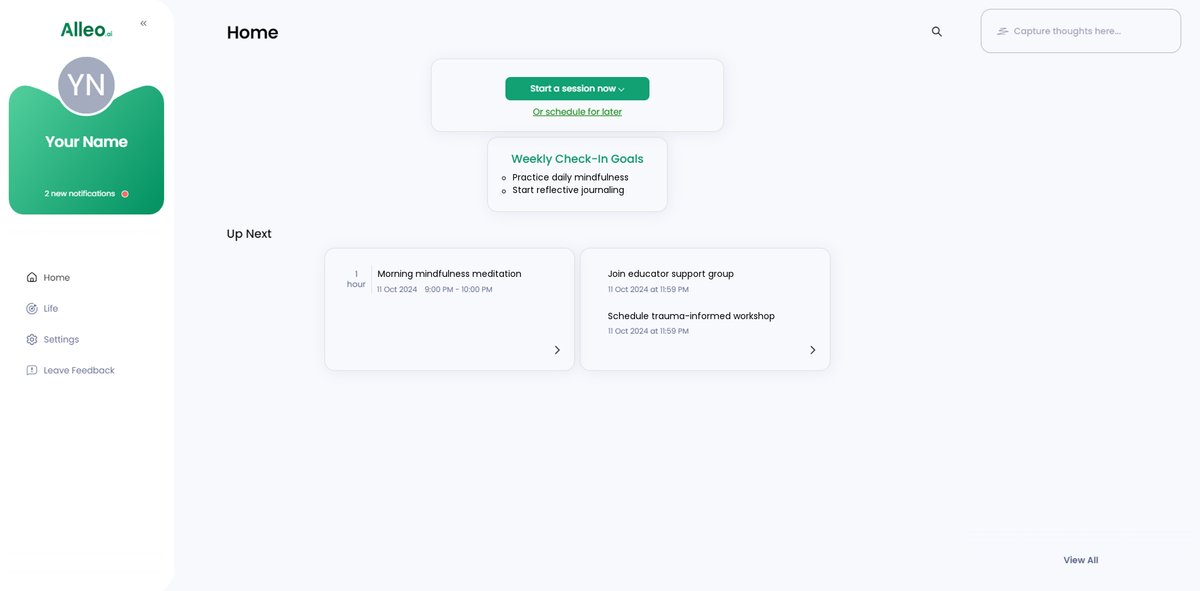
Step 5: Viewing and managing goals after the session
After your coaching session, open the Alleo app to find your discussed goals displayed on the home page, where you can easily track and manage your progress towards rebuilding empathy and reconnecting with your students.
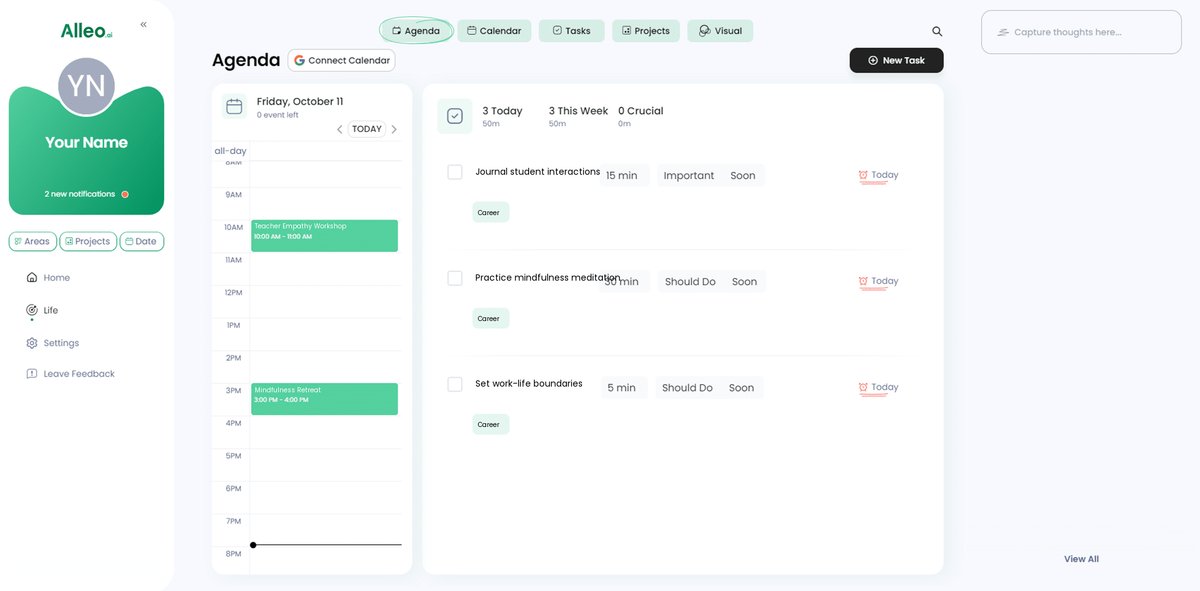
Step 6: Adding events to your calendar or app
Use Alleo’s calendar and task features to add self-care activities, mindfulness sessions, and professional development events, allowing you to easily track your progress in rebuilding empathy and managing teacher burnout.
Empowering Educators to Rebuild Empathy
Rebuilding teacher empathy after burnout is a challenging journey, but it’s absolutely possible. By practicing mindfulness, reflective journaling, and attending professional development, you can reconnect with students and focus on restoring classroom connections.
Remember to prioritize self-care and set boundaries to maintain balance, which are crucial for overcoming compassion fatigue in teaching. Peer support groups and role-playing exercises can further enhance your empathy-building strategies for educators.
You don’t have to navigate teacher burnout recovery alone. Alleo can be your partner in this journey, offering support every step of the way towards rebuilding trust in the classroom.
Take the first step today in reigniting your passion for teaching. Sign up for a free trial of Alleo and start your path to becoming a more empathetic educator, reestablishing positive learning environments.