How to Align Stakeholders for Cohesive Strategy Presentations: 7 Fundamental Principles
Are you struggling to present a cohesive strategy to your company’s stakeholders, facing conflicting opinions and diverse priorities? Aligning stakeholders for strategy presentations can be a challenging task that requires effective cross-functional collaboration and consensus building in organizations.
Imagine a product manager who couldn’t align their stakeholders during a critical strategy presentation, leading to confusion and missed opportunities. This scenario highlights the importance of strategic communication methods and executive presentation skills.
As a life coach, I’ve helped many professionals navigate these challenges. I often encounter issues with aligning stakeholders for strategy presentations and implementing corporate strategy development effectively.
In this article, you’ll discover actionable steps to align stakeholders, from identifying key players to using persuasive storytelling for business. We’ll explore stakeholder alignment techniques and change management communication strategies to ensure leadership buy-in.
Let’s dive in and learn how to master the art of aligning stakeholders for strategy presentations.

Understanding the Challenges of Stakeholder Alignment
Aligning stakeholders for strategy presentations is no easy feat. Many clients initially struggle with conflicting priorities, which often leads to communication breakdowns in cross-functional collaboration.
In my experience, this misalignment can derail crucial strategy presentations. When stakeholders aren’t on the same page, it creates confusion and inefficiency, highlighting the need for effective stakeholder alignment techniques.
This lack of alignment also makes it hard to implement strategies effectively. You might find stakeholders resisting change or disagreeing on key points, emphasizing the importance of change management communication.
Ultimately, these challenges can cause missed opportunities and suboptimal outcomes in corporate strategy development.
Achieving alignment is critical for success. It ensures everyone is working towards the same goals and understands their roles in the strategy, underlining the significance of consensus building in organizations.

A Roadmap to Align Stakeholders for Cohesive Strategy Presentations
Overcoming this challenge requires a few key steps. Here are the main areas to focus on when aligning stakeholders for strategy presentations:
- Identify key stakeholders and their priorities: Conduct interviews and surveys to understand goals and concerns, essential for stakeholder alignment techniques.
- Map stakeholder relationships and influence: Develop influence maps to understand power dynamics and enhance cross-functional collaboration.
- Develop a clear, concise strategy narrative: Craft a compelling strategy statement that aligns with stakeholder priorities, crucial for corporate strategy development.
- Create visual aids for complex information: Use data visualization for strategic presentations to simplify and highlight key points.
- Conduct pre-presentation stakeholder meetings: Schedule meetings to address concerns and refine the strategy, promoting consensus building in organizations.
- Use storytelling to engage diverse audiences: Incorporate persuasive storytelling for business with real-life examples to create an emotional connection.
- Establish a feedback loop for ongoing alignment: Implement regular check-ins to keep stakeholders informed and engaged, supporting change management communication.
Let’s dive into these strategic communication methods and executive presentation skills for aligning stakeholders for strategy presentations!
1: Identify key stakeholders and their priorities
Identifying key stakeholders and understanding their priorities is essential for aligning stakeholders for strategy presentations and developing a cohesive strategy.
Actionable Steps:
- Conduct stakeholder interviews to gather insights into their goals and concerns, enhancing cross-functional collaboration.
- Use surveys to collect input on stakeholder priorities and expectations, supporting consensus building in organizations.
- Create a stakeholder matrix to visualize and prioritize their influence and interest, aiding in corporate strategy development.
Key benefits of stakeholder identification:
- Improved strategy alignment
- Enhanced buy-in and support
- Reduced resistance to change
Explanation:
These stakeholder alignment techniques matter because they help you understand and address stakeholder needs, ensuring your strategy resonates with them.
This approach aligns with industry trends that emphasize involving the right stakeholders to create effective strategies.
By doing so, you minimize resistance and enhance buy-in, making the strategy implementation smoother and supporting change management communication.
Identifying stakeholders and their priorities is the first step towards achieving alignment and paves the way for mapping relationships and influence, ultimately improving executive presentation skills.

2: Map stakeholder relationships and influence
Mapping stakeholder relationships and influence is crucial for aligning stakeholders for strategy presentations and understanding power dynamics within organizations.
Actionable Steps:
- Develop a stakeholder influence map to visualize power dynamics and aid in consensus building in organizations.
- Identify key allies and potential blockers among stakeholders to strategize your approach for leadership buy-in strategies.
- Use relationship mapping software to visualize connections and leverage points effectively for cross-functional collaboration.
Explanation:
These steps matter because they help you navigate complex stakeholder dynamics, ensuring that you can leverage key relationships to drive alignment and improve executive presentation skills.
According to industry trends, visualizing these relationships aids in refining strategies and achieving better outcomes in corporate strategy development.
By understanding influence and connections, you can foster collaboration and reduce resistance, enhancing strategic communication methods.
With stakeholder relationships mapped out, we can now focus on developing a clear strategy narrative for aligning stakeholders for strategy presentations.

3: Develop a clear, concise strategy narrative
Creating a clear and concise strategy narrative is vital for aligning stakeholders for strategy presentations and ensuring everyone is on the same page.
Actionable Steps:
- Craft a compelling strategy statement: Develop a strategy statement that highlights priorities and aligns with stakeholder goals, utilizing persuasive storytelling for business.
- Highlight mutual benefits and shared goals: Use the narrative to emphasize mutual benefits and shared objectives among stakeholders, focusing on cross-functional collaboration.
- Test the narrative with a small group: Gather feedback from a small group of stakeholders to refine and improve the narrative, employing consensus building in organizations.
Explanation:
These steps are important because they help you create a narrative that resonates with stakeholders, ensuring better alignment and buy-in for corporate strategy development.
According to industry experts, crafting a compelling strategy narrative is crucial for effective communication and stakeholder engagement.
By focusing on mutual benefits and refining the narrative based on feedback, you can enhance clarity and foster collaboration, which are key stakeholder alignment techniques.
With a clear strategy narrative in place, we can now focus on creating visual aids to simplify complex information, incorporating data visualization for strategic presentations.

4: Create visual aids for complex information
Creating visual aids is essential for simplifying complex information and ensuring stakeholder understanding when aligning stakeholders for strategy presentations.
Actionable Steps:
- Utilize data visualization tools: Use tools like charts and graphs to simplify and highlight key points and trends in strategic communication methods.
- Develop infographics: Craft infographics to make complex data more accessible and engaging for stakeholders, enhancing cross-functional collaboration.
- Create a visual storyboard: Develop a storyboard to guide the presentation flow and emphasize important insights in corporate strategy development.
Explanation:
These steps matter because they help you present complex information in an easily digestible format, improving stakeholder alignment techniques and comprehension.
According to industry trends, incorporating visual aids can make presentations more impactful and memorable, enhancing executive presentation skills.
By using data visualization for strategic presentations, infographics, and storyboards, you can ensure that your strategy is understood and supported by all stakeholders, facilitating consensus building in organizations.
With visual aids in place, we can now focus on conducting pre-presentation stakeholder meetings to further align stakeholders for strategy presentations.

5: Conduct pre-presentation stakeholder meetings
Conducting pre-presentation stakeholder meetings is crucial for aligning stakeholders for strategy presentations and addressing concerns before the main event.
Actionable Steps:
- Schedule individual meetings: Arrange one-on-one sessions with key stakeholders to discuss their concerns and gather feedback, enhancing cross-functional collaboration.
- Host small group discussions: Organize small group meetings to build consensus and refine the strategy collaboratively, employing consensus building in organizations.
- Gather and incorporate feedback: Use these sessions to collect insights and make necessary adjustments to your corporate strategy development.
Best practices for pre-presentation meetings:
- Set clear agendas
- Listen actively to concerns
- Document key takeaways
Explanation:
These stakeholder alignment techniques matter because they help preemptively address concerns and build a stronger consensus.
According to industry trends, involving stakeholders early and often can lead to better alignment and smoother implementation.
By incorporating feedback and refining your strategy, you ensure a more cohesive and effective presentation, enhancing your executive presentation skills.
Now, let’s focus on using persuasive storytelling for business to engage diverse audiences.

6: Use storytelling to engage diverse audiences
Using storytelling to engage diverse audiences is essential for aligning stakeholders for strategy presentations and creating an emotional connection that ensures your strategy resonates with all stakeholders.
Actionable Steps:
- Develop a compelling narrative: Craft a story that aligns with stakeholder values and highlights shared goals, utilizing persuasive storytelling for business.
- Incorporate real-life examples and case studies: Use tangible examples to illustrate key points and make the strategy relatable, enhancing cross-functional collaboration.
- Leverage storytelling techniques: Employ techniques like setting, conflict, and resolution to create an engaging and memorable presentation, improving executive presentation skills.
Explanation:
These steps matter because they help you connect with stakeholders on an emotional level, making your strategy more impactful and facilitating consensus building in organizations.
According to industry experts, storytelling can enhance audience engagement and foster deeper connections, which is crucial for stakeholder alignment techniques.
By using narratives, examples, and storytelling techniques, you can ensure your corporate strategy development is not only understood but also embraced by all stakeholders.
This approach sets the stage for establishing a feedback loop for ongoing alignment, supporting change management communication and leadership buy-in strategies.

7: Establish a feedback loop for ongoing alignment
Establishing a feedback loop for ongoing alignment is crucial for ensuring continuous stakeholder engagement and strategy refinement when aligning stakeholders for strategy presentations.
Actionable Steps:
- Implement regular check-ins: Schedule periodic updates with stakeholders to discuss progress and gather feedback, enhancing cross-functional collaboration.
- Create a feedback mechanism: Set up surveys or feedback forms to capture stakeholder insights and concerns, supporting consensus building in organizations.
- Incorporate feedback into strategy: Use the collected feedback to make necessary adjustments and improvements to your strategy, refining corporate strategy development.
Key elements of an effective feedback loop:
- Consistent communication
- Transparent reporting
- Action-oriented responses
Explanation:
These steps matter because they help maintain stakeholder alignment and ensure your strategy remains relevant and effective.
According to industry experts, regular check-ins and feedback loops are essential for keeping stakeholders aligned and informed, supporting strategic communication methods.
By continuously refining your strategy based on stakeholder input, you can achieve better outcomes and foster a collaborative environment, enhancing leadership buy-in strategies.
This approach ensures ongoing alignment and sets the stage for successful strategy implementation, improving executive presentation skills for aligning stakeholders for strategy presentations.

Partner with Alleo for Seamless Stakeholder Alignment
We’ve explored the challenges of aligning stakeholders for strategy presentations. But did you know you can work with Alleo to make this process of aligning stakeholders for strategy presentations easier and faster?
Alleo provides affordable, tailored coaching support for this specific issue. With Alleo, you can set up stakeholder interviews and surveys effortlessly, enhancing your stakeholder alignment techniques.
Visualize stakeholder maps and influence diagrams to understand power dynamics and improve cross-functional collaboration. Craft and refine strategy narratives with AI assistance for clarity and impact, boosting your strategic communication methods.
Creating engaging visual aids and storyboards becomes simple with Alleo’s tools, enhancing your data visualization for strategic presentations. Organize pre-presentation meetings and gather feedback efficiently to support consensus building in organizations.
Develop storytelling techniques to enhance your presentations and establish a feedback loop for continuous improvement, mastering persuasive storytelling for business.
Alleo’s AI coach offers full coaching sessions similar to a human coach, focusing on executive presentation skills and corporate strategy development. You can start with a free 14-day trial, no credit card required.
Alleo will follow up on your progress, handle changes, and keep you accountable via text and push notifications, supporting your change management communication efforts.
Ready to get started for free and improve your leadership buy-in strategies?
Let me show you how!
Step 1: Logging In or Creating Your Account
To begin aligning your stakeholders with Alleo, log in to your existing account or create a new one to access the AI coach and start your journey towards cohesive strategy presentations.

Step 2: Choose Your Focus Area
Select “Setting and achieving personal or professional goals” to align your stakeholders effectively and present a cohesive strategy. This focus will help you develop clear objectives that resonate with all stakeholders, ensuring everyone works towards the same vision.

Step 3: Select “Career” as Your Focus Area
Choose “Career” as your focus area to address stakeholder alignment challenges in your professional life. This selection will help you develop strategies for effective communication, relationship building, and presentation skills crucial for aligning diverse stakeholders in your career setting.

Step 4: Starting a coaching session
Begin your journey with Alleo by scheduling an intake session, where you’ll discuss your stakeholder alignment challenges and set up a personalized plan to improve your strategy presentations.

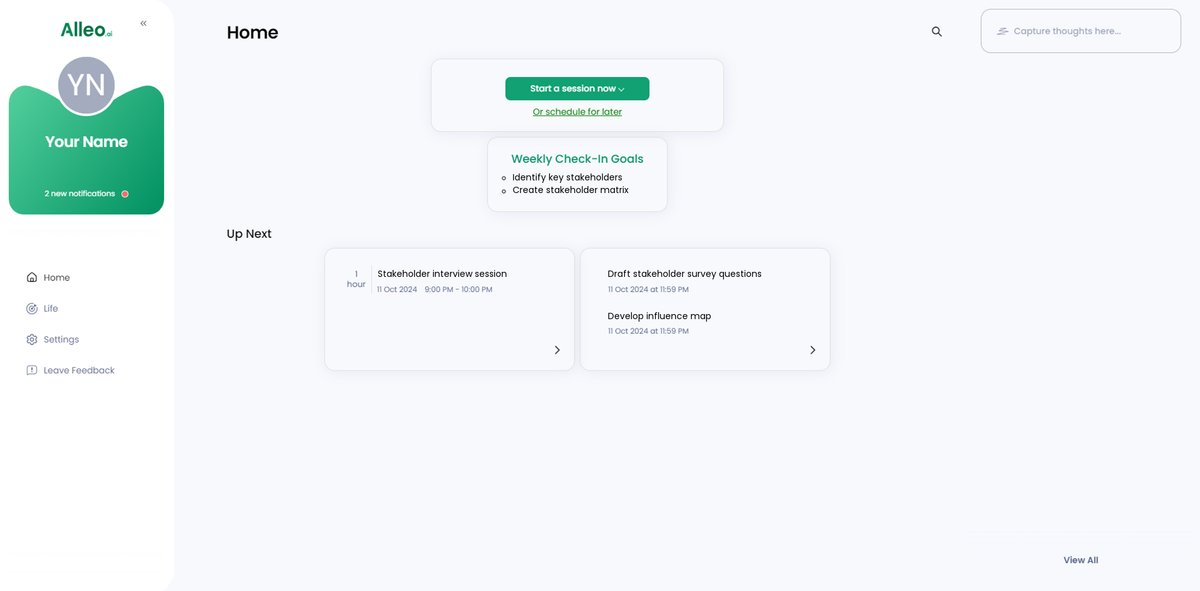
Step 5: Viewing and managing goals after the session
After your coaching session on stakeholder alignment, check the Alleo app’s home page to view and manage the goals you discussed, ensuring you stay on track with your strategy presentation preparation.
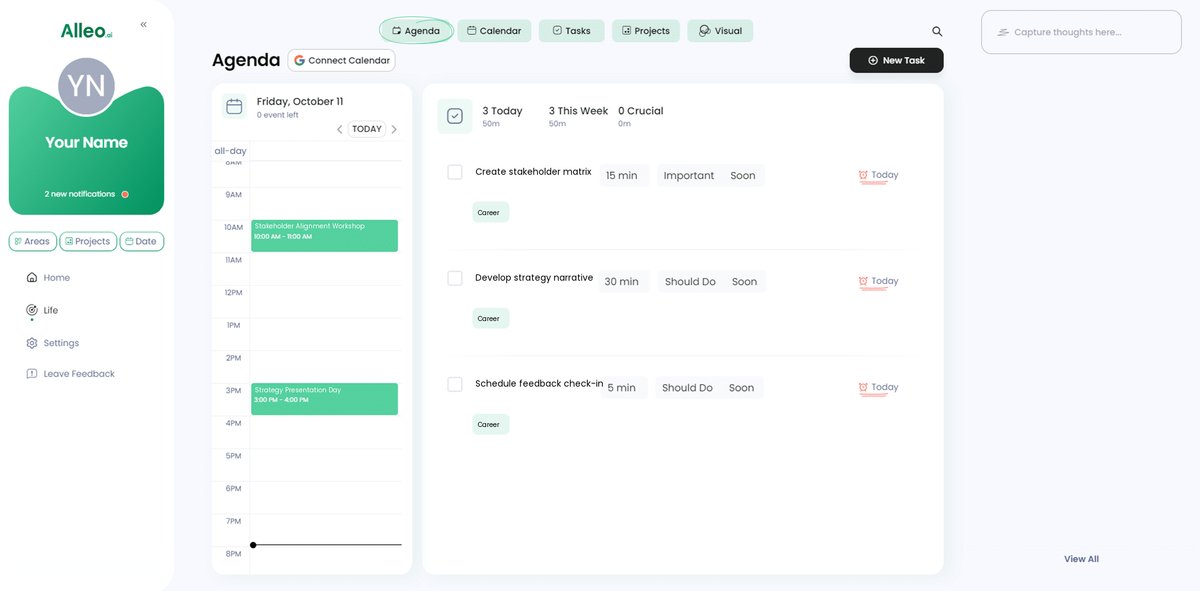
Step 6: Adding events to your calendar or app
Use Alleo’s calendar and task features to schedule and track your stakeholder meetings, strategy presentations, and feedback sessions, helping you stay organized and monitor your progress in aligning stakeholders for cohesive strategy presentations.
Wrapping Up and Taking Action
Addressing stakeholder alignment for strategy presentations can be daunting, but it’s achievable with the right approach. Remember, it’s all about understanding, mapping, and engaging effectively using strategic communication methods.
Empathize with your stakeholders’ challenges and priorities. Use the steps outlined to create a cohesive strategy that resonates with everyone involved, fostering cross-functional collaboration and consensus building in organizations.
You don’t have to do this alone when aligning stakeholders for strategy presentations.
Alleo can help simplify the process, from stakeholder mapping to narrative crafting and beyond, enhancing your executive presentation skills and persuasive storytelling for business.
Start your free 14-day trial with Alleo today. Take the first step towards seamless stakeholder alignment and successful strategy presentations, improving your corporate strategy development and leadership buy-in strategies.
Ready to transform your strategy presentations with effective stakeholder alignment techniques?
Let’s get started!