How to Convince Stakeholders to Implement UX Design Changes: A Revolutionary Approach
Are you struggling to convince stakeholders for UX changes? Implementing user-centered design approaches can be challenging when facing resistance from executive leadership.
As a life coach, I’ve helped many professionals navigate these challenges. In my experience, managing stakeholders effectively is crucial for success, especially when it comes to communicating the ROI of UX design improvements.
In this article, you’ll discover actionable strategies to manage stakeholders and advocate for UX design changes. We’ll explore demonstrating ROI, aligning UX goals with business objectives, and involving stakeholders in the design process. You’ll learn how to present user research data and leverage UX design case studies to quantify the impact of your proposed changes.
Let’s dive into these stakeholder buy-in techniques and address common UX design implementation challenges.

Understanding the Depth of Stakeholder Resistance
Resistance to change is a significant challenge when convincing stakeholders for UX changes. Many clients initially struggle with stakeholders who fear disruptions to established processes, making stakeholder communication strategies crucial.
This can derail timelines and compromise project outcomes, impacting the ROI of UX design improvements.
Budget constraints also pose a hurdle. Stakeholders often worry about the costs of UX changes, necessitating the presentation of user research data.
In reality, delaying these changes can be even more costly, as demonstrated by UX design case studies.
Differing priorities add another layer of complexity. UX designers and stakeholders may have conflicting views on project goals, making convincing executive leadership essential.
This misalignment can stifle innovation and create UX design implementation challenges.
Imagine a company facing pushback on a UX redesign. The result? Missed opportunities and diminished user satisfaction, highlighting the importance of a user-centered design approach.

Three Key Steps to Win Stakeholder Support for UX Design Changes
Convincing stakeholders for UX changes can be challenging. Overcoming this challenge requires a few key steps. Here are the main areas to focus on to make progress:
- Demonstrate ROI through Data-Driven Case Studies: Show stakeholders the financial benefits of UX improvements using real data and compelling UX design case studies. Quantifying UX design impact can help in convincing executive leadership.
- Align UX Goals with Business Objectives: Ensure your UX initiatives support the company’s strategic goals and use business language to communicate their value. This approach highlights UX design benefits for business and aids in stakeholder communication strategies.
- Involve Stakeholders in the Design Process: Engage stakeholders early and often to gather input and build buy-in throughout the design process. This user-centered design approach can help overcome UX design implementation challenges.
Let’s dive in!
1: Demonstrate ROI through data-driven case studies
Showing the financial benefits of UX improvements through data-driven case studies can help in convincing stakeholders for UX changes and win their support.
Actionable Steps:
- Collect Relevant Data: Gather data on user behavior and feedback using tools like heatmaps, session recordings, and surveys to support your user-centered design approach.
- Create Compelling Case Studies: Highlight the financial impact of past UX improvements with metrics such as conversion rates and error reduction, effectively quantifying UX design impact.
- Present Data to Stakeholders: Address stakeholders’ specific concerns and priorities with tailored presentations that use visual aids and storytelling techniques, employing effective stakeholder communication strategies.
Key benefits of data-driven case studies for convincing stakeholders for UX changes include:
- Tangible evidence of UX impact
- Increased credibility with stakeholders
- Clear connection to business goals, showcasing UX design benefits for business
Explanation: Demonstrating ROI with data-driven case studies is crucial for convincing stakeholders for UX changes. It shows the tangible benefits of UX improvements, making it easier to gain their support and overcome UX design implementation challenges.
For instance, showcasing metrics like conversion rates and error reduction can highlight the positive impact on the bottom line, effectively demonstrating the ROI of UX design improvements. According to GeeksforGeeks, measuring ROI in UX design is essential for justifying the investment.
By connecting these steps to business goals, you can effectively advocate for necessary UX changes and enhance stakeholder buy-in techniques.
These steps will set the stage for aligning UX goals with business objectives, which we’ll cover next.

2: Align UX goals with business objectives
Aligning UX goals with business objectives is essential for demonstrating the value of UX design changes to stakeholders and convincing stakeholders for UX changes.
Actionable Steps:
- Identify Business Objectives: Collaborate with stakeholders to understand their goals and priorities. Map out how UX improvements can directly support these objectives, highlighting UX design benefits for business.
- Develop a UX Strategy that Aligns with Business Goals: Create a UX roadmap that aligns with the company’s strategic plan. Prioritize UX initiatives that have the highest potential ROI of UX design improvements.
- Communicate the Value of UX in Business Terms: Use business language and metrics to explain the benefits of UX design changes. Highlight how improved user experiences can drive revenue growth, reduce costs, and enhance brand reputation, utilizing stakeholder communication strategies.
Explanation: Aligning UX goals with business objectives ensures that stakeholder concerns are addressed and that UX initiatives are seen as valuable investments, aiding in convincing stakeholders for UX changes.
By demonstrating how UX improvements can support business goals, you can gain stakeholder buy-in and drive successful project outcomes. This approach helps in quantifying UX design impact and overcoming UX design implementation challenges.
According to Smashing Magazine, aligning UX with business goals is crucial for connecting with stakeholders and presenting design concepts effectively, which is key to convincing stakeholders for UX changes.
These steps will help you involve stakeholders in the design process, which we’ll cover next.

3: Involve stakeholders in the design process
Involving stakeholders in the design process is crucial for convincing stakeholders for UX changes and ensuring their buy-in and support.
Actionable Steps:
- Engage Stakeholders Early and Often: Involve stakeholders in the initial research and discovery phases. Conduct workshops and brainstorming sessions to gather their input and ensure they feel valued in the user-centered design approach.
- Use Collaborative Tools and Techniques: Implement tools like collaborative design software to facilitate real-time feedback and address UX design implementation challenges. Schedule regular check-ins and progress updates to keep stakeholders informed and engaged.
- Demonstrate the UX Process: Share prototypes and usability testing results with stakeholders. Explain the rationale behind design decisions and how they address user needs and business goals, emphasizing UX design benefits for business.
Effective ways to involve stakeholders include:
- Regular design review meetings
- Interactive prototype demonstrations
- Collaborative problem-solving sessions
Explanation: Engaging stakeholders early and using collaborative tools helps ensure their concerns are addressed and builds their commitment to the project, which is essential for convincing stakeholders for UX changes.
Demonstrating the UX process with prototypes and usability tests can make the benefits of UX improvements more tangible. According to Smashing Magazine, involving stakeholders in the design process and showing the research behind design decisions increases credibility and support, aiding in stakeholder communication strategies.
Key outcomes of stakeholder involvement:
- Increased project ownership
- Better alignment with business needs
- Smoother implementation process
By involving stakeholders throughout the design process, you’ll pave the way for smoother implementations and more successful outcomes, ultimately convincing stakeholders for UX changes.

Partner with Alleo to Win Stakeholder Support
We’ve explored the challenges of convincing stakeholders for UX changes. Did you know you can work directly with Alleo to make this journey easier and faster, especially when it comes to communicating UX design benefits for business?
Step 1: Setting Up Your Account
Create your free 14-day trial account with Alleo. No credit card needed. This is your first step towards mastering stakeholder communication strategies for UX design implementation challenges.
Step 2: Personalized Coaching Plan
Work with Alleo’s AI coach to define clear, measurable goals for your UX initiatives. Tailor your plan to align with business objectives and learn effective techniques for convincing executive leadership about the ROI of UX design improvements.
Step 3: Ongoing Support and Accountability
Alleo’s coach will follow up on your progress in convincing stakeholders for UX changes. You’ll receive reminders and updates via text and push notifications.
Adjust strategies based on real-time feedback, incorporating user research data presentation and UX design case studies to strengthen your user-centered design approach.
Ready to get started for free? Let me show you how to begin quantifying UX design impact and mastering stakeholder buy-in techniques!
Step 1: Log In or Create Your Account
Log in to your existing Alleo account or create a new one to start your journey towards more effective UX design advocacy and stakeholder management.

Step 2: Choose Your UX Design Goal
Select “Setting and achieving personal or professional goals” to focus on your UX design objectives, helping you align your efforts with stakeholder expectations and business outcomes for successful implementation of UX changes.

Step 3: Select “Career” as Your Focus Area
Choose “Career” as your focus area in Alleo to align your UX design goals with your professional growth, helping you navigate stakeholder challenges and advance your UX initiatives more effectively.

Step 4: Starting a Coaching Session
Begin your journey with Alleo by scheduling an intake session, where you’ll discuss your UX goals and stakeholder challenges to create a personalized coaching plan that aligns with your business objectives.

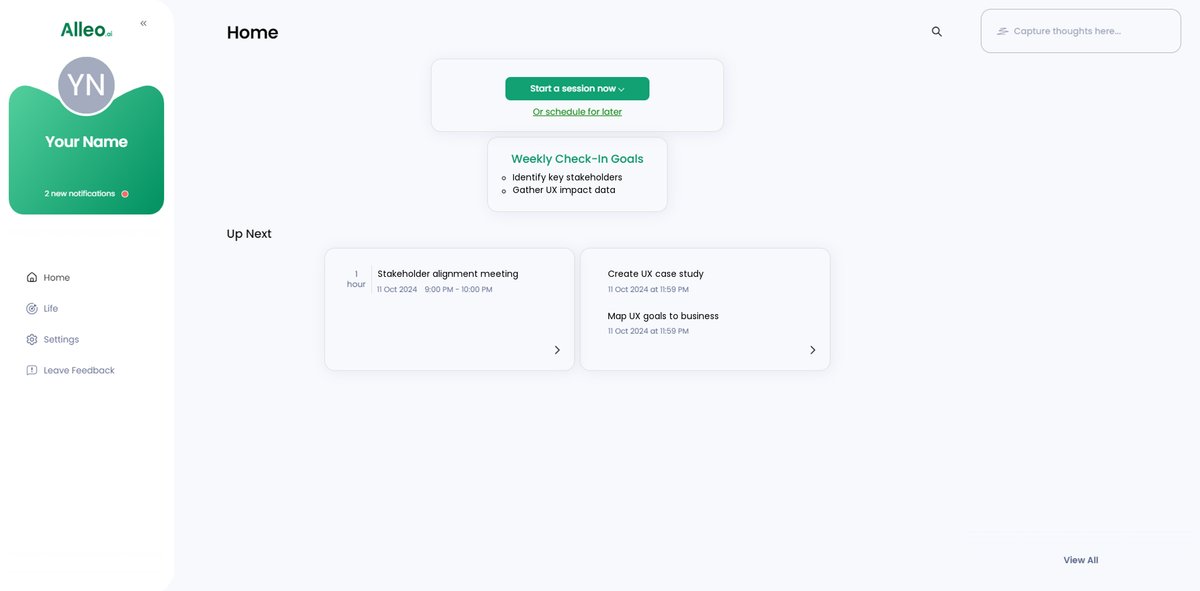
Step 5: Viewing and Managing Goals After the Session
After your coaching session, open the Alleo app to find your discussed UX design goals displayed on the home page, allowing you to easily track and manage your progress in winning stakeholder support.
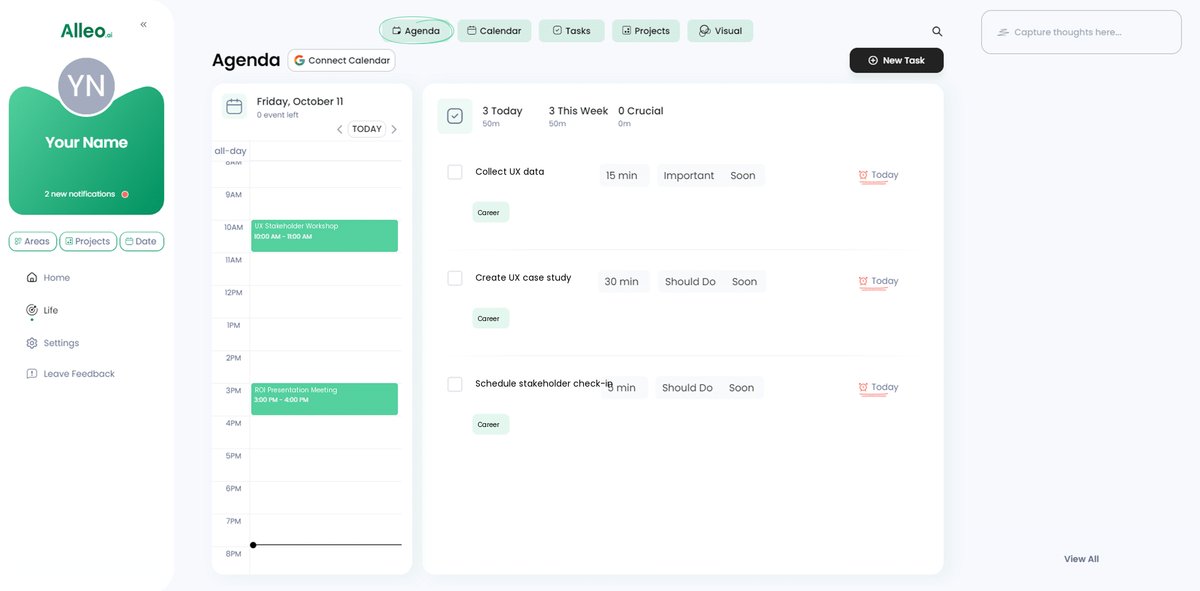
Step 6: Adding events to your calendar or app
Track your progress in winning stakeholder support by adding key milestones and meetings to the Alleo app’s calendar and task features, allowing you to stay organized and accountable throughout your UX design change implementation process.
Bringing It All Together
Convincing stakeholders for UX changes can seem daunting, but it’s achievable with the right strategies.
By demonstrating ROI of UX design improvements through data-driven case studies, you can clearly show the financial benefits of UX improvements. Aligning UX goals with business objectives ensures that your initiatives support the company’s strategic plan, highlighting UX design benefits for business.
Involving stakeholders in the user-centered design process fosters collaboration and buy-in, making them feel valued and heard. Remember, you don’t have to navigate this alone when convincing executive leadership.
Alleo is here to support you every step of the way. Try Alleo for free and transform your approach to stakeholder communication strategies and UX design implementation challenges.
Let’s make your UX vision a reality and start quantifying UX design impact.