How to Create a Balanced Weekly Schedule: A Guide for Busy Students
Imagine trying to juggle a career, family, and education all at once – sounds impossible, right? Not if you have the right strategy for balancing study, work, and family!
As a life coach, I’ve helped many students navigate these challenges. In my experience, balancing multiple commitments is entirely achievable with effective scheduling techniques and study-life balance tips.
In this article, you’ll discover actionable strategies to create a sustainable weekly schedule for balancing coursework and extracurriculars. We’ll cover prioritizing tasks for students, creating time blocks, and using student productivity hacks like the Pomodoro Technique.
Let’s dive into these academic planning strategies and time management for students.

Understanding the Struggle of Balancing Commitments
Let’s face it: balancing study, work and family is a massive challenge. Many clients initially struggle with feeling overwhelmed and missing deadlines when trying to maintain study-life balance.
This often leads to neglecting personal well-being and failing to implement effective scheduling techniques.
In my experience, poor time management for students is a common culprit. It can result in significant stress, decreased productivity, and eventual burnout.
Several clients report difficulty in maintaining a healthy balance between their responsibilities, including coursework and extracurriculars.
Additionally, when personal time and self-care are neglected, it becomes even harder to stay focused and motivated. This vicious cycle can be incredibly draining, highlighting the importance of stress reduction through organization.
But it doesn’t have to be this way. With the right strategies for balancing study, work and family, you can regain control and find balance using student productivity hacks and academic planning strategies.

Roadmap to a Balanced Weekly Schedule
Overcoming the challenge of balancing study, work, and family requires a few key steps. Here are the main areas to focus on to make progress in achieving effective study-life balance:
- Prioritize Tasks Using the 80/20 Rule: Focus on the most impactful tasks to maximize results, a crucial time management for students strategy.
- Create Time Blocks for Study, Work, and Self-Care: Structure your week with dedicated time for each activity, implementing effective scheduling techniques for balancing coursework and extracurriculars.
- Implement the Pomodoro Technique for Focus: Enhance focus and productivity by breaking study sessions into manageable intervals, one of the top student productivity hacks.
Let’s dive into these academic planning strategies for balancing study, work, and family!
1: Prioritize tasks using the 80/20 rule
Prioritizing tasks is crucial for managing your time effectively and avoiding burnout when balancing study, work, and family commitments.
Actionable Steps:
- List all tasks and responsibilities for the week, including academic planning strategies.
- Identify the top 20% of tasks that contribute to 80% of your results, a key aspect of time management for students.
- Allocate more time and resources to these high-impact tasks, enhancing your study-life balance.
Explanation: Using the 80/20 rule helps you focus on what truly matters, ensuring you make the most of your time. By concentrating on high-impact activities, you can significantly boost productivity and reduce stress, which is essential for balancing study, work, and family responsibilities.
This approach is supported by the Pareto Principle, which states that 80% of the output comes from 20% of the input.
Key benefits of the 80/20 rule include:
- Increased efficiency in task completion, a crucial student productivity hack
- Better time management and reduced stress through effective scheduling techniques
- Improved focus on high-value activities, aiding in balancing coursework and extracurriculars
These steps will set the foundation for a more balanced and productive schedule, helping you master the art of balancing study, work, and family commitments.
2: Create time blocks for study, work, and self-care
Creating dedicated time blocks for study, work, and self-care is vital for balancing study, work, and family in a weekly schedule.
Actionable Steps:
- Use a planner or digital calendar to block out specific times for study, work, and self-care, implementing effective scheduling techniques.
- Allocate fixed time blocks for study sessions and work hours, ensuring no overlap and improving student productivity.
- Schedule regular breaks, exercise, and leisure activities to maintain study-life balance.
Explanation: Establishing structured time blocks helps maintain a balanced approach to your responsibilities. This method ensures that each activity gets dedicated attention, preventing burnout and aiding in balancing coursework and extracurriculars.
According to Use Motion, consistent routines enhance productivity and improve overall well-being.
This approach will help you stay organized and maintain a healthy balance between commitments, serving as one of the key time management strategies for students.
3: Implement the Pomodoro Technique for focus
The Pomodoro Technique is a proven method to enhance focus and productivity by breaking study sessions into manageable intervals, helping students in balancing study, work and family commitments.
Actionable Steps:
- Divide study sessions into 25-minute intervals, followed by 5-minute breaks, a key time management for students strategy.
- Create a distraction-free study environment by turning off notifications and using focus apps, enhancing study-life balance.
- Reflect on the effectiveness of the Pomodoro Technique weekly and make necessary adjustments to your academic planning strategies.
Explanation: Implementing the Pomodoro Technique helps maintain concentration and prevents burnout. Regular breaks between study intervals boost motivation and productivity, essential for balancing coursework and extracurriculars.
According to UF Online, structured study sessions like Pomodoro can significantly improve time management. This approach is essential for maintaining a balanced weekly schedule while balancing study, work and family.
To maximize the benefits of the Pomodoro Technique:
- Use a timer to track your intervals accurately, a simple yet effective student productivity hack
- Reward yourself after completing a set of Pomodoros, aiding in stress reduction through organization
- Gradually increase focus time as your concentration improves, an effective scheduling technique
You’ll find these steps make staying focused easier and more effective, contributing to better study-life balance.
Partner with Alleo for a Balanced Schedule
We’ve explored how to balance a busy schedule, including balancing study, work, and family commitments, but did you know Alleo can make it even easier? Sign up for Alleo’s free 14-day trial to discover effective scheduling techniques. No credit card required.
Alleo’s AI life coach helps you create a personalized plan for balancing study, work, and family. It keeps you accountable via text and push notifications, offering student productivity hacks and time management for students.
Ready to get started for free and improve your study-life balance? Let me show you how Alleo can enhance your academic planning strategies!
Step 1: Log In or Create Your Account
To start balancing your career, family, and education with our AI coach, log in to your account or create a new one to begin your 14-day free trial and access personalized scheduling assistance.

Step 2: Choose “Building better habits and routines”
Click on “Building better habits and routines” to start creating a structured weekly schedule that balances your career, family, and education commitments, helping you overcome overwhelm and boost productivity.

Step 3: Select “Career” as Your Focus Area
Choose “Career” as your focus area to align your goals with the strategies for balancing work, education, and personal life discussed in the article, enabling you to optimize your professional growth while maintaining overall life balance.

Step 4: Starting a coaching session
Begin your Alleo journey with an initial intake session, where you’ll discuss your goals and challenges, allowing the AI coach to create a personalized plan tailored to your busy lifestyle.

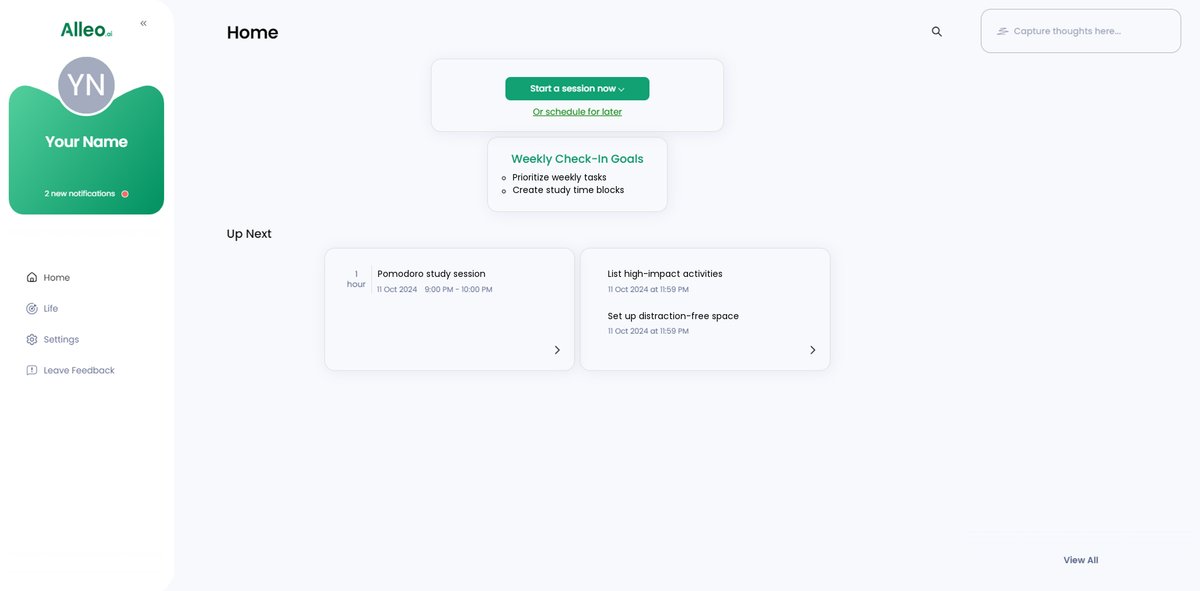
Step 5: Viewing and Managing Goals After the Session
After your coaching session, easily access and track your progress by checking the goals discussed, which will be conveniently displayed on the home page of the Alleo app, allowing you to stay focused on balancing your career, family, and education commitments.
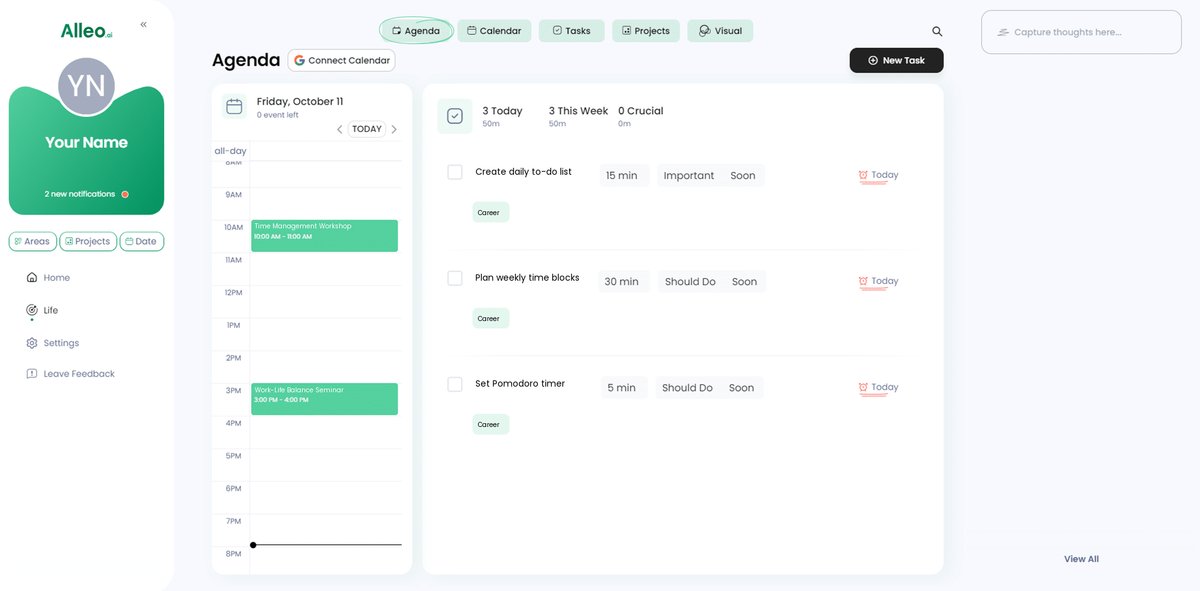
Step 6: Adding events to your calendar or app
Use the app’s calendar feature to add your study blocks, work hours, and self-care activities, allowing you to easily visualize your schedule and track your progress in balancing your commitments.
Bring Balance to Your Busy Life
As we’ve explored the strategies, you can see balancing study, work, and family commitments is achievable.
By prioritizing tasks for students, creating structured time blocks, and using the Pomodoro Technique, you’re setting yourself up for success in time management for students.
Remember, you’re not alone in this journey of balancing coursework and extracurriculars.
Regaining control over your schedule can transform your life and improve your study-life balance.
Finally, partner with Alleo to make this process of balancing study, work, and family even smoother.
With regular reminders and personalized academic planning strategies, Alleo can help you stay on track.
So, take the first step towards a balanced life and effective scheduling techniques.
Sign up for Alleo’s free 14-day trial today and see the difference it makes in your student productivity!