How to Effectively Lead Remote Teams: 3 Essential Steps for New Managers
Imagine navigating a ship through uncharted waters with a crew you’ve never met in person. Sounds challenging, right? That’s the reality for many tech managers leading remote teams effectively for the first time. Virtual leadership skills are put to the test in this new landscape.
As a life coach, I’ve helped many professionals navigate these work-from-home leadership challenges. In my experience, the transition to remote team management can be daunting but manageable with the right strategies.
In this article, you’ll discover proven strategies to effectively lead remote teams. We’ll cover clear communication tools for remote teams, regular one-on-one check-ins for remote employee engagement, and results-based management to boost remote team productivity. These tips will help in building trust in virtual teams and enhancing overall performance.
Let’s dive in to explore essential remote team management strategies.

Understanding the Unique Challenges of Remote Team Leadership
Transitioning to leading remote teams effectively presents unique challenges. Many tech managers initially struggle to maintain team cohesion and ensure clear communication in virtual leadership.
Without face-to-face interactions, it becomes harder to gauge team morale and address issues promptly, which is crucial for remote employee engagement.
In my experience, managing productivity from afar is a common hurdle in remote team management strategies. Remote work often leads to information overload and feelings of isolation among team members, affecting remote team productivity.
These issues, if unaddressed, can significantly decrease employee engagement and productivity in work-from-home leadership scenarios.
It’s crucial to recognize these pain points early on. By understanding and anticipating these challenges, you can develop strategies to effectively lead your remote team and enhance virtual leadership skills.

Key Steps to Master Remote Team Leadership
Leading remote teams effectively requires overcoming unique challenges. Here are the main areas to focus on to make progress in remote team management strategies:
- Establish clear communication channels and norms: Use standard communication tools for remote teams like Slack or Zoom and set virtual leadership guidelines.
- Schedule regular one-on-one check-ins: Consistent meetings help maintain connection and address individual needs, improving remote employee engagement.
- Foster trust through results-based management: Focus on measurable goals and provide constructive feedback, essential for building trust in virtual teams and remote performance management.
Let’s dive into these key steps for leading remote teams effectively!
1: Establish clear communication channels and norms
Effective communication is crucial for leading remote teams effectively and ensuring everyone stays aligned and productive.
Actionable Steps:
- Standardize communication tools: Choose and implement tools like Slack, Microsoft Teams, or Zoom for remote team management strategies.
- Set communication guidelines: Draft and share a document detailing acceptable practices, including response times and meeting etiquette, to enhance virtual leadership skills.
- Create a central information repository: Use platforms like SharePoint or Google Docs to store and organize essential documents for easy team access, improving remote team productivity.
Explanation: Establishing clear communication channels and norms helps maintain clarity and prevent miscommunication. This approach ensures everyone knows where and how to communicate, which is crucial in leading remote teams effectively.
According to LifeLabs Learning, clear communication is essential for managing hybrid teams effectively, including setting guidelines for communication tools for remote teams and creating a central repository for information.
These steps lay a strong foundation for seamless communication, aiding in better collaboration and productivity among team members. Key benefits of clear communication norms include:
- Reduced misunderstandings and conflicts
- Increased team cohesion and trust in virtual teams
- Improved overall productivity and efficiency in remote team management
2: Schedule regular one-on-one check-ins
Regular one-on-one check-ins are crucial for leading remote teams effectively and addressing individual needs in virtual work environments.
Actionable Steps:
- Set up recurring meetings: Use communication tools for remote teams like Google Calendar to establish regular one-on-one meetings with each team member.
- Prepare personalized agendas: Tailor each meeting agenda to focus on the individual’s progress, challenges, and goals, enhancing remote performance management.
- Follow up on action items: After each check-in, summarize key takeaways and action items, and send a follow-up email to boost remote employee engagement.
Explanation: These remote team management strategies ensure consistent communication and personalized support, which can significantly boost team morale and productivity in virtual environments.
According to Robert Half, regular and informative communication is crucial for managing remote teams effectively and maintaining engagement.
Implementing these practices will help you build stronger relationships with your team members and keep everyone aligned on goals and expectations, addressing work-from-home leadership challenges and leading remote teams effectively.

3: Foster trust through results-based management
Fostering trust through results-based management is crucial for leading remote teams effectively and boosting productivity.
Actionable Steps:
- Set clear, measurable goals: Collaborate with your remote team to establish specific, measurable, achievable, relevant, and time-bound (SMART) goals. Use communication tools for remote teams like Asana or Trello to track progress.
- Give regular, constructive feedback: Provide timely, outcomes-focused feedback during virtual team meetings and individual check-ins. This approach helps maintain focus on results rather than processes, enhancing remote team management strategies.
- Recognize and reward achievements: Acknowledge team members’ accomplishments publicly through virtual meetings or team communication channels. This practice boosts remote employee engagement and morale.
Explanation: These steps are essential in building trust in virtual teams and maintaining high performance within remote teams.
According to SHRM, measuring outcomes over outputs is crucial for maintaining productivity in hybrid work environments. This approach encourages a results-oriented mindset and fosters a culture of trust and accountability, which is vital for leading remote teams effectively.
Implementing these strategies will help you develop virtual leadership skills, focusing on outcomes and building strong, trust-based relationships.
Key components of successful results-based management include:
- Empowering team members to take ownership of their work
- Providing autonomy in how tasks are accomplished
- Celebrating both individual and team successes regularly

Enhance Your Remote Leadership with Alleo
We’ve explored the challenges of leading remote teams effectively, the benefits of overcoming them, and the steps to achieve success. Did you know you can work directly with Alleo to make this journey easier and faster?
Alleo is an AI life coach and organizer designed to help managers like you improve their virtual leadership skills. It supports goal setting, decision-making, and planning schedules, ensuring you stay on track with remote team management strategies.
With Alleo, you’ll receive personalized coaching sessions and tailored advice to address your unique remote employee engagement challenges.
To get started, sign up for Alleo and create a personalized plan that fits your needs. The AI coach will help you set SMART goals and track your progress in leading remote teams effectively.
Alleo will follow up on your progress, handle changes, and keep you accountable via text and push notifications, enhancing your remote performance management.
Alleo’s scheduling features ensure you never miss a one-on-one check-in or follow-up, crucial for time zone management for global teams. Plus, it provides tailored advice to foster trust and communication within your virtual team.
Ready to get started for free? Try Alleo with a 14-day trial, no credit card required, and boost your remote team productivity.
Let me show you how!
Step 1: Log In or Create Your Account
To begin your journey with Alleo, Log in to your account or create a new one to access personalized coaching and team management tools tailored for remote leadership.

Step 2: Choose Your Remote Leadership Focus
Select “Setting and achieving personal or professional goals” to address your remote team leadership challenges. This focus will help you develop clear objectives for improving communication, conducting effective check-ins, and implementing results-based management strategies discussed in the article.

Step 3: Select “Career” as Your Focus Area
Choose “Career” as your focus area in Alleo to receive tailored guidance on improving your remote leadership skills, helping you navigate the challenges of managing a distributed team more effectively.

Step 4: Starting a coaching session
Begin your Alleo journey with an intake session, where you’ll set up your personalized plan for effective remote team leadership and define your goals for future coaching sessions.

Step 5: Viewing and managing goals after the session
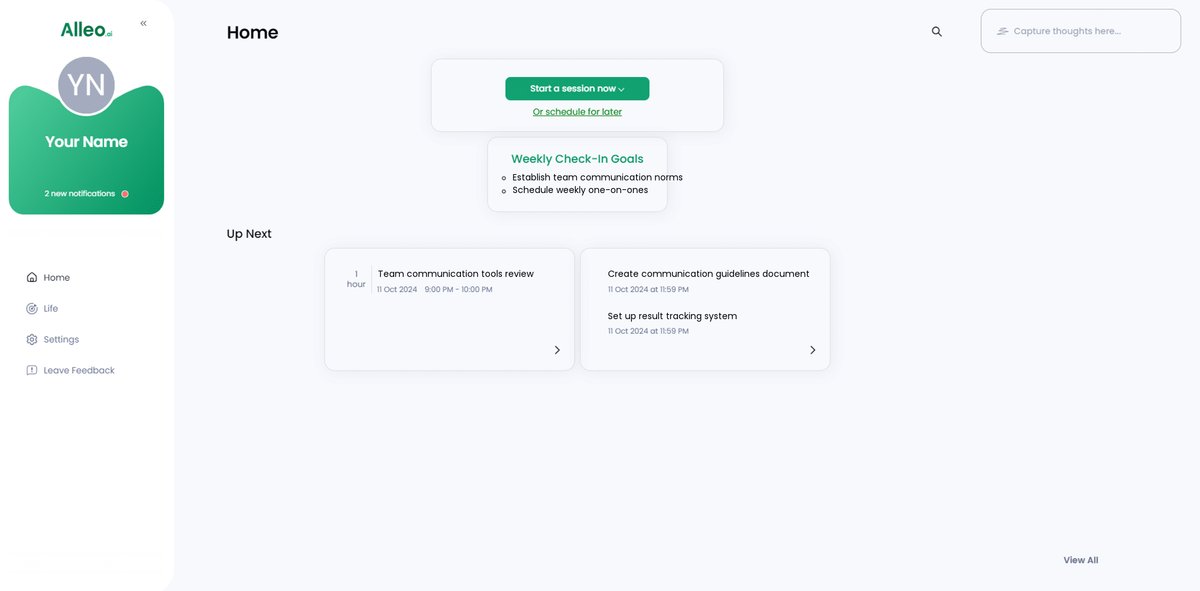
After your coaching session, open the Alleo app to find your discussed goals displayed on the home page, where you can easily track and manage your progress towards effective remote team leadership.
Step 6: Adding events to your calendar or app
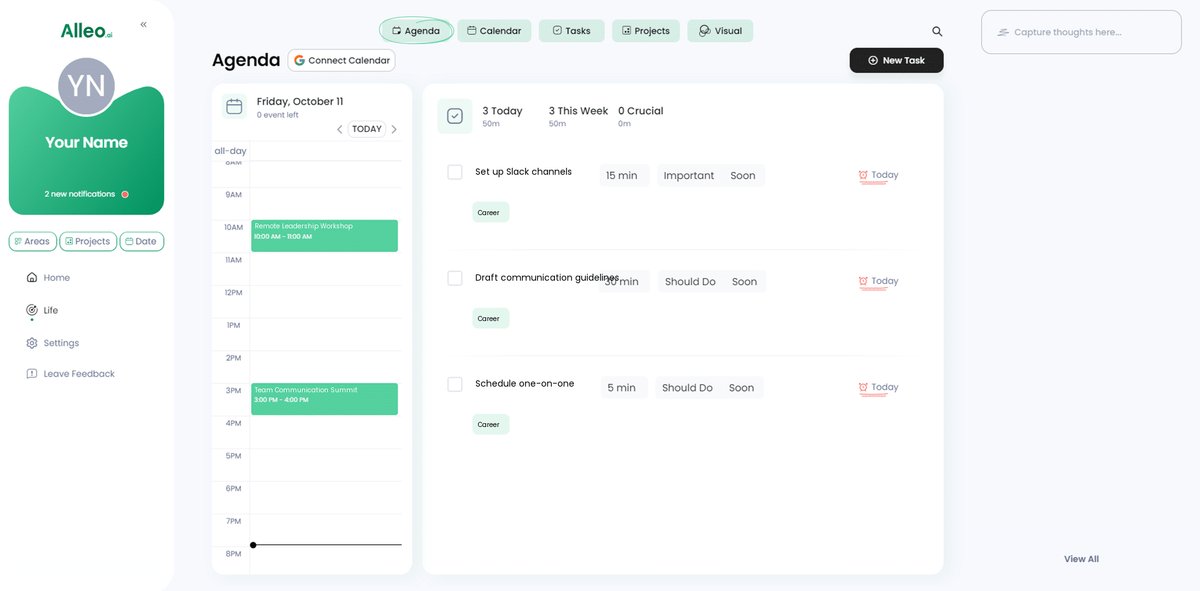
Use Alleo’s calendar and task features to easily add and track events related to your remote leadership goals, such as one-on-one check-ins and team meetings, allowing you to monitor your progress in solving communication and management challenges.
Wrapping Up: Your Path to Effective Remote Leadership
Leading remote teams effectively can feel like navigating uncharted waters. But you’re not alone.
By establishing clear communication tools for remote teams, scheduling regular check-ins, and focusing on remote performance management, you can overcome these work-from-home leadership challenges. Remember, building trust in virtual teams and maintaining connection are key to remote team management strategies.
Take it step by step. Implement these virtual leadership skills, and you’ll see a significant improvement in your remote team productivity and morale.
You’ve got this.
For extra support in leading remote teams effectively, consider using Alleo. It can make your journey smoother and more efficient.
Try Alleo for free today. Transform your remote leadership skills and lead your virtual team to success.