How to Give Upward Feedback Safely as a Remote Employee: 4 Fundamental Principles
Have you ever hesitated to give upward feedback remotely, fearing it might backfire?
For remote workers, providing upward feedback is particularly challenging due to the fear of retaliation and lack of personal connection in virtual team collaboration.
As a life coach, I’ve helped many professionals navigate these challenges in remote workplace communication. In my experience, creating a safe environment for feedback is crucial for professional growth in remote settings.
In this article, you’ll discover strategies for giving upward feedback remotely and safely. We’ll cover anonymous feedback channels, constructive feedback strategies, regular check-ins, and trust-building to enhance employee empowerment and effective manager-employee relationships.
Let’s dive into improving remote work culture and performance evaluation in remote teams.

The Challenges of Providing Upward Feedback as a Remote Employee
In remote work settings, many professionals fear retaliation when giving upward feedback remotely to their managers. This fear can significantly impact their willingness to speak up, affecting remote workplace communication.
The imbalance in accountability systems is stark. While managers regularly hold their teams accountable, remote workers often lack similar mechanisms to address concerns, hindering effective manager-employee relationships.
I often see clients struggle with this lack of personal connection, making it harder to build trust in virtual team collaboration. This issue is widespread and affects both employee morale and organizational transparency in the remote work culture.
Additionally, several clients report feeling isolated and undervalued. The absence of regular face-to-face interactions exacerbates these feelings, impacting professional growth in remote settings.
Ultimately, the pain is real. Addressing these challenges is crucial for fostering a healthy and productive work environment, emphasizing the importance of psychological safety in virtual environments.
Four Key Steps to Safely Provide Upward Feedback as a Remote Employee
Overcoming the challenge of giving upward feedback remotely requires a few key steps. Here are the main areas to focus on to make progress in remote workplace communication:
- Use anonymous feedback channels: Implement digital feedback tools for anonymous feedback to ensure honest responses and foster psychological safety in virtual environments.
- Practice constructive feedback strategies: Learn and apply feedback models for clear and effective communication, enhancing professional growth in remote settings.
- Schedule regular virtual check-ins: Set up consistent one-on-one meetings to maintain open communication and support effective manager-employee relationships in remote work culture.
- Build trust through informal interactions: Engage in casual conversations and virtual team collaboration activities to foster trust and employee empowerment.
Let’s dive into these strategies for giving upward feedback remotely and improving performance evaluation in remote teams!
1: Use anonymous feedback channels
Using anonymous feedback channels is crucial for fostering open communication without fear of retaliation when giving upward feedback remotely.
Actionable Steps:
- Implement anonymous feedback tools. Utilize digital feedback tools like SurveyMonkey or Google Forms to collect anonymous feedback on specific issues in remote workplace communication.
- Establish a regular cadence for anonymous surveys. Schedule monthly anonymous surveys to ensure continuous and timely feedback, promoting professional growth in remote settings.
- Analyze and act on feedback. Create a feedback loop by sharing aggregated results with the team and outlining actionable steps taken based on the feedback, enhancing virtual team collaboration.
Explanation:
Anonymous feedback channels help ensure that employees can voice concerns without fear of backlash when giving upward feedback remotely. Regularly collecting and acting on this feedback can improve trust and transparency within the team, fostering effective manager-employee relationships.
According to Deel, effective feedback systems are essential for maintaining communication and engagement, especially in remote work environments.
Key benefits of anonymous feedback channels for giving upward feedback remotely include:
- Increased honesty in responses
- Reduced fear of repercussions
- Better identification of systemic issues in remote work culture
These steps pave the way for a more trusting and open workplace culture, enhancing psychological safety in virtual environments.
2: Practice constructive communication techniques
Mastering constructive communication techniques is essential for giving upward feedback remotely without causing misunderstandings in the remote workplace.
Actionable Steps:
- Attend feedback workshops. Enroll in online courses or workshops that teach feedback models like SBI (Situation-Behavior-Impact) for clear communication in virtual team collaboration.
- Practice role-playing. Pair up with a colleague to rehearse feedback scenarios using role-play exercises to build confidence in remote workplace communication.
- Prepare specific examples. Use detailed and specific examples when giving upward feedback remotely to ensure clarity and relevance in performance evaluation for remote teams.
Explanation:
Using constructive feedback strategies helps in delivering feedback that is clear, specific, and actionable. This approach reduces the risk of miscommunication and enhances trust between remote employees and their managers, fostering effective manager-employee relationships.
According to Radical Candor, role-playing feedback scenarios can make the process more engaging and effective. These steps are crucial for fostering a transparent and supportive remote work culture.
By mastering these techniques, you can confidently provide feedback that leads to positive changes and contributes to professional growth in remote settings.

3: Schedule regular virtual check-ins
Scheduling regular virtual check-ins is vital for maintaining open communication and building trust in remote work settings, especially when giving upward feedback remotely.
Actionable Steps:
- Set up bi-weekly one-on-one meetings. Use digital feedback tools like Google Calendar or Outlook to consistently schedule check-ins for remote workplace communication.
- Prepare an agenda for each meeting. Draft a concise agenda highlighting key points, including constructive feedback strategies, before each check-in.
- Use video conferencing for a personal touch. Opt for video calls over emails or chats to foster a more personal connection and enhance virtual team collaboration.
Explanation:
Regular virtual check-ins help ensure ongoing communication and prevent misunderstandings in remote work culture. These meetings provide structured opportunities to discuss feedback and build stronger manager-employee relationships in remote settings.
According to Harvard Business Review, virtual check-ins are crucial for maintaining engagement and clarity in remote teams, supporting professional growth in remote settings.
Essential components of effective virtual check-ins for giving upward feedback remotely:
- Clear agenda and objectives for performance evaluation in remote teams
- Active listening and engagement to promote employee empowerment
- Follow-up actions and accountability to foster psychological safety in virtual environments
By incorporating these steps, you can create a more cohesive and transparent work environment for giving upward feedback remotely.

Partner with Alleo to Give Upward Feedback Safely
We’ve explored the challenges of giving upward feedback remotely as a remote employee, how solving them can benefit your career, and the steps to achieve it. But did you know you can work directly with Alleo to make this journey easier and faster in the remote workplace?
Alleo’s AI-driven tools can create and manage anonymous surveys, ensuring your feedback is heard without fear of retaliation, promoting psychological safety in virtual environments. Use Alleo to organize your calendar and prepare agendas for regular virtual check-ins, ensuring you make the most of each meeting and enhance virtual team collaboration.
Alleo also offers personalized coaching sessions to hone your constructive feedback strategies and provides templates for effective manager-employee relationships. Additionally, Alleo suggests personalized activities and reminders to help you engage in informal interactions and build stronger relationships with your manager, fostering a positive remote work culture.
Ready to get started for free and boost your professional growth in remote settings? Let me show you how!
Step 1: Log In or Create Your Account
To start your journey towards safe upward feedback, log in to your Alleo account or create a new one if you haven’t already.

Step 2: Choose “Building better habits and routines”
Select “Building better habits and routines” to develop consistent practices for providing upward feedback, such as scheduling regular check-ins and engaging in informal interactions, which will help you overcome the challenges of giving feedback as a remote employee.

Step 3: Select “Career” as Your Focus Area
Choose “Career” as your focus area to address challenges in giving upward feedback, improving communication with your manager, and fostering a more transparent remote work environment.

Step 4: Starting a coaching session
Begin your journey with Alleo by scheduling an initial intake session, where you’ll discuss your upward feedback goals and create a personalized plan to improve your communication with managers in your remote work environment.

Step 5: Viewing and managing goals after the session
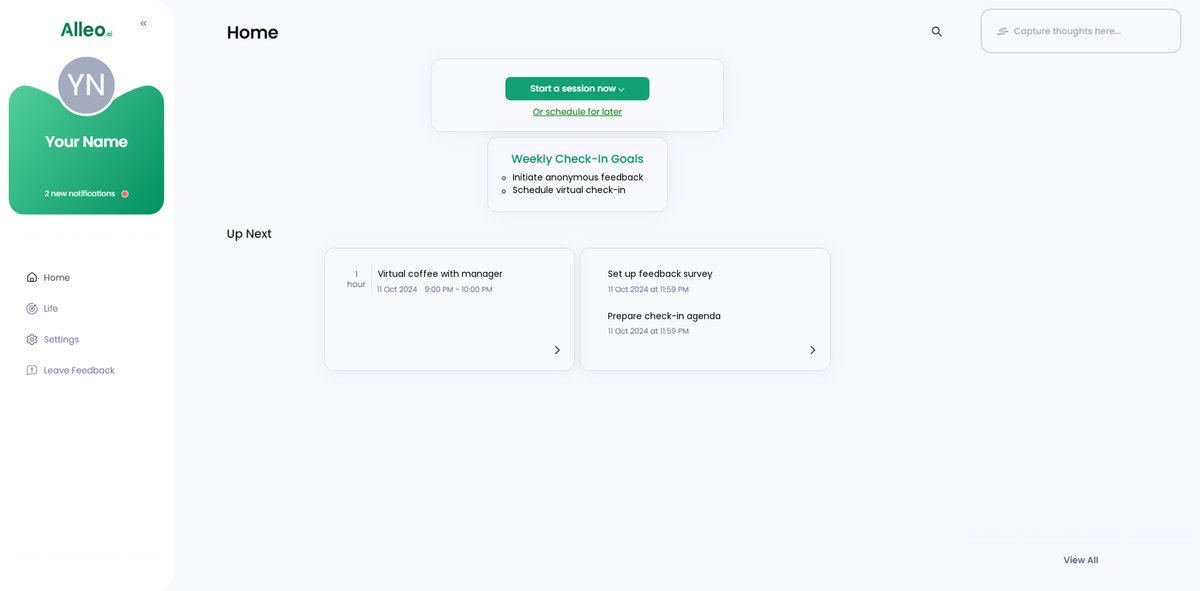
After your coaching session on providing upward feedback, check the Alleo app’s home page to view and manage the goals you discussed, helping you track your progress in implementing the feedback strategies.
Step 6: Adding events to your calendar or app
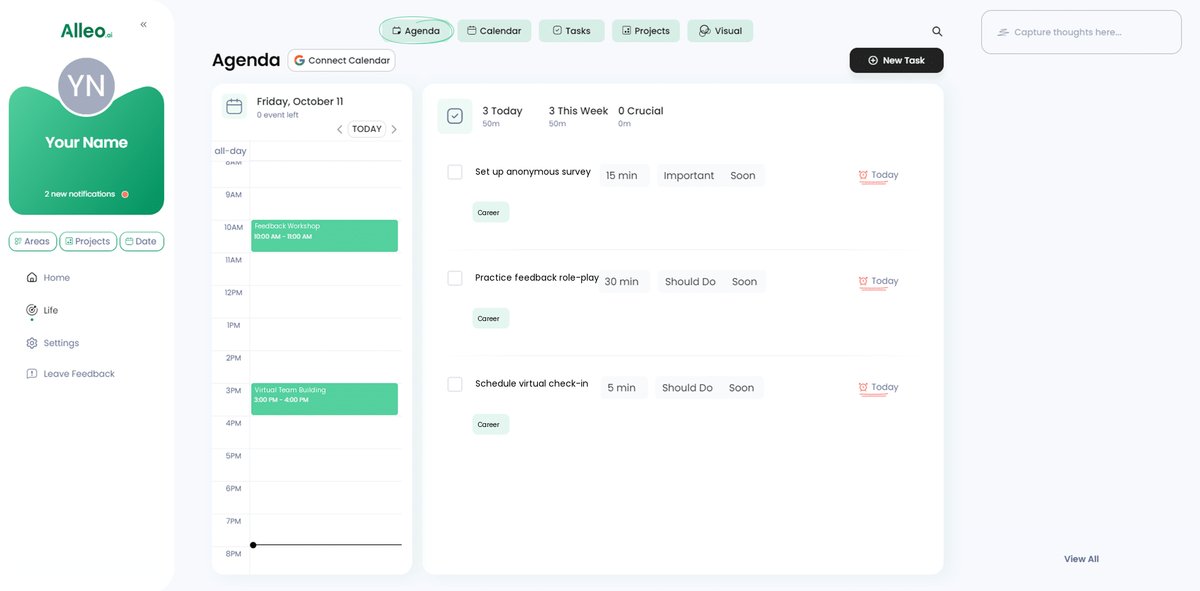
Use Alleo’s calendar integration to schedule virtual check-ins, feedback sessions, and informal interactions, allowing you to track your progress in building stronger communication with your manager and solving your upward feedback challenges.
Empowering Your Upward Feedback Journey
These strategies will help you in giving upward feedback remotely safely as a remote employee. It’s not always easy, but it’s crucial for professional growth in remote settings.
By using anonymous feedback channels, you can voice concerns without fear, enhancing psychological safety in virtual environments. Practicing constructive feedback strategies ensures your feedback is clear and effective in remote workplace communication.
Regular virtual check-ins keep communication lines open, fostering virtual team collaboration. Building trust through informal interactions makes your feedback more impactful, improving manager-employee relationships in a remote work culture.
Remember, you’re not alone in this journey of employee empowerment.
Using Alleo’s digital feedback tools can make the process of giving upward feedback remotely smoother and more efficient.
Don’t hesitate to take the first step. Try Alleo for free and start transforming your feedback experience in remote teams today.