How to Overcome Imposter Syndrome as a Professional: 6 Fundamental Principles for Success
Are you ever on stage, delivering a powerful speech, and suddenly think, “Do I deserve to be here?” This is a common symptom of imposter syndrome in the workplace.
As a life coach, I’ve helped many professionals navigate these challenges. In my experience, public speakers often struggle with professional self-doubt and imposter syndrome. Overcoming imposter syndrome for professionals is crucial for career development and personal growth.
In this article, you’ll discover actionable strategies to overcome imposter syndrome and boost your confidence as a public speaker. We’ll explore techniques like reframing negative thoughts, seeking mentorship, and celebrating achievements. These coping strategies for imposter syndrome can help in building confidence at work and overcoming self-doubt in your career.
Let’s dive in and explore how successful professionals with imposter syndrome have managed to overcome performance anxiety and boost their professional self-esteem.

Understanding the Depth of Imposter Syndrome
Let’s consider the statistics: imposter syndrome impacts up to 70% of people at some point in their lives. In my work, I often hear from speakers who feel paralyzed by self-doubt right before they step on stage, a common symptom of imposter syndrome in the workplace.
Many professionals, despite their achievements, struggle with feeling like frauds. This professional self-doubt can hinder career development and affect personal well-being. Overcoming imposter syndrome for professionals is essential for long-term success.
Imagine the stress of constantly fearing exposure as an impostor every time you speak publicly, a classic example of performance anxiety related to imposter syndrome.
I’ve seen clients who initially couldn’t enjoy their successes due to imposter syndrome. They felt they didn’t deserve their accolades, which stunted their professional development. Even successful professionals with imposter syndrome face these challenges.
Overcoming these feelings is crucial for thriving in your career and maintaining mental health. Building confidence at work and developing coping strategies for imposter syndrome are key to overcoming self-doubt in career paths.

A Roadmap to Overcoming Imposter Syndrome
Overcoming imposter syndrome for professionals requires a few key steps. Here are the main areas to focus on to make progress in coping with professional self-doubt.
- Recognize and acknowledge your imposter feelings: Identify and accept your self-doubt in the workplace.
- Reframe negative thoughts with positive self-talk: Challenge and change your negative beliefs to build confidence at work.
- Focus on your unique strengths and experiences: Highlight your unique skills and achievements to overcome self-doubt in your career.
- Seek mentorship from experienced public speakers: Find guidance and support from mentors who have successfully navigated imposter syndrome in their professional lives.
- Track and celebrate your speaking achievements: Document and celebrate every success as part of your career development strategy.
- Practice self-compassion after challenging talks: Be kind to yourself and reflect on your growth, using techniques to boost professional self-esteem.
Let’s dive in to explore these coping strategies for imposter syndrome!
1: Recognize and acknowledge your imposter feelings
Recognizing and acknowledging your imposter feelings is essential in your journey to overcoming imposter syndrome for professionals and addressing self-doubt in your career.
Actionable Steps:
- Document your self-doubt in a journal: Write down instances when you feel like an imposter to identify patterns and recognize imposter syndrome symptoms.
- Share your feelings with a trusted friend: Discussing your thoughts with someone can offer a fresh perspective on coping strategies for imposter syndrome.
- Attend a workshop on imposter syndrome: Learn about its causes and effects to better understand your feelings and how it impacts career development and imposter syndrome.
Explanation: Recognizing and acknowledging your imposter feelings is the first step to overcoming imposter syndrome for professionals.
By documenting your self-doubt and sharing your feelings, you can start to see that you are not alone in experiencing imposter syndrome in the workplace.
Engaging in workshops provides deeper insights and strategies, helping you tackle imposter syndrome effectively and build confidence at work.
Key benefits of recognizing imposter feelings:
- Increased self-awareness
- Reduced isolation
- Better understanding of your thought patterns related to professional self-doubt
Transitioning to reframing your negative thoughts can further empower you in your professional journey and help in overcoming self-doubt in your career.

2: Reframe negative thoughts with positive self-talk
Reframing negative thoughts with positive self-talk is crucial for overcoming imposter syndrome for professionals and building confidence as a public speaker.
Actionable Steps:
- Create a list of positive affirmations: Write down statements that counteract your professional self-doubt and recite them daily to combat imposter syndrome in the workplace.
- Practice cognitive-behavioral techniques: Challenge and change your negative beliefs by questioning their validity and replacing them with positive ones, helping in building confidence at work.
- Incorporate mindfulness exercises: Use techniques like deep breathing or meditation to maintain a positive mindset before and after speaking engagements, aiding in coping strategies for imposter syndrome.
Explanation: Reframing negative thoughts helps you break the cycle of self-doubt and fosters a more positive self-image, essential for overcoming self-doubt in career.
According to Coursera, these steps can significantly impact your mental well-being and professional growth, even for successful professionals with imposter syndrome.
By consistently practicing positive self-talk, you’ll start to internalize your capabilities and achievements, which is crucial for career development and imposter syndrome management.
Transitioning to focusing on your unique strengths and experiences can further solidify your confidence and help in recognizing imposter syndrome symptoms.

3: Focus on your unique strengths and experiences
To overcome imposter syndrome for professionals, it’s crucial to focus on your unique strengths and experiences.
Actionable Steps:
- Conduct a strengths assessment: Identify your unique skills and qualities through a formal assessment or self-reflection to combat professional self-doubt.
- Reflect on past successes: Write down specific examples of your accomplishments and the impact they had, which can help in overcoming self-doubt in your career.
- Create a personal brand statement: Highlight your unique contributions and strengths as a speaker in a concise statement, aiding in building confidence at work.
Explanation: Focusing on your strengths helps build confidence and reinforces your value as a speaker. By conducting a strengths assessment and reflecting on past successes, you can better understand and appreciate your abilities, which is crucial for overcoming imposter syndrome in the workplace.
Creating a personal brand statement makes it easier to communicate your value to others. According to Career Village, these steps can significantly enhance your professional growth.
This approach will help you recognize your worth and move past self-doubt, setting the stage for further development and providing coping strategies for imposter syndrome.

4: Seek mentorship from experienced public speakers
Seeking mentorship from experienced public speakers can greatly help in overcoming imposter syndrome for professionals, particularly when dealing with imposter syndrome in the workplace.
Actionable Steps:
- Join a professional speakers’ association: Connect with seasoned speakers who can offer valuable insights and guidance for building confidence at work.
- Schedule regular meetings with a mentor: Discuss your progress and challenges to gain targeted advice and support for overcoming self-doubt in your career.
- Participate in a peer mentorship program: Provide and receive support from peers, fostering mutual growth and addressing professional self-doubt.
Explanation: Seeking mentorship is vital for gaining perspective and advice from those who have navigated similar challenges. Engaging with mentors can boost your confidence and provide coping strategies for imposter syndrome.
According to Asana, mentorship can significantly enhance professional growth and reduce feelings of inadequacy.
Benefits of mentorship in public speaking:
- Personalized feedback on your speaking style
- Insider tips for managing stage fright and performance anxiety
- Networking opportunities within the industry
These steps will help you build a supportive network, enhancing your journey towards self-confidence and professional success while overcoming imposter syndrome for professionals.

5: Track and celebrate your speaking achievements
Tracking and celebrating your achievements is crucial for building confidence and overcoming imposter syndrome for professionals in the workplace.
Actionable Steps:
- Keep a success log: Document each speaking engagement and note down your accomplishments to combat professional self-doubt.
- Set measurable goals: Define specific targets for your speaking career and celebrate when you meet them, aiding in building confidence at work.
- Share your successes: Communicate your achievements with your network to receive positive feedback and validation, helping overcome self-doubt in your career.
Explanation: Celebrating your achievements reinforces your sense of competence and helps combat self-doubt, which are key coping strategies for imposter syndrome.
By maintaining a success log and setting measurable goals, you can track your progress and recognize your growth, essential for overcoming imposter syndrome for professionals.
Sharing your successes with others can also boost your confidence and help in recognizing imposter syndrome symptoms.
According to Alia Innovations, recognizing personal achievements is key to overcoming imposter syndrome.
Transitioning to practicing self-compassion can further support your journey towards self-confidence and career development, especially for successful professionals with imposter syndrome.

6: Practice self-compassion after challenging talks
Practicing self-compassion after challenging talks is essential for maintaining your confidence and mental well-being, especially when overcoming imposter syndrome for professionals.
Actionable Steps:
- Develop a post-talk ritual: Engage in self-care activities like deep breathing or listening to calming music immediately after your speech to help cope with imposter syndrome in the workplace.
- Write a compassionate letter to yourself: Reflect on the talk, acknowledge your efforts, and remind yourself of your strengths to combat professional self-doubt.
- Engage in regular self-reflection: Take time to recognize your growth and progress in your speaking career, which is crucial for building confidence at work.
Explanation: These steps matter because they help you manage stress and build resilience. By practicing self-compassion, you can better handle setbacks and celebrate your achievements, essential for overcoming self-doubt in career.
According to On the Right Track, self-compassion is crucial in overcoming imposter syndrome and fostering professional growth.
Ways to practice self-compassion:
- Treat yourself with kindness, as you would a friend
- Acknowledge that mistakes are part of learning, a key aspect of recognizing imposter syndrome symptoms
- Focus on growth rather than perfection, a technique to boost professional self-esteem
These simple actions can make a significant difference in your journey towards self-confidence and career success, helping successful professionals with imposter syndrome overcome their challenges.

Partner with Alleo to Overcome Imposter Syndrome
We’ve explored the challenges of overcoming imposter syndrome for professionals as public speakers, how solving them can boost your career, and the steps to achieve it. Did you know you can work directly with Alleo to make this journey easier and faster?
How Alleo Can Help:
- Goal Setting: Use Alleo to set specific, achievable goals for overcoming imposter syndrome in the workplace.
- Decision Making: Get personalized advice on decisions related to your speaking career and coping strategies for imposter syndrome.
- Schedule Planning: Organize your speaking engagements and preparation time efficiently to combat professional self-doubt.
- Habit Building: Develop and maintain habits that boost your confidence at work and resilience.
Setting up an account with Alleo is simple. First, sign up and create a personalized plan tailored to your needs for overcoming self-doubt in your career.
Work with Alleo’s AI coach to overcome specific challenges, such as recognizing imposter syndrome symptoms, and track your progress. The coach follows up regularly, handles changes, and keeps you accountable via text and push notifications, helping you build confidence at work.
Ready to get started for free? Let me show you how to begin your journey in overcoming imposter syndrome for professionals!
Step 1: Log In or Create Your Account
To begin your journey in overcoming imposter syndrome as a public speaker, Log in to your account or create a new one to access Alleo’s personalized AI coaching tools.

Step 2: Choose “Building better habits and routines”
Click on “Building better habits and routines” to start developing consistent practices that will boost your confidence as a public speaker and help overcome imposter syndrome.

Step 3: Select “Career” as Your Focus Area
Choose “Career” as your focus area in Alleo to directly address your public speaking challenges and imposter syndrome, aligning perfectly with your goal of boosting confidence on stage and advancing your professional growth.

Step 4: Starting a Coaching Session
Begin your journey with Alleo by scheduling an initial intake session, where you’ll discuss your public speaking goals and create a personalized plan to overcome imposter syndrome and boost your confidence on stage.

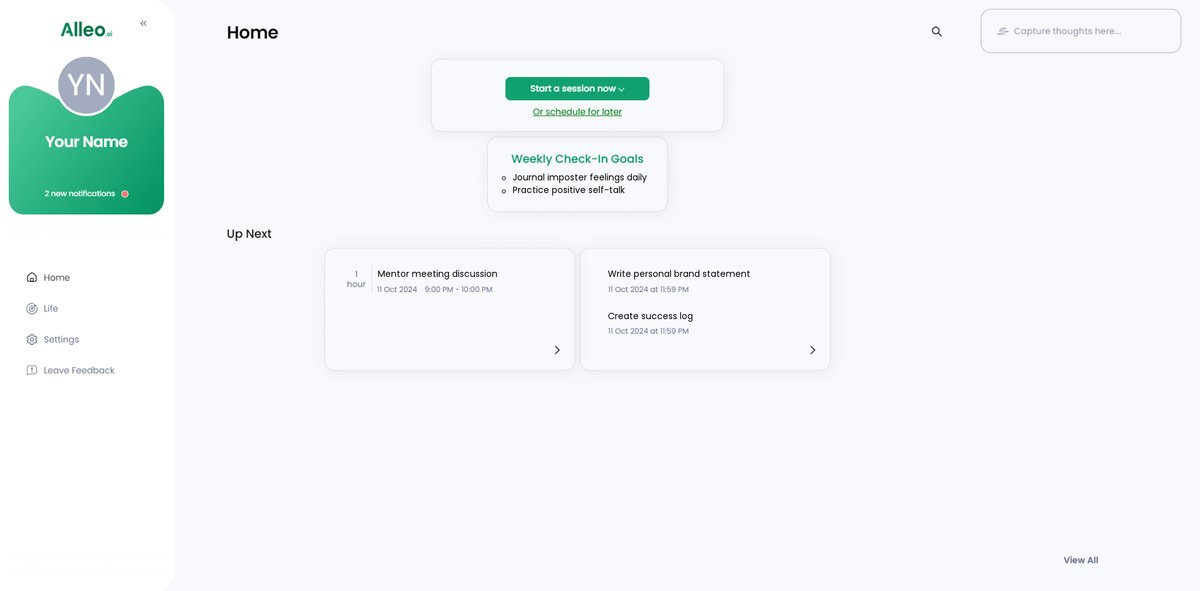
Step 5: Viewing and managing goals after the session
After your coaching session on overcoming imposter syndrome, check the Alleo app’s home page to review and manage the goals you discussed, helping you stay on track with your public speaking confidence journey.
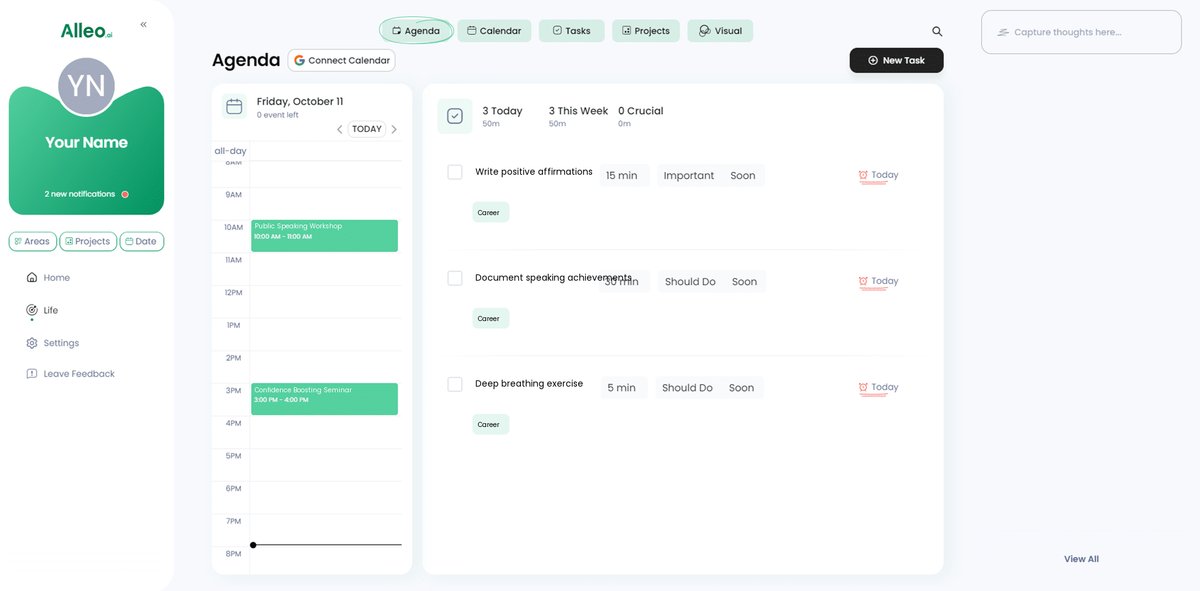
Step 6: Adding Events to Your Calendar or App
Track your progress in overcoming imposter syndrome by adding speaking engagements, practice sessions, and self-reflection time to your calendar or app, utilizing the built-in calendar and task features to monitor your journey and celebrate milestones along the way.
Embrace Your Journey with Confidence
You’ve learned valuable strategies for overcoming imposter syndrome for professionals as a public speaker. It’s essential to recognize and acknowledge your feelings, reframe negative thoughts, and focus on your unique strengths to combat professional self-doubt.
Seek mentorship, track achievements, and practice self-compassion. Each step helps build your confidence at work and resilience, crucial for coping with imposter syndrome in the workplace.
Remember, you’re not alone. Many successful professionals face similar challenges and experience imposter syndrome symptoms.
Alleo can support you in this journey of overcoming self-doubt in your career. Our tools help you set goals, make decisions, and build positive habits to boost professional self-esteem.
Take action today. Start using Alleo for free and continue your path to self-confidence and success, effectively managing imposter syndrome and performance anxiety in your professional life.