How to Overcome Impostor Syndrome: 3 Powerful Strategies for Young Professionals
Are you feeling like a fraud despite your impressive accomplishments?
As a life coach, I’ve helped many professionals navigate these challenges. In my experience, young corporate executives often struggle with impostor syndrome, seeking constant validation and doubting their abilities. Overcoming impostor syndrome for professionals is crucial for career growth and success.
In this article, you’ll discover actionable steps to overcome impostor syndrome and boost your self-confidence. We’ll explore strategies to reframe negative thoughts, seek meaningful feedback, and celebrate your successes. These professional development tips will help you build confidence at work and overcome fear of failure.
Let’s dive in to these young professional success strategies for dealing with workplace anxiety and recognizing your achievements.

Understanding the Depths of Impostor Syndrome
Impostor syndrome often manifests in young corporate executives through constant validation-seeking and pervasive self-doubt in the workplace. Many professionals initially struggle with feeling undeserving of their success and fear being exposed as frauds, which are common impostor syndrome symptoms.
This persistent anxiety can significantly impact mental health and professional performance, affecting career growth for beginners.
For instance, I’ve seen several clients who hesitate to take on new projects or leadership roles due to their self-doubt. This hesitation can stall career progression and lead to missed opportunities, hindering young professional success strategies.
The relentless need for external approval can also create stress and burnout, making overcoming impostor syndrome for professionals crucial.
Moreover, impostor syndrome can make you question your abilities to the point where even minor setbacks feel like confirmations of inadequacy. This can be paralyzing, making it hard to move forward confidently and overcome fear of failure.
It’s critical to address these feelings head-on. Recognizing the problem is the first step toward overcoming it and building confidence at work. Professional development tips and imposter syndrome coping techniques can help in dealing with workplace anxiety and recognizing achievements.

Effective Strategies to Overcome Impostor Syndrome
Overcoming impostor syndrome for professionals requires a few key steps. Here are the main areas to focus on to make progress in dealing with workplace anxiety and building confidence at work:
- Reframe Negative Self-Talk with Positive Affirmations: Recognize impostor syndrome symptoms and counteract negative thoughts with positive affirmations, an essential imposter syndrome coping technique.
- Seek Regular Feedback from Trusted Mentors: Regularly consult mentors for constructive feedback and guidance, a crucial professional development tip for young professional success.
- Celebrate Small Wins and Acknowledge Achievements: Keep track of your accomplishments and celebrate them, helping overcome fear of failure and boost career growth for beginners.
Let’s dive into these strategies for overcoming impostor syndrome!
1: Reframe negative self-talk with positive affirmations
Reframing negative self-talk with positive affirmations is essential for overcoming impostor syndrome in professionals. This technique helps combat self-doubt in the workplace and is crucial for building confidence at work.
Actionable Steps:
- Track negative thoughts: Keep a daily journal to log negative self-talk. Review weekly to identify patterns and impostor syndrome symptoms.
- Create positive affirmations: Develop a list of affirmations that counteract your negative thoughts. Say them daily in front of a mirror to help in overcoming fear of failure.
- Practice mindfulness: Dedicate at least 10 minutes a day to mindfulness exercises to control negative thoughts and deal with workplace anxiety.
Explanation: These steps help you recognize and counteract negative self-talk, fostering a healthier self-image and supporting professional development.
By consistently applying these practices, you can gradually shift your mindset towards positivity, which is crucial for young professional success strategies.
For more insights on managing impostor syndrome, visit Coursera’s article on overcoming impostor syndrome.
The benefits of positive affirmations include:
- Boost in self-confidence and recognizing achievements
- Reduced stress and anxiety
- Improved focus on personal goals and career growth for beginners
In the next section, we’ll explore how seeking regular feedback from trusted mentors can further support your journey in overcoming impostor syndrome as a professional.

2: Seek regular feedback from trusted mentors
Seeking regular feedback from trusted mentors can significantly help professionals in overcoming impostor syndrome by providing constructive insights and support.
Actionable Steps:
- Identify potential mentors: Reach out to experienced colleagues or industry professionals who can offer guidance on dealing with workplace anxiety. Schedule regular meetings to discuss your progress and professional development.
- Set clear objectives: Work with your mentors to define specific, measurable goals for your career growth. Track these goals in a shared document to help recognize achievements and overcome self-doubt in the workplace.
- Implement feedback: Act on the advice you receive and monitor your progress. Reflect on improvements and discuss outcomes in subsequent mentor meetings, focusing on building confidence at work.
Explanation: These steps matter because mentors provide an external perspective that can help validate your abilities and offer objective feedback, which is crucial for overcoming impostor syndrome for professionals.
Engaging with mentors can also help you build confidence by achieving clearly defined goals and developing young professional success strategies.
According to LinkedIn, mentors can guide you in setting realistic goals and provide reassurance, which is essential for overcoming self-doubt and fear of failure.
By seeking regular feedback, you can develop a stronger sense of self-awareness and professional growth, while learning effective imposter syndrome coping techniques.
3: Celebrate small wins and acknowledge achievements
Recognizing and celebrating your achievements is crucial for overcoming impostor syndrome and building self-confidence in professionals.
Actionable Steps:
- Maintain an achievement log: Keep a detailed log of your daily or weekly achievements to combat self-doubt in the workplace. Review and update it regularly.
- Share successes with peers: Share your achievements with trusted colleagues or through professional networks. Engage in discussions to receive positive reinforcement and boost confidence at work.
- Reward yourself: Set up a reward system for reaching milestones. Treat yourself to something special, like a nice meal or a day off, when you achieve a goal, as part of your professional development.
Ways to celebrate your achievements:
- Create a visual progress board to track career growth for beginners
- Share accomplishments on social media as young professional success strategies
- Plan a small celebration with friends or family to reinforce imposter syndrome coping techniques
Explanation: These steps are important because they help you recognize your progress and value your contributions, essential for overcoming impostor syndrome in professionals.
Celebrating small wins can boost your self-esteem and motivate you to keep moving forward, especially when dealing with workplace anxiety.
According to LinkedIn, acknowledging achievements is essential for maintaining a positive self-image and combating self-doubt.
By celebrating your accomplishments, you reinforce a positive mindset and pave the way for continued growth and success, helping professionals in overcoming fear of failure.

Partner with Alleo to Overcome Impostor Syndrome
We’ve explored the challenges of overcoming impostor syndrome in professionals, the benefits of tackling it, and actionable steps. But did you know you can work directly with Alleo to make this journey easier and faster for young professional success?
Alleo is an AI life coach designed for professionals like you who are dealing with workplace anxiety and self-doubt in the workplace. Create an account to start your personalized plan for building confidence at work.
Alleo will help you identify your goals and track your progress in overcoming fear of failure. You’ll receive tailored feedback and professional development tips based on your needs.
Alleo’s daily affirmations and mindfulness features will help reframe negative self-talk, a key aspect of imposter syndrome coping techniques. The coach will follow up on your progress, handle changes, and keep you accountable with text and push notifications, supporting your career growth for beginners.
Ready to get started for free and begin recognizing achievements?
Let me show you how to start overcoming impostor syndrome as a professional!
Step 1: Log In or Create Your Account
To start your journey towards overcoming impostor syndrome with Alleo, simply Log in to your account or create a new one if you’re a first-time user.

Step 2: Choose “Improving overall well-being and life satisfaction”
Select “Improving overall well-being and life satisfaction” as your goal to address the root causes of impostor syndrome and build a more positive self-image, helping you overcome self-doubt and celebrate your achievements.

Step 3: Select “Career” as Your Focus Area
Choose “Career” as your primary focus area in Alleo to directly address impostor syndrome and boost your professional confidence, aligning with the strategies discussed for overcoming self-doubt in your work life.

Step 4: Starting a coaching session
Begin your journey with Alleo by scheduling an intake session, where you’ll discuss your struggles with impostor syndrome and set up a personalized plan to boost your confidence and overcome self-doubt.

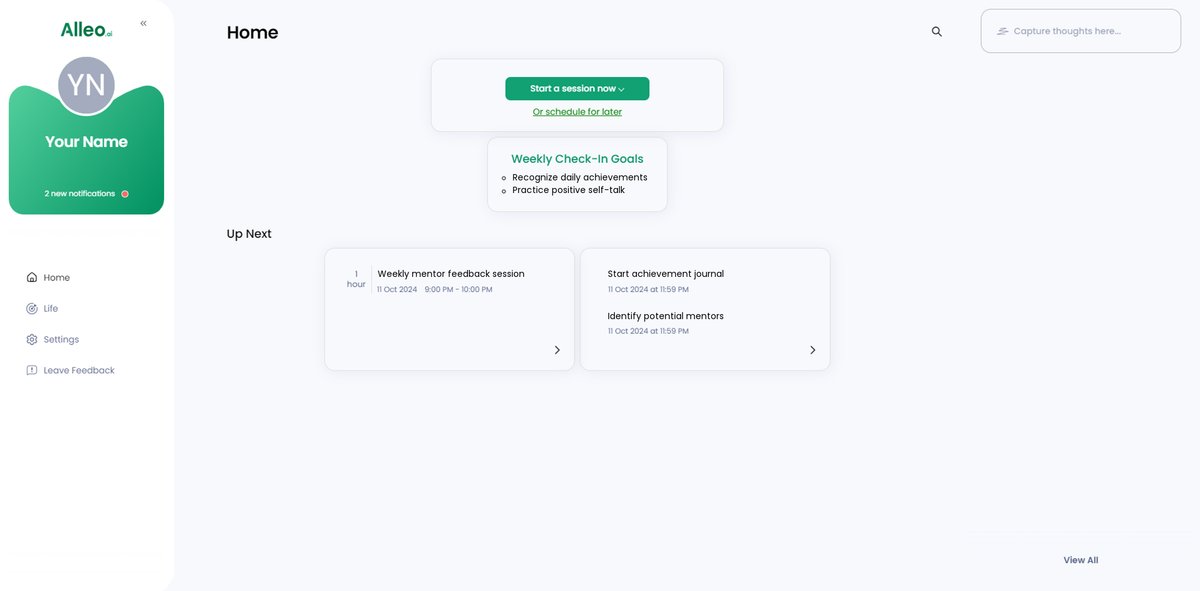
Step 5: Viewing and managing goals after the session
After your coaching session, open the Alleo app and check your home page to view and manage the goals you discussed, allowing you to track your progress in overcoming impostor syndrome and building self-confidence.
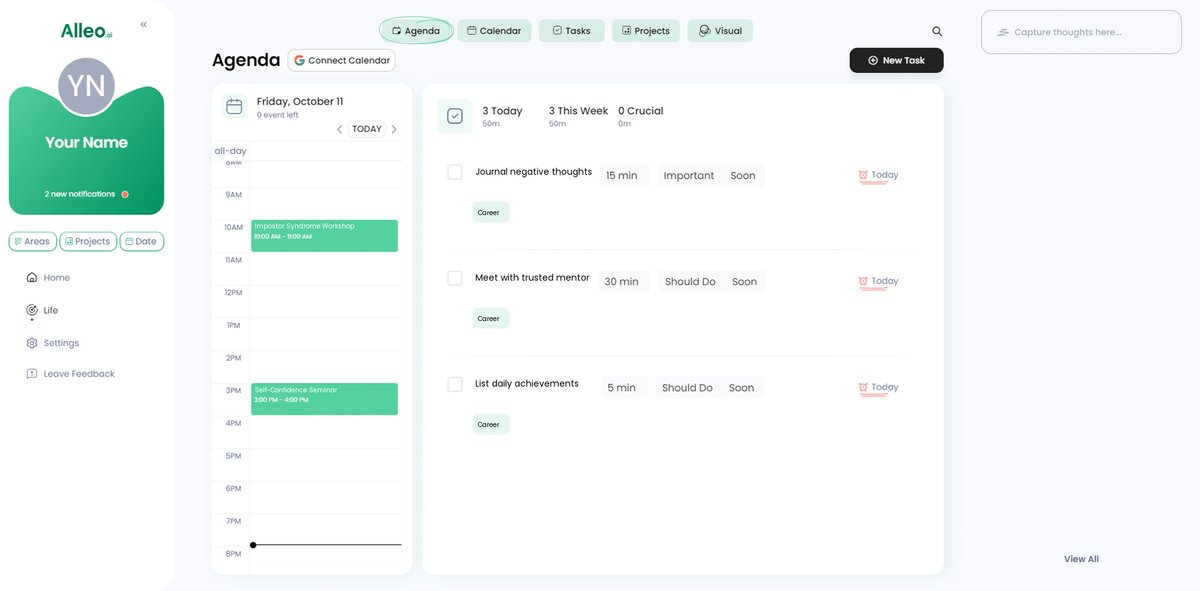
Step 6: Adding events to your calendar or app
Use Alleo’s calendar and task features to add important events, such as mentor meetings or self-reflection sessions, helping you track your progress in overcoming impostor syndrome and celebrating your achievements along the way.
Embrace Your Success and Overcome Impostor Syndrome
We’ve explored practical strategies to tackle impostor syndrome, focusing on reframing negative self-talk, seeking feedback, and celebrating achievements. Remember, overcoming impostor syndrome for professionals is a process, and it’s okay to seek help along the way.
You are not alone in this journey of dealing with workplace anxiety and self-doubt in the workplace.
By implementing these steps, you’ll build confidence at work and improve your professional life. Take small, consistent actions to shift your mindset and recognize your worth, using effective imposter syndrome coping techniques.
Don’t forget, Alleo is here to support you every step of the way in your career growth for beginners.
Try Alleo for free today and take the first step toward overcoming impostor syndrome as a professional.
Believe in yourself. You deserve your success and are capable of overcoming fear of failure.