How to Say No and Balance Study Time: The Ultimate Guide for Busy Professionals
Are you struggling to balance your work study time alongside a demanding job and personal commitments?
As a life coach, I’ve helped many professionals navigate these challenges in time management for professionals. I often encounter clients who feel overwhelmed by their busy schedules, trying to manage stress while studying and working.
In this article, you’ll learn practical strategies for balancing work study time, like prioritizing academic commitments, setting SMART goals, and saying “no” to non-essential commitments. These tips will help you achieve better work-life balance for students and reduce stress.
Let’s dive in to explore effective study techniques for busy adults.

Understanding the Struggles of Busy Professionals
Balancing work study time is a daunting task for many professionals. In my experience, people often find themselves stretched thin, trying to manage work, study, and personal life while striving for work-life balance for students.
This constant juggling act can lead to significant stress and burnout. You may find that sacrificing personal time and social commitments becomes a norm, impacting your mental health and professional performance. Setting boundaries in professional life becomes crucial for managing stress while studying and working.
Several clients report feeling overwhelmed by the lack of personal time. This stress not only affects their work output but also their overall well-being, highlighting the need for effective study techniques for busy adults and improving productivity in study and work.
It’s a tough situation. But there’s hope.

Overcoming the challenge of balancing work study time requires a few key steps. Here are the main areas to focus on to make progress in managing stress while studying and working:
- Prioritize tasks using the 80/20 rule: Identify and focus on high-impact tasks for effective time management for professionals.
- Set SMART goals for study and work commitments: Break down goals into specific, measurable steps to improve productivity in study and work.
- Use time-blocking for focused study sessions: Schedule dedicated study blocks, implementing effective study techniques for busy adults.
- Practice saying “no” with polite, firm responses: Set boundaries for non-essential commitments, enhancing assertiveness skills for professionals.
- Schedule regular self-care and recharge time: Block time for self-care activities to maintain work-life balance for students.
Let’s dive into these strategies for balancing career and education!
1: Prioritize tasks using the 80/20 rule
Understanding the importance of focusing on high-impact tasks can transform how you balance work study time and manage your professional commitments.
Actionable Steps:
- Identify the top 20% of tasks that yield 80% of your results when balancing career and education.
- Use a task management tool to categorize and prioritize these critical tasks for effective time management for professionals.
- Allocate more time and energy to high-impact activities, reducing time spent on low-priority tasks to improve work-life balance for students.
The benefits of implementing the 80/20 rule include:
- Increased productivity in study and work
- Better time management for professionals
- Reduced stress and overwhelm while studying and working
Explanation: Prioritizing tasks using the 80/20 rule helps you focus on what truly matters, enhancing productivity and reducing overwhelm when balancing work study time.
By concentrating on high-impact tasks, you can achieve more in less time. For instance, Balancing Through Simplicity suggests that understanding and implementing this rule can significantly ease your workload.
This approach sets a strong foundation for effective time management, paving the way for achieving your goals while balancing work study time.
2: Set SMART goals for study and work commitments
Setting SMART goals is crucial for balancing work study time and managing your commitments effectively.
Actionable Steps:
- Break down major goals into specific, measurable, achievable, relevant, and time-bound sub-goals for effective time management for professionals.
- Use a goal-setting app to track progress and stay accountable, improving productivity in study and work.
- Review and adjust goals weekly to ensure they remain realistic and aligned with current priorities, helping with work-life balance for students.
Explanation: Setting SMART goals helps you stay focused and organized, making it easier to balance multiple commitments and prioritize academic commitments.
These goals offer clarity and direction, reducing overwhelm and managing stress while studying and working.
For further details on effective goal-setting, check out this resource from the University of Virginia.
Remember, SMART goals are essential tools for achieving balance and reducing stress when balancing career and education.

3: Use time-blocking for focused study sessions
Effective time-blocking can significantly improve your ability to balance work study time and manage professional commitments.
Actionable Steps:
- Plan your week in advance: Allocate specific time blocks for study sessions, ensuring they don’t overlap with work or personal time, improving productivity in study and work.
- Use a timer for study sessions and breaks: Implement techniques like the Pomodoro Technique, setting intervals for focused study and short breaks, which are effective study techniques for busy adults.
- Review and adjust your schedule: Regularly evaluate the effectiveness of your time blocks and make adjustments to optimize productivity and work-life balance for students.
Key elements of effective time-blocking include:
- Consistency in scheduling
- Flexibility to adapt
- Clear boundaries between tasks
Explanation: By using time-blocking, you create dedicated periods for focused study, reducing distractions and improving productivity while balancing work study time.
This method helps in maintaining a structured schedule, ensuring you have sufficient time for work, study, and personal commitments, effectively balancing career and education.
For further insights, explore this resource on professional development and training.
Time-blocking is a powerful strategy that can help you achieve your study and work goals more efficiently, aiding in prioritizing academic commitments and managing stress while studying and working.
4: Practice saying “no” with polite, firm responses
Learning to say “no” is crucial for balancing work study time and maintaining focus on essential commitments.
Actionable Steps:
- Prepare polite yet firm responses: Draft responses for declining additional tasks or social invitations. Practice these responses to build confidence in setting boundaries in professional life.
- Role-play scenarios: Practice with a trusted colleague or friend. This will help you feel more comfortable and assertive in real situations, improving productivity in study and work.
- Reflect on past experiences: Think about times when saying “no” could have prevented overwhelm. Use these insights to guide your future decisions on prioritizing academic commitments.
Explanation: Practicing polite, firm responses helps you set clear boundaries, reducing unnecessary stress and preserving time for critical tasks, which is essential for time management for professionals.
This approach aligns with industry trends emphasizing the importance of mental health and self-care in work-life balance for students. For more strategies on managing stress while studying and working, explore this resource on healthy stress management.
Taking these steps will empower you to manage your time effectively and reduce burnout, crucial for balancing career and education.

5: Schedule regular self-care and recharge time
Making time for self-care and recharging is essential to maintaining productivity and mental health when balancing work study time.
Actionable Steps:
- Plan daily self-care activities: Schedule activities like exercise, hobbies, or relaxation techniques each day to improve work-life balance for students.
- Use mindfulness practices: Incorporate meditation apps or mindfulness techniques to reduce stress while studying and working and improve focus.
- Plan periodic “digital detox” days: Dedicate days to disconnect completely from work and study to recharge, helping in balancing career and education.
The importance of self-care cannot be overstated. Here’s why:
- Prevents burnout
- Enhances overall well-being
- Improves focus and productivity in study and work
Explanation: Regular self-care activities are vital for preventing burnout and maintaining well-being. These steps help you stay balanced and focused while managing stress while studying and working.
For further insights, check out this resource on healthy stress management.
Scheduling self-care ensures you remain productive and maintain effective time management for professionals while balancing work study time.
Partner with Alleo to Balance Your Study and Work Commitments
We’ve explored the challenges of balancing work study time and how solving them can improve your life. But did you know you can work directly with Alleo to make this journey easier and faster?
Setting up an account with Alleo is simple. Start by signing up for a free 14-day trial. No credit card is required.
Once you’re in, Alleo helps you create a personalized plan tailored to your needs, focusing on time management for professionals and work-life balance for students.
Alleo’s AI coach will guide you through prioritizing academic commitments, setting SMART goals, and time-blocking. It provides actionable advice, pre-written scripts for setting boundaries in professional life, and reminders for self-care.
The coach checks in on your progress and adjusts your plan as needed, helping you in balancing career and education.
Stay accountable with text and push notifications. Alleo ensures you stay on track and avoid burnout while balancing work study time.
Ready to get started for free? Let me show you how!
Step 1: Logging in or Creating an Account
To start balancing your study and work commitments with Alleo, simply Log in to your account or create a new one to begin your personalized journey towards better time management and reduced stress.

Step 2: Choose “Building better habits and routines”
Select “Building better habits and routines” to create a structured approach for balancing your study, work, and personal commitments, helping you implement the time management strategies discussed in the article more effectively.

Step 3: Selecting the Life Area You Want to Focus On
Choose “Career” as your focus area to address the challenge of balancing study and work commitments. By prioritizing your career goals, you’ll be better equipped to manage your professional development, set SMART goals for your studies, and create a more effective work-study balance that aligns with your long-term aspirations.

Step 4: Starting a Coaching Session
Begin your journey with Alleo by participating in an initial intake session, where you’ll discuss your study-work balance challenges and set up a personalized plan to help you prioritize tasks, manage time effectively, and maintain self-care practices.

Step 5: Viewing and Managing Goals After the Session
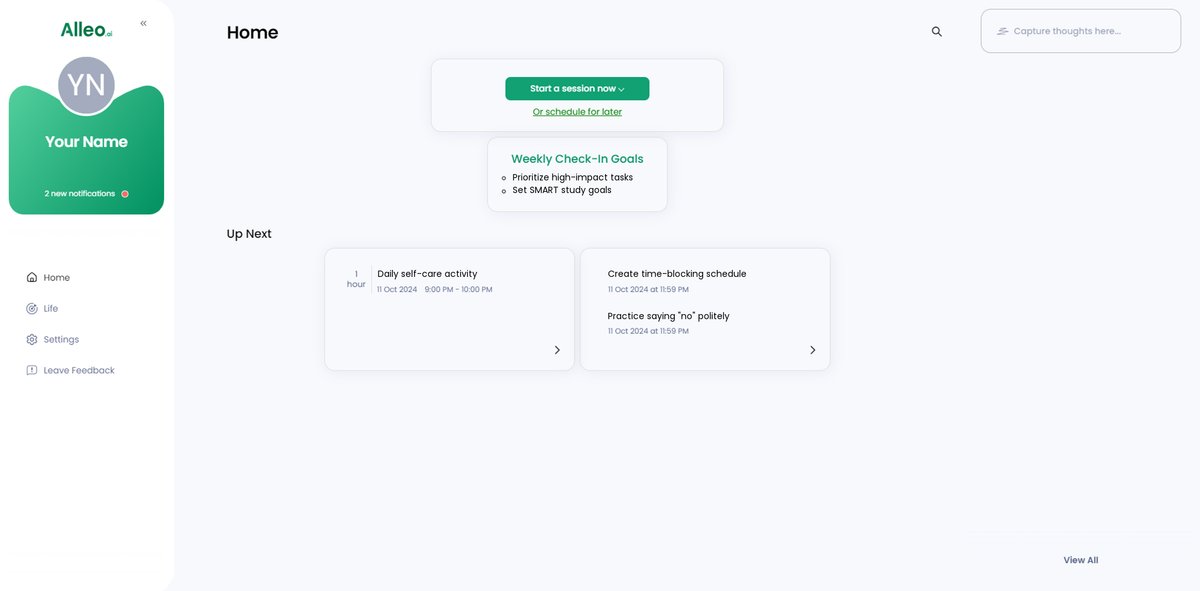
After your coaching session, check the Alleo app’s home page to review and manage the goals you discussed, allowing you to easily track your progress in balancing study and work commitments.
Step 6: Adding events to your calendar or app
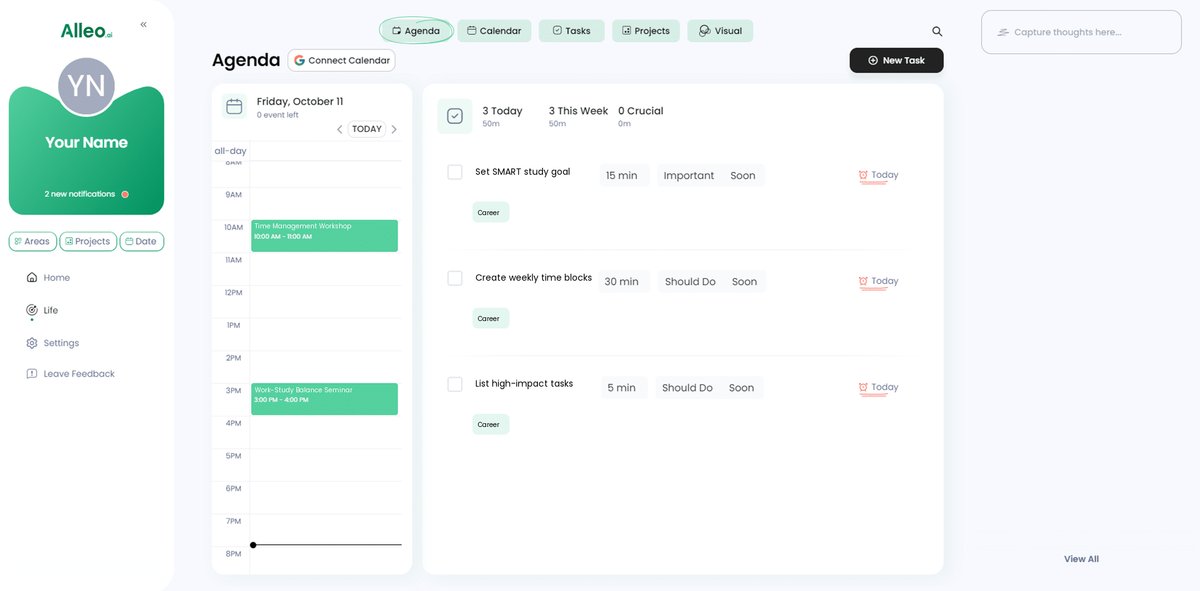
Utilize the Alleo app’s calendar and task features to add your prioritized tasks, study sessions, and self-care activities, allowing you to easily track your progress in balancing work and study commitments while maintaining your well-being.
Bringing It All Together for Busy Professionals
Balancing work study time with professional and personal commitments is tough, but not impossible.
By prioritizing academic commitments, setting SMART goals, using time-blocking for effective study techniques, saying “no” when needed for work-life balance, and scheduling self-care, you can find balance.
It’s all about taking small, actionable steps to improve productivity in study and work.
Remember, I’ve been there and I know the struggle of managing stress while studying and working.
You can do this.
For personalized support in balancing career and education, consider trying Alleo.
It guides you through these time management strategies for professionals and keeps you on track.
Ready to take control of balancing work study time? Sign up for a free 14-day trial of Alleo today.