How to Set Realistic MBA Goals: 3 Fundamental Principles for Ambitious Career Changers
Are you struggling to set ambitious yet achievable MBA goals? Setting realistic MBA career goals is crucial for success.
As a life coach, I’ve helped many professionals navigate these challenges. In my experience, it’s crucial to find the right balance between ambition and realism when planning your MBA career change strategies.
In this post, you’ll discover strategies to set realistic MBA goals tailored to your career aspirations. We’ll cover industry trends, alumni insights, and skill gap analysis to help with your career transition planning for MBA aspirants.
Let’s dive in to explore setting realistic MBA career goals and post-MBA career path planning.

Understanding the Challenge of Setting Realistic MBA Goals
Setting realistic MBA career goals can be overwhelming. Many young professionals struggle to refine and articulate their short-term objectives, especially when considering MBA career change strategies.
Often, the pressure to achieve big dreams leads to setting goals that seem unattainable. In my experience, balancing ambition with realism is crucial when setting SMART goals for MBA students.
Furthermore, it’s essential to align your goals with the MBA program’s resources and timeframe. Without this alignment, you risk feeling lost or unfulfilled during your studies, which is particularly important for career transition planning for MBA aspirants.
Moreover, several clients report feeling stuck when their goals don’t match their program’s offerings. This mismatch can derail your progress and dampen your motivation, highlighting the importance of MBA program selection for career switchers.
Let’s explore actionable steps to overcome these challenges in setting realistic MBA career goals.
Roadmap to Setting Realistic MBA Goals for Career Changers
Overcoming this challenge requires a few key steps. Here are the main areas to focus on when setting realistic MBA career goals for career changers:
- Research Industry Trends and In-Demand Skills: Stay updated on industry developments and identify key skills for MBA graduates, essential for post-MBA career path planning.
- Conduct Informational Interviews with Alumni: Gain insights from alumni about their career paths and valuable skills, aiding in MBA career change strategies.
- Create a Skills Gap Analysis and Action Plan: Assess your skills, identify gaps, and develop a detailed action plan for career transition planning for MBA aspirants.
Let’s dive into these strategies for setting realistic MBA career goals!
1: Research industry trends and in-demand skills
Understanding industry trends and in-demand skills is essential for setting realistic MBA career goals.
Actionable Steps:
- Subscribe to industry newsletters: Sign up for updates from reputable sources to stay informed about the latest trends and MBA career change strategies.
- Analyze job postings: Use platforms like LinkedIn to identify common skills listed in job descriptions for your desired roles, aiding in post-MBA career path planning.
- Attend industry events: Register for webinars and conferences to gain insights and network with professionals, enhancing your networking tips for MBA career transitions.
Key benefits of staying updated on industry trends:
- Align your goals with current market demands and industry-specific MBA goals
- Identify emerging opportunities in your field for career transition planning
- Tailor your skill development to industry needs, supporting your MBA program selection for career switchers
Explanation: Staying updated on industry trends helps you align your MBA goals with the current market demands, crucial for setting realistic MBA career goals.
For example, subscribing to industry newsletters and attending events can provide valuable insights into emerging trends. This ensures your goals are relevant and achievable, supporting your time management for MBA career changers.
Additionally, analyzing job postings helps you understand the skills employers are looking for, making your MBA journey more focused and effective. For more on trending skills, check out this resource.
By taking these steps, you’ll be well-equipped to set realistic and ambitious MBA goals, including MBA internship goals for career changers.
2: Conduct informational interviews with alumni
Conducting informational interviews with alumni is essential for setting realistic MBA career goals and understanding the real-world applications of your MBA aspirations.
Actionable Steps:
- Connect with alumni: Use LinkedIn to reach out to 5-10 alumni from your targeted MBA programs and request informational interviews to gain insights on MBA career change strategies.
- Prepare insightful questions: Develop a list of 10 questions focusing on their career paths, the skills they found most valuable, and their post-MBA career path planning.
- Follow up: Send thank-you notes and keep in touch to build a supportive network, which is crucial for MBA career transitions.
Explanation: Alumni can offer valuable insights and guidance based on their experiences. Their advice can help you align your goals with the realities of the industry and assist in setting SMART goals for MBA students.
For example, by conducting interviews, you can discover which skills and experiences are most valued in specific industries. This approach ensures you set realistic MBA career goals and relevant objectives for your career transition planning.
For more tips on MBA goal-setting, check out this resource.
Key questions to ask during informational interviews:
- What skills were most crucial in your post-MBA career?
- How did your MBA program selection contribute to your success as a career switcher?
- What advice would you give to someone looking to transition into your field, especially regarding time management for MBA career changers?
Connecting with alumni provides a clearer picture of what’s achievable and helps you build a network that supports your career ambitions, including setting industry-specific MBA goals and planning MBA internship goals for career changers.
3: Create a skills gap analysis and action plan
Creating a skills gap analysis and action plan is essential when setting realistic MBA career goals tailored to your career needs.
Actionable Steps:
- Conduct a self-assessment: List your current skills and compare them with those identified from your research and interviews, considering your MBA career change strategies.
- Identify skill gaps: Use a skills gap analysis tool to pinpoint areas needing development for your post-MBA career path planning.
- Develop an action plan: Set specific, measurable, actionable, and realistic (SMAR) goals to bridge the gaps, such as enrolling in courses or seeking mentorship, aligning with setting SMART goals for MBA students.
Explanation: Identifying and addressing skill gaps ensures your MBA journey is focused and effective. By assessing your skills and creating a targeted action plan, you align your goals with industry demands and facilitate career transition planning for MBA aspirants.
For instance, using a skills gap analysis tool helps you stay on track. Additionally, setting SMAR goals keeps you motivated and accountable while setting realistic MBA career goals.
For more guidance on skill development, check out this resource.
Components of an effective action plan:
- Prioritized list of skills to develop, considering industry-specific MBA goals
- Timeline for acquiring each skill, incorporating time management for MBA career changers
- Specific resources or courses for skill development, including MBA internship goals for career changers
This approach helps you focus on achievable objectives, making your MBA journey more rewarding and supporting your MBA program selection for career switchers.

Boost Your MBA Success with Alleo
We’ve explored setting realistic MBA goals for career changers. Did you know you can work directly with Alleo to make this journey easier and faster, especially when it comes to setting realistic MBA career goals?
Alleo, the AI life coach, offers affordable, tailored coaching support for MBA career change strategies. With full coaching sessions like any human coach and a free 14-day trial, no credit card required, it’s perfect for those planning their post-MBA career path.
How to Get Started:
- Set up an Account: Visit Alleo’s website and sign up for your free trial to begin your MBA program selection for career switchers.
- Create a Personalized Plan: Use Alleo to assess your current skills and set specific, measurable, actionable, and realistic (SMAR) goals for your MBA journey.
- Work with Alleo’s Coach: Receive tailored advice on time management for MBA career changers, follow up on your progress, and keep accountable via text and push notifications.
Ready to get started for free and begin setting SMART goals for MBA students?
Let me show you how!
Visit Alleo today and take the first step toward a successful MBA journey and career transition planning for MBA aspirants.
Step 1: Log in or Create Your Account
To begin your MBA goal-setting journey with Alleo, simply Log in to your account or create a new one to access personalized coaching and support tailored to your career aspirations.

Step 2: Choose Your MBA Goal Focus
Select “Setting and achieving personal or professional goals” to align your MBA aspirations with realistic, industry-relevant objectives. This option will help you create a targeted plan for your MBA journey, addressing the challenges of balancing ambition with achievable milestones discussed in the article.

Step 3: Select “Career” as Your Focus Area
Choose “Career” as your focus area to align your MBA goals with industry trends, develop in-demand skills, and bridge any gaps identified in your skills analysis, setting you up for success in your professional journey.

Step 4: Starting a coaching session
Begin your journey with Alleo by scheduling an intake session to establish your personalized MBA goal-setting plan and map out your path to success.

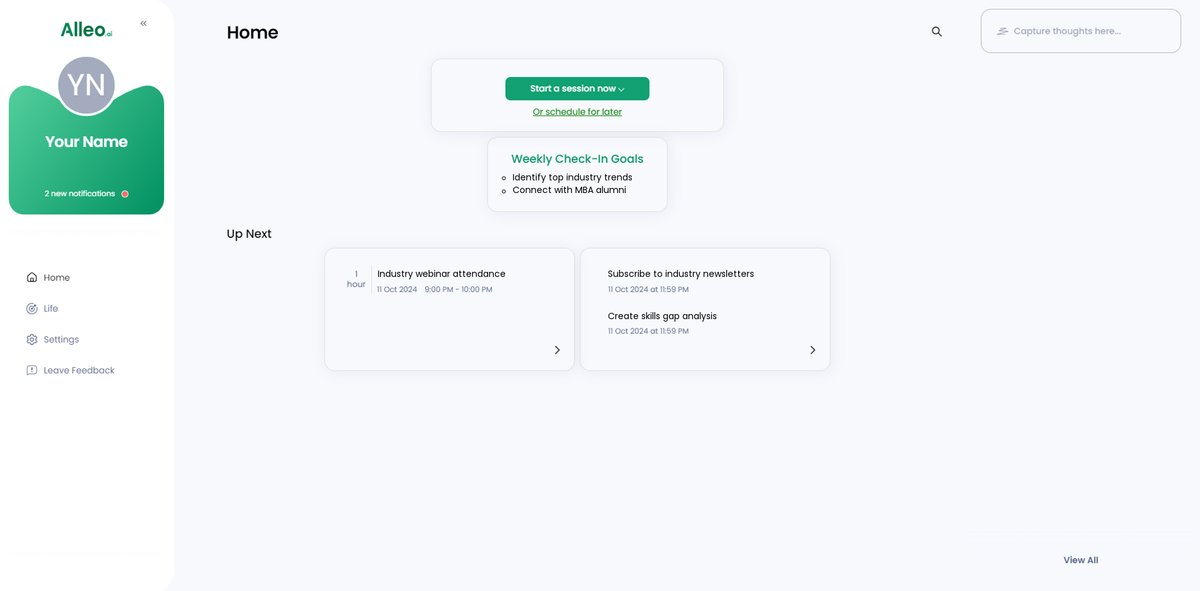
Step 5: Viewing and Managing Goals After the Session
After your coaching session, easily access and track the MBA goals you discussed by checking the home page of the Alleo app, where they will be prominently displayed for your ongoing management and review.
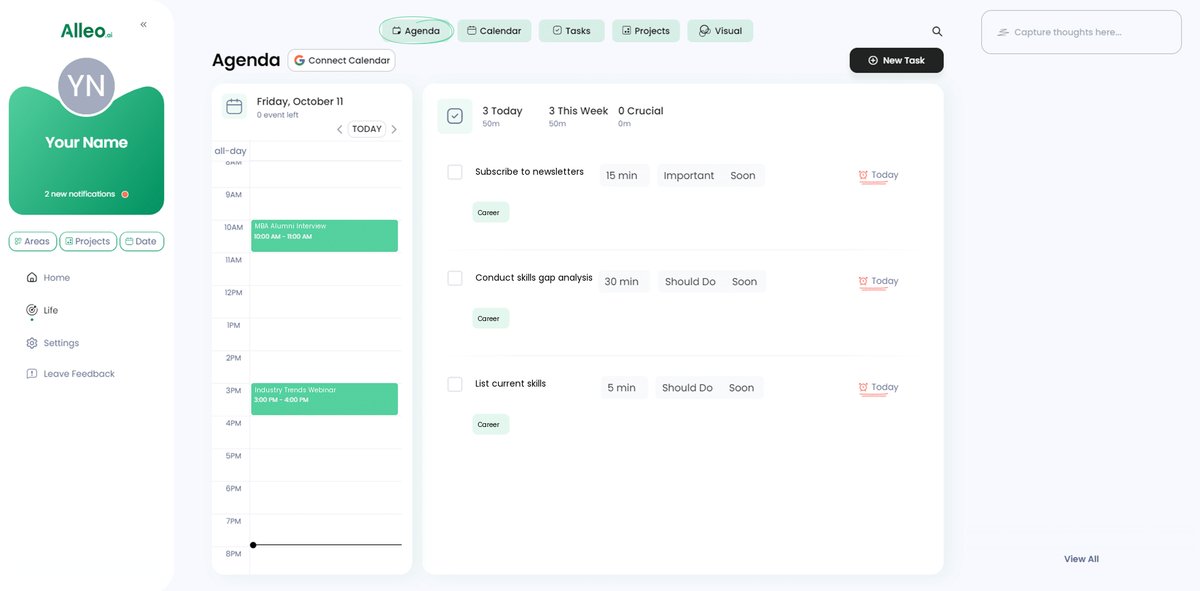
Step 6: Adding events to your calendar or app
Use Alleo’s calendar and task features to add and track important MBA-related events, deadlines, and milestones, helping you stay organized and monitor your progress towards achieving your realistic goals.
Embrace Your MBA Journey with Confidence
Throughout this blog, we’ve explored how to set realistic MBA career goals tailored for career changers like you. By researching industry trends, seeking alumni insights, and conducting a skills gap analysis, you can align your ambitions with achievable milestones for your MBA career change strategies.
Remember, it’s about balancing ambition with practicality when setting realistic MBA career goals.
Setting clear, realistic goals will ensure you stay focused and motivated throughout your MBA journey, especially when planning your post-MBA career path.
I know these actionable steps will guide you towards success in your MBA program selection for career switchers.
If you need extra support in setting SMART goals for MBA students, Alleo is here to help.
Start your free trial today and let Alleo assist you in achieving your MBA goals, including time management for MBA career changers.
Ready to take the first step in your career transition planning for MBA aspirants? Visit Alleo now and transform your career aspirations into reality.