How to Trust Your Team Without Micromanaging: 7 Essential Steps for New Managers
Ever feel like you’re always looking over your team’s shoulders? Learning to trust your team without micromanaging is a common challenge for new managers.
As a life coach, I’ve helped many professionals navigate these challenges. Developing effective delegation techniques and building trust in the workplace can be tough for those new to leadership roles.
In this article, you’ll discover effective strategies to balance trust and quality control. We’ll explore setting clear expectations, regular check-ins, and more. These new manager leadership skills will help you in empowering employees and implementing team autonomy strategies.
Let’s dive in and explore how to overcome micromanagement tendencies while balancing oversight and independence.

Understanding the Struggle with Micromanagement
Starting as a new manager, you may feel the need to oversee every detail. Many clients initially struggle with this need for constant oversight, finding it challenging to trust their team without micromanaging.
It’s exhausting and counterproductive.
Micromanagement can damage team morale and productivity. When team members feel constantly watched, their creativity and motivation suffer, hindering team autonomy strategies.
You might think you’re helping, but you’re likely hindering progress and failing to develop team accountability.
In my experience, people often find it hard to let go. Trusting your team feels risky, especially when quality control is at stake. Building trust in the workplace is crucial for new manager leadership skills.
This balancing act between oversight and independence is a common dilemma for new managers.
Moreover, micromanaging can lead to burnout—not just for your team but also for you. The stress of trying to control every aspect can take a toll on your well-being, making it essential to learn effective delegation techniques.
Recognizing this is the first step to finding a better approach and overcoming micromanagement tendencies.
Key Steps to Trust Your Team Without Micromanaging
Overcoming this challenge of learning to trust your team without micromanaging requires a few key steps. Here are the main areas to focus on to make progress in developing team accountability and balancing oversight and independence.
- Set clear expectations and goals upfront: Define project briefs, hold kickoff meetings, and use project management tools to empower employees and build trust in the workplace.
- Establish regular check-ins without micromanaging: Schedule check-ins, use collaborative platforms, and implement progress reports as part of your performance monitoring without micromanaging strategy.
- Provide necessary resources and training: Supply essential tools, organize training sessions, and create a resource library to support effective delegation techniques.
- Encourage open communication and feedback: Set an open-door policy, conduct anonymous surveys, and hold team-building activities to enhance communication strategies for new managers.
- Delegate tasks based on team members’ strengths: Assess skills, create a skill matrix, and pair members with mentors to improve new manager leadership skills.
- Practice active listening during team interactions: Use reflective listening, encourage ideas, and summarize for clarity to foster team autonomy strategies.
- Build trust through consistent follow-through: Follow up on commitments, acknowledge achievements, and be transparent to overcome micromanagement tendencies and trust your team without micromanaging.
Let’s dive in!
1: Set clear expectations and goals upfront
Setting clear expectations and goals upfront is essential for new managers to trust their team without micromanaging. This approach is key to developing team accountability and building trust in the workplace.
Actionable Steps:
- Create detailed project briefs outlining end goals, key milestones, and deadlines.
- Hold a kickoff meeting to align everyone on the objectives and roles, demonstrating effective delegation techniques.
- Use project management tools to document and share expectations, aiding in performance monitoring without micromanaging.
Explanation:
By defining clear expectations and goals, you provide a roadmap for your team, reducing the need for constant oversight. This approach not only helps in maintaining quality control but also empowers employees to take ownership of their tasks, promoting team autonomy strategies.
According to Jill Geisler, clear communication and setting expectations are crucial for successful delegation.
These steps ensure everyone is on the same page from the start, paving the way for a more autonomous and productive team environment. This strategy helps new managers trust their team without micromanaging, balancing oversight and independence effectively.

2: Establish regular check-ins without micromanaging
Establishing regular check-ins without micromanaging is crucial for maintaining balance in team oversight and autonomy, helping you trust your team without micromanaging.
Actionable Steps:
- Schedule weekly or bi-weekly check-ins to discuss progress and roadblocks, promoting effective delegation techniques.
- Use a collaborative platform for team updates to reduce unnecessary meetings and build trust in the workplace.
- Implement a ‘progress report’ system where team members briefly outline their achievements and challenges, enhancing team accountability.
Explanation:
These steps matter because they help you stay informed without hovering, a key new manager leadership skill. Regular check-ins keep you updated on progress and issues while fostering a sense of trust and independence among team members, effectively balancing oversight and independence.
According to Jill Geisler, balancing involvement with autonomy is key to effective leadership. By implementing these practices, you ensure continuous improvement without compromising team morale, empowering employees and overcoming micromanagement tendencies.
These methods will help you maintain a supportive yet non-intrusive presence, allowing you to trust your team without micromanaging while developing team autonomy strategies.

3: Provide necessary resources and training
Providing necessary resources and training is critical for empowering your team and ensuring task success, allowing you to trust your team without micromanaging.
Actionable Steps:
- Identify and supply essential tools and software: Make sure your team has the necessary equipment and software to complete their tasks efficiently, promoting team autonomy strategies.
- Organize training sessions or workshops: Hold regular training sessions to upskill team members and keep them updated on industry trends, enhancing new manager leadership skills.
- Create a resource library: Compile guides, tutorials, and best practices into a shared resource library for easy access, supporting effective delegation techniques.
Explanation: These steps matter because they equip your team with the knowledge and tools they need to succeed. Providing resources and training fosters independence and confidence, helping in building trust in the workplace.
According to Google’s Project Oxygen, empowered teams perform better and are more innovative. Ensuring your team is well-prepared reduces the need for constant oversight and enhances productivity, allowing for performance monitoring without micromanaging.
By investing in your team’s development, you’ll create a more capable and autonomous workforce, empowering employees and overcoming micromanagement tendencies.

4: Encourage open communication and feedback
Encouraging open communication and feedback is essential for building trust in the workplace and ensuring team success without micromanaging.
Actionable Steps:
- Set up an open-door policy: Make it clear that team members can approach you at any time to discuss issues or ideas, fostering team autonomy strategies.
- Conduct anonymous surveys: Regularly gather honest feedback on management practices without fear of repercussion, helping in overcoming micromanagement tendencies.
- Hold regular team-building activities: Create opportunities for open dialogue and strengthen team relationships, supporting new manager leadership skills.
Explanation: These steps matter because they create a safe environment where team members feel heard and valued, allowing you to trust your team without micromanaging.
Open communication leads to better problem-solving and innovation, key aspects of effective delegation techniques.
According to Google’s Project Oxygen, empowered teams are more productive and satisfied, highlighting the importance of empowering employees.
By fostering open communication, you ensure a collaborative and supportive team culture, balancing oversight and independence.
Encouraging open communication sets the foundation for a trustworthy and effective leadership style, enabling you to trust your team without micromanaging while developing team accountability.

5: Delegate tasks based on team members’ strengths
Delegating tasks based on team members’ strengths is key to optimizing productivity and fostering a sense of ownership, helping you trust your team without micromanaging.
Actionable Steps:
- Assess individual skills: Conduct assessments to understand each team member’s unique strengths and capabilities, an essential step in effective delegation techniques.
- Create a skill matrix: Develop a visual tool that maps out the skills of each team member, helping to assign tasks more effectively and build trust in the workplace.
- Pair members with mentors: Match less experienced team members with mentors who can guide them through complex tasks, a key strategy for new manager leadership skills.
Explanation: These steps matter because they ensure tasks are assigned to those best equipped to handle them, boosting efficiency and morale while empowering employees.
By leveraging each team member’s strengths, you create a more dynamic and capable team, promoting team autonomy strategies.
According to Harvard Business Review, resisting delegation can lead to overwhelm and missed opportunities for team development, highlighting the importance of overcoming micromanagement tendencies.
Embracing these strategies will help you delegate more effectively and build a stronger team, balancing oversight and independence.
Key benefits of effective delegation include:
- Increased team productivity and efficiency
- Enhanced employee satisfaction and engagement
- Improved leadership development opportunities and team accountability
Implementing these steps will help you delegate wisely, boost team performance, and trust your team without micromanaging, while mastering performance monitoring without micromanagement.
6: Practice active listening during team interactions
Practicing active listening during team interactions is crucial for building trust and understanding within your team, helping you trust your team without micromanaging.
Actionable Steps:
- Use reflective listening techniques: Paraphrase what team members say to confirm understanding and show you are paying attention, a key aspect of building trust in the workplace.
- Encourage team members to voice their ideas and concerns without interruption: Allow everyone to contribute freely, fostering a collaborative atmosphere and promoting team autonomy strategies.
- Summarize and repeat back what you’ve heard: This ensures clarity and demonstrates that you value their input, an essential new manager leadership skill.
Explanation: These steps matter because active listening enhances communication and builds stronger relationships within your team, supporting effective delegation techniques.
According to Google’s Project Oxygen, effective managers empower their teams by actively listening and engaging with their input, which is crucial for empowering employees.
Implementing these strategies will help you connect better with your team and foster an open dialogue, aiding in overcoming micromanagement tendencies.
By practicing active listening, you create a more inclusive and dynamic team environment, balancing oversight and independence while developing team accountability.
7: Build trust through consistent follow-through
Building trust through consistent follow-through is essential for new managers to trust their team without micromanaging and foster team confidence.
Actionable Steps:
- Always follow up on commitments and promises made to the team: Ensure you deliver on what you say to build credibility and develop team accountability.
- Acknowledge and reward team members’ achievements and improvements: Recognize their efforts publicly to boost morale and empower employees.
- Be transparent about decisions and changes affecting the team: Keep everyone informed to maintain trust and implement effective delegation techniques.
Explanation: These steps matter because they help establish reliability and transparency, which are crucial for building trust in the workplace. When you consistently follow through, your team knows they can depend on you without the need for micromanagement.
According to Jill Geisler, dependable managers foster a more engaged and productive team. By implementing these practices, you’ll create a trustworthy and cohesive team environment, balancing oversight and independence.
The impact of consistent follow-through:
- Builds a foundation of trust and respect, supporting team autonomy strategies
- Increases team motivation and commitment, overcoming micromanagement tendencies
- Enhances overall team performance and results through effective performance monitoring without micromanaging
Adopting these strategies will enhance your leadership and team dynamics, improving new manager leadership skills and communication strategies for new managers.
Partner with Alleo to Master Delegation and Trust
We’ve explored how to trust your team without micromanaging. Did you know you can work with Alleo to make this process easier and develop effective delegation techniques?
Set up an account with Alleo in minutes. Create a personalized plan tailored to your needs, focusing on building trust in the workplace and enhancing new manager leadership skills.
Alleo’s AI coach will provide full coaching sessions, just like a human coach, helping you overcome micromanagement tendencies. We offer a free 14-day trial with no credit card required.
Alleo helps you set clear expectations and track progress, balancing oversight and independence. Use our scheduling tools for regular check-ins and reminders to support team autonomy strategies.
Access our resource library to streamline training and resource provision. Utilize feedback and communication strategies for new managers to foster open dialogue and empower employees.
Match tasks to team members’ strengths with Alleo’s assessment features. Improve team interactions using active listening and note-taking functionalities, essential for trusting your team without micromanaging.
Maintain consistent follow-through with Alleo’s task management support, enhancing performance monitoring without micromanaging and developing team accountability.
Ready to get started for free?
Let me show you how!
Step 1: Logging in or Creating an Account
To begin your journey with Alleo’s AI coach, simply Log in to your account or create a new one to access personalized coaching tailored to help you trust your team without micromanaging.

Step 2: Choose “Building better habits and routines”
Click on “Building better habits and routines” to start addressing your micromanagement tendencies and develop a more trusting leadership style, aligning with the strategies discussed in the article for effective team management.

Step 3: Select “Career” as Your Focus Area
Choose “Career” as your focus area in Alleo to address your management challenges, helping you develop trust-building skills and effective delegation strategies that will boost your team’s productivity and morale.

Step 4: Starting a coaching session
Begin your journey with Alleo by scheduling an intake session, where you’ll discuss your management challenges and set up a personalized plan to improve team trust and delegation skills.

Step 5: Viewing and managing goals after the session
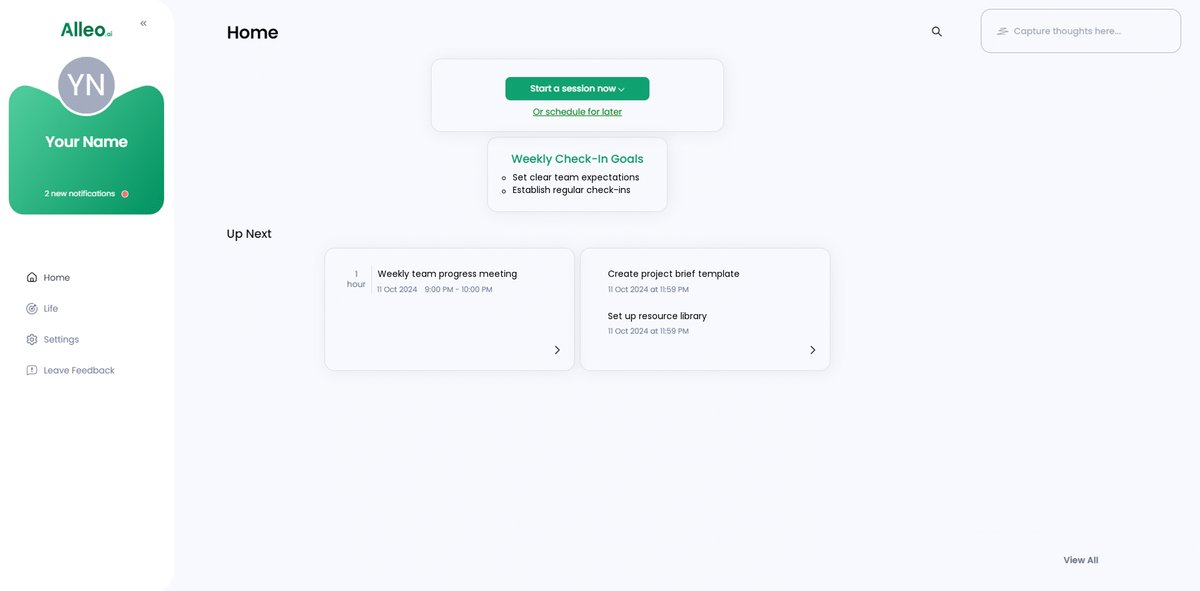
After your coaching session, check the app’s home page to view and manage the goals you discussed, allowing you to track progress and stay accountable as you work on trusting your team without micromanaging.
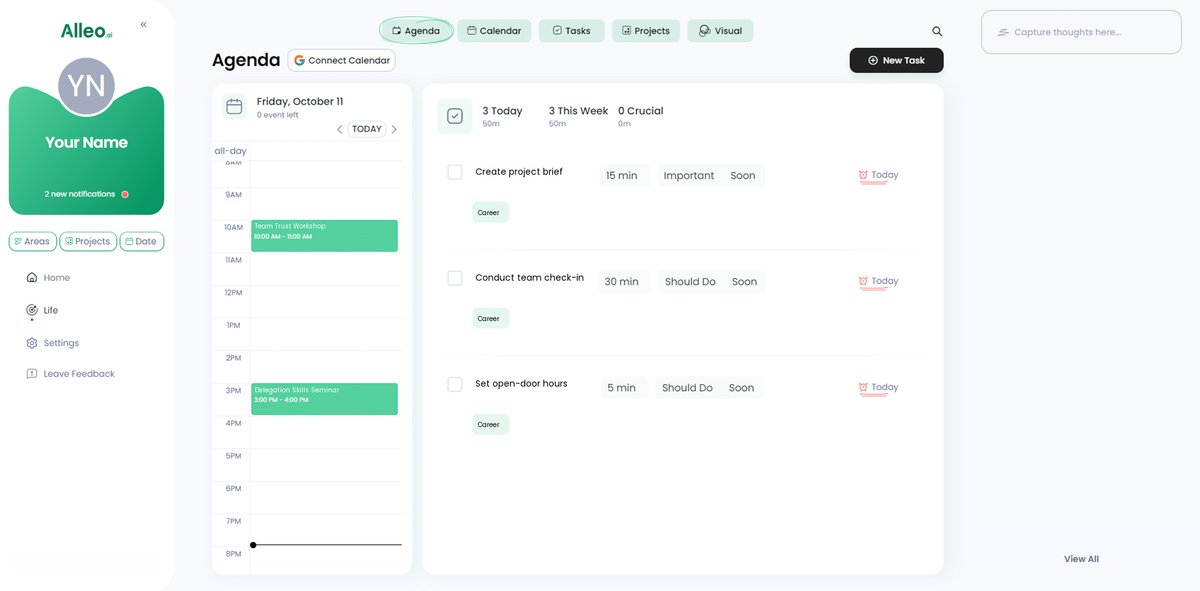
Step 6: Adding events to your calendar or app
Use Alleo’s calendar integration to schedule check-ins, deadlines, and team meetings, allowing you to easily track your progress in solving micromanagement issues and fostering team trust through the app’s calendar and task features.
Empower Your Team and Thrive
As we wrap things up, remember that learning to trust your team without micromanaging doesn’t mean losing control. It’s about creating a balance where everyone feels empowered and accountable, which is key to building trust in the workplace.
You’ve got this.
Implement these effective delegation techniques, and watch your team flourish. Setting clear expectations, checking in regularly, and providing resources will make a huge difference in developing team accountability.
Building trust is a journey. Start with small steps and grow from there, focusing on team autonomy strategies and overcoming micromanagement tendencies.
Why not try Alleo? It’s designed to help you master delegation and trust, enhancing your new manager leadership skills.
Sign up for a free 14-day trial and see the transformation. Empower your employees, learn performance monitoring without micromanaging, and lead with confidence.