Master Crisis Management: 5 Essential Strategies for Business Leaders
Have you ever found yourself in the middle of event chaos, wishing you had solid crisis management skills for events?
As a life coach, I’ve helped many professionals navigate the unpredictable waters of event planning. I’ve seen firsthand the importance of being prepared for the unexpected, including developing crisis communication techniques and business continuity planning.
In this blog, you’ll discover actionable strategies to develop essential crisis management skills for events. We’ll cover communication protocols, crisis simulations, playbooks, and more, focusing on leadership during emergencies and decision-making under pressure.
Ready to enhance your preparedness and learn about risk assessment and mitigation? Let’s dive in.

Understanding the Challenges of Crisis Management
Let’s face it, event planners encounter a myriad of crises, from unforeseen natural disasters to unexpected technical issues. When you’re unprepared, the consequences can be devastating. Developing crisis management skills for events is essential for success in this field.
Imagine scrambling to find solutions while your event falls apart, lacking proper risk assessment and mitigation strategies.
I’ve noticed many clients struggle with the overwhelming stress of managing such crises. The lack of a solid business continuity planning often leads to chaos and tarnished reputations.
It’s clear that acquiring and practicing crisis management skills for events is crucial, including leadership during emergencies and decision-making under pressure.
You might think, “Can I really prepare for every possible scenario?”
The answer is yes, with the right strategies. By developing these crisis management skills for events, including crisis communication techniques and team coordination in crises, you can turn potential disasters into manageable challenges.

Overcoming this challenge requires a few key steps in developing crisis management skills for events. Here are the main areas to focus on to make progress:
- Develop a crisis communication strategy: Establish protocols to ensure clear and efficient communication during crises, utilizing effective crisis communication techniques.
- Conduct regular crisis simulation exercises: Regularly practice simulations to enhance preparedness and improve decision-making under pressure.
- Create a crisis management playbook: Document detailed response plans for various scenarios, incorporating business continuity planning and risk assessment and mitigation strategies.
- Establish a dedicated crisis response team: Form a specialized team to handle crisis situations, focusing on leadership during emergencies and team coordination in crises.
- Enhance situational awareness through training: Implement ongoing training to stay alert and ready, emphasizing stakeholder management during disasters and crisis prevention strategies.
Let’s dive in to explore these crisis management skills for events!
1: Develop a crisis communication strategy
Developing a crisis communication strategy is crucial for enhancing crisis management skills for events and ensuring clear and efficient communication during crises.
Actionable Steps:
- Conduct a communication audit to identify current gaps in crisis communication techniques.
- Measure: Create a report detailing communication strengths and weaknesses for risk assessment and mitigation.
- Establish a crisis communication protocol for business continuity planning.
- Measure: Develop a step-by-step guide for communication during crises, focusing on leadership during emergencies.
- Train your team on the protocol through role-playing exercises to improve decision-making under pressure.
- Measure: Conduct quarterly training sessions and evaluate team coordination in crises.
Explanation:
These steps matter because effective crisis management skills for events can mitigate the impact of a crisis and maintain stakeholder management during disasters. By identifying gaps, establishing clear protocols, and training your team, you ensure a coordinated and efficient response.
For more insights on effective crisis communication, you can refer to this guide.
Key elements of a robust crisis management strategy for events include:
- Clear chain of command
- Pre-approved messaging templates for crisis prevention strategies
- Multi-channel communication plan for reputation management post-crisis
Prepare your team well, and you’ll be ready to handle any situation that arises, focusing on recovery and resilience building.
2: Conduct regular crisis simulation exercises
Conducting regular crisis simulation exercises is crucial for enhancing your team’s crisis management skills for events and improving response capabilities.
Actionable Steps:
- Schedule bi-annual crisis simulations to practice decision-making under pressure.
- Measure: Document and review simulation outcomes to identify improvement areas in crisis communication techniques.
- Collaborate with local emergency services for realistic scenarios to enhance business continuity planning.
- Measure: Create partnerships and conduct joint simulations focusing on leadership during emergencies.
- Debrief with your team after each simulation to improve team coordination in crises.
- Measure: Develop action plans based on debriefing insights for better risk assessment and mitigation.
Explanation:
These steps matter because practicing simulations helps your team stay alert and prepared for real crises. By partnering with local services, you ensure realistic scenarios that test your crisis management skills for events and response plans.
Debriefing sessions are essential for refining strategies and learning from experiences. For more insights on stakeholder management during disasters, refer to Crisis Management Negotiation.
Regular simulations foster a culture of readiness and continuous improvement in crisis prevention strategies and reputation management post-crisis.

3: Create a crisis management playbook
Creating a crisis management playbook is essential for developing crisis management skills for events and ensuring a structured and efficient response during crises.
Actionable Steps:
- Identify potential crisis scenarios for your events.
- Measure: List and categorize scenarios based on likelihood and impact, incorporating risk assessment and mitigation strategies.
- Develop detailed response plans for each scenario.
- Measure: Document procedures and assign responsibilities, including crisis communication techniques and team coordination in crises.
- Update the playbook regularly based on new insights and past experiences.
- Measure: Review and revise the playbook annually, focusing on crisis prevention strategies and business continuity planning.
Explanation:
These steps matter because a well-prepared playbook can significantly reduce response time and improve decision-making under pressure during crises.
By identifying scenarios, creating detailed plans, and keeping the playbook updated, you ensure that your team is always ready to exercise leadership during emergencies. For more insights, you can refer to the Applied Crisis and Emergency Management course.
Essential components of a comprehensive crisis management playbook:
- Emergency contact lists
- Step-by-step response procedures
- Resource allocation guidelines
A comprehensive playbook turns chaos into order, enhancing your team’s confidence and effectiveness in stakeholder management during disasters and reputation management post-crisis.

4: Establish a dedicated crisis response team
Establishing a dedicated crisis response team is vital for managing unexpected issues effectively and enhancing crisis management skills for events.
Actionable Steps:
- Select team members based on their skills and experience in crisis communication techniques.
- Measure: Formalize roles and responsibilities for each team member, focusing on leadership during emergencies.
- Provide specialized training for the crisis response team in business continuity planning.
- Measure: Enroll team members in relevant courses and workshops on risk assessment and mitigation.
- Conduct team-building activities to enhance coordination and decision-making under pressure.
- Measure: Organize quarterly team-building events and assess team dynamics in crisis scenarios.
Explanation:
These steps matter because a well-prepared and coordinated team can significantly reduce response time and improve decision-making during crises, crucial for effective crisis management skills for events.
By selecting skilled members, providing specialized training, and enhancing team coordination, you ensure efficient crisis management and stakeholder management during disasters.
For more insights, refer to the role of Sr. Director of Issues Management.
A dedicated crisis response team turns potential chaos into a manageable situation, focusing on crisis prevention strategies and reputation management post-crisis.

5: Enhance situational awareness through training
Enhancing situational awareness through training is crucial for developing crisis management skills for events and remaining alert and prepared during crises.
Actionable Steps:
- Conduct regular situational awareness training sessions.
- Measure: Schedule monthly training and track attendance.
- Implement technology tools for real-time monitoring and risk assessment and mitigation.
- Measure: Integrate tools like disaster alert apps and social media monitoring.
- Encourage continuous learning through professional development focused on crisis management skills for events.
- Measure: Support team members in attending relevant conferences and seminars.
Explanation:
These steps matter because heightened situational awareness enables quick and effective responses during crises. Regular training keeps your team sharp, while technology tools provide critical real-time information for decision-making under pressure.
Continuous learning ensures your team stays updated on best practices in crisis communication techniques and business continuity planning. For more insights, you can refer to the Applied Crisis and Emergency Management course.
Key benefits of enhanced situational awareness:
- Faster threat identification
- Improved decision-making under pressure
- More effective resource allocation and team coordination in crises
Stay vigilant, and your team will be ready for any unexpected situation, demonstrating effective leadership during emergencies.
Partner with Alleo on Your Crisis Management Journey
We’ve explored the challenges of mastering crisis management skills for events and the steps to achieve it. Did you know you can work directly with Alleo to make this journey easier and faster, enhancing your crisis communication techniques and business continuity planning?
Alleo, the AI life coach, offers affordable, tailored coaching support to improve your crisis management skills for events. It provides full coaching sessions, akin to a human coach, focusing on leadership during emergencies and decision-making under pressure. Alleo offers a free 14-day trial with no credit card required.
Set up an account and create a personalized plan with Alleo to develop your risk assessment and mitigation strategies. The AI coach follows up on your progress, handles changes, and keeps you accountable via text and push notifications, helping you improve team coordination in crises and stakeholder management during disasters.
Ready to get started for free and enhance your crisis management skills for events? Let me show you how!
Step 1: Logging in or Creating an Account
To begin your crisis management journey with Alleo, Log in to your account or create a new one to access personalized AI coaching support for enhancing your event planning skills.

Step 2: Choose “Building better habits and routines”
Select “Building better habits and routines” to develop consistent crisis management practices that will help you stay prepared and respond effectively to unexpected challenges during event planning.

Step 3: Selecting the Life Area You Want to Focus On
Choose “Career” as your focus area to enhance your crisis management skills, which is crucial for event planners looking to excel in their professional roles and handle unexpected challenges with confidence.

Step 4: Starting a coaching session
Begin your journey with Alleo by scheduling an intake session to discuss your crisis management goals and create a personalized action plan for enhancing your event planning skills.

Step 5: Viewing and managing goals after the session
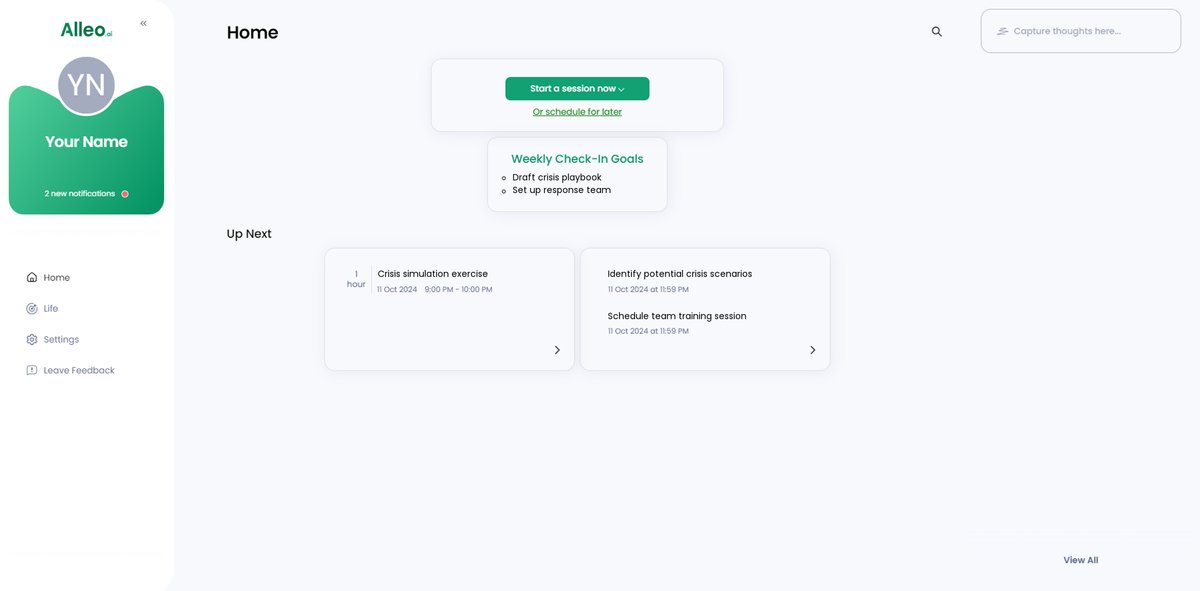
After your crisis management coaching session, check the Alleo app’s home page to view and manage the goals you discussed, allowing you to track your progress in developing essential preparedness skills for event planning.
Step 6: Adding events to your calendar or app
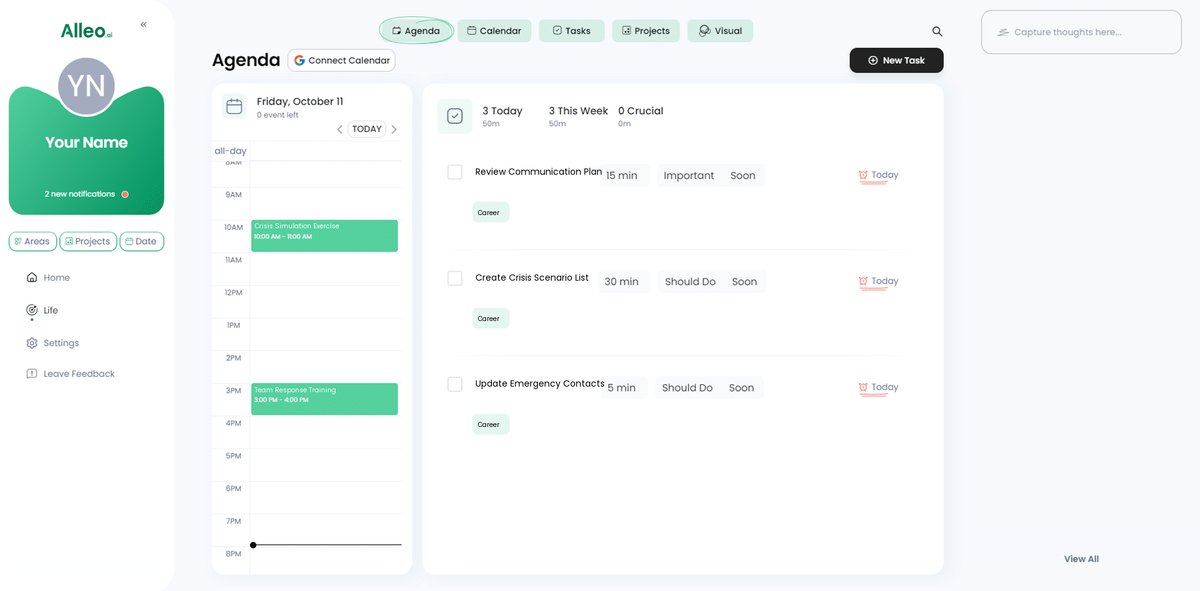
Use Alleo’s calendar and task features to schedule and track your crisis management training sessions, simulations, and team meetings, allowing you to monitor your progress and stay accountable as you implement your new crisis management strategies.
Final Thoughts on Mastering Crisis Management
You’ve learned the essential steps to mastering crisis management skills for events. It’s been a journey, hasn’t it?
Remember, crises will happen. Being unprepared is not an option when it comes to business continuity planning.
Implementing these strategies will transform how you handle unexpected issues. You’ll gain confidence and control in decision-making under pressure.
Don’t let potential disasters deter you from honing your crisis management skills for events.
Embrace these steps, and watch your preparedness grow, including your risk assessment and mitigation abilities.
Alleo can help you stay on track with crisis prevention strategies. The AI coach is there to support you every step of the way in developing leadership during emergencies.
Ready to enhance your crisis management skills for events? Try Alleo for free and start your journey in mastering team coordination in crises today!
You’ve got this!