Mastering Strategies for ADHD Student Accountability: A Teacher’s Guide
As a life coach, I’ve helped many educators navigate these challenges. In my experience, working with students to build accountability is crucial, especially when it comes to ADHD student accountability strategies.
In this article, you’ll discover proven strategies to help ADHD students recognize and take responsibility for their actions. We’ll explore personalized daily report cards, visual schedules, collaborative goal-setting methods for students with ADHD, and more. These ADHD classroom management techniques aim to enhance self-regulation skills for ADHD students and provide effective time management tools for ADHD learners.
Let’s dive into these ADHD-friendly organizational systems and positive reinforcement strategies for ADHD.

Understanding the Challenges in Teaching Accountability to ADHD Students
Educators often find it particularly challenging to implement ADHD student accountability strategies in the classroom. Many students with ADHD struggle with attention, focus, and behavior, making it difficult to maintain accountability and develop self-regulation skills.
In my experience, these challenges can feel overwhelming. ADHD students may have difficulty staying organized, completing tasks, and following through on commitments, necessitating ADHD-friendly organizational systems and time management tools for ADHD learners.
This is not due to a lack of capability but rather the unique ways ADHD affects executive functioning, highlighting the need for executive function support in the classroom.
Moreover, misconceptions around ADHD and accountability can complicate these efforts. For instance, some people believe that ADHD students are simply lazy or unmotivated, which is far from the truth.
Instead, these students need tailored ADHD classroom management techniques and consistent support to thrive in their educational environment.
Educators must navigate these challenges while fostering a supportive and structured learning environment. This requires a combination of patience, understanding, and effective strategies tailored to the needs of ADHD students, such as positive reinforcement strategies for ADHD and goal-setting methods for students with ADHD.
By addressing these issues through behavior modification techniques for ADHD and collaborative approaches for ADHD accountability, teachers can help students build the skills they need for long-term success.
Key Steps to Help ADHD Students Develop Accountability
Overcoming this challenge requires a few key steps. Here are the main ADHD student accountability strategies to focus on to make progress:
- Implement a personalized daily report card system: Track daily tasks and behaviors with individualized education plans for ADHD students using report cards.
- Teach time management using visual schedules: Use visual schedules as time management tools for ADHD learners to break down the day into manageable segments.
- Use collaborative goal-setting with students: Set goals with students to increase their investment and accountability, incorporating goal-setting methods for students with ADHD.
- Provide frequent, specific feedback on behaviors: Give immediate and constructive feedback to encourage desired behaviors, utilizing positive reinforcement strategies for ADHD.
- Establish clear routines for task completion: Create structured classroom routines to help students stay on track, implementing ADHD-friendly organizational systems.
Let’s dive into these ADHD student accountability strategies!
1: Implement a personalized daily report card system
Implementing a personalized daily report card system is crucial for helping ADHD students develop accountability, forming the foundation of effective ADHD student accountability strategies.
Actionable Steps:
- Design individualized report cards that track daily tasks and behaviors, incorporating time management tools for ADHD learners.
- Measure progress daily to provide immediate feedback and reinforcement, supporting self-regulation skills for ADHD students.
- Collaborate with students to set achievable daily goals using SMART criteria, aligning with goal-setting methods for students with ADHD.
Explanation:
These steps matter because they provide immediate feedback, which is essential for ADHD students. Personalized report cards help students see their progress, making them more engaged and accountable, while supporting executive function in the classroom.
According to CDC guidelines, tailored strategies are effective in supporting ADHD students in educational settings. By including students in the goal-setting process, teachers increase their investment and commitment to improvement, exemplifying collaborative approaches for ADHD accountability.
This approach sets the foundation for other ADHD classroom management techniques, ensuring students have a clear understanding of their daily responsibilities.

2: Teach time management using visual schedules
Teaching time management using visual schedules is essential for helping ADHD students maintain focus and complete tasks, serving as one of the most effective ADHD student accountability strategies.
Actionable Steps:
- Develop a visual schedule that breaks the day into manageable segments. Use color-coded charts and images to represent different activities and times, incorporating ADHD-friendly organizational systems.
- Incorporate reminders and prompts to help students transition between tasks. Use timers or alarms to signal the beginning and end of activities, enhancing time management tools for ADHD learners.
Key benefits of visual schedules for ADHD students:
- Reduce anxiety by providing clear structure
- Improve time awareness and task completion, supporting executive function in the classroom
- Enhance independence in daily routines, promoting self-regulation skills for ADHD students
Explanation:
These steps are crucial because visual schedules provide clear structure and make time management more tangible for ADHD students, aligning with effective ADHD classroom management techniques.
According to the CDC, using visual aids can significantly improve organizational skills and task completion. By incorporating reminders, students stay on track and reduce the anxiety of transitioning between activities, supporting behavior modification techniques for ADHD.
This method supports students in building strong time management skills, essential for their long-term success and serving as a cornerstone of ADHD student accountability strategies.
3: Use collaborative goal-setting with students
Using collaborative goal-setting with students is crucial for enhancing their accountability and engagement in the classroom, especially when implementing ADHD student accountability strategies.
Actionable Steps:
- Conduct regular one-on-one meetings with students to discuss progress and set new goals, incorporating goal-setting methods for students with ADHD.
- Involve students in creating a personal goal chart that tracks achievements using stickers or other rewards, which can serve as effective time management tools for ADHD learners.
- Encourage students to personalize their charts to reflect their interests and motivations, promoting self-regulation skills for ADHD students.
Explanation:
These steps matter because involving students in goal-setting increases their investment and commitment, aligning with ADHD classroom management techniques.
Personalized goal charts make progress visible and engaging, fostering a sense of ownership and serving as ADHD-friendly organizational systems.
According to ADRC guidelines, collaborative approaches significantly enhance motivation and accountability in ADHD students, leading to better educational outcomes.
This method builds a supportive and motivating environment, essential for student success and executive function support in the classroom.
4: Provide frequent, specific feedback on behaviors
Providing frequent, specific feedback on behaviors is essential for implementing effective ADHD student accountability strategies and helping them stay engaged in their learning.
Actionable Steps:
- Give immediate and constructive feedback: Offer specific praise or guidance right after a behavior occurs. Highlight what the student did well or needs to improve on, incorporating positive reinforcement strategies for ADHD.
- Use a consistent tracking system: Implement a digital platform or app to document feedback. This ensures that students and parents can access and review progress regularly, supporting ADHD-friendly organizational systems.
- Schedule regular check-ins: Arrange brief, consistent meetings to discuss feedback and set new behavior goals. This helps maintain momentum and address any concerns promptly, aligning with goal-setting methods for students with ADHD.
Effective feedback strategies for ADHD students:
- Be specific and descriptive in your comments
- Focus on effort and improvement, not just results
- Use positive reinforcement to encourage desired behaviors
Explanation:
These steps matter because immediate and specific feedback helps ADHD students understand their actions and make necessary adjustments, supporting self-regulation skills for ADHD students.
According to the ADRC guidelines, constructive feedback can significantly enhance motivation and accountability.
Consistent tracking and regular check-ins ensure that students receive ongoing support and reinforcement, leading to better behavioral outcomes and improving ADHD classroom management techniques.
These strategies help create a supportive environment where students feel seen and understood, fostering positive growth and enhancing executive function support in the classroom.
5: Establish clear routines for task completion
Establishing clear routines for task completion is vital to help ADHD students stay organized and focused, serving as a key ADHD student accountability strategy.
Actionable Steps:
- Designate specific times for different activities: Create a daily schedule with set times for tasks, ensuring consistency and predictability, which supports time management for ADHD learners.
- Use visual aids and reminders: Implement visual charts and reminders to reinforce routines and guide students through their tasks, enhancing ADHD-friendly organizational systems.
- Provide step-by-step guides for assignments: Offer clear, written instructions and checklists to help students track their progress and stay on task, supporting executive function in the classroom.
Key elements of effective ADHD-friendly routines:
- Consistency in daily schedules
- Clear transitions between activities
- Built-in breaks for movement and refocusing
Explanation:
These steps matter because structured routines provide ADHD students with a predictable environment, reducing anxiety and improving task management as part of comprehensive ADHD classroom management techniques.
According to the ADRC, clear routines and visual aids significantly enhance organization and task completion for ADHD students.
Consistent routines ensure that students understand their responsibilities and can manage their time effectively, fostering self-regulation skills for ADHD students.
This structured approach lays the foundation for continued academic success and supports individualized education plans for ADHD students.
Partner with Alleo to Enhance Student Accountability
We’ve explored the challenges of helping ADHD students develop accountability through various ADHD student accountability strategies. But did you know you can work directly with Alleo to make this journey easier and faster?
Setting up an account with Alleo is simple. First, sign up for a free 14-day trial, no credit card required. This allows you to explore our ADHD classroom management techniques and time management tools for ADHD learners.
Then, create a personalized plan tailored to your classroom needs, incorporating self-regulation skills for ADHD students. Alleo’s AI coach will provide full coaching sessions, just like a human coach, focusing on executive function support in the classroom.
The coach will follow up on your progress and handle any changes along the way, implementing positive reinforcement strategies for ADHD. You’ll receive text and push notifications to keep you accountable, aligning with ADHD-friendly organizational systems.
Ready to get started for free and explore our goal-setting methods for students with ADHD? Let me show you how!
Step 1: Logging in or Creating an Account
To begin your journey with Alleo and enhance ADHD student accountability, simply Log in to your account or create a new one to access our AI coach and start implementing personalized strategies for your classroom.

Step 2: Choose “Building better habits and routines”
Select “Building better habits and routines” as your goal to establish consistent classroom structures that support ADHD students in developing accountability and improving task completion.

Step 3: Selecting the life area you want to focus on
Choose the “Personal” life area in Alleo to address accountability challenges for ADHD students, as this focuses on developing individual skills and habits that are crucial for classroom success and long-term personal growth.

Step 4: Starting a coaching session
Begin with an intake session to set up your personalized plan, where Alleo’s AI coach will ask about your classroom challenges and goals for improving ADHD student accountability, ensuring a tailored approach moving forward.

Step 5: Viewing and managing goals after the session
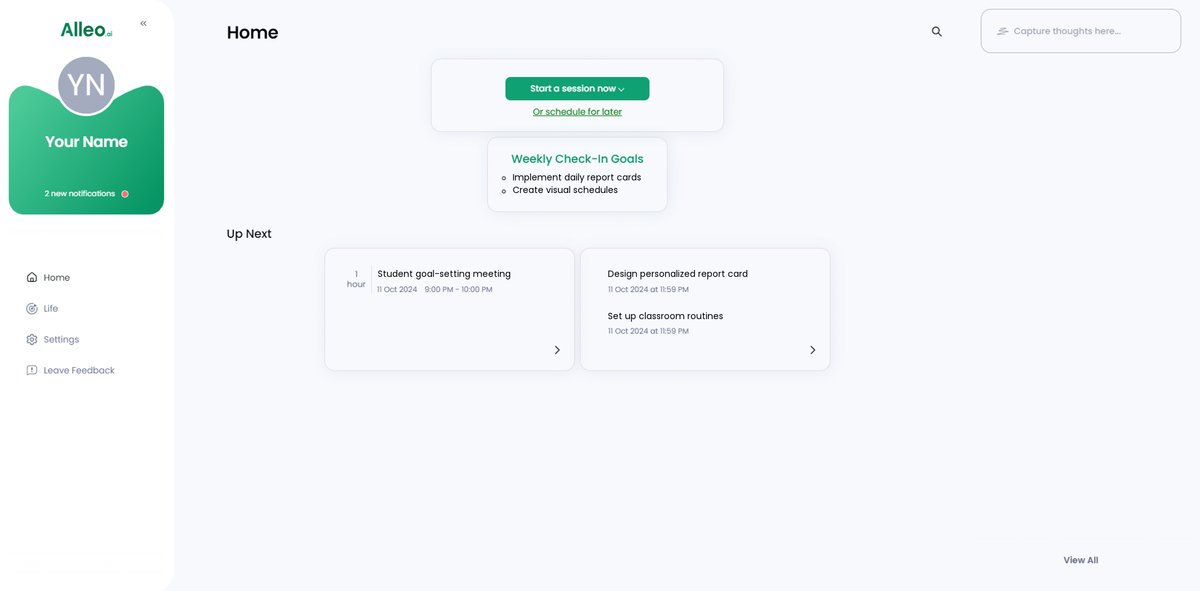
After your coaching session, you’ll find the goals you discussed conveniently displayed on the home page of the Alleo app, allowing you to easily track and manage your progress in developing accountability strategies for ADHD students.
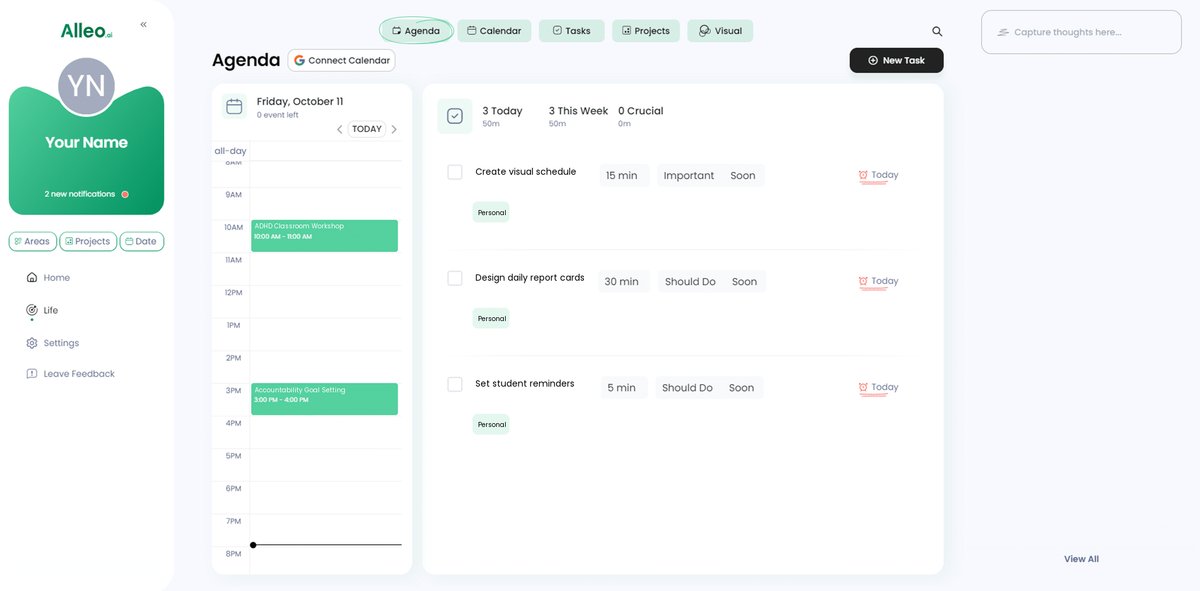
Step 6: Adding events to your calendar or app
Use the Alleo app’s calendar and task features to easily add and track classroom events, student goals, and progress milestones, helping you stay organized and monitor your ADHD students’ accountability journey more effectively.
Bringing It All Together for Student Success
We’ve covered several ADHD student accountability strategies to help develop accountability. Each one is designed to support their unique needs and improve ADHD classroom management techniques.
By implementing personalized report cards, visual schedules, and collaborative goal-setting methods for students with ADHD, you can make a real difference. Providing frequent feedback and establishing clear routines further solidify these efforts, enhancing self-regulation skills for ADHD students.
Remember, patience and consistency are key. These strategies require time and persistence but lead to meaningful progress in developing executive function support in the classroom.
Consider leveraging Alleo to streamline this process. Our AI coach can help you stay organized and on track, making your job a little easier by providing time management tools for ADHD learners.
Take the first step today. Try Alleo for free and see the positive impact on your classroom, supporting individualized education plans for ADHD students.