Mastering Anxiety Management: Essential Strategies for Young Professionals
Have you ever felt an overwhelming sense of worry that you couldn’t quite pinpoint? This is a common experience for young professionals learning to manage anxiety in their careers.
As a life coach, I’ve helped many professionals navigate these challenges. I often encounter men in relationships who struggle with unrecognized anxiety, especially those in high-pressure jobs or dealing with imposter syndrome in early career stages.
In this article, you’ll discover practical strategies to manage anxiety for young professionals. We’ll cover mindfulness practices, recognizing physical symptoms of workplace stress, and more career-related anxiety coping mechanisms.
Ready to improve your emotional health and relationships while balancing work and personal life to reduce anxiety? Let’s dive into these anxiety management techniques for early career individuals.

Understanding the Hidden Impact of Anxiety
Anxiety often hides in plain sight, especially among young professionals in relationships. Many clients initially struggle to identify their anxiety, mistaking it for workplace stress or fatigue.
This unrecognized anxiety can disrupt daily life, work performance, and relationships for those trying to manage anxiety for young professionals.
Imagine feeling constantly irritable or struggling to concentrate at work. These are common signs of anxiety that often go unnoticed, particularly when recognizing workplace stress in your 20s and 30s.
When left unaddressed, anxiety can lead to severe issues like burnout and strained relationships, making it crucial to learn anxiety management techniques for early career individuals.
Recognizing these symptoms is the first step toward better emotional health. By understanding the impact of anxiety, you can take proactive steps to manage anxiety for young professionals effectively, incorporating mindfulness practices and self-care strategies for busy young professionals.

Key Steps to Manage Anxiety Effectively
Overcoming this challenge requires a few key steps for young professionals to manage anxiety. Here are the main areas to focus on to make progress in anxiety management techniques for early career individuals.
- Practice daily mindfulness for anxiety awareness: Start with mindfulness practices for young professionals to center your thoughts.
- Learn to identify physical anxiety symptoms: Note physical symptoms like elevated heart rate, common in recognizing workplace stress in your 20s and 30s.
- Develop a personalized stress management plan: Identify and prioritize your top stressors to manage anxiety for young professionals effectively.
- Seek support from trusted friends or partners: Have open conversations about your anxiety, utilizing mental health resources for recent graduates.
- Use CBT techniques to challenge anxious thoughts: Write down and challenge negative thoughts, addressing imposter syndrome and anxiety in early career stages.
- Establish a work-life balance routine: Create a schedule that includes both work and personal time, balancing work and personal life to reduce anxiety.
Let’s dive in to explore these career-related anxiety coping mechanisms!
1: Practice daily mindfulness for anxiety awareness
Practicing daily mindfulness can greatly enhance your awareness of anxiety and help you manage anxiety for young professionals effectively.
Actionable Steps:
- Start your day with 5 minutes of mindfulness meditation to center your thoughts and emotions, a key anxiety management technique for early career individuals.
- Use a mindfulness app to track your progress and gradually increase your meditation time, supporting mental health resources for recent graduates.
- Incorporate deep-breathing exercises during breaks to maintain calm and focus throughout the day, aiding in recognizing workplace stress in your 20s and 30s.
Explanation: These steps matter because they create a solid foundation for recognizing and managing anxiety. Mindfulness meditation, in particular, has been shown to reduce stress and improve emotional regulation, essential for balancing work and personal life to reduce anxiety.
According to the Medical News Today, mindfulness practices can significantly reduce anxiety symptoms and enhance overall well-being. By incorporating these practices into your daily routine, you can start to notice anxiety triggers and respond to them more effectively, building resilience against anxiety in professional settings.
Key benefits of mindfulness for anxiety management:
- Increases self-awareness and emotional regulation, helping with imposter syndrome and anxiety in early career stages
- Reduces stress and promotes relaxation, crucial for stress reduction techniques in high-pressure jobs
- Improves focus and decision-making abilities, supporting career-related anxiety coping mechanisms
Try integrating these mindfulness steps into your daily life to start feeling more in control of your anxiety, an essential self-care strategy for busy young professionals.

2: Learn to identify physical anxiety symptoms
Understanding physical anxiety symptoms is crucial for managing your overall well-being, especially when learning to manage anxiety for young professionals.
Actionable Steps:
- Keep a journal: Write down physical symptoms like elevated heart rate, shaking, or sweating each day, which can help in recognizing workplace stress in your 20s and 30s.
- Attend a body awareness workshop: Learn how anxiety manifests physically through guided exercises and expert advice, a valuable anxiety management technique for early career individuals.
- Practice progressive muscle relaxation: Focus on different muscle groups to understand and alleviate tension, one of many stress reduction techniques for high-pressure jobs.
Explanation: These steps matter because they help you become more attuned to your body’s signals, essential for managing anxiety for young professionals.
Recognizing physical symptoms can prevent anxiety from escalating, which is crucial for building resilience against anxiety in professional settings.
According to the Healthdirect, understanding these signs can lead to better management and overall health.
By implementing these practices, you’ll gain greater control over your anxiety, an important aspect of balancing work and personal life to reduce anxiety.
Identifying physical symptoms is a vital part of your journey toward better emotional health and is key to manage anxiety for young professionals.

3: Develop a personalized stress management plan
Developing a personalized stress management plan is crucial for managing anxiety for young professionals and improving overall well-being.
Actionable Steps:
- Identify your top stressors: Write down your main stressors at work and home. Rank them by priority to recognize workplace stress in your 20s and 30s.
- Set achievable goals: Create specific goals for reducing stress, like delegating tasks or setting firm boundaries, which are essential career-related anxiety coping mechanisms.
- Schedule regular relaxation activities: Dedicate time weekly for hobbies or exercise to recharge and relax, incorporating mindfulness practices for young professionals.
Explanation: These steps matter because they help you systematically address stress, reducing its impact on your life and helping manage anxiety for young professionals.
According to the CDC, stress management techniques can help individuals cope with anxiety more effectively and prevent negative health outcomes.
By implementing a personalized plan, you’ll enhance your ability to manage anxiety for young professionals and improve your overall well-being.
Taking these steps can help you feel more in control of your stress and anxiety, building resilience against anxiety in professional settings.

4: Seek support from trusted friends or partners
Seeking support from trusted friends or partners is vital for managing anxiety effectively, especially for young professionals looking to manage anxiety in their early careers.
Actionable Steps:
- Have open conversations: Discuss your anxiety with a close friend or partner and explain how they can support you in managing anxiety for young professionals.
- Join a support group: Connect with others facing similar challenges either in person or online for shared experiences and advice on anxiety management techniques for early career individuals.
- Set regular check-ins: Schedule regular discussions with your support network to talk about progress and setbacks in recognizing workplace stress in your 20s and 30s.
Explanation: These steps matter because they help you feel less isolated and more understood. Support from others can provide different perspectives and coping mechanisms for career-related anxiety.
According to the NIDA, social support is crucial for improving mental health outcomes. By engaging with trusted friends or partners, you can build a robust support system to manage anxiety more effectively and develop self-care strategies for busy young professionals.
Ways to build a strong support network:
- Cultivate deep, meaningful relationships to help balance work and personal life to reduce anxiety
- Be open and honest about your struggles with imposter syndrome and anxiety in early career stages
- Offer support to others in return, fostering resilience against anxiety in professional settings
Connecting with others can make a significant difference in your journey toward better mental health and in managing anxiety for young professionals.

5: Use CBT techniques to challenge anxious thoughts
Using CBT techniques to challenge anxious thoughts is essential for managing anxiety for young professionals effectively.
Actionable Steps:
- Write down negative thoughts: Document your negative thoughts and challenge them with positive affirmations to manage anxiety in early career stages.
- Practice thought-stopping techniques: Interrupt anxiety spirals by saying “stop” aloud or visualizing a stop sign, which can help in recognizing workplace stress in your 20s and 30s.
- Work with a therapist: Collaborate with a therapist to develop personalized CBT strategies tailored to your needs, focusing on career-related anxiety coping mechanisms.
Explanation: These steps matter because they help you reframe negative thought patterns and reduce anxiety, which is crucial for building resilience against anxiety in professional settings.
According to the NIMH, CBT is highly effective in treating anxiety disorders, making it a valuable tool for young professionals to manage anxiety.
By using these techniques, you can gain better control over your thoughts and emotions, essential for balancing work and personal life to reduce anxiety.
Implementing these CBT strategies can significantly improve your emotional health and well-being, helping you cope with imposter syndrome and anxiety in early career stages.

6: Establish a work-life balance routine
Establishing a work-life balance routine is crucial for managing anxiety for young professionals and maintaining overall well-being.
Actionable Steps:
- Create a weekly schedule: Include dedicated work hours and personal time to ensure a balanced routine, helping to manage anxiety for young professionals.
- Implement a “no-work” policy: Avoid work-related activities during evenings and weekends to allow for proper rest and reduce career-related anxiety.
- Use time management tools: Prioritize tasks efficiently and avoid overcommitting by using scheduling apps or planners, aiding in balancing work and personal life to reduce anxiety.
Explanation: These steps matter because they help you maintain a healthy balance between work and personal life, which is essential for anxiety management techniques for early career individuals.
According to the Cleveland Clinic, managing work-life balance can reduce stress and improve emotional health. By setting clear boundaries and prioritizing tasks, you can prevent burnout and enhance your overall well-being, crucial for recognizing workplace stress in your 20s and 30s.
Tips for maintaining a healthy work-life balance:
- Set clear boundaries between work and personal time
- Prioritize self-care and leisure activities as part of stress reduction techniques for high-pressure jobs
- Learn to say no to unnecessary commitments, an important aspect of building resilience against anxiety in professional settings
Making these changes can significantly improve your work-life balance and reduce anxiety, helping young professionals manage anxiety effectively in their careers.

Partner with Alleo to Manage Your Anxiety Effectively
We’ve explored recognizing and managing anxiety for young professionals and its benefits for your emotional health and relationships. But did you know you can work directly with Alleo to make this journey easier and faster for early career individuals?
Setting up an account with Alleo is quick and simple. Create a personalized plan tailored to your anxiety management needs, including techniques for recognizing workplace stress in your 20s and 30s.
Alleo’s AI coach offers full coaching sessions, just like a human coach, focusing on mindfulness practices for young professionals and career-related anxiety coping mechanisms.
With Alleo, you’ll receive tailored coaching support, including daily check-ins and progress tracking. The coach will follow up on your progress and adjust plans as needed, helping you balance work and personal life to reduce anxiety.
You’ll get reminders via text and push notifications to keep you accountable and maintain self-care strategies for busy young professionals.
Ready to get started for free? Let me show you how to manage anxiety for young professionals effectively!
Step 1: Sign In or Create Your Alleo Account
To begin your journey towards better anxiety management, log in to your existing Alleo account or create a new one in just a few clicks.

Step 2: Choose Your Focus Area
Select “Improving overall well-being and life satisfaction” as your goal to directly address the anxiety management strategies discussed in the article, helping you create a personalized plan for better emotional health and stronger relationships.

Step 3: Select “Health” as Your Focus Area
Choose “Health” as your primary focus area in Alleo to address anxiety-related challenges. By prioritizing your mental and physical well-being, you’ll be better equipped to manage stress, improve emotional regulation, and develop effective coping strategies for anxiety, directly aligning with the goals outlined in the article.

Step 4: Starting a Coaching Session
Begin your journey with Alleo by scheduling an intake session, where you’ll discuss your anxiety management goals and create a personalized plan to guide your future coaching sessions.

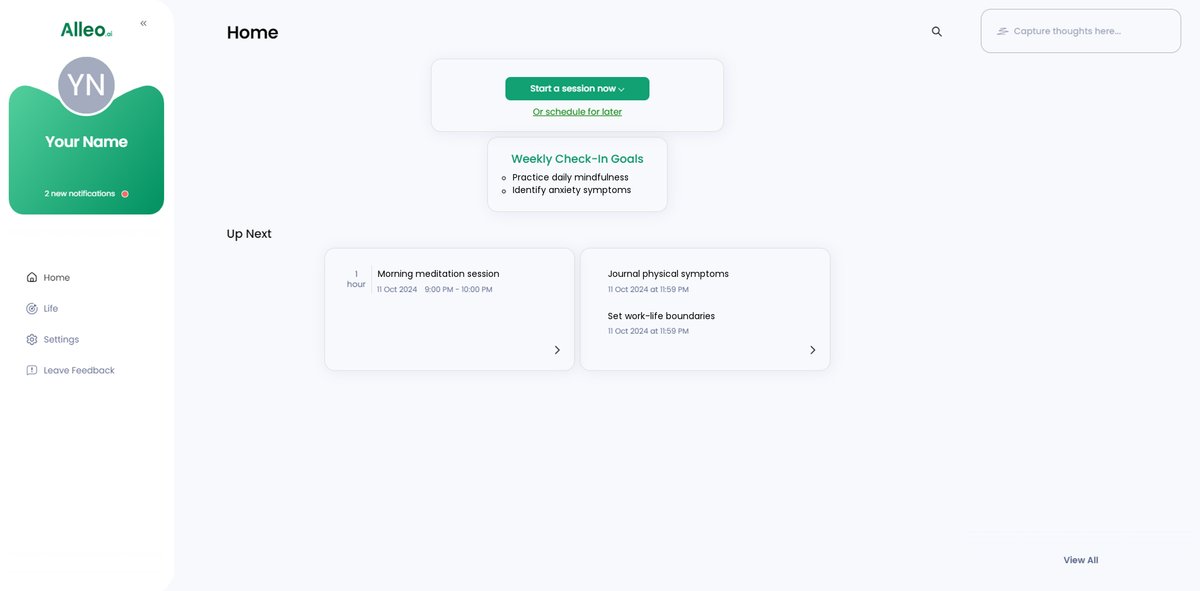
Step 5: Viewing and Managing Goals After the Session
After your coaching session, check the Alleo app’s home page to review and manage the anxiety management goals you discussed with your AI coach, allowing you to track your progress and stay accountable.
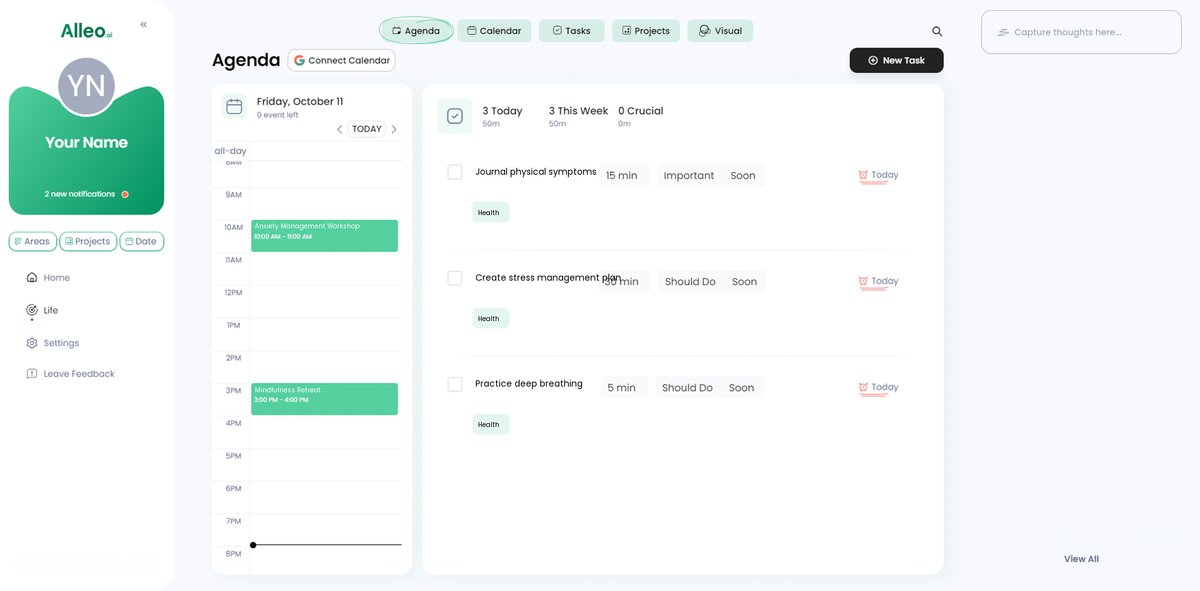
Step 6: Adding events to your calendar or app
Use the calendar and task features in the Alleo app to schedule and track your anxiety management activities, such as mindfulness sessions, therapy appointments, and work-life balance routines, helping you stay accountable and monitor your progress over time.
Wrapping Up: Take Control of Your Anxiety
As we conclude, reflect on the strategies we’ve discussed to manage anxiety for young professionals. Recognizing and managing anxiety can transform your emotional health and relationships, especially when balancing work and personal life to reduce anxiety.
These practical steps can help you identify and address anxiety in early career stages. Remember, small changes can make a big difference when it comes to anxiety management techniques for early career individuals.
Take the first step today towards building resilience against anxiety in professional settings.
You don’t have to do this alone. Alleo can be the support you need for coping with career-related anxiety.
Try Alleo for free and see how it can help you manage anxiety effectively for young professionals. Together, we’ll make progress toward a calmer, more balanced life, incorporating mindfulness practices for young professionals.