Mastering Emotional Intelligence in Relationships: A Young Professional’s Comprehensive Guide
Have you ever felt misunderstood in your relationship, despite your best efforts to communicate? This is where emotional intelligence for relationships comes into play.
As a life coach, I’ve helped many men navigate these challenges. In my experience, emotional intelligence is crucial for building strong, lasting relationships. It’s not just about romantic partnerships; workplace relationships can also benefit from these skills.
In this article, you’ll discover practical strategies to improve your emotional intelligence. We’ll cover daily self-reflection, active listening in relationships, and seeking feedback. These emotional intelligence techniques can enhance your interpersonal skills development.
Let’s dive in and explore how emotional intelligence for relationships can transform your connections.

Understanding the Emotional Intelligence Challenges
Many men struggle to understand and manage their emotions in relationships. This often leads to miscommunication and emotional strain, highlighting the importance of emotional intelligence for relationships.
For instance, several clients report feeling overwhelmed by their partner’s emotional needs. They find it hard to express their feelings without causing conflict, which is where communication skills for couples become crucial.
Seeking feedback is crucial for interpersonal skills development. Yet, many men hesitate to ask for it, fearing criticism.
Without growth in emotional intelligence, relationships can suffer. You might experience frequent arguments or feel disconnected from your partner, underscoring the need for conflict resolution strategies.
Understanding these challenges is the first step towards improving emotional intelligence for relationships. Next, we’ll explore practical strategies to enhance your emotional intelligence techniques.

A Roadmap to Enhancing Emotional Intelligence for Relationships
Overcoming this challenge requires a few key steps. Here are the main areas to focus on to make progress in developing emotional intelligence for relationships:
- Practice Daily Self-Reflection on Emotions: Reflect on your emotions daily to understand your emotional triggers and responses, enhancing self-awareness in dating and workplace relationships.
- Actively Listen and Empathize with Your Partner: Develop better listening skills and show empathy to strengthen your connection, improving communication skills for couples and interpersonal skills development.
- Seek Regular Feedback on Emotional Responses: Regularly ask for feedback to identify areas for improvement in your emotional responses, aiding in managing emotions at work and conflict resolution strategies.
Let’s dive into these emotional intelligence techniques!
1: Practice daily self-reflection on emotions
Daily self-reflection on emotions is crucial for understanding your emotional triggers and responses, which is a key aspect of developing emotional intelligence for relationships.
Actionable Steps:
- Journal your emotions: Write down your emotions and thoughts each evening. Reflect on how they impacted your interactions with your partner, enhancing self-awareness in dating.
- Practice mindfulness meditation: Spend 10 minutes each morning meditating to increase self-awareness. Focus on recognizing your emotions without judgment, an essential emotional intelligence technique.
- Set emotional check-ins: Set reminders to pause and assess your emotional state throughout the day. Identify triggers and patterns in your responses, which is valuable for managing emotions at work and in personal relationships.
Explanation:
These steps help you become more aware of your emotions, which is key to improving your emotional intelligence. Increased self-awareness can lead to better communication skills for couples and understanding in relationships.
According to research, self-awareness is fundamental for emotional growth and relationship satisfaction.
Key benefits of daily self-reflection:
- Enhances emotional awareness
- Improves decision-making
- Reduces stress and anxiety
By practicing these steps consistently, you’ll be better equipped to navigate emotional challenges in your relationship and develop interpersonal skills.
Next, we’ll explore how to actively listen and empathize with your partner, which are crucial components of emotional intelligence for relationships.

2: Actively listen and empathize with your partner
Actively listening and empathizing with your partner is essential to building a strong, understanding relationship and developing emotional intelligence for relationships.
Actionable Steps:
- Practice active listening in relationships: Paraphrase and summarize what your partner says to ensure you understand their perspective. Avoid interrupting and provide your full attention during conversations.
- Create an empathy map: Visualize your partner’s emotions and experiences to guide your interactions and responses, enhancing your empathy building exercises.
- Engage in role-playing exercises: Practice empathy by role-playing scenarios with your partner, switching roles to see situations from each other’s perspectives, improving communication skills for couples.
Explanation:
These steps help you better connect with your partner by showing understanding and empathy, key components of emotional intelligence for relationships.
According to research, active listening and empathy are key components of emotional intelligence, crucial for relationship satisfaction and interpersonal skills development.
By implementing these emotional intelligence techniques, you can improve communication and reduce misunderstandings in your relationship.
Next, we’ll explore how seeking regular feedback can further enhance your emotional intelligence for relationships.

3: Seek regular feedback on emotional responses
Seeking regular feedback on your emotional responses is vital for ongoing emotional growth and relationship improvement, especially when developing emotional intelligence for relationships.
Actionable Steps:
- Schedule feedback sessions: Set weekly sessions with your partner to discuss emotional responses. Identify areas for improvement based on the feedback, focusing on enhancing communication skills for couples.
- Find a mentor or coach: Engage with a mentor experienced in emotional intelligence for guidance. Attend sessions regularly and apply their advice to improve interpersonal skills development.
- Attend workshops: Participate in emotional intelligence workshops to learn new techniques. Implement these strategies in your daily interactions, including workplace relationships.
Ways to maximize feedback sessions:
- Come prepared with specific questions about emotional intelligence techniques
- Be open to constructive criticism to enhance self-awareness in dating and relationships
- Set actionable goals based on feedback to improve social intelligence for young adults
Explanation:
These steps matter because they help you identify and work on areas where you need improvement. Regular feedback and professional guidance can significantly enhance your emotional intelligence, which is crucial for relationship satisfaction and managing emotions at work.
According to research, consistent practice and feedback are vital for emotional growth. Taking these actions helps you build a stronger, more understanding relationship through empathy building exercises and conflict resolution strategies.
Improving emotional intelligence for relationships requires dedication and practice. Next, we’ll explore how using Alleo can further support your journey in developing active listening in relationships.
Partner with Alleo on Your Emotional Intelligence Journey
We’ve explored the challenges of improving emotional intelligence for relationships and the steps to achieve it. But did you know you can work directly with Alleo to make this journey easier and faster?
Setting up an account with Alleo is quick and simple. Once you sign up, Alleo will help create a personalized plan tailored to your needs, including emotional intelligence techniques for workplace relationships and self-awareness in dating.
You’ll have full coaching sessions, just like with a human coach, but at a fraction of the cost. These sessions can cover topics like empathy building exercises and communication skills for couples.
Alleo tracks your progress, handles changes, and keeps you accountable with text and push notifications. You can set and track emotional intelligence goals, receive personalized advice on managing emotions at work, and plan regular reflection and feedback sessions to improve your interpersonal skills development.
Ready to get started for free? Let me show you how!
Sign up for Alleo’s free 14-day trial today—no credit card required. Enhance your emotional intelligence and build stronger relationships now, mastering conflict resolution strategies and active listening in relationships.
Step 1: Log In or Create Your Account
To begin your emotional intelligence journey with Alleo, simply log in to your account or create a new one to access personalized coaching and support tailored to your relationship goals.

Step 2: Choose Your Goal – Improving Overall Well-being and Life Satisfaction
Select “Improving Overall Well-being and Life Satisfaction” as your goal to address the emotional intelligence challenges in your relationships. This comprehensive goal will help you develop the self-awareness, empathy, and communication skills needed to build stronger connections and enhance your personal growth.

Step 3: Select ‘Personal’ as Your Focus Area
Choose the ‘Personal’ life area in Alleo to address emotional intelligence challenges in your relationships, as this focus will help you develop self-awareness and interpersonal skills crucial for building stronger connections with your partner.

Step 4: Starting a coaching session
Begin your emotional intelligence journey with Alleo by scheduling an intake session, where you’ll discuss your goals and create a personalized plan to enhance your relationship skills through targeted coaching sessions.

Step 5: Viewing and managing goals after the session
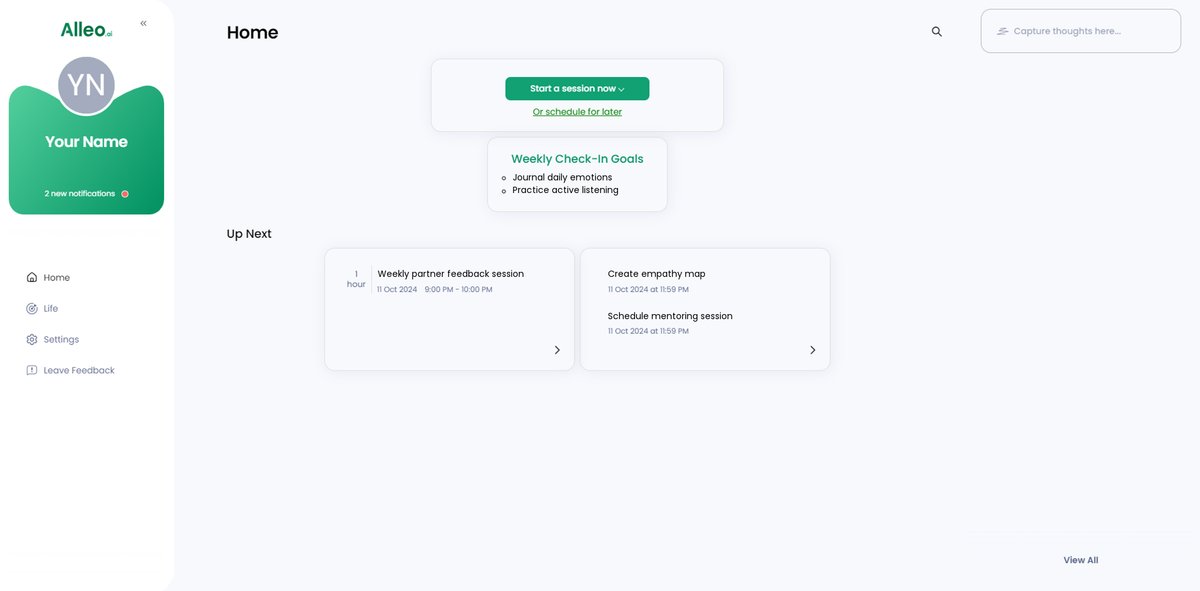
After your coaching session, open the Alleo app to find your discussed emotional intelligence goals displayed on the home page, allowing you to easily track and manage your progress towards building stronger relationships.
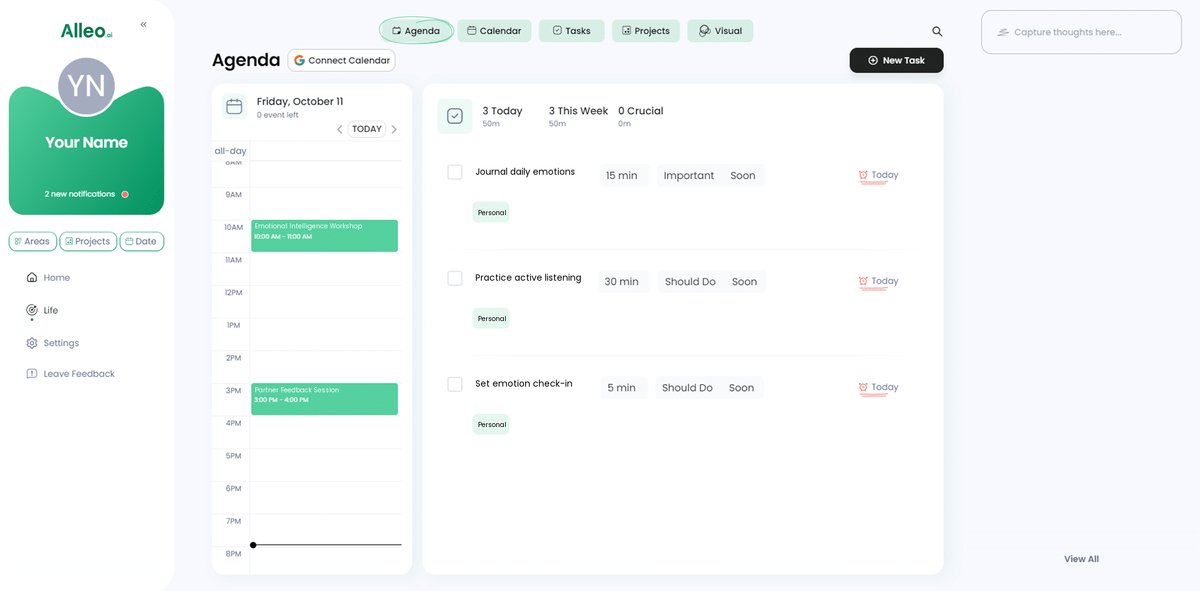
Step 6: Adding events to your calendar or app
Schedule your emotional intelligence practices in the Alleo app by adding daily self-reflection, active listening sessions, and feedback meetings to your calendar, allowing you to easily track your progress in solving relationship challenges and improving your emotional intelligence over time.
Embrace Your Emotional Growth Journey
You’ve learned the essential steps to enhance your emotional intelligence for relationships. Now, it’s time to put these emotional intelligence techniques into practice.
Start with daily self-reflection to understand your emotions better, boosting self-awareness in dating and workplace relationships. Practice active listening in relationships and empathy with your partner to improve communication skills for couples.
Seek regular feedback to keep improving your interpersonal skills development.
Remember, progress in emotional intelligence for relationships takes consistency and effort. You can do this.
Partnering with Alleo can make this journey of managing emotions at work and in personal life smoother. With Alleo, you’ll have the tools and support you need to succeed in developing your social intelligence for young adults.
Sign up for Alleo’s free 14-day trial today. Enhance your emotional intelligence for relationships and build stronger, more fulfilling connections, while mastering conflict resolution strategies.