Mindfulness for Nurses: 6 Essential Techniques to Manage Emergency Room Stress
Imagine being in the middle of an emergency with multiple patients needing urgent care — how do you keep your cool and stay effective? This is where mindfulness for emergency nurses becomes crucial.
As a life coach, I’ve helped many professionals navigate these challenges. In my experience working with healthcare professionals, I often encounter the need for resilience and focus during high-stress scenarios. Nurse stress management and emergency room mindfulness practices are key components in maintaining composure.
In this article, you’ll discover actionable mindfulness techniques to help you stay present and focused during these intense moments. From deep breathing exercises for emergency situations to emotional debriefing, these strategies are designed to improve your emotional resilience and job performance. We’ll explore mindful nursing in high-pressure environments and stress reduction for healthcare professionals.
Let’s dive into these self-care strategies for ER nurses and quick meditation techniques for nurses.

The Stress and Strain of Emergency Nursing
Emergency nursing is one of the most challenging and stressful professions. Nurses face emotional and physical stress daily in high-pressure environments, which can be overwhelming. Mindfulness for emergency nurses is becoming increasingly important in addressing these challenges.
Many nurses struggle to maintain job performance and mental health due to high-stress environments. Burnout and PTSD are common, severely impacting overall well-being. Stress reduction for healthcare professionals, including mindfulness-based stress relief for medical staff, is crucial for long-term career sustainability.
In my experience, healthcare professionals often find these stressors detrimental to their emotional resilience. Turnover rates among new nurses are high, indicating a pressing need for effective stress management techniques. Emergency room mindfulness practices and coping mechanisms for nurses in crisis scenarios can help address this issue.
Understanding these challenges is the first step toward finding solutions. Let’s explore how mindfulness can help, including quick meditation techniques for nurses and self-care strategies for ER nurses.

Effective Mindfulness Techniques for Emergency Nurses
Overcoming high-stress nursing challenges requires a few key steps. Here are the main areas to focus on for mindfulness for emergency nurses to make progress:
- Practice Deep Breathing Exercises Regularly: Set aside time for deep breathing exercises for emergency situations at the start and end of each shift.
- Use Progressive Muscle Relaxation During Breaks: Incorporate a 10-minute PMR routine during lunch breaks as part of your nurse stress management strategy.
- Implement Mindfulness-Based Stress Reduction: Enroll in an MBSR course and practice mindfulness daily to enhance emotional resilience training for emergency nurses.
- Engage in Post-Shift Emotional Debriefing: Schedule debriefing sessions with colleagues or supervisors after stressful shifts to support stress reduction for healthcare professionals.
- Utilize Quick Grounding Techniques Mid-Shift: Practice the “5-4-3-2-1” grounding technique as one of the quick meditation techniques for nurses to stay focused.
- Develop a Personal Mantra for Stressful Moments: Create a short, positive mantra to repeat during stressful situations, enhancing mindful nursing in high-pressure environments.
Let’s dive into these emergency room mindfulness practices!
1: Practice deep breathing exercises regularly
Deep breathing exercises are essential for managing stress and maintaining focus during high-pressure situations, making them a crucial aspect of mindfulness for emergency nurses.
Actionable Steps:
- Set aside 5 minutes at the start and end of each shift for deep breathing exercises as part of your nurse stress management routine.
- Use the 4-7-8 breathing technique to quickly induce relaxation during high-stress moments in the emergency room.
- Incorporate breathing exercises into your daily routine, such as during breaks or while commuting, to enhance mindful nursing in high-pressure environments.
Explanation:
Practicing deep breathing exercises regularly helps reduce stress and increase mental clarity. By setting specific times for these exercises, you create a habit that improves emotional resilience, which is vital for emergency nurses facing crisis scenarios.
According to the VA Whole Health Library, mind-body practices, including deep breathing, can profoundly impact emotional well-being.
Regular practice ensures that you are better equipped to handle the demands of emergency nursing and can serve as an effective stress reduction technique for healthcare professionals.
2: Use Progressive Muscle Relaxation during breaks
Progressive Muscle Relaxation (PMR) during breaks can significantly alleviate physical tension and reduce stress, making it an excellent mindfulness for emergency nurses technique.
Actionable Steps:
- Practice a 10-minute PMR routine during your lunch break. Focus on tensing and then relaxing different muscle groups, a key nurse stress management strategy.
- Utilize guided PMR audio sessions available through mindfulness apps or online resources to ensure proper technique, enhancing emergency room mindfulness practices.
Key benefits of PMR include:
- Reduced muscle tension and physical stress
- Improved mental clarity and focus, essential for mindful nursing in high-pressure environments
- Enhanced ability to manage emotional responses, contributing to stress reduction for healthcare professionals
Explanation:
Incorporating PMR into your daily routine helps release pent-up tension, promoting relaxation and mental clarity. It’s one of the quick meditation techniques for nurses that can be easily integrated into a busy schedule.
According to the VA Whole Health Library, mind-body practices like PMR can greatly enhance emotional resilience, serving as effective self-care strategies for ER nurses.
Regular practice can make stressful shifts more manageable, allowing you to perform at your best, ultimately supporting mindfulness-based stress relief for medical staff and improving coping mechanisms for nurses in crisis scenarios.
3: Implement mindfulness-based stress reduction
Mindfulness-based stress reduction (MBSR) is essential for managing stress in high-pressure nursing environments, especially for emergency nurses seeking effective stress management techniques.
Actionable Steps:
- Enroll in a local or online MBSR course to learn structured mindfulness practices and techniques for emergency room mindfulness practices.
- Dedicate 20 minutes each day to mindfulness meditation, focusing on breath and body sensations as part of self-care strategies for ER nurses.
- Apply mindfulness techniques during patient interactions to stay grounded and present, enhancing mindful nursing in high-pressure environments.
Explanation:
Implementing MBSR can significantly reduce stress and improve emotional resilience for emergency nurses. By enrolling in an MBSR course, you gain structured guidance on effective mindfulness practices and stress reduction for healthcare professionals.
Dedicating daily time to mindfulness meditation helps you stay focused and calm, while applying these techniques during patient care enhances your ability to remain present. These quick meditation techniques for nurses can be particularly beneficial in crisis scenarios.
According to the VA Whole Health Library, mindfulness practices are highly effective in managing stress and improving well-being.
Incorporating MBSR into your routine can transform your approach to high-stress situations, providing valuable coping mechanisms for nurses in emergency departments.
4: Engage in post-shift emotional debriefing
Engaging in post-shift emotional debriefing is crucial for processing intense experiences and maintaining mental well-being, especially for emergency nurses practicing mindfulness in high-pressure environments.
Actionable Steps:
- Schedule regular debriefing sessions: Arrange debriefing sessions with a trusted colleague or supervisor after particularly stressful shifts to enhance mindfulness for emergency nurses.
- Use journaling to reflect: At the end of each day, write about your emotions and experiences to gain clarity and perspective, incorporating self-care strategies for ER nurses.
- Participate in group debriefing sessions: Join support groups to share experiences and receive mutual support from peers, focusing on stress reduction for healthcare professionals.
Explanation:
These steps help manage stress by providing an outlet for emotions and fostering a support network, promoting mindfulness for emergency nurses.
Reflecting on your day through journaling can offer insights and emotional relief, serving as one of the coping mechanisms for nurses in crisis scenarios.
Using debriefing sessions and support groups helps maintain emotional resilience, an essential aspect of mindfulness-based stress relief for medical staff.
According to the AACN, structured debriefing sessions are vital for stress management.
By engaging in post-shift emotional debriefing, you’ll be better prepared to face the challenges of emergency nursing and maintain mindfulness in high-pressure environments.
5: Utilize quick grounding techniques mid-shift
Quick grounding techniques are essential for maintaining focus and composure during chaotic moments in emergency nursing, serving as effective mindfulness practices for emergency nurses.
Actionable Steps:
- Practice the “5-4-3-2-1” technique: Identify 5 things you can see, 4 things you can touch, 3 things you can hear, 2 things you can smell, and 1 thing you can taste. This is a quick meditation technique for nurses in high-pressure environments.
- Take short, mindful breaks: Engage in grounding activities, such as sipping water slowly or feeling the texture of an object, as part of your stress management routine.
- Use grounding affirmations or visualizations: Regain focus by repeating calming phrases or visualizing a peaceful scene, which are effective coping mechanisms for nurses in crisis scenarios.
Explanation:
These grounding techniques help you stay present and manage stress effectively during high-pressure situations. By practicing these steps, you can quickly restore your focus and maintain emotional resilience, which is crucial for mindfulness in emergency nursing.
According to the IntelyCare, emotional intelligence training, including grounding techniques, can significantly improve job performance and mental well-being. This aligns with mindfulness-based stress relief for medical staff.
Implementing these methods mid-shift ensures you remain composed and effective in your role, enhancing nurse stress management and promoting self-care strategies for ER nurses.
6: Develop a personal mantra for stressful moments
In high-pressure emergency situations, having a personal mantra can help maintain calm and focus, serving as a mindfulness technique for emergency nurses.
Actionable Steps:
- Create a short, positive mantra: Choose a phrase like “I am calm and capable” that resonates with you, supporting nurse stress management.
- Repeat your mantra silently or out loud: Use it during stressful situations to reinforce a sense of control and calm, incorporating emergency room mindfulness practices.
- Write your mantra on a small card: Keep it in your pocket or on your workstation for quick access, facilitating mindful nursing in high-pressure environments.
Effective mantras often share these characteristics:
- Short and easy to remember
- Positive and empowering
- Personally meaningful
Explanation:
Developing a personal mantra provides a quick mental reset during intense moments. By repeating a positive phrase, you can shift your mindset and maintain composure, a key stress reduction technique for healthcare professionals.
According to the IntelyCare, emotional intelligence training, including using mantras, can enhance job performance and mental well-being. This practice is vital for staying effective in emergency situations and serves as a coping mechanism for nurses in crisis scenarios.
By integrating a personal mantra into your routine, you reinforce resilience and focus, contributing to emotional resilience training for emergency nurses.
Partner with Alleo on Your Mindfulness Journey
We’ve explored the challenges of managing stress in emergency nursing and how mindfulness for emergency nurses can help. But did you know you can work directly with Alleo to make this journey easier and faster for nurse stress management?
Alleo, an AI life coach, offers tailored support for healthcare professionals seeking mindfulness-based stress relief for medical staff. Setting up an account is simple.
You can create a personalized plan to incorporate emergency room mindfulness practices into your routine.
Alleo will help you set reminders for daily mindful nursing in high-pressure environments and track your progress. Our AI coach provides full coaching sessions, just like any human coach, and keeps you accountable with text and push notifications to support stress reduction for healthcare professionals.
Ready to get started for free? Let me show you how to begin your journey with mindfulness for emergency nurses!
Step 1: Log In or Create Your Account
To begin your mindfulness journey with Alleo, simply Log in to your account or create a new one to access personalized support for managing stress in emergency nursing.

Step 2: Choose “Improve overall well-being and life satisfaction”
Select “Improve overall well-being and life satisfaction” as your goal to address the stress and challenges of emergency nursing, helping you develop resilience and mindfulness techniques that will enhance your work performance and personal life balance.

Step 3: Select “Health” as Your Focus Area
Choose “Health” as your primary focus area in Alleo to address stress management and mindfulness techniques specifically tailored for emergency nursing, helping you build resilience and improve your overall well-being in this high-pressure profession.

Step 4: Starting a Coaching Session
Begin your journey with Alleo by scheduling an initial intake session, where you’ll discuss your stress management goals and create a personalized mindfulness plan tailored to your emergency nursing challenges.

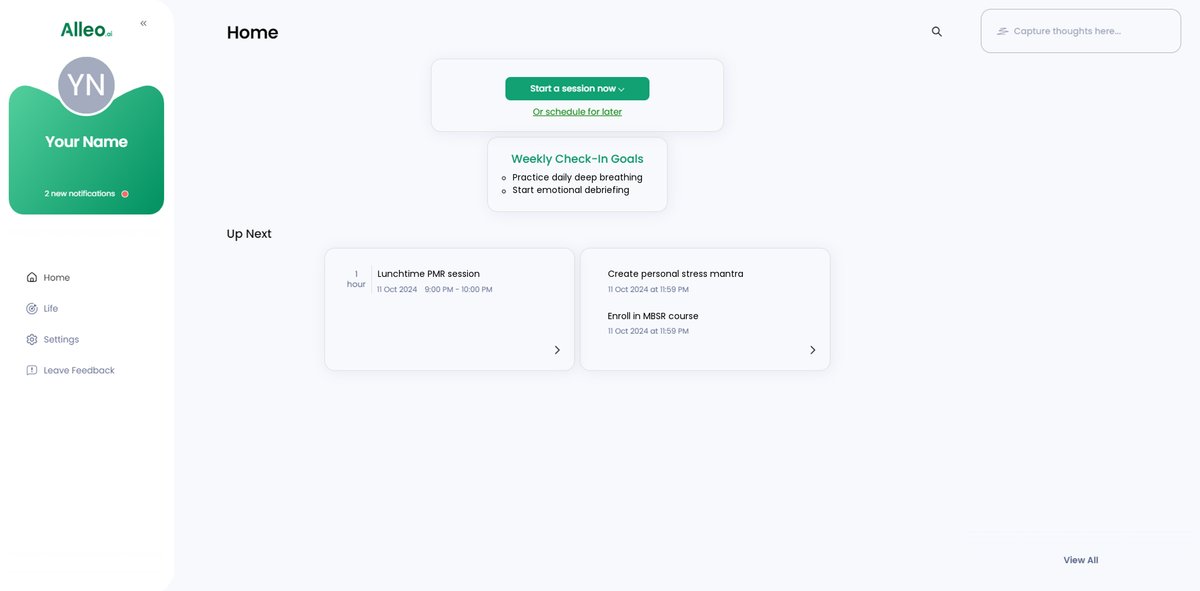
Step 5: Viewing and managing goals after the session
After your coaching session, check the Alleo app’s home page to review and manage the mindfulness goals you discussed, helping you stay on track with your stress management techniques for emergency nursing.
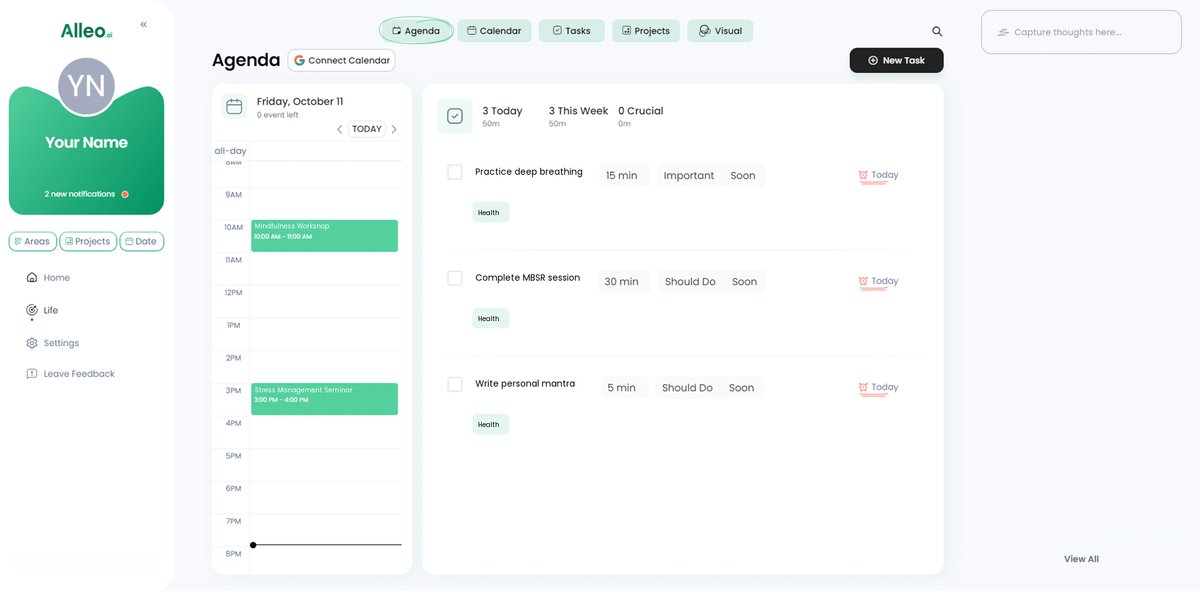
Step 6: Adding events to your calendar or app
Set up reminders for your mindfulness practices and debriefing sessions in Alleo’s calendar feature, allowing you to easily track your progress in managing stress and improving emotional resilience as an emergency nurse.
Bringing It All Together: Your Path to Stress Management
Working in emergency nursing is tough, but with mindfulness techniques for emergency nurses, you can find relief.
Remember, deep breathing, muscle relaxation, and mindfulness can transform your stressful shifts in the emergency room.
Embrace emotional debriefing and grounding techniques to stay focused and resilient in high-pressure environments.
Creating a personal mantra helps maintain calm during intense moments, a key aspect of nurse stress management.
By using these strategies, you’ll improve your emotional resilience and job performance as an emergency nurse.
I believe in your ability to manage stress effectively through mindfulness practices.
Ready to take the next step in your mindfulness journey for emergency nurses?
Try Alleo for free and get personalized support on your path to stress reduction for healthcare professionals.
You deserve balance and focus in your high-stress emergency room environment.
Start today with Alleo, your AI life coach for mindfulness-based stress relief.