Overcoming Imposter Syndrome: A Comprehensive Guide for New Corporate Employees
Are you feeling overwhelmed and out of place on your first day at a new corporate job?
Overcoming imposter syndrome at work is a common struggle among new employees, especially recent graduates entering the corporate culture.
As a life coach, I’ve helped many professionals navigate these challenges and build confidence in professional settings. In my experience, overcoming self-doubt at work can significantly boost your performance and career growth.
In this post, you’ll discover actionable strategies for workplace success as a newcomer, including:
- Recognizing negative self-talk
- Celebrating achievements
- Seeking mentorship through workplace mentorship programs
- Practicing mindfulness to cope with new employee anxiety
Let’s dive into these strategies for overcoming imposter syndrome at work and enhancing your self-efficacy in corporate environments.

Understanding the Depth of Imposter Syndrome
It’s important to realize that imposter syndrome isn’t just a fleeting feeling. Many new employees face persistent self-doubt and the fear of being exposed as frauds when overcoming imposter syndrome at work.
This can be incredibly draining.
I often see clients who struggle with these feelings, impacting not just their mental health but also their job performance. Increased anxiety and reduced productivity are common consequences of imposter syndrome in the workplace.
For example, several clients report feeling paralyzed by the thought that they don’t belong in their roles. Imagine working hard but constantly fearing that everyone will discover you’re not as competent as they think, a common challenge when building confidence in professional settings.
These feelings of inadequacy can make every task seem monumental. It’s a vicious cycle that consumes your energy and undermines your confidence, making overcoming self-doubt at work a crucial aspect of professional development for beginners.

Key Steps to Overcome Imposter Syndrome
Overcoming imposter syndrome at work requires a few key steps. Here are the main areas to focus on to make progress in building confidence in professional settings:
- Recognize and Reframe Negative Self-Talk: Identify and challenge negative thoughts to build a positive mindset and overcome self-doubt at work.
- Track and Celebrate Small Daily Achievements: Keep a log of daily successes to boost confidence and improve self-efficacy in corporate environments.
- Seek Mentorship from Experienced Colleagues: Gain guidance and support from seasoned professionals through workplace mentorship programs.
- Practice Self-Compassion and Mindfulness Daily: Incorporate mindfulness and self-compassion exercises into your routine to combat imposter syndrome in the workplace.
Let’s dive in to explore strategies for workplace success as a newcomer!
1: Recognize and reframe negative self-talk
One of the first steps in overcoming imposter syndrome at work is recognizing and reframing negative self-talk, which is crucial for building confidence in professional settings.
Actionable Steps:
- Track negative thoughts: Keep a journal to note down any negative thoughts you have throughout the day. Reflect on these entries to identify patterns of self-doubt at work.
- Practice positive affirmations: Create a list of positive affirmations that counteract your negative thoughts. Repeat these affirmations daily, especially before starting your workday, to boost self-efficacy in corporate environments.
- Use cognitive-behavioral techniques: Challenge the evidence behind your negative thoughts. Replace them with more balanced perspectives using cognitive-behavioral techniques to combat imposter syndrome in the workplace.
Common negative thoughts to watch for when overcoming imposter syndrome at work:
- I’m not qualified for this job
- Everyone else is more capable than me
- I’m going to be exposed as a fraud
Explanation: Reframing negative self-talk is crucial because it helps build a positive mindset, which enhances your confidence and performance, particularly for those dealing with new employee anxiety.
According to insights from Asana, acknowledging and addressing these thoughts can significantly reduce feelings of inadequacy and improve mental health, which is essential for career growth and managing imposter feelings.
By incorporating these steps, you align with current trends emphasizing mental well-being in the workplace and strategies for workplace success as a newcomer.
Starting with these actions can set a strong foundation for overcoming imposter syndrome at work and boosting your confidence, which is vital for professional development for beginners.

2: Track and celebrate small daily achievements
Tracking and celebrating small daily achievements is vital for building confidence and maintaining motivation in your new role, especially when overcoming imposter syndrome at work.
Actionable Steps:
- Maintain a daily accomplishments log: Write down your small successes each day. Reflect on these achievements to foster a positive mindset and combat self-doubt at work.
- Set and celebrate milestones: Establish specific, measurable milestones for your goals. Reward yourself with small treats or acknowledgments when you reach them, which can help in building confidence in professional settings.
- Share your successes: Discuss your achievements with a trusted mentor or colleague. Use their positive feedback to boost your self-efficacy in corporate environments and address imposter syndrome in the workplace.
Explanation: Celebrating small achievements helps reinforce a positive outlook and build self-confidence, crucial strategies for workplace success as a newcomer.
According to LinkedIn, tracking accomplishments and receiving positive feedback can alleviate feelings of inadequacy and isolation. This approach aligns with the trend of emphasizing mental well-being in the workplace and can help in overcoming imposter syndrome at work.
Next, let’s explore how seeking mentorship from experienced colleagues can further support your journey in professional development for beginners and managing career growth and imposter feelings.
3: Seek mentorship from experienced colleagues
Seeking mentorship from experienced colleagues is essential for overcoming imposter syndrome at work and gaining valuable insights in professional settings.
Actionable Steps:
- Identify potential mentors: Pinpoint experienced colleagues who can offer guidance on overcoming self-doubt at work. Approach them with a clear request for mentorship, explaining your goals and challenges in corporate environments.
- Schedule regular meetings: Set up consistent one-on-one meetings with your mentor to discuss progress and strategies for workplace success as a newcomer. Prepare specific questions or topics for each meeting to maximize productivity and address imposter syndrome in the workplace.
Key benefits of mentorship include:
- Gaining industry-specific knowledge and advice for career growth
- Building a supportive professional network to combat new employee anxiety
- Receiving encouragement and validation to boost self-efficacy in corporate environments
Explanation: Having a mentor can provide you with support, encouragement, and practical advice tailored to your career goals and help in overcoming imposter syndrome at work.
According to CareerVillage, mentorship plays a crucial role in boosting confidence and navigating professional challenges.
Establishing a solid mentorship relationship can significantly enhance your career journey and aid in professional development for beginners.
Now, let’s discuss the importance of practicing self-compassion and mindfulness daily.

4: Practice self-compassion and mindfulness daily
Practicing self-compassion and mindfulness daily is vital for overcoming imposter syndrome at work and fostering mental well-being in corporate environments.
Actionable Steps:
- Start with morning mindfulness: Dedicate 5-10 minutes each morning to meditate or practice deep-breathing exercises. This helps center yourself and reduce anxiety, essential for building confidence in professional settings.
- Write self-compassion letters: Regularly write kind and supportive letters to yourself. Acknowledge your struggles and commend your efforts without judgment, aiding in overcoming self-doubt at work.
- Take mindful breaks: Throughout your workday, take brief mindfulness breaks to reset and reduce stress. Focus on your breathing and the present moment, a crucial strategy for workplace success as a newcomer.
Simple mindfulness exercises to try for addressing imposter syndrome in the workplace:
- Body scan meditation
- Five-senses grounding technique
- Loving-kindness meditation
Explanation: These steps are crucial because they help build resilience and reduce stress, aiding in overcoming imposter syndrome and enhancing self-efficacy in corporate environments.
According to Salesforce, incorporating mindfulness into your routine can significantly enhance mental well-being and professional performance, supporting career growth and managing imposter feelings.
By practicing these techniques daily, you can create a more supportive and balanced work experience, effectively overcoming imposter syndrome at work.

Partner with Alleo to Overcome Imposter Syndrome
We’ve explored the challenges of overcoming imposter syndrome at work and discussed effective strategies for building confidence in professional settings. Did you know you can work directly with Alleo to make this journey easier and faster, addressing self-doubt at work?
Get Started:
- Sign Up: Create an account on Alleo’s platform to begin tackling imposter syndrome in the workplace.
- Personalized Plan: Alleo tailors a plan to your specific needs, supporting your professional development as a beginner.
- Daily Coaching: Receive full coaching sessions, similar to a human coach, focusing on overcoming self-doubt at work.
- Progress Tracking: Get regular follow-ups and progress checks via text and push notifications to boost self-efficacy in corporate environments.
- Stay Accountable: Alleo keeps you on track with encouragement and reminders, aiding in your career growth and managing imposter feelings.
Ready to get started for free and learn strategies for workplace success as a newcomer? Let me show you how!
Step 1: Log In or Create Your Account
To begin your journey in overcoming imposter syndrome with Alleo, simply Log in to your account or create a new one to access personalized coaching and support tailored to your needs as a new corporate employee.

Step 2: Choose Your Focus Area
Click on “Improving overall well-being and life satisfaction” to address the root causes of imposter syndrome and build lasting confidence in your new role. This goal directly tackles the challenges discussed in the article, helping you develop a positive mindset and resilience against self-doubt.

Step 3: Select “Career” as Your Focus Area
Choose “Career” as your primary focus area in Alleo to directly address your imposter syndrome challenges and boost your confidence in your new corporate role, aligning perfectly with the strategies discussed in the article.

Step 4: Starting a coaching session
Begin your journey with Alleo by scheduling an intake session, where you’ll discuss your imposter syndrome challenges and work together to create a personalized action plan for building confidence in your new corporate role.

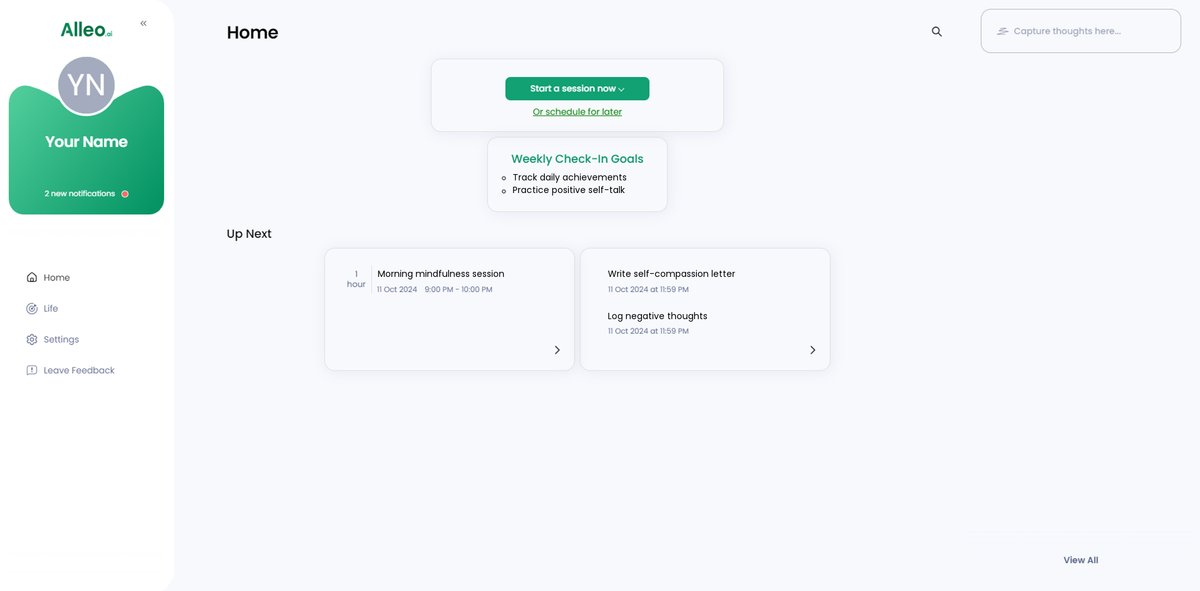
Step 5: Viewing and managing goals after the session
After your coaching session on overcoming imposter syndrome, check the Alleo app’s home page to review and manage the personalized goals you’ve set, helping you stay focused on building confidence in your new corporate role.
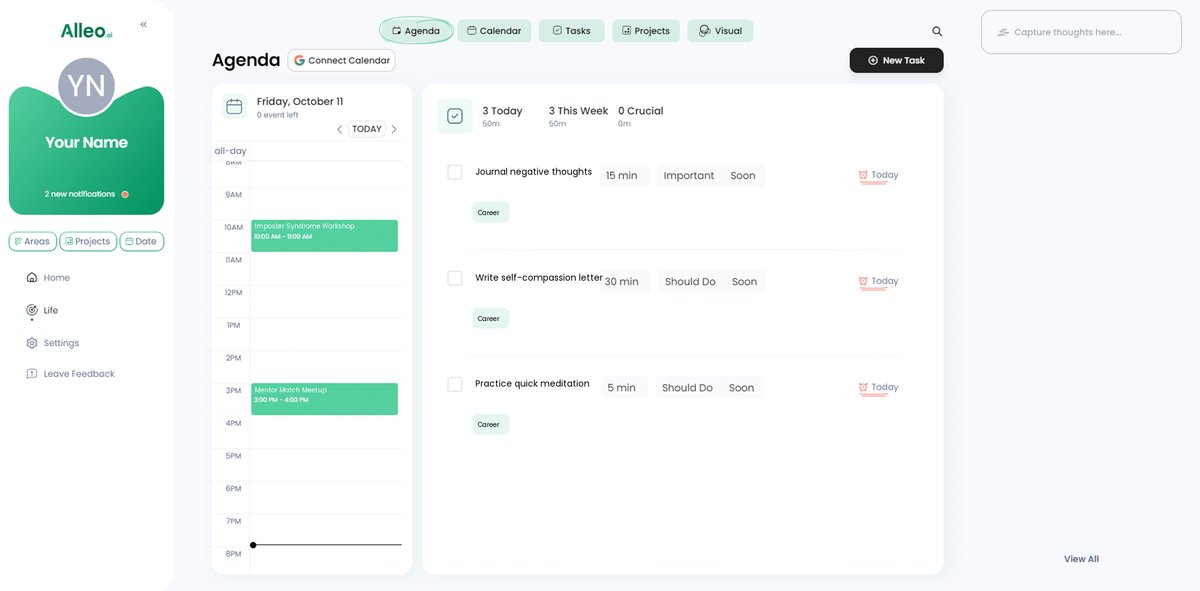
Step 6: Adding events to your calendar or app
Use the calendar and task features in the Alleo app to schedule and track your progress on overcoming imposter syndrome, such as setting reminders for daily affirmations, mentorship meetings, and mindfulness exercises.
Bringing It All Together
As we’ve explored, overcoming imposter syndrome at work is a journey. It’s essential to recognize and reframe negative self-talk, track achievements, seek mentorship, and practice mindfulness to combat self-doubt in corporate environments.
I empathize with your feelings of self-doubt and inadequacy in the workplace. Know that you’re not alone, and these strategies for workplace success as a newcomer can genuinely make a difference.
Take proactive steps to conquer imposter syndrome and enhance your confidence in professional settings.
Remember, Alleo is here to support you. Our AI life coach can guide you through this process of building confidence and overcoming self-doubt at work.
Ready to feel more confident in your new role and navigate corporate culture? Give Alleo a try for free today to boost your self-efficacy in corporate environments.