How Tech Managers Can Balance Nostalgia and Innovation in 4 Steps
Have you ever wondered how to strike the perfect balance between nostalgia and innovation in tech product development?
As a life coach specializing in helping professionals navigate complex challenges, I often see product managers grapple with this issue. Balancing nostalgia and innovation can be tough, especially when addressing nostalgia-driven user segments and considering legacy systems integration.
In this article, you’ll discover actionable strategies to coordinate product lifecycle management across different technology generations. We’ll explore user experience design, integrating retro elements, dual-version products, and gradual feature updates that incorporate customer feedback.
Let’s dive into balancing nostalgia and innovation while preserving brand heritage and implementing future-proofing strategies.

The Complexities of Balancing Nostalgia and Innovation
Navigating the balance between nostalgia and innovation is no small feat. Many clients initially struggle with coordinating product development that spans different technology generations, a key aspect of product lifecycle management.
This challenge becomes even more pronounced when addressing nostalgia-driven user segments. In my experience, product managers often find it difficult to satisfy both modern tech enthusiasts and those longing for retro-inspired technology features, making user experience design crucial.
Additionally, common obstacles such as integrating old design elements with new technologies can be daunting, often requiring legacy systems integration. It’s important to remember that user preferences can vary widely, making it crucial to gather and analyze data effectively through market trends analysis and customer feedback incorporation.
Ultimately, the key to balancing nostalgia and innovation is to understand the emotional connections users have with past technologies and blend them seamlessly with contemporary innovations, while also considering brand heritage preservation and future-proofing strategies.
Key Strategies for Balancing Nostalgia and Innovation
Overcoming this challenge of balancing nostalgia and innovation requires a few key steps. Here are the main areas to focus on to make progress in product lifecycle management.
- Conduct User Research on Nostalgic Preferences: Survey your audience to identify valuable nostalgic elements and incorporate customer feedback.
- Integrate Retro Elements with Modern Features: Blend classic design features with cutting-edge technology, focusing on retro-inspired technology and legacy systems integration.
- Create Dual-Version Products for Different Audiences: Develop both modern and nostalgia-focused versions of products, considering user experience design and market trends analysis.
- Implement Gradual Feature Updates to Retain Familiarity: Introduce new features incrementally to keep products fresh yet familiar, utilizing an iterative development process and future-proofing strategies.
Let’s dive in to explore how balancing nostalgia and innovation can enhance your brand heritage preservation while embracing technological advancement!
1: Conduct user research on nostalgic preferences
Understanding nostalgic preferences is crucial for balancing nostalgia and innovation in tech product development. This approach aligns with product lifecycle management and user experience design principles.
Actionable Steps:
- Survey your audience: Create online surveys and focus groups to gather data on favorite past tech features, incorporating customer feedback.
- Analyze the data: Use data visualizations to identify trends and common nostalgic elements, aiding in market trends analysis.
- Segment your audience: Develop user personas that reflect different nostalgic inclinations based on the collected data, supporting brand heritage preservation.
Explanation:
Conducting user research helps you identify nostalgic elements that resonate with your target audience. By analyzing this data, you can create user personas to guide product development, balancing nostalgia and innovation effectively.
This approach aligns with industry trends, such as the blending of nostalgia and cutting-edge technology in consumer products. For more insights, check out this resource on how tech companies are leveraging nostalgia.
Benefits of user research for nostalgic product development:
- Identifies key features that evoke positive memories, supporting retro-inspired technology
- Helps tailor products to specific generational preferences, aiding in legacy systems integration
- Reduces the risk of alienating loyal customers while promoting technological advancement
These steps set the foundation for integrating nostalgic elements effectively. Let’s now explore how to blend these elements with modern features in an iterative development process.
2: Integrate retro elements with modern features
Integrating retro elements with modern features is key to balancing nostalgia and innovation in product lifecycle management. This approach helps bridge the gap between nostalgic appeal and contemporary technology.
Actionable Steps:
- Select key nostalgic elements: Choose classic design features like rotary dials or vintage color schemes, preserving brand heritage.
- Combine with cutting-edge technology: Incorporate AI-driven functionalities into retro-inspired technology devices.
- Test prototypes: Conduct beta testing sessions and gather user impressions on the blend of old and new, focusing on user experience design.
Explanation:
These steps ensure that your product appeals to both nostalgic users and tech enthusiasts. By combining beloved retro elements with modern features, you create a product that resonates emotionally and functionally, effectively balancing nostalgia and innovation.
This aligns with the trend of leveraging nostalgia in product development, as discussed here.
This approach paves the way for creating a balanced product that meets diverse user expectations, incorporating market trends analysis and future-proofing strategies.

3: Create dual-version products for different audiences
Offering dual-version products caters to both modern tech enthusiasts and nostalgia-driven users, effectively balancing nostalgia and innovation in product development.
Actionable Steps:
- Develop distinct versions: Create a sleek modern version and a nostalgia-focused version of the product, considering legacy systems integration.
- Targeted marketing: Use tailored advertising strategies to reach each audience segment effectively, focusing on brand heritage preservation.
- Monitor feedback: Track sales and customer reviews to gauge preferences and adjust strategies, incorporating customer feedback in the iterative development process.
Explanation:
These steps allow you to address diverse user preferences and maximize market reach. By developing distinct product versions, you cater to different audience segments, ensuring higher engagement through user experience design.
Tailored marketing strategies help in reaching specific user groups effectively. Monitoring feedback is crucial for refining your approach based on user preferences and market trends analysis.
For more insights, check out this resource on leveraging nostalgia in product development.
Key advantages of dual-version products:
- Expands market reach to different consumer segments
- Allows for targeted marketing campaigns
- Provides flexibility in product lifecycle management and technological advancement
4: Implement gradual feature updates to retain familiarity
Introducing new features gradually can help maintain user familiarity while keeping the product fresh, effectively balancing nostalgia and innovation in product lifecycle management.
Actionable Steps:
- Plan incremental updates: Develop a timeline to introduce new features on a quarterly basis, focusing on iterative development processes.
- Communicate updates clearly: Use newsletters and in-app notifications to explain new features and their benefits, incorporating customer feedback.
- Gather user feedback: Conduct regular surveys to understand user satisfaction and adjust future updates based on feedback, aiding in user experience design.
Explanation:
These steps help ensure that users are not overwhelmed by too many changes at once, maintaining a balance between familiarity and innovation while preserving brand heritage.
Clear communication about updates and gathering user feedback are essential for continuous improvement and legacy systems integration. For more insights on managing user experiences, check out this resource on strategic thinking and data analytics.
This approach helps you stay aligned with user expectations while gradually enhancing your product, considering market trends analysis and technological advancement.

Partner with Alleo to Balance Nostalgia and Innovation
We’ve explored the complexities of balancing nostalgia and innovation in tech product development. But did you know you can work directly with Alleo to make this journey of balancing nostalgia and innovation easier and faster?
Set up an account with Alleo and create a personalized plan tailored to your needs in product lifecycle management. Alleo’s AI coach provides full coaching sessions like any human coach would, focusing on user experience design and legacy systems integration.
You’ll receive affordable, tailored support specific to balancing nostalgia and innovation, incorporating market trends analysis and customer feedback incorporation strategies.
The coach will follow up on your progress, handle changes, and keep you accountable via text and push notifications. This ensures you stay on track and achieve your goals in developing retro-inspired technology while embracing technological advancement.
Ready to get started for free and explore iterative development processes that preserve brand heritage?
Let me show you how to implement future-proofing strategies while balancing nostalgia and innovation!
Step 1: Log In or Create Your Account
To begin balancing nostalgia and innovation in your product development journey, log in to your existing Alleo account or create a new one to access personalized AI coaching tailored to your needs.

Step 2: Choose Your Focus Area
Select “Setting and achieving personal or professional goals” to tackle the challenge of balancing nostalgia and innovation in your product development journey, helping you create a strategic plan that resonates with both nostalgic users and tech enthusiasts.

Step 3: Select “Career” as Your Focus Area
Choose “Career” as your focus area to tackle challenges in balancing nostalgia and innovation in tech product development, aligning your professional goals with effective strategies for creating user-friendly, multi-generational products.

Step 4: Starting a coaching session
Begin your journey with Alleo by scheduling an initial intake session, where you’ll discuss your goals for balancing nostalgia and innovation in tech product development and create a personalized action plan.

Step 5: Viewing and Managing Goals After the Session
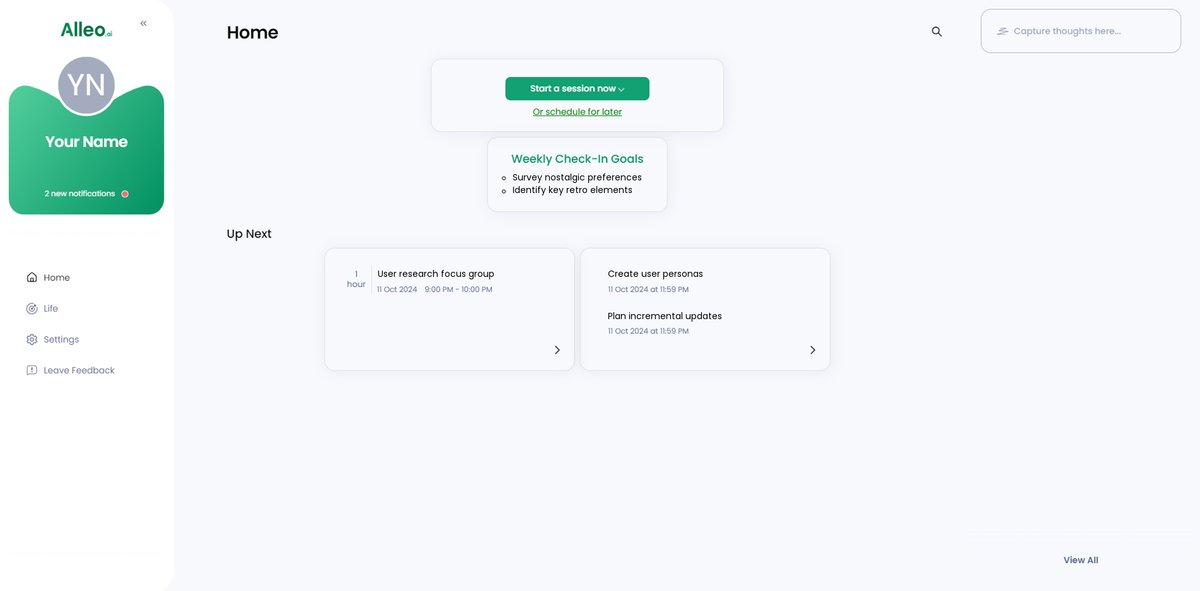
After your coaching session on balancing nostalgia and innovation, check the Alleo app’s home page to view and manage the goals you discussed, allowing you to track your progress in tech product development.
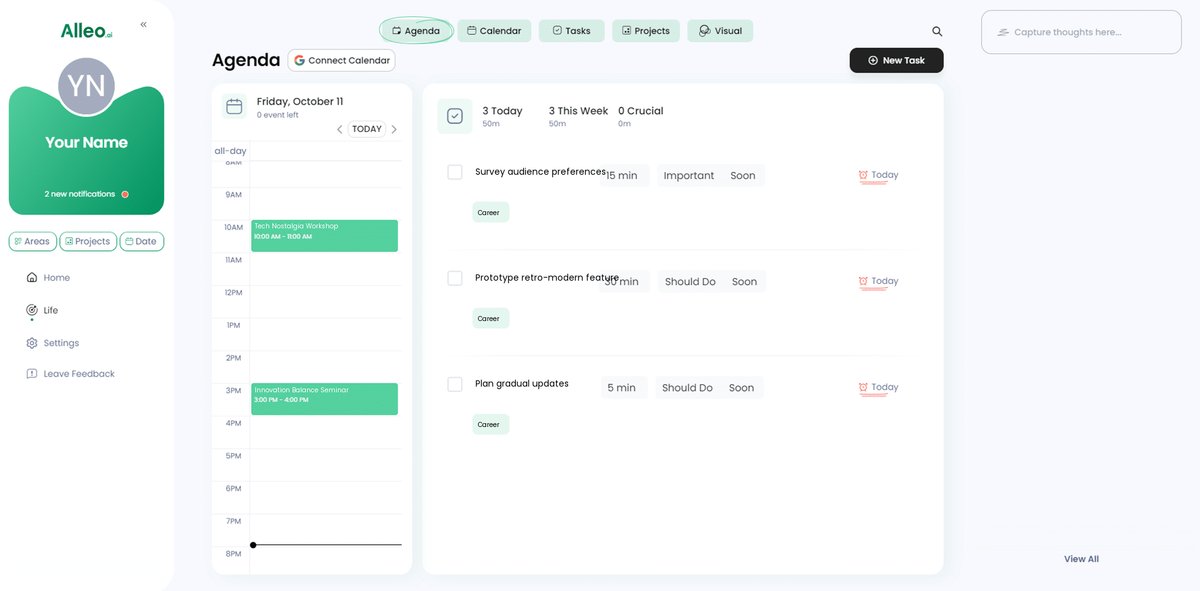
Step 6: Adding events to your calendar or app
Track your progress in balancing nostalgia and innovation by adding key milestones and deadlines to your calendar or app, allowing you to monitor your journey and stay accountable as you implement the strategies discussed in this article.
Bringing It All Together
Balancing nostalgia and innovation in tech product development can be challenging, but it’s achievable. By conducting thorough user research and market trends analysis, you can identify what resonates with your audience and guide your product lifecycle management.
Integrating retro elements with modern features allows you to blend the best of both worlds seamlessly, preserving brand heritage while ensuring technological advancement. Creating dual-version products ensures you cater to different user segments effectively, addressing both legacy systems integration and future-proofing strategies.
Additionally, implementing gradual feature updates through an iterative development process helps maintain familiarity while introducing innovation. Remember, the key to balancing nostalgia and innovation is to stay connected with your users and adapt based on their feedback, continuously refining the user experience design.
You don’t have to navigate this alone. Alleo is here to help you balance nostalgia and innovation with ease. Sign up for free and start your journey to successful product development today, incorporating retro-inspired technology alongside cutting-edge solutions.