5 Powerful Techniques for Developers to Balance Sprint Work with Strategic Thinking
Are you struggling to balance sprint work and strategy in your software development process?
As a life coach, I’ve helped many professionals navigate these challenges. I’ve seen firsthand how the pressure to complete sprint tickets can leave little time for strategic thinking and long-term planning in Agile development.
In this article, you’ll discover actionable strategies to manage sprint work while staying informed about other teams’ activities. We’ll explore concepts like “Scrum-days,” cross-team knowledge sharing, and leveraging OKRs to align product vision with sprints. These techniques will help you balance coding tasks with strategic goals and improve your developer time management strategies.
Let’s dive in and explore how to maintain sprint productivity while fostering innovation and continuous improvement in development cycles.

Understanding the Challenge of Balancing Sprint Work with Strategic Thinking
Many developers and product managers find themselves overwhelmed when balancing sprint work and strategy. The constant pressure to complete sprint tasks leaves little room for strategic planning and software development roadmapping.
This imbalance can lead to poor cross-team communication, reducing overall productivity and hindering Agile development and long-term planning.
In my experience, several clients initially struggle with this issue. They often feel trapped in a cycle of urgent coding tasks, unable to step back and think strategically about product vision alignment in sprints.
This lack of strategic focus can hinder long-term success and developer career growth and project contributions.
Moreover, without proper planning, teams can miss opportunities for innovation and continuous improvement in development cycles. It’s crucial to find a balance that allows for both immediate sprint productivity and innovation, as well as strategic work, considering tech debt vs. future-proofing code.
Five Key Steps to Balance Sprint Work with Strategic Thinking
Overcoming this challenge requires a few key steps. Here are the main areas to focus on to make progress in balancing sprint work and strategy:
- Implement “Scrum-days” for Focused Sprint Work: Allocate specific days for sprint work and other days for strategic activities, improving developer time management strategies.
- Set Aside Time for Cross-Team Knowledge Sharing: Schedule regular cross-functional meetings to share updates and insights, fostering continuous improvement in development cycles.
- Use OKRs to Align Sprint Work with Strategy: Define clear OKRs that align with both sprint goals and broader strategic objectives, enhancing product vision alignment in sprints.
- Leverage Asynchronous Tools for Updates: Implement asynchronous communication tools to reduce the need for constant meetings, allowing more time for balancing coding tasks with strategic goals.
- Schedule Regular Strategic Thinking Sessions: Dedicate specific time slots each week for strategic thinking and planning, addressing the balance between tech debt and future-proofing code.
Let’s dive into these strategies for balancing sprint work and strategy!
1: Implement “Scrum-days” for focused sprint work
Introducing “Scrum-days” can help developers balance sprint work and strategic thinking more effectively, improving the overall approach to balancing sprint work and strategy.
Actionable Steps:
- Designate specific days for focused sprint work. For example, allocate Monday, Wednesday, and Friday for sprint tasks, enhancing sprint productivity and innovation.
- Reserve other days for strategic activities and meetings. Use Tuesday and Thursday for planning, collaboration, and cross-team meetings, focusing on software development roadmapping.
- Communicate the schedule clearly. Use tools like Jira to ensure everyone understands and follows the new routine, aligning with product vision in sprints.
Explanation: Properly allocating “Scrum-days” helps teams focus on sprint tasks without frequent interruptions, supporting developer time management strategies.
This approach allows time for strategic planning, promoting better long-term outcomes and balancing coding tasks with strategic goals.
According to a relevant source, balancing sprint and non-sprint activities improves overall efficiency and productivity, addressing the balance between tech debt and future-proofing code.
This structured approach ensures developers have dedicated time for both sprint work and strategic thinking, ultimately enhancing team performance and supporting continuous improvement in development cycles.
2: Set aside time for cross-team knowledge sharing
Sharing knowledge across teams is crucial to keep everyone aligned and informed about ongoing projects, especially when balancing sprint work and strategy.
Actionable Steps:
- Schedule regular cross-functional meetings to share updates and insights on balancing coding tasks with strategic goals.
- Organize bi-weekly lunch-and-learn sessions where different teams present their current projects, challenges, and approaches to software development roadmapping.
- Create a shared knowledge repository where teams can document and access important information on Agile development and long-term planning.
- Use tools like Confluence or Notion to maintain a central hub for all project-related documentation, including strategies for balancing sprint work and strategy.
Explanation: Properly setting aside time for cross-team knowledge sharing enhances communication and collaboration. This practice ensures that everyone stays informed about other teams’ activities and reduces silos, supporting continuous improvement in development cycles.
According to a relevant source, continuous sharing of updates can significantly improve overall team efficiency and productivity, which is essential for balancing sprint work and strategy.
Key benefits of cross-team knowledge sharing include:
- Improved problem-solving through diverse perspectives on sprint productivity and innovation
- Enhanced innovation by combining different expertise in developer time management strategies
- Reduced duplication of efforts across teams, supporting tech debt management vs. future-proofing code
This approach helps in aligning goals and enhancing team performance, fostering innovation and product vision alignment in sprints while supporting developer career growth and project contributions.
3: Use OKRs to align sprint work with strategy
Using OKRs (Objectives and Key Results) helps to align sprint work with broader strategic goals, ensuring that your team stays on course while balancing sprint work and strategy.
Actionable Steps:
- Define clear OKRs that connect sprint tasks to long-term objectives. Identify specific goals for each sprint that contribute to the quarterly OKRs, focusing on balancing coding tasks with strategic goals.
- Regularly review and adjust OKRs based on progress and feedback. Hold monthly review sessions to assess achievements and refine future targets, emphasizing continuous improvement in development cycles.
- Integrate OKRs into daily workflows using project management tools. Use tools like Jira to track progress and keep everyone aligned, supporting agile development and long-term planning.
Explanation: Aligning sprint work with strategic OKRs ensures that immediate tasks contribute to long-term goals. This approach maintains a focus on both short-term wins and strategic planning, crucial for software development roadmapping.
Regular reviews help teams stay adaptable and responsive to changes. According to Atlassian, using metrics like OKRs can significantly improve team efficiency and productivity, enhancing sprint productivity and innovation.
These steps help integrate strategic thinking into daily sprint tasks, fostering a balanced approach to project management and supporting product vision alignment in sprints.
4: Leverage asynchronous tools for updates
Using asynchronous tools can significantly reduce the need for constant meetings and keep everyone informed without disrupting the workflow, which is crucial when balancing sprint work and strategy.
Actionable Steps:
- Implement asynchronous communication tools: Use platforms like Slack or Microsoft Teams for quick updates and discussions, minimizing the need for synchronous meetings and improving developer time management strategies.
- Document and share updates asynchronously: Create a daily stand-up channel where team members can post their updates and blockers, aligning with Agile development and long-term planning.
- Schedule regular asynchronous check-ins: Encourage team members to check in at specific times to review updates and address any issues, enhancing sprint productivity and innovation.
Explanation: Properly leveraging asynchronous tools helps teams stay informed and aligned without frequent interruptions. This approach promotes better focus and productivity, supporting the balance between coding tasks and strategic goals.
According to Scrum.org, asynchronous communication can significantly improve team efficiency and collaboration.
Best practices for asynchronous communication include:
- Setting clear expectations for response times
- Using clear and concise language in messages
- Providing context to avoid misunderstandings
This method ensures that everyone stays updated while maintaining their concentration on sprint tasks, ultimately enhancing overall team performance and supporting continuous improvement in development cycles.
5: Schedule regular strategic thinking sessions
Regular strategic thinking sessions are essential to keep your team focused on long-term goals and innovation, balancing sprint work and strategy effectively.
Actionable Steps:
- Block dedicated time weekly: Set aside 2 hours every Thursday afternoon for uninterrupted strategic planning, focusing on balancing coding tasks with strategic goals.
- Encourage brainstorming sessions: Use this time to explore new ideas and propose innovative features, aligning with software development roadmapping.
- Review progress regularly: Assess the outcomes of these sessions monthly to ensure alignment with strategic objectives and continuous improvement in development cycles.
Explanation: Regular strategic thinking sessions help your team maintain a balance between immediate tasks and long-term goals. This practice promotes innovation and strategic alignment, crucial for balancing sprint work and strategy.
According to Harvard Business Review, dedicating time for strategic planning can significantly enhance productivity and focus.
Effective strategic thinking sessions often include:
- Analyzing market trends and competitor strategies
- Identifying potential risks and opportunities in Agile development and long-term planning
- Aligning team goals with broader organizational objectives, emphasizing product vision alignment in sprints
Implementing these sessions will foster a culture of continuous improvement, positioning your team for success in balancing sprint work and strategy.

Partner with Alleo to Balance Sprint Work and Strategic Thinking
We’ve explored the challenges of balancing sprint work and strategy. Did you know you can work directly with Alleo to make this journey easier and faster, improving your approach to Agile development and long-term planning?
Set up an account with Alleo in minutes. Create a personalized plan tailored to your needs, focusing on developer time management strategies and sprint productivity and innovation.
Work with Alleo’s AI coach to overcome specific challenges in balancing coding tasks with strategic goals. The coach will follow up on your progress, handle changes, and keep you accountable via text and push notifications, helping you with software development roadmapping.
Ready to get started for free and improve your skills in balancing sprint work and strategy? Let me show you how!
Step 1: Log In or Create Your Account
To start balancing your sprint work with strategic thinking, log in to your existing Alleo account or create a new one in just a few clicks.

Step 2: Choose “Building better habits and routines”
Click on “Building better habits and routines” to start tackling the root cause of your sprint work and strategic thinking imbalance. This goal will help you create a structured approach to managing your time and tasks more effectively, aligning with the strategies discussed in the article for better work-life balance and productivity.

Step 3: Select “Career” as Your Focus Area
Choose “Career” as your life area to focus on, as this will help you directly address the challenges of balancing sprint work with strategic thinking, aligning perfectly with your professional goals and the strategies outlined in the article.

Step 4: Starting a Coaching Session
Begin your journey with Alleo by scheduling an intake session, where you’ll discuss your challenges in balancing sprint work and strategic thinking, allowing the AI coach to create a personalized plan tailored to your specific needs.

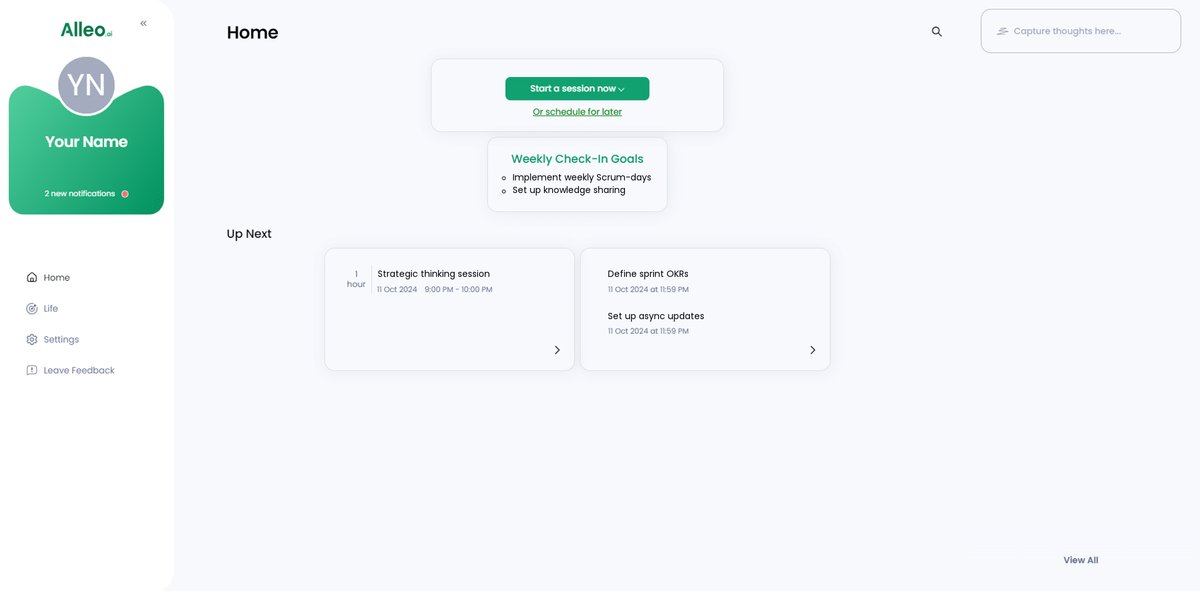
Step 5: Viewing and managing goals after the session
After your coaching session, access your goals on the app’s home page to review, track progress, and adjust as needed, helping you maintain focus on balancing sprint work with strategic thinking.
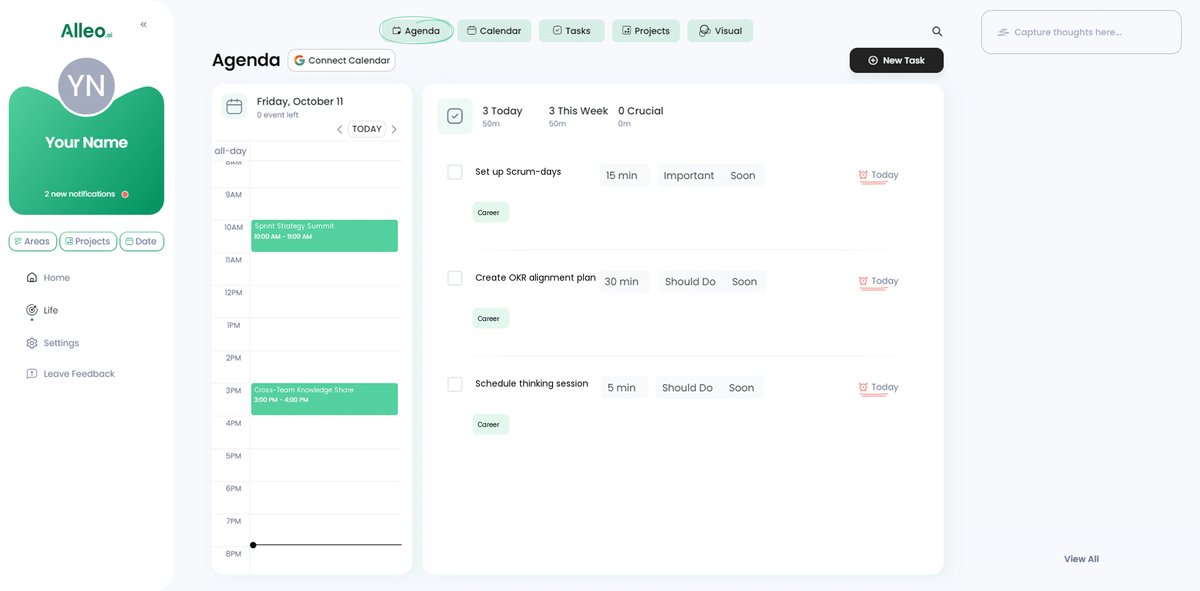
Step 6: Adding events to your calendar or app
Schedule your “Scrum-days,” strategic thinking sessions, and cross-team meetings directly in the Alleo app’s calendar feature, allowing you to easily track your progress in balancing sprint work with strategic thinking.
Bringing It All Together
Balancing sprint work and strategy may seem challenging, but it’s completely achievable.
By implementing “Scrum-days,” sharing knowledge across teams, aligning sprint tasks with OKRs, leveraging asynchronous tools, and dedicating time to strategic thinking, you can foster a more balanced and productive workflow in Agile development and long-term planning.
Remember, the key is to take small, consistent steps in balancing coding tasks with strategic goals.
And you don’t have to do it alone in your journey of developer career growth and project contributions.
Alleo is here to help you streamline this process of balancing sprint work and strategy.
Give it a try and see how Alleo can support your journey in software development roadmapping and continuous improvement in development cycles.
You got this!