5 Proven Methods to Balance Product Development Priorities for Product Managers
Ever feel like you’re juggling a hundred different priorities as a product manager? Balancing product development priorities, including user feedback, new feature ideas, and development constraints can be overwhelming. Agile product management techniques can help, but it’s still a challenge.
As a life coach, I’ve seen many professionals struggle with these challenges. I’ve helped them find effective ways to manage their workload and achieve their goals through prioritization techniques for PMs and resource allocation in product development.
In this article, you’ll learn actionable strategies to prioritize tasks, use data analytics for product roadmap planning, and create balanced roadmaps. By following these steps, you’ll not only keep development manageable but also ensure your product meets user needs through customer feedback integration and feature prioritization frameworks.
Let’s dive in to explore how you can excel at balancing product development priorities.

The Struggle of Balancing Product Development Priorities
Many product managers find themselves overwhelmed by the sheer volume of tasks. Feature prioritization often feels like an endless juggling act in agile product management.
Mismanaging priorities can lead to missed deadlines and frustrated teams, impacting product roadmap planning.
In my experience, several clients report that the pressure to balance user feedback, new ideas, and development constraints affects their focus. This situation can quickly spiral out of control, damaging team morale and product success, highlighting the importance of effective prioritization techniques for PMs.
Imagine constantly shifting priorities, leaving your team confused and your projects delayed. It’s no wonder that product managers struggle to keep everything on track, especially when balancing innovation and maintenance tasks.
Addressing this chaos is crucial for maintaining a productive and cohesive team and optimizing the product backlog.
By understanding these common challenges in balancing product development priorities, you’ll better appreciate the importance of effective prioritization strategies and resource allocation in product development.

Key Steps to Balancing Product Development Priorities
To overcome this challenge of balancing product development priorities, focus on these key actions:
- Implement value vs effort prioritization matrix: Evaluate features based on value and effort, prioritizing high-value, low-effort tasks in your product backlog optimization strategy.
- Establish regular cross-functional feedback sessions: Schedule consistent sessions to gather team insights and align on priorities, enhancing stakeholder management in product development.
- Use data analytics to inform feature decisions: Integrate data tools to analyze user behavior and guide decisions, supporting customer feedback integration in your agile product management approach.
- Create a balanced product roadmap with milestones: Define clear milestones that balance short-term wins with long-term goals, crucial for effective product roadmap planning.
- Set clear criteria for accepting new feature ideas: Develop standardized templates and review processes for new ideas, improving your feature prioritization frameworks.
Let’s dive into these techniques for balancing product development priorities!
1: Implement value vs effort prioritization matrix
A value vs effort prioritization matrix helps product managers focus on high-impact features that are easy to implement, effectively balancing product development priorities.
Actionable Steps:
- Identify and list potential features: Brainstorm with your team and document all ideas in a shared space, utilizing agile product management techniques.
- Evaluate each feature: Use a scoring system to quantify the value and effort required for each feature, incorporating customer feedback integration.
- Prioritize high-value, low-effort features: Create a visual matrix to aid decision-making and regularly update it as part of your product roadmap planning.
Explanation:
These steps help ensure that you focus on features that deliver the most value with the least effort, optimizing your development process and resource allocation in product development.
Incorporating tools like a value vs effort matrix can lead to better product outcomes and more efficient use of resources. For more insights, check out this guide on product management challenges.
This matrix is a powerful tool to streamline your decision-making process and maintain a clear focus on your most important tasks, aiding in product backlog optimization and balancing product development priorities.

2: Establish regular cross-functional feedback sessions
Establishing regular cross-functional feedback sessions helps align team priorities and gather diverse insights, crucial for balancing product development priorities.
Actionable Steps:
- Schedule bi-weekly feedback sessions: Set recurring calendar invites to ensure consistent participation from all team members, supporting agile product management practices.
- Create a structured agenda: Include sections for progress updates, current challenges, and new ideas to guide each meeting, aiding in product roadmap planning.
- Assign follow-up tasks: Designate specific team members to implement feedback items and track their progress, enhancing stakeholder management in product development.
Explanation:
These steps are essential for maintaining open communication and collaboration among cross-functional teams. Regular feedback sessions ensure that everyone is aligned on the product vision and can address issues promptly, facilitating product backlog optimization.
For more insights on the importance of cross-functional collaboration, check out this guide on key responsibilities of product managers. Consistent feedback sessions can keep your team focused and on track when balancing product development priorities.
Key benefits of cross-functional feedback sessions:
- Improved team alignment on product goals and prioritization techniques for PMs
- Faster issue resolution and decision-making in sprint planning for product managers
- Enhanced creativity through diverse perspectives, aiding in feature prioritization frameworks

3: Use data analytics to inform feature decisions
Using data analytics to inform feature decisions is crucial for balancing product development priorities and understanding user behavior to make informed choices.
Actionable Steps:
- Integrate data analytics tools: Set up dashboards to monitor user behavior and key performance metrics in real-time, aiding in agile product management.
- Analyze user feedback and trends: Conduct regular data reviews to identify user pain points and opportunities for improvement, facilitating customer feedback integration.
- Prioritize data-driven insights: Use insights from data analysis to create a product roadmap that aligns with user needs and business goals, employing prioritization techniques for PMs.
Explanation:
These steps ensure that your feature decisions are based on actual user data, leading to more effective and user-centric product development while balancing product development priorities.
By leveraging data analytics, you can prioritize features that will have the most significant impact, optimizing your product backlog. For further reading, check out this guide on product growth strategies.
Embracing data-driven decision-making can transform your product development process, ensuring you meet user needs effectively while balancing innovation and maintenance tasks.
Incorporating data analytics into your workflow can elevate your product management strategy, improve resource allocation in product development, and drive better outcomes.

4: Create a balanced product roadmap with milestones
Creating a balanced product roadmap with milestones is crucial for balancing product development priorities and managing both short-term objectives and long-term goals effectively.
Actionable Steps:
- Define clear milestones: Break down your product roadmap into achievable phases, each with specific goals and deadlines, using agile product management techniques.
- Mix short-term and long-term goals: Incorporate quick-to-implement features alongside strategic initiatives to maintain momentum and achieve lasting impact, utilizing prioritization techniques for PMs.
- Communicate the roadmap effectively: Use visual tools to present the roadmap to all stakeholders, ensuring everyone is on the same page and facilitating stakeholder management in product development.
Explanation:
These steps help ensure that your development process is structured and balanced. By setting clear milestones, you can track progress and make necessary adjustments in your product roadmap planning.
Mixing short-term wins with long-term goals keeps the team motivated and focused. Effective communication of the roadmap ensures alignment across the team and aids in resource allocation in product development.
For more insights, check out this guide on product roadmaps. Following these steps will help you achieve a well-organized and successful product development journey while balancing product development priorities.
Essential elements of a balanced product roadmap:
- Clearly defined short-term and long-term objectives
- Realistic timelines for feature implementation
- Flexibility to adapt to changing market conditions

5: Set clear criteria for accepting new feature ideas
Setting clear criteria for accepting new feature ideas is crucial for balancing product development priorities and maintaining a focused and efficient product development process.
Actionable Steps:
- Develop a standardized submission template: Create a template that includes sections for value proposition, user impact, and required resources. Ensure all new ideas are submitted using this format, aiding in product backlog optimization.
- Form a review committee: Assemble a cross-functional team to evaluate and prioritize feature ideas. Track the approval rate and time to decision for transparency, supporting agile product management practices.
- Communicate decisions transparently: Provide feedback on why certain ideas were accepted or rejected, and maintain a log of all submissions and decisions, enhancing stakeholder management in product development.
Explanation:
These steps ensure a structured and transparent process for evaluating new feature ideas, helping to maintain focus and alignment. By standardizing submissions and involving a review committee, you can make informed decisions that align with user needs and business goals, effectively balancing product development priorities.
For more insights, check out this guide on product operations management. This structured approach helps avoid confusion and ensures that only the most valuable ideas move forward, supporting efficient sprint planning for product managers.
Key factors to consider when evaluating new feature ideas:
- Alignment with overall product strategy and roadmap planning
- Potential impact on user experience and customer feedback integration
- Resource requirements and feasibility, considering resource allocation in product development
Having clear criteria for feature acceptance streamlines your workflow and keeps your team focused on high-impact tasks, facilitating effective prioritization techniques for PMs and balancing innovation and maintenance tasks.
Partner with Alleo to Balance Your Product Development Priorities
We’ve explored the challenges of balancing product development priorities and how solving them can benefit your career. But did you know you can work directly with Alleo to make this journey easier and faster?
Setting up an account with Alleo is simple. First, sign up and create a personalized plan tailored to your needs for balancing product development priorities.
Then, work with Alleo’s AI coach to overcome specific challenges, like feature prioritization and product backlog optimization.
The coach will follow up on your progress, handle changes, and keep you accountable via text and push notifications, helping you with sprint planning for product managers.
Alleo provides affordable, tailored coaching support for agile product management, with full coaching sessions just like any human coach. You can even start with a free 14-day trial—no credit card needed.
Ready to get started for free? Let me show you how to improve your product roadmap planning and stakeholder management in product development!
Step 1: Log In or Create Your Account
To start balancing your product development priorities with AI coaching, log in to your account or create a new one to begin your journey toward more effective product management.

Step 2: Choose “Building Better Habits and Routines”
Select “Building Better Habits and Routines” to develop a structured approach for managing your product development priorities, helping you create consistent processes for task prioritization and team collaboration.

Step 3: Select “Career” as Your Focus Area
Choose “Career” as your focus area to address product management challenges, aligning perfectly with the prioritization strategies discussed in the article and helping you achieve better work-life balance.

Step 4: Starting a coaching session
Begin your journey with Alleo by scheduling an initial intake session, where you’ll discuss your product management challenges and set up a personalized plan to balance your development priorities moving forward.

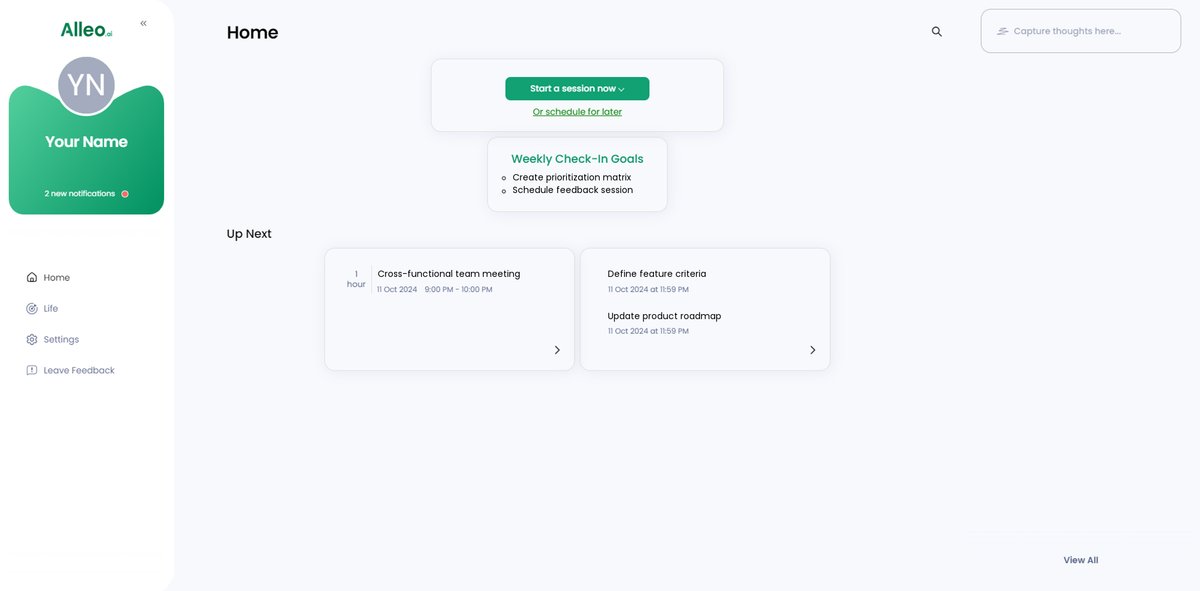
Step 5: Viewing and Managing Goals After the Session
After your coaching session, open the Alleo app and navigate to the home page to view and manage the product development priorities and goals you discussed with your AI coach.
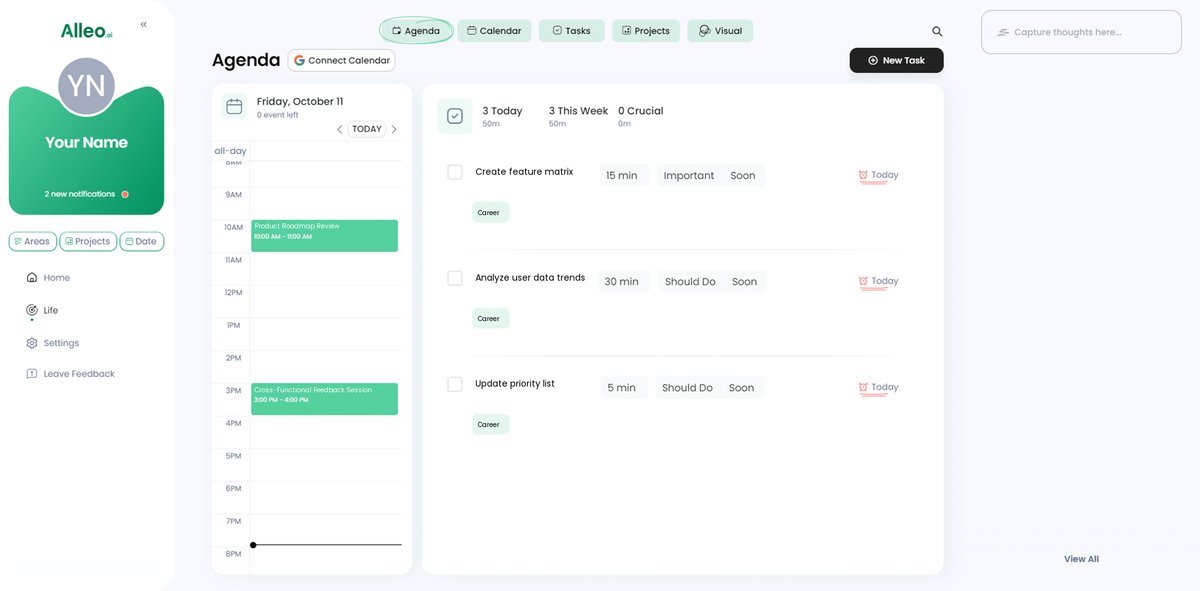
Step 6: Adding events to your calendar or app
Track your progress in solving product development challenges by adding key milestones and tasks to the Alleo app’s calendar feature, allowing you to stay organized and accountable as you implement the prioritization strategies discussed in this article.
Empowering You to Balance Product Development Priorities
Transitioning from actionable steps to wrapping up, let’s reflect on what we’ve covered.
Balancing product development priorities can indeed feel like a juggling act, but with the right strategies, it becomes manageable.
By implementing a value vs effort prioritization matrix, establishing regular feedback sessions for customer feedback integration, and using data analytics, you can streamline your product backlog optimization process.
Creating a balanced roadmap and setting clear criteria for new features are essential steps in product roadmap planning to keep your team focused and your product on track.
Remember, you’re not alone in this journey of balancing product development priorities.
Alleo is here to help you navigate these challenges with tailored coaching support, assisting with everything from sprint planning for product managers to stakeholder management in product development.
So, take the leap—start your free trial with Alleo today and see the difference it can make in your agile product management approach.