3 Essential Strategies for Market Researchers to Balance Sales Goals and Data Integrity
Are you constantly juggling the demands of hitting sales targets while maintaining data integrity in your market research? Balancing sales and research integrity can be a challenging task.
As a life coach, I’ve helped many professionals navigate these challenges. In my experience, balancing client demands and data accuracy is no easy feat, especially when facing sales-driven research pitfalls.
In this article, you’ll discover strategies to ensure both sales success and research quality. We’ll explore market research ethics, data verification processes, and mixed-methods research to help you balance customer insights vs sales targets.
Let’s dive into unbiased data collection techniques and market research best practices for maintaining integrity in market analysis.
Understanding the Balance Between Sales and Research Integrity
Balancing sales and research integrity is a significant challenge. Many clients initially struggle with aligning these priorities due to the pressure of achieving immediate sales targets. This tension between customer insights vs sales targets can create difficulties in maintaining market research ethics.
Compromised data quality can lead to poor business decisions and damage your reputation. It’s a pain point that grows as you scale and manage more data. Implementing data quality assurance in sales processes is crucial for avoiding sales-driven research pitfalls.
In my experience, product managers often face dilemmas when data quality conflicts with sales objectives. This tension can create a stressful work environment and hinder long-term success. Maintaining integrity in market analysis is essential for sustainable growth.
Consider the impact: unreliable data can misguide your strategies and erode client trust. It’s essential to address these issues head-on for sustainable growth. Balancing client demands and data accuracy requires adherence to market research best practices and the use of unbiased data collection techniques.
Key Steps to Balancing Sales and Data Integrity
Overcoming this challenge requires a few key steps. Here are the main areas to focus on to make progress in balancing sales and research integrity:
- Define Clear Ethical Guidelines for Research: Develop a code of conduct and provide regular training on market research ethics.
- Implement Rigorous Data Verification Processes: Use advanced tools and conduct regular audits to ensure data quality assurance in sales.
- Balance Quantitative and Qualitative Methods: Integrate mixed-methods research and leverage customer insights vs sales targets for unbiased data collection techniques.
Let’s dive into these market research best practices for balancing client demands and data accuracy!
1: Define clear ethical guidelines for research
Defining clear ethical guidelines for research is essential to balance sales goals and maintain data integrity when balancing sales and research integrity.
Actionable Steps:
- Develop a comprehensive code of conduct.
- Outline transparency, data protection, and conflict of interest guidelines to ensure market research ethics.
- Provide regular training and resources.
- Conduct workshops and offer access to decision-making tools for data quality assurance in sales.
- Establish an oversight committee.
- Monitor adherence and address ethical concerns through a reporting system to prevent sales-driven research pitfalls.
Key benefits of clear ethical guidelines include:
- Enhanced trust from stakeholders
- Improved research credibility
- Reduced risk of ethical breaches when balancing client demands and data accuracy
Explanation: These steps are crucial for maintaining high research standards. Regular training and an oversight committee ensure compliance and foster a culture of integrity in market analysis.
The importance of ethical practices in market research cannot be overemphasized, as they build trust and credibility while balancing sales and research integrity.
Moving forward, we will explore implementing rigorous data verification processes to support unbiased data collection techniques.
2: Implement rigorous data verification processes
Implementing rigorous data verification processes is vital for ensuring the accuracy and reliability of your research, which is crucial when balancing sales and research integrity.
Actionable Steps:
- Invest in advanced data verification tools.
- Select software that cross-checks data for accuracy and detects anomalies, supporting data quality assurance in sales.
- Ensure regular updates and maintenance for optimal performance.
- Standardize data collection methods.
- Establish consistent procedures to minimize errors and support unbiased data collection techniques.
- Train staff on best practices for data collection and entry, emphasizing market research ethics.
- Conduct regular audits.
- Schedule periodic audits to review data integrity and prevent sales-driven research pitfalls.
- Use audit findings to improve data practices continuously, enhancing integrity in market analysis.
Explanation: These steps ensure the reliability of your research, which is crucial for making informed business decisions while balancing client demands and data accuracy. Using advanced tools and standardizing methods help maintain high data quality.
Regular audits also highlight areas needing improvement. For more insights, you can refer to this guideline on verifying data accuracy.
Common challenges in data verification include:
- Detecting subtle data inconsistencies
- Managing large volumes of data
- Balancing automation with human oversight
With these processes in place, you can confidently balance sales targets and data integrity, ensuring market research best practices are followed.
Next, let’s explore balancing quantitative and qualitative methods in the context of customer insights vs sales targets.

3: Balance quantitative and qualitative methods
Balancing quantitative and qualitative methods is crucial for capturing comprehensive insights in market research while balancing sales and research integrity.
Actionable Steps:
- Integrate mixed-methods research.
- Combine surveys and focus groups to gather both numerical data and in-depth insights, ensuring unbiased data collection techniques.
- Use both methods to validate findings and ensure accuracy, maintaining integrity in market analysis.
- Leverage customer feedback mechanisms.
- Implement systems to collect ongoing feedback from customers, balancing client demands and data accuracy.
- Use this feedback to refine and improve research methods, avoiding sales-driven research pitfalls.
Explanation: These steps help you gather a fuller picture of market trends and consumer behavior. Combining quantitative and qualitative methods ensures that your data is both robust and insightful, aligning with market research best practices.
Additionally, using customer feedback enhances your research’s relevance and accuracy, helping balance customer insights vs sales targets. For more on effective market research techniques, refer to this comprehensive guide.
Key advantages of balanced research methods:
- Richer, more nuanced insights
- Improved decision-making accuracy
- Enhanced understanding of customer needs while maintaining data quality assurance in sales
These methods will help you achieve a balanced approach to market research, aiding both sales and data integrity while preventing data manipulation.
Now, let’s explore how Alleo can support these strategies in balancing sales and research integrity.
Partner with Alleo for Seamless Market Research
We’ve explored the balance between sales and research integrity. But did you know Alleo can make this journey easier and faster, especially when it comes to balancing sales and research integrity?
Setting up an account is simple. Sign up and start your free 14-day trial, no credit card needed. Experience how Alleo helps maintain market research ethics while meeting sales goals.
Create a personalized plan with your AI coach. Alleo helps with goal setting, data verification, and mixed-methods research, ensuring unbiased data collection techniques and integrity in market analysis.
It tracks your progress and keeps you accountable via text and push notifications, helping you avoid sales-driven research pitfalls.
Ready to get started for free and learn market research best practices?
Let me show you how to balance client demands and data accuracy!
Step 1: Log In or Create Your Account
To start balancing your sales goals and research integrity, log in to your existing Alleo account or create a new one to begin your 14-day free trial without a credit card.

Step 2: Choose Your Focus Area
Select “Setting and achieving personal or professional goals” to align your market research efforts with your business objectives, helping you balance sales targets and data integrity more effectively.

Step 3: Select “Career” as Your Focus Area
Choose “Career” as your focus area to align your market research efforts with your professional goals, helping you balance sales targets and data integrity more effectively in your role.

Step 4: Starting a coaching session
Begin your journey with Alleo by scheduling an intake session, where you’ll work with your AI coach to set up a personalized plan that aligns your sales goals with research integrity practices.

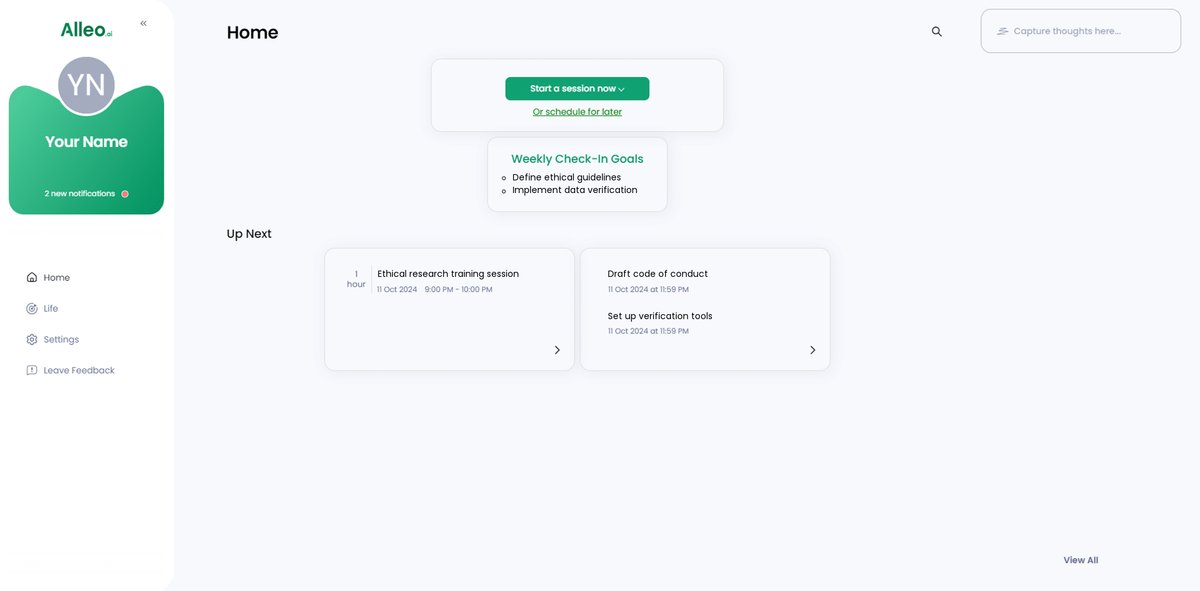
Step 5: Viewing and managing goals after the session
After your coaching session, check the app’s home page to view and manage the goals you discussed, allowing you to track your progress in balancing sales targets and research integrity.
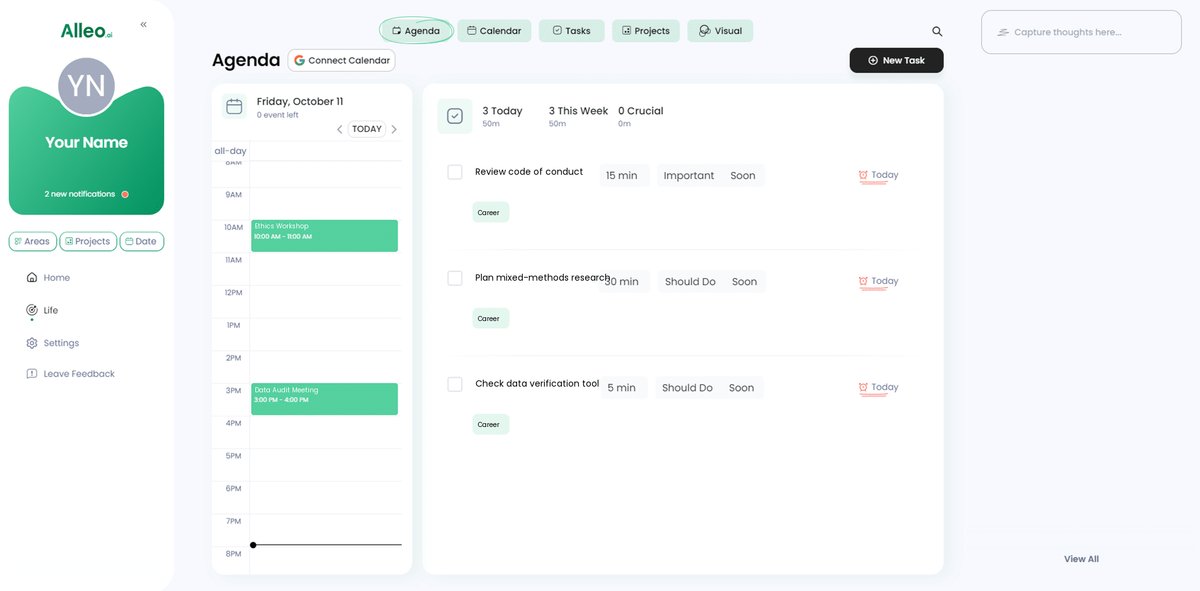
Step 6: Adding events to your calendar or app
Easily add key research milestones and sales targets to your calendar within the Alleo app, allowing you to track your progress in balancing data integrity and sales goals while receiving timely reminders and notifications to keep you on track.
Bringing It All Together
Balancing sales and research integrity is no small task.
Remember, defining clear ethical guidelines is the foundation of your success in market research ethics. Implementing rigorous data verification processes ensures accuracy and data quality assurance in sales.
Balancing quantitative and qualitative methods captures comprehensive customer insights vs sales targets.
You’ve got this.
It’s about making informed decisions and maintaining high standards in market research best practices.
Don’t let the pressure of immediate targets compromise your integrity in market analysis.
Consider using Alleo to streamline these processes and stay on track while balancing sales and research integrity.
Take the first step today.
Sign up for a free 14-day trial with Alleo. Your journey towards balanced market research starts now, focusing on unbiased data collection techniques.