7 Proven Techniques to Manage Long-Term Client Relationships Without Burning Out
Are you feeling overwhelmed by the constant demands of managing long-term client relationships?
As a life coach, I’ve seen how these challenges can impact both personal well-being and business performance. Managing long-term client relationships often brings fatigue, making you dread the next call or email. This can lead to professional burnout if not addressed properly.
In this article, you’ll discover actionable strategies for effective client relationship management without burning out. From setting clear boundaries with clients to leveraging automation for time management, we’ll cover essential client retention strategies.
Let’s dive into these techniques for maintaining work-life balance while ensuring client satisfaction.

The Overwhelming Reality of Long-Term Client Relationships
Managing long-term client relationships often presents real estate agents with unique challenges. Many agents initially enjoy the rapport but soon find themselves overwhelmed by the constant demands of client relationship management.
I’ve seen clients struggle to balance their workload, feeling the pressure of endless updates and check-ins. This constant interaction can lead to professional burnout, impacting both personal well-being and business performance in long-term business partnerships.
You may start to dread the daily calls and emails, feeling trapped by your commitments. The result? Less energy for new clients, decreased job satisfaction, and even physical health issues, highlighting the importance of work-life balance for consultants.
These challenges in managing long-term client relationships are real, but there are solutions. Let’s explore them.

Overcoming the challenge of managing long-term client relationships requires a few key steps. Here are the main areas to focus on to make progress in client relationship management and preventing professional burnout.
- Set Clear Boundaries and Communication Expectations: Schedule regular check-ins and establish a communication policy for effective communication with clients.
- Implement Automation for Routine Client Tasks: Use automated email follow-ups and implement a CRM system to streamline client retention strategies.
- Prioritize Self-Care and Regular Breaks: Schedule regular breaks and set aside time for personal hobbies, essential for work-life balance for consultants.
- Rotate Client Assignments Within Your Team: Implement a rotation schedule and hold regular team meetings to maintain long-term business partnerships.
- Use a CRM to Streamline Relationship Management: Choose a CRM that integrates with your tools and regularly update client information for better client satisfaction techniques.
- Schedule Dedicated “No-Contact” Periods: Block out non-negotiable times for focused work and communicate these to clients, aiding in time management for client relationships.
- Offer Tiered Service Packages to Manage Workload: Create tiered service packages and clearly communicate their benefits and limitations, helping in setting boundaries with clients.
Let’s dive into these strategies for managing long-term client relationships!
1: Set clear boundaries and communication expectations
Setting clear boundaries and communication expectations is vital for managing long-term client relationships effectively.
Actionable Steps:
- Schedule regular check-ins with clients and communicate your availability upfront.
- Establish and share a clear communication policy, including response times.
- Use templates for common client inquiries to save time and maintain consistency.
Explanation: These steps help you manage client expectations and reduce the time spent on routine communications. By setting boundaries with clients, you can maintain a healthy work-life balance for consultants and improve your overall productivity.
For instance, establishing a communication policy can prevent misunderstandings and ensure that clients know when to expect responses. According to Debra Smouse, effective communication with clients is essential for maintaining healthy relationships and avoiding professional burnout prevention.
Key benefits of setting clear boundaries:
- Improved work-life balance
- Reduced stress and burnout
- Enhanced client satisfaction
These client relationship management strategies will set a solid foundation for managing long-term client relationships without feeling overwhelmed.
2: Implement automation for routine client tasks
Implementing automation for routine client tasks can significantly reduce your workload and streamline client relationship management, essential for managing long-term client relationships.
Actionable Steps:
- Use automated email follow-ups: Set up automated email sequences to keep clients engaged without manual effort, improving client retention strategies.
- Implement a CRM system: Automate task reminders and updates using a CRM to stay organized and efficient in long-term business partnerships.
- Leverage chatbots: Deploy chatbots to handle initial client inquiries, reducing your manual workload and enhancing effective communication with clients.
Explanation: These steps allow you to focus on more critical tasks while maintaining consistent client communication, crucial for managing long-term client relationships.
Automation tools, like those mentioned in HelloArii, help streamline processes and prevent professional burnout by reducing repetitive tasks.
By automating routine activities, you can enhance productivity and improve client satisfaction techniques.
Consider implementing these strategies to manage your client relationships more effectively and prevent burnout, supporting work-life balance for consultants and self-care for service providers.

3: Prioritize self-care and regular breaks
Prioritizing self-care and regular breaks is essential to manage long-term client relationships without burning out, a crucial aspect of effective client relationship management.
Actionable Steps:
- Schedule regular breaks: Block out short breaks throughout your day to recharge and clear your mind, improving your ability to focus on managing long-term client relationships.
- Set aside time for personal hobbies: Dedicate a few hours each week to activities that bring you joy and relaxation, enhancing your work-life balance as a consultant.
- Practice mindfulness or meditation: Integrate brief mindfulness or meditation sessions into your daily routine to reduce stress and improve your client retention strategies.
Explanation: These steps are crucial for maintaining your mental and physical health. Regular breaks can improve focus and productivity, while personal hobbies and mindfulness practices help manage stress and prevent professional burnout.
According to Jennifer Gray, prioritizing self-care is vital for preventing burnout and ensuring long-term success in your business and client relationships.
Taking care of yourself allows you to be more present and effective in managing long-term client relationships, contributing to successful long-term business partnerships.

4: Rotate client assignments within your team
Rotating client assignments within your team is crucial for managing long-term client relationships and preventing fatigue while maintaining high-quality service.
Actionable Steps:
- Implement a rotation schedule: Rotate client assignments regularly to ensure no team member feels overwhelmed, supporting effective client relationship management.
- Hold regular team meetings: Discuss client progress and reassign tasks as necessary to balance workload and improve long-term business partnerships.
- Encourage shadowing: Provide opportunities for team members to shadow each other and share best practices in client satisfaction techniques.
Explanation: These steps help distribute the workload evenly and prevent burnout, essential for managing long-term client relationships.
Regular rotation keeps client interactions fresh and ensures diverse perspectives, enhancing client retention strategies.
According to Accounting Insights, rotating assignments can mitigate familiarity threats and enhance objectivity.
This approach promotes a healthier work environment and better client outcomes, supporting work-life balance for consultants.
Benefits of client assignment rotation:
- Prevents individual burnout
- Enhances team knowledge sharing
- Improves client experience
Consider rotating assignments to maintain team energy and client satisfaction, a key aspect of managing long-term client relationships.

5: Use a CRM to streamline relationship management
Using a CRM to streamline relationship management is essential for managing long-term client relationships and maintaining organized and efficient client interactions.
Actionable Steps:
- Choose a CRM that integrates with your existing tools: Select a CRM that works seamlessly with your current systems to avoid disruptions in client relationship management.
- Regularly update client information: Keep client data and interaction notes current to ensure accurate and up-to-date records, supporting effective communication with clients.
- Use CRM analytics to identify potential issues: Leverage the CRM’s analytics to proactively address client concerns before they escalate, enhancing client satisfaction techniques.
Explanation: These steps help you manage client relationships more effectively by centralizing information and automating routine tasks, contributing to long-term business partnerships.
A well-integrated CRM can enhance productivity and client satisfaction, supporting client retention strategies.
According to HubSpot, customizable workflows and dashboards can significantly improve client management and reduce manual workload, aiding in time management for client relationships.
Implement these strategies to maintain a streamlined approach to client relationship management.

6: Schedule dedicated “no-contact” periods
Scheduling dedicated “no-contact” periods is crucial to maintain focus and productivity in managing long-term client relationships.
Actionable Steps:
- Block out non-negotiable “no-contact” times: Allocate specific periods in your calendar for uninterrupted work, essential for effective client relationship management.
- Communicate these periods to clients: Inform clients about your “no-contact” times and set expectations for response times, improving long-term business partnerships.
- Use this time for high-priority tasks: Concentrate on important tasks or personal development during these periods, contributing to work-life balance for consultants.
Explanation: These steps help create a balance between client interactions and focused work, enhancing client retention strategies.
By clearly communicating your availability, you ensure clients respect your time, which enhances productivity and supports managing long-term client relationships.
According to Jennifer Gray, setting boundaries is essential for preventing professional burnout and achieving long-term success.
Implementing these strategies will allow you to manage your workload more effectively, improving client satisfaction techniques.
Taking control of your time helps you stay organized and reduces stress, promoting self-care for service providers engaged in managing long-term client relationships.

7: Offer tiered service packages to manage workload
Offering tiered service packages is essential to manage workload effectively while maintaining high-quality client interactions and managing long-term client relationships.
Actionable Steps:
- Create diverse service packages: Design multiple packages with varying levels of support and pricing to cater to different client needs and enhance client retention strategies.
- Communicate benefits and limitations: Clearly explain the advantages and constraints of each service tier to clients to set expectations and improve effective communication with clients.
- Regularly review packages: Gather client feedback and adjust packages periodically to ensure they meet evolving demands and maintain long-term business partnerships.
Explanation: These steps allow you to balance your workload by offering tailored solutions that match client needs and budget. This approach can reduce pressure, enhance client satisfaction techniques, and aid in professional burnout prevention.
According to Ivy Slater, maintaining long-term relationships through customized services can build significant value for both parties. Implementing tiered packages helps you manage your time and resources more efficiently, supporting work-life balance for consultants.
Key elements of effective tiered service packages for managing long-term client relationships:
- Clear value proposition for each tier
- Scalable pricing structure
- Flexibility to upgrade or downgrade
Consider these strategies to offer flexible and manageable service options to your clients, improving client relationship management and time management for client relationships while setting boundaries with clients.

Partner with Alleo to Manage Your Client Relationships
We’ve explored the challenges of managing long-term client relationships and how to solve them. But did you know you can work directly with Alleo to make this journey easier and faster for effective client relationship management?
Setting up an account with Alleo is simple. First, create a profile and outline your needs for managing long-term client relationships and professional burnout prevention.
Next, Alleo’s AI coach helps you design a personalized plan tailored to your specific challenges in long-term business partnerships and client retention strategies.
The coach will follow up on your progress, manage changes, and keep you accountable via text and push notifications, supporting your work-life balance as a consultant.
Ready to get started for free? Let me show you how to improve your client satisfaction techniques and time management for client relationships!
Step 1: Log In or Create Your Account
To begin managing your client relationships more effectively, log in to your Alleo account or create a new one if you’re a first-time user.

Step 2: Choose “Building better habits and routines”
Click on “Building better habits and routines” to address the core challenges of managing long-term client relationships, as establishing consistent practices will help you set boundaries, automate tasks, and prioritize self-care, ultimately preventing burnout and improving your client management skills.

Step 3: Select “Career” as Your Focus Area
Choose “Career” as your focus area to address the challenges of managing long-term client relationships, allowing Alleo’s AI coach to provide tailored strategies for improving your work-life balance and preventing burnout in your professional life.

Step 4: Starting a coaching session
Begin your journey with Alleo by scheduling an initial intake session, where you’ll discuss your client management challenges and work with your AI coach to create a personalized plan for improving your long-term client relationships.

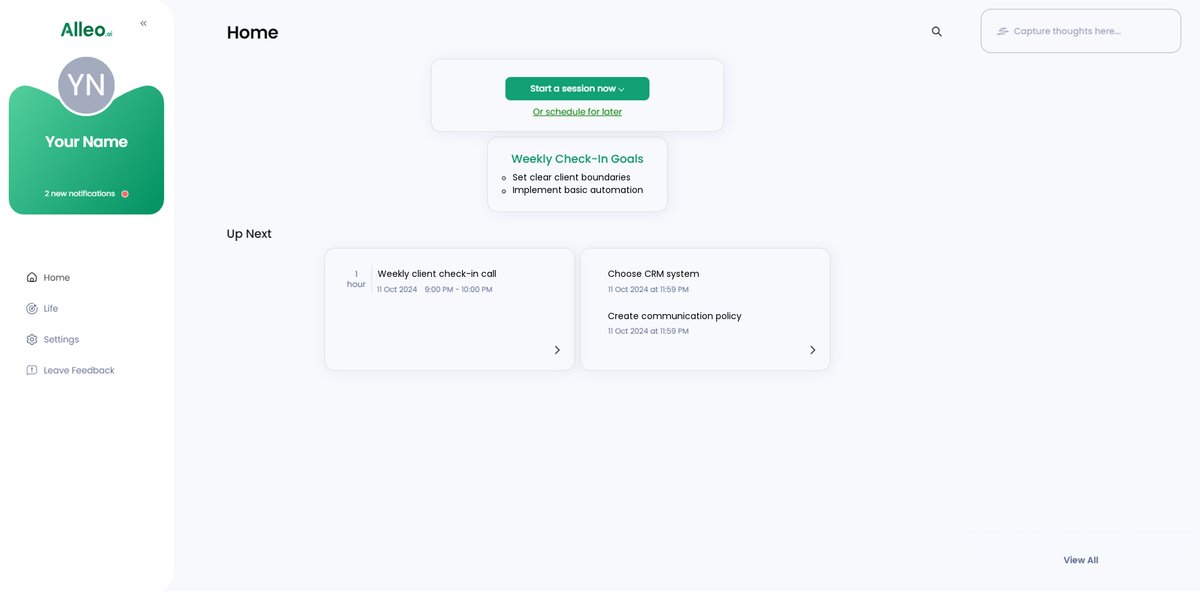
Step 5: Viewing and Managing Goals After the Session
After your coaching session, check the app’s home page to view and manage the goals you discussed, allowing you to track your progress and stay accountable in managing long-term client relationships without burning out.
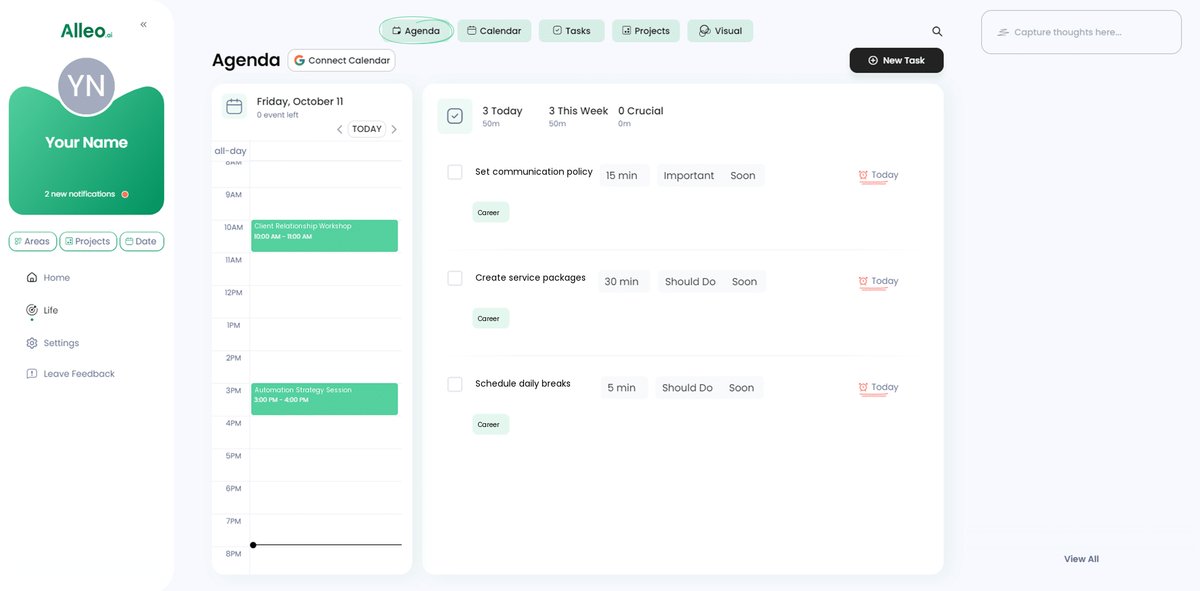
Step 6: Adding Events to Your Calendar or App
Use the calendar and task features in the Alleo app to schedule and track your progress on implementing strategies for managing long-term client relationships, such as setting boundaries, automating tasks, and prioritizing self-care.
Bringing It All Together: Your Path to Balanced Client Management
Reflecting on our discussion, managing long-term client relationships can be challenging but not impossible.
Remember, setting clear boundaries and using automation tools can provide significant relief in client relationship management. Prioritizing self-care and rotating client assignments within your team are also crucial steps for professional burnout prevention.
Don’t forget to leverage a CRM for streamlined relationship management and schedule “no-contact” periods for focused work. Offering tiered service packages can further help manage workload effectively, enhancing long-term business partnerships.
It’s about finding balance in managing long-term client relationships. You deserve to thrive, not just survive, while maintaining work-life balance as a consultant.
Try Alleo for free today to help you take these steps towards a more balanced, productive life and improve your client retention strategies.