6 Proven Methods to Overcome Imposter Syndrome as a New Employee
Have you ever felt like you don’t belong in your new job, doubting your abilities despite your achievements? This common experience is often referred to as imposter syndrome at work.
Overcoming imposter syndrome at work can be a significant challenge for new graduates. As a life coach, I’ve helped many professionals navigate these challenges and develop strategies for workplace success, especially for beginners.
In this article, you’ll discover actionable steps to build confidence and overcome imposter syndrome in the workplace. We’ll explore strategies like mentorship, self-reflection, and continuous learning to boost self-confidence in the workplace and manage new job anxiety.
Let’s dive into these professional development strategies and workplace adaptation techniques to foster a career growth mindset.

Understanding the Depth of Imposter Syndrome
Many recent graduates face imposter syndrome when they start their first job. This overwhelming feeling of self-doubt and inadequacy can be debilitating, often leading to challenges in overcoming imposter syndrome at work.
It often leads to hesitations in taking on new challenges, impacting their professional growth and hindering workplace adaptation techniques.
In my experience, many new employees struggle with self-doubt, feeling like they don’t belong. It’s common for them to compare themselves to more experienced colleagues, which only heightens their insecurities and new job anxiety.
This internal battle can significantly affect their confidence and performance, making self-confidence in the workplace a crucial aspect of employee self-esteem building.
Addressing imposter syndrome early is crucial. Building confidence from the start ensures long-term professional well-being and supports a career growth mindset.
By recognizing and tackling these feelings, you can pave the way for a more fulfilling career and develop effective workplace success strategies for beginners.

Roadmap to Overcoming Imposter Syndrome
Overcoming imposter syndrome at work requires a few key steps. Here are the main areas to focus on to make progress in building self-confidence in the workplace:
- Seek mentorship from experienced colleagues: Identify and connect with mentors for guidance and feedback to support your professional development strategies.
- Keep a record of accomplishments and feedback: Document your achievements and review them regularly to boost employee self-esteem.
- Practice reframing negative thoughts positively: Replace negative thoughts with positive affirmations, utilizing cognitive behavioral techniques for work.
- Set clear expectations with your manager: Discuss your role and establish measurable goals to aid in overcoming self-doubt at work.
- Join professional networks for peer support: Network and engage with peers for advice on workplace adaptation techniques.
- Focus on continuous learning and skill development: Dedicate time to learning new skills and tracking progress to foster a career growth mindset.
Let’s dive into these workplace success strategies for beginners to help you in overcoming imposter syndrome at work!
1: Seek mentorship from experienced colleagues
Connecting with experienced colleagues can provide guidance and boost your confidence in your new role, helping in overcoming imposter syndrome at work.
Actionable Steps:
- Identify a potential mentor within your organization and schedule regular check-ins to enhance workplace adaptation techniques.
- Prepare specific questions or topics to discuss with your mentor to maximize the value of each meeting and support your professional development strategies.
- Actively seek feedback from your mentor on your performance and areas for improvement, aiding in employee self-esteem building.
Explanation: Seeking mentorship offers invaluable insights and support, helping you navigate the complexities of your new role and manage new job anxiety. Regular feedback from experienced colleagues can accelerate your growth and build your self-confidence in the workplace.
According to Business.com, creating a supportive workplace culture is crucial for addressing imposter syndrome.
Key benefits of mentorship include:
- Gaining industry-specific knowledge and insights to overcome self-doubt at work
- Developing a professional support network for workplace success strategies for beginners
- Receiving constructive feedback for growth and fostering a career growth mindset
These steps will help you build a strong support network, enhancing your professional development and aiding in corporate culture integration.

2: Keep a record of accomplishments and feedback
Recording your achievements and feedback is crucial for building confidence and tracking your progress, especially when overcoming imposter syndrome at work.
Actionable Steps:
- Create a digital journal to document your achievements and positive feedback from colleagues, aiding in employee self-esteem building.
- Review your journal regularly to remind yourself of your progress and successes, reinforcing workplace success strategies for beginners.
- Set personal goals based on documented accomplishments and track your growth over time, fostering a career growth mindset.
Explanation: Keeping a record of your accomplishments helps you see your growth and boosts your self-confidence in the workplace.
Regularly reviewing these records can counteract negative thoughts and reinforce your self-worth, serving as an effective technique for overcoming self-doubt at work.
According to Reset Brain and Body, support structures like these can instill confidence in new hires, aiding in new job anxiety management.
This practice will empower you to recognize your value and continue progressing in your career, supporting your professional development strategies.

3: Practice reframing negative thoughts positively
Reframing negative thoughts is crucial for overcoming imposter syndrome at work and building self-confidence in the workplace.
Actionable Steps:
- Identify and write down negative thoughts as they arise, a key step in workplace adaptation techniques.
- Replace each negative thought with a positive affirmation or realistic counter-argument, fostering a career growth mindset.
- Practice mindfulness techniques to become more aware of negative thought patterns and interrupt them, aiding in new job anxiety management.
Explanation: Reframing negative thoughts helps you focus on your strengths and achievements, reducing self-doubt at work.
This practice aligns with industry trends that emphasize mental well-being and professional development strategies.
According to The Polyglot Group, recognizing and addressing negative thoughts can significantly improve your confidence and performance, essential for employee self-esteem building.
This approach will empower you to face challenges with a positive mindset, enhancing your professional growth and aiding in overcoming imposter syndrome at work.
4: Set clear expectations with your manager
Clearly defining your role and responsibilities with your manager is essential to overcoming imposter syndrome at work. This step is crucial for building self-confidence in the workplace.
Actionable Steps:
- Schedule a one-on-one meeting with your manager to discuss your role and responsibilities, which can help manage new job anxiety.
- Establish clear, measurable goals and expectations for your performance, aiding in your professional development strategies.
- Request regular feedback sessions to ensure you are meeting expectations and to address any concerns promptly, supporting your career growth mindset.
Explanation: Setting clear expectations with your manager ensures that you understand your role and responsibilities. This clarity can reduce self-doubt at work and improve your confidence, which is crucial for overcoming imposter syndrome at work.
According to Asana, establishing communication norms with new team members helps prevent imposter syndrome. Regular feedback sessions can also help you stay on track and make continuous improvements, supporting your workplace adaptation techniques.
Benefits of clear communication with your manager:
- Reduced uncertainty about job responsibilities, aiding in overcoming self-doubt at work
- Increased alignment with team and organizational goals, supporting employee self-esteem building
- Opportunities for timely performance adjustments, enhancing workplace success strategies for beginners
Taking these steps will help you build a solid foundation for your professional growth and assist in corporate culture integration.

5: Join professional networks for peer support
Joining professional networks can help you gain insights and support in your new role, which is crucial for overcoming imposter syndrome at work.
Actionable Steps:
- Research and join relevant professional organizations or online communities to expand your network and boost self-confidence in the workplace.
- Participate in events, workshops, or webinars to connect with industry peers and gain new insights, aiding in workplace adaptation techniques.
- Engage with peers in these networks to share experiences and seek advice on overcoming self-doubt at work.
Explanation: Joining professional networks provides a platform for learning and support, which is crucial for overcoming imposter syndrome and developing a career growth mindset.
Engaging with peers can help you recognize your strengths and gain confidence, essential for employee self-esteem building. According to NAHSE, mentorship and networking are key for young professionals navigating their careers and managing new job anxiety.
This approach will help you build a robust support system, enhancing your professional development strategies and workplace success strategies for beginners.
6: Focus on continuous learning and skill development
Continuous learning and skill development are critical for overcoming imposter syndrome at work and thriving in your new role. These strategies can significantly boost your self-confidence in the workplace.
Actionable Steps:
- Identify key skills relevant to your role and seek out training opportunities or courses to enhance your professional development strategies.
- Dedicate time each week to learning and practicing new skills, which can help in managing new job anxiety.
- Set personal development goals and track your progress regularly as part of your workplace adaptation techniques.
Explanation: Focusing on continuous learning ensures you stay updated and confident in your abilities. This approach aligns with current industry trends, emphasizing the importance of ongoing education and growth, which is crucial for overcoming self-doubt at work.
According to LinkedIn, continuous learning can significantly enhance your professional development.
Effective strategies for continuous learning and overcoming imposter syndrome at work:
- Utilize online learning platforms for self-paced courses to build a career growth mindset
- Seek out cross-departmental projects for diverse skill exposure and employee self-esteem building
- Attend industry conferences and workshops regularly to improve workplace success strategies for beginners
By committing to these steps, you can build a robust foundation for your career and effectively overcome imposter syndrome at work.

Partner with Alleo to Overcome Imposter Syndrome
We’ve explored the challenges of overcoming imposter syndrome at work and the steps to achieve it. But did you know you can work directly with Alleo to make this journey easier and faster, boosting your self-confidence in the workplace?
Setting up an account with Alleo is simple. Create a personalized plan tailored to your imposter syndrome challenges, incorporating professional development strategies and workplace adaptation techniques.
Alleo’s AI coach offers full coaching sessions, just like a human coach. It provides affordable support for overcoming self-doubt at work and a free 14-day trial, requiring no credit card. This can be especially helpful for managing new job anxiety.
The coach will follow up on your progress and keep you accountable through text and push notifications, supporting your career growth mindset and employee self-esteem building efforts.
Ready to get started for free and learn workplace success strategies for beginners? Let me show you how!
Step 1: Log In or Create Your Account
To start your journey towards overcoming imposter syndrome, Log in to your account or create a new one to access Alleo’s personalized AI coaching support.

Step 2: Choose Your Focus Area
Select “Setting and achieving personal or professional goals” to directly address your imposter syndrome by setting clear objectives that showcase your abilities and track your progress, helping you build confidence in your new role.

Step 3: Select “Career” as Your Focus Area
Choose the “Career” life area in Alleo to directly address your imposter syndrome challenges, setting the foundation for targeted coaching that will boost your professional confidence and help you thrive in your new role.

Step 4: Starting a Coaching Session
Begin your journey with Alleo by scheduling an intake session, where you’ll discuss your imposter syndrome challenges and create a personalized plan to build your confidence and overcome self-doubt in your new role.

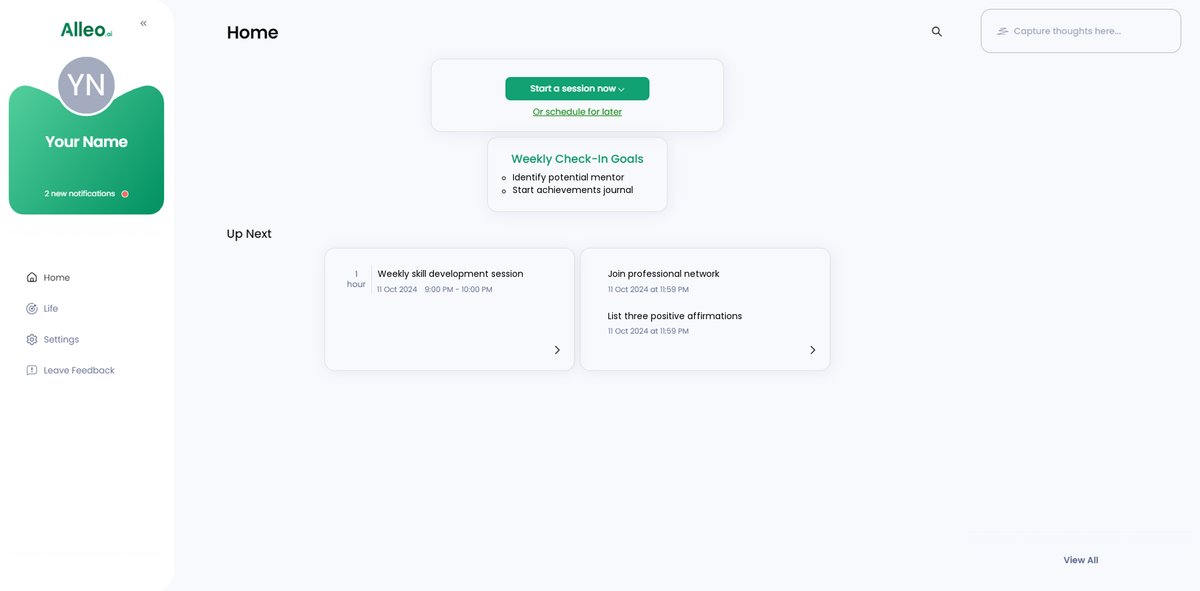
Step 5: Viewing and Managing Goals After the Session
After your coaching session, you can easily review and manage the goals you discussed by checking the home page of the Alleo app, where they’ll be prominently displayed for your ongoing progress and accountability.
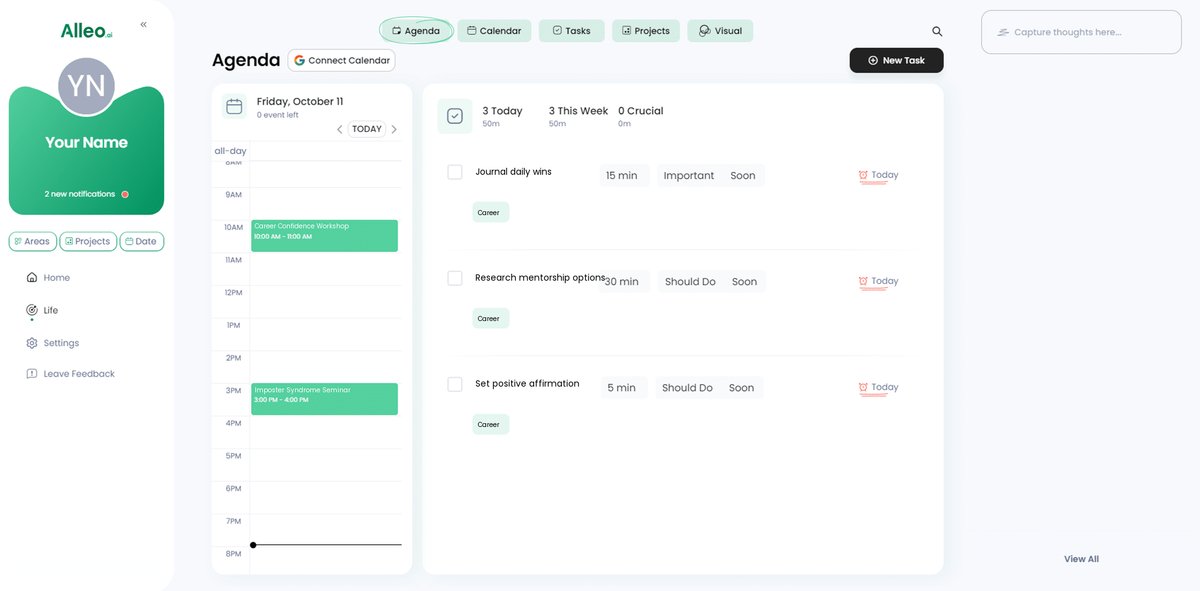
Step 6: Adding events to your calendar or app
Use the calendar and task features in the Alleo app to schedule and track your progress on overcoming imposter syndrome, allowing you to set reminders for mentorship meetings, skill development sessions, and personal goal reviews.
Embrace Your Journey to Confidence
As we’ve discussed, overcoming imposter syndrome at work is essential for your growth. By following these actionable steps, you can build a strong foundation for your career and boost your self-confidence in the workplace.
Remember, you’re not alone in this journey. Many new graduates feel the same way when facing new job anxiety.
Empower yourself through mentorship, positive thinking, and continuous learning. Each step you take will boost your confidence and contribute to your professional development strategies.
Don’t forget to track your accomplishments. Celebrate your progress as part of your workplace success strategies for beginners.
And for an extra boost, try Alleo. This AI life coach can guide you through every step of overcoming self-doubt at work.
Take the first step today. Embrace your potential and build your confidence as you focus on overcoming imposter syndrome at work.