5 Proven Methods to Implement Anonymous Feedback Systems for Remote Teams
Imagine a workplace where every voice is heard, and feedback flows freely, driving continuous improvement and engagement, even when working remotely. Anonymous feedback for remote teams can be a powerful tool to achieve this.
As a life coach, I’ve helped many professionals navigate these challenges. In my experience, creating a safe space for feedback is crucial for improving remote team dynamics and fostering psychological safety in remote teams.
In this article, you’ll learn strategies to implement anonymous feedback systems that protect remote workers from potential retaliation while improving leadership accountability. We’ll explore various anonymous feedback tools and confidential feedback mechanisms that can enhance remote team communication.
Let’s dive into how employee satisfaction surveys and digital suggestion boxes can transform your remote workplace culture.

Understanding the Challenges of Remote Feedback
Remote workers often struggle to provide anonymous feedback for remote teams without fearing retaliation. This fear can stifle honest communication and hinder improvements in remote team communication.
Many clients initially struggle with creating a safe feedback environment using confidential feedback mechanisms.
The lack of face-to-face interaction makes it harder to ensure anonymity. This can lead to decreased engagement and productivity, impacting the remote workplace culture.
According to several studies, only a small percentage of workers feel communication is open and accurate in virtual environments.
In my experience, people often find that these challenges lead to disengagement. When feedback mechanisms are ineffective, trust erodes, affecting psychological safety in remote teams.
This impacts overall team performance and morale in remote team dynamics.
Addressing these issues is crucial. You need a structured approach to create a safe space for anonymous feedback for remote teams.
Let’s explore how to achieve this using team feedback software and employee satisfaction surveys.

Key Steps to Implementing Effective Anonymous Feedback Systems for Remote Teams
Overcoming this challenge requires a few key steps. Here are the main areas to focus on to make progress with anonymous feedback for remote teams:
- Choose secure anonymous feedback software: Ensure robust encryption and ease of integration with team feedback software.
- Establish clear feedback guidelines and policies: Communicate processes and ensure anonymity through confidential feedback mechanisms.
- Train leaders on handling anonymous feedback: Provide training on non-judgmental listening and responses to improve remote team dynamics.
- Implement regular, scheduled feedback cycles: Use a variety of methods, including employee satisfaction surveys, to gather continuous feedback.
- Create a safe space for open dialogue: Foster psychological safety in remote teams and act on feedback promptly to enhance remote workplace culture.
Let’s dive into these key aspects of implementing anonymous feedback for remote teams!
1: Choose secure anonymous feedback software
Selecting the right software is crucial to ensure anonymity and security in remote feedback systems for anonymous feedback for remote teams.
Actionable Steps:
- Choose software with robust encryption features.
- Research anonymous feedback tools that prioritize data protection and secure submissions.
- Conduct a pilot program with a small team.
- Test the team feedback software for reliability and ease of use before full implementation.
- Ensure integration with existing remote team communication platforms.
- Select tools that seamlessly work with Slack or Microsoft Teams.
Explanation: Choosing secure software is essential for protecting employee identities and fostering trust in anonymous feedback for remote teams. Secure tools ensure anonymous submissions, reducing fear of retaliation and improving remote team dynamics.
This helps maintain open communication and engagement. According to ContactMonkey, integrating feedback tools with existing platforms enhances usability and improves feedback collection.
This approach aligns with industry trends, ensuring you stay ahead in creating a safe feedback environment and promoting psychological safety in remote teams.
Key factors to consider when selecting feedback software:
- Encryption strength and data protection measures for confidential feedback mechanisms
- User-friendly interface for both employees and administrators in virtual environments
- Compatibility with existing company systems, such as digital suggestion boxes
By following these steps, you can build a secure and effective anonymous feedback system for remote teams. Let’s move on to establishing clear guidelines and policies for constructive criticism in virtual environments.
2: Establish clear feedback guidelines and policies
Establishing clear feedback guidelines and policies is essential to ensure anonymity and build trust in anonymous feedback systems for remote teams.
Actionable Steps:
- Draft comprehensive guidelines outlining the anonymous feedback process and confidentiality assurances for remote teams.
- Create a detailed policy document that explains each step taken to protect anonymity in remote workplace culture.
- Clearly communicate these guidelines to all employees in virtual environments.
- Host a virtual town hall to explain the new anonymous feedback for remote teams system and address any concerns.
- Regularly review and update policies based on feedback and effectiveness.
- Schedule quarterly reviews to assess and refine the guidelines for remote team communication as needed.
Explanation: Creating and communicating clear guidelines helps ensure that employees understand the anonymous feedback process and feel secure in their anonymity. This transparency builds trust and encourages more honest feedback, improving remote team dynamics.
According to Launchways, effective communication strategies are crucial for improving engagement and performance. By regularly updating policies, you can adapt to new challenges and continuously improve the anonymous feedback for remote teams system.
Regularly reviewing and updating guidelines ensures the system remains relevant and effective. Let’s move on to training leaders on handling anonymous feedback from remote teams.
3: Train leaders on handling anonymous feedback
Training leaders on handling anonymous feedback for remote teams is crucial for fostering a culture of trust and accountability in virtual environments.
Actionable Steps:
- Conduct workshops focused on non-judgmental listening and constructive responses in remote team communication.
- Provide practical exercises to help leaders practice these skills using team feedback software.
- Distribute guides on framing positive and actionable responses to anonymous feedback.
- Include real-life scenarios and suggested scripts to enhance learning about confidential feedback mechanisms.
- Pair experienced leaders with new managers for mentorship on improving remote team dynamics.
- Facilitate knowledge sharing to ensure consistent feedback handling across the remote workplace culture.
Explanation: Training leaders to handle anonymous feedback effectively builds trust and encourages more honest communication in remote teams.
Workshops and guides help leaders respond constructively to anonymous feedback, fostering a positive feedback culture in virtual environments.
According to CultureMonkey, effective training helps leaders handle feedback without bias, increasing engagement and productivity. This approach ensures that all feedback from employee satisfaction surveys is taken seriously and acted upon promptly.
Key skills leaders should develop for handling anonymous feedback in remote teams:
- Active listening without judgment in virtual environments
- Constructive response formulation using digital suggestion boxes
- Maintaining confidentiality and psychological safety in remote teams
By following these steps, you can ensure leaders are well-equipped to handle anonymous feedback for remote teams using appropriate anonymous feedback tools.
Let’s move on to implementing regular feedback cycles.
4: Implement regular, scheduled feedback cycles
Implementing regular, scheduled feedback cycles is essential for maintaining continuous improvement and engagement in remote teams. This includes incorporating anonymous feedback for remote teams to ensure honest communication.
Actionable Steps:
- Schedule monthly pulse surveys.
- Collect ongoing feedback to stay updated on team sentiments and issues, using employee satisfaction surveys for remote workplace culture insights.
- Incorporate diverse feedback methods.
- Use surveys, 1:1 meetings, and digital suggestion boxes to cater to different preferences, enhancing remote team communication.
- Analyze feedback data regularly.
- Utilize team feedback software and data analytics tools to identify trends and actionable insights for improving remote team dynamics.
Explanation: Consistent feedback cycles ensure that employees’ voices are heard regularly, promoting continuous improvement. This approach aligns with industry trends, ensuring you stay proactive in addressing concerns and maintaining psychological safety in remote teams.
According to Psico-Smart, organizations that embrace continuous feedback see a significant improvement in performance. This strategy builds a culture of trust and accountability, crucial for remote teams, and supports constructive criticism in virtual environments.
By following these steps, you can maintain a robust feedback loop that supports remote team success. Now, let’s focus on creating a safe space for open dialogue using confidential feedback mechanisms.
5: Create a safe space for open dialogue
Creating a safe space for open dialogue is essential to ensure remote employees feel comfortable sharing anonymous feedback for remote teams without fear of retaliation.
Actionable Steps:
- Foster a culture of psychological safety in remote teams.
- Regularly affirm the value of feedback and recognize contributors anonymously.
- Establish anonymous feedback tools for real-time feedback.
- Set up confidential feedback mechanisms or digital suggestion boxes for immediate input.
- Act promptly on received feedback.
- Share action plans and updates on changes implemented based on feedback.
Explanation: Ensuring a safe space for open dialogue helps build trust and encourages honest remote team communication. This approach aligns with industry trends, fostering a positive feedback culture.
According to Wrenly, creating anonymous channels and acting on feedback promptly are critical steps in building trust within remote teams.
Benefits of creating a safe space for open dialogue:
- Increased employee engagement and satisfaction
- Improved problem-solving and innovation
- Enhanced team feedback and collaboration
By following these steps, you can create an environment where remote employees feel safe to share their thoughts, improving remote team dynamics.
Now, let’s explore how Alleo can assist in setting up and managing regular feedback cycles.
Partner with Alleo to Enhance Your Feedback Systems
We’ve explored the challenges of implementing anonymous feedback for remote teams, how solving them can improve engagement and accountability, and the steps to achieve it. But did you know you can work directly with Alleo to make this journey easier and faster for your remote workplace culture?
Setting up an account with Alleo is simple. Create a personalized plan to tackle your feedback challenges and improve remote team communication.
Alleo’s AI coach provides tailored support for anonymous feedback tools, just like a human coach, ensuring psychological safety in remote teams.
Alleo’s coach will follow up on your progress, handle changes, and keep you accountable through text and push notifications. You’ll receive full coaching sessions on confidential feedback mechanisms and employee satisfaction surveys, and you can start with a free 14-day trial, no credit card needed.
Ready to get started with our team feedback software for free?
Let me show you how to implement a digital suggestion box and improve remote team dynamics!
Step 1: Log In or Create Your Account
Log in to your existing Alleo account or create a new one to start your journey towards implementing effective anonymous feedback systems for your remote team.

Step 2: Choose Your Goal – Building Better Habits and Routines
Select “Building Better Habits and Routines” to establish consistent feedback practices that will enhance your remote team’s communication and engagement, addressing the challenges outlined in implementing effective anonymous feedback systems.

Step 3: Select “Career” as Your Focus Area
Choose “Career” as your life area to address workplace communication challenges and improve your team’s feedback system, aligning with the article’s focus on creating a safe space for remote worker feedback and enhancing leadership accountability.

Step 4: Starting a Coaching Session
Begin your journey with Alleo by scheduling an intake session, where you’ll discuss your remote team’s feedback challenges and collaboratively create a personalized plan to implement an effective anonymous feedback system.

Step 5: Viewing and Managing Goals After the Session
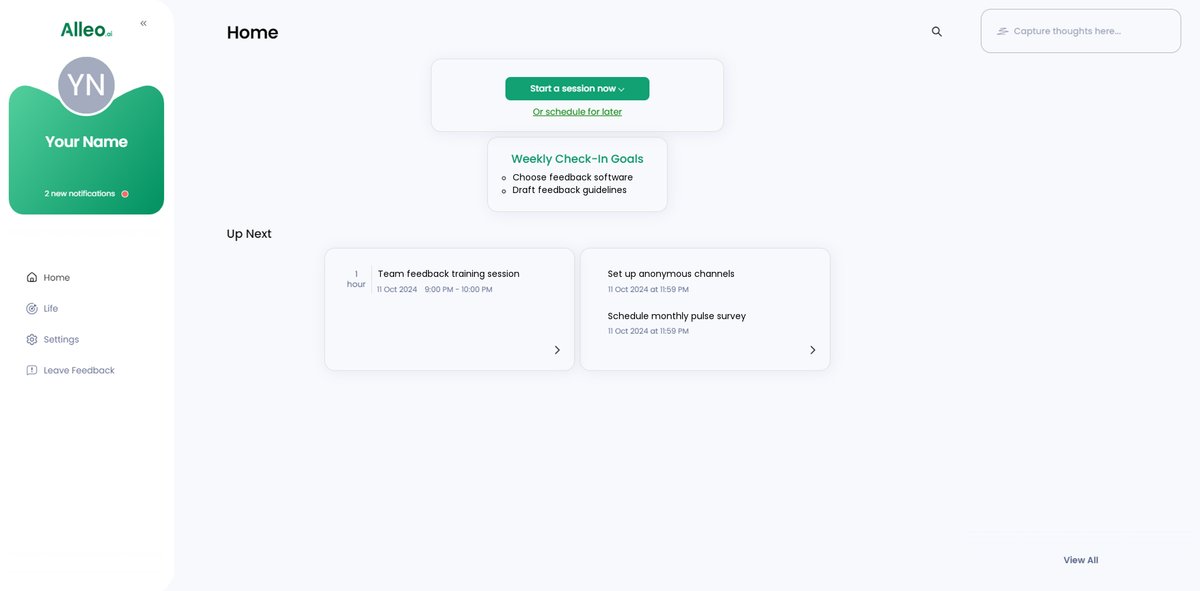
After your coaching session on implementing anonymous feedback systems, find your goals displayed on the app’s home page, allowing you to easily track and manage your progress towards creating a safe space for open dialogue in your remote team.
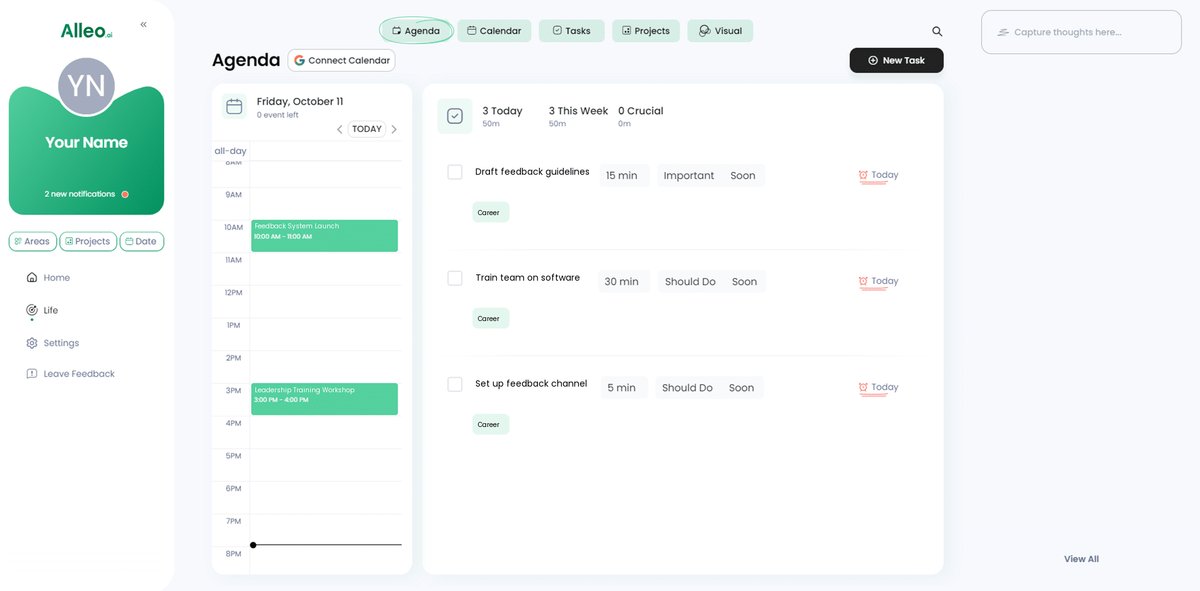
Step 6: Adding events to your calendar or app
To track your progress in implementing anonymous feedback systems, use Alleo’s calendar and task features to schedule regular feedback cycles, set reminders for policy reviews, and mark milestones in your journey towards creating a safe space for open dialogue in your remote team.
Wrapping Up: Empower Your Remote Team with Anonymous Feedback
We’ve covered how to create a secure, anonymous feedback system for your remote team. Addressing these challenges can lead to improved engagement and trust in your remote workplace culture.
Remember, the steps for implementing anonymous feedback for remote teams include:
- Choosing secure anonymous feedback tools
- Establishing guidelines for constructive criticism in virtual environments
- Training leaders on remote team communication
- Maintaining regular feedback cycles with employee satisfaction surveys
- Creating a safe space to improve remote team dynamics
These actions are crucial for psychological safety in remote teams.
Empathize with your team. They need to feel safe to share honestly through confidential feedback mechanisms.
By implementing these strategies, you can build a more open and accountable work environment using team feedback software.
And don’t forget, Alleo is here to help. Try our digital suggestion box for free today and see the difference it makes in your anonymous feedback for remote teams.