Master Quick Breathing Exercises: Your Ultimate Guide to Workplace Stress Relief
Are you feeling overwhelmed by the demands of remote work and constant connectivity? Quick breathing exercises for stress can provide instant relief for busy professionals.
As a life coach, I’ve helped many professionals navigate these challenges. I’ve seen firsthand how workplace stress can impact productivity and well-being. Stress relief breathing methods for employees are essential in today’s fast-paced work environment.
In this article, you’ll learn how quick breathing exercises for stress can provide immediate stress relief. We’ll cover simple techniques like belly breathing, the 4-7-8 method, and mindful breathing for office stress reduction. These desk-friendly breathing exercises are perfect for workplace wellness.
Let’s dive into these productivity-boosting breathing exercises.

Understanding the Toll of Workplace Stress on Remote Workers
Many remote workers grapple with overwhelming stress. The pressures of constant connectivity and blurred work-life boundaries can be exhausting, making workplace stress management techniques crucial.
I often see clients struggle with balancing their responsibilities. This constant stress can negatively impact your productivity and overall well-being, highlighting the need for quick breathing exercises for stress relief.
One common issue is the lack of physical separation between work and personal life. This can make it difficult to switch off from work mode, emphasizing the importance of deep breathing exercises for anxiety at work.
Additionally, frequent interruptions and the pressure to always be available can heighten anxiety. It’s a pervasive problem that needs addressing through mindful breathing for office stress reduction.
So, what can you do to incorporate quick breathing exercises for stress into your routine?

Effective Steps to Reducing Workplace Stress with Breathing Exercises
Overcoming this challenge requires a few key steps. Here are the main areas to focus on to make progress with quick breathing exercises for stress.
- Practice quick belly breathing at your desk: This workplace stress management technique can help you relax and stay focused throughout the day.
- Use the 4-7-8 technique during short breaks: This deep breathing exercise for anxiety at work provides immediate stress relief and can enhance your relaxation.
- Integrate mindful breathing into your daily routine: This practice of mindful breathing for office stress reduction can help maintain calmness and manage stress effectively.
Let’s dive into these quick breathing exercises for stress!
1: Practice quick belly breathing at your desk
Incorporating quick breathing exercises for stress into your routine can help you relax and stay focused throughout the day. These workplace stress management techniques are essential for maintaining productivity.
Actionable Steps:
- Set a timer to remind yourself to practice deep breathing exercises for anxiety at work every hour. Track the number of sessions completed daily.
- Use a visual or audio guide, like a YouTube video, for a 5-minute belly breathing session. Measure the impact on your stress levels before and after each session.
- Incorporate mindful breathing for office stress reduction into your pre-meeting routine to calm your nerves. Evaluate the difference in anxiety levels during meetings.
Explanation:
These steps matter because regular belly breathing can stimulate the parasympathetic nervous system, promoting relaxation and reducing stress. Quick breathing exercises for stress are among the most effective desk-friendly breathing exercises.
According to Verywell Mind, diaphragmatic breathing helps regulate stress and anxiety, making it a valuable tool for remote workers and busy professionals seeking instant calm breathing for work pressure.
Consistent practice can significantly improve your ability to manage workplace stress effectively using these stress relief breathing methods for employees.
Key benefits of belly breathing include:
- Reduced heart rate and blood pressure
- Improved focus and mental clarity
- Enhanced overall sense of calm
Taking these small steps in workplace wellness through breathing techniques can make a big difference in your daily stress levels.
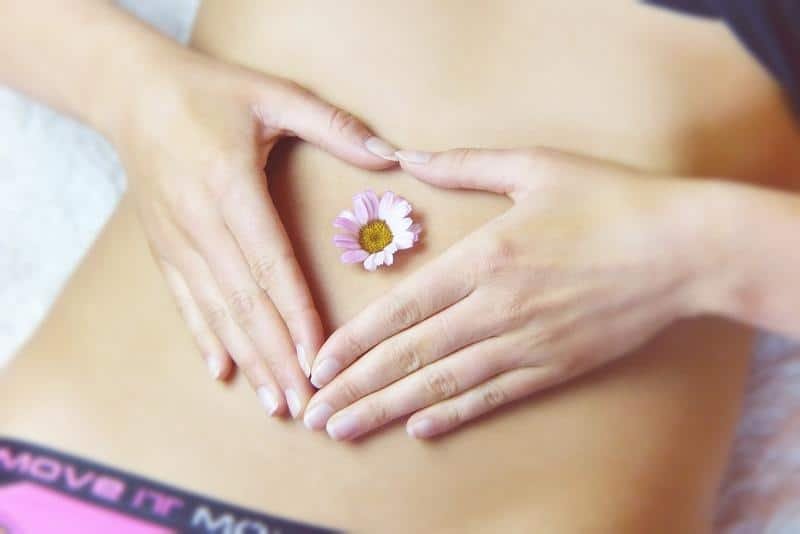
2: Use 4-7-8 technique during short breaks
The 4-7-8 breathing technique, one of the quick breathing exercises for stress, can provide immediate stress relief during your workday.
Actionable Steps:
- Schedule two 5-minute breaks daily for the 4-7-8 breathing technique, a workplace stress management technique. Log each session and reflect on its impact on your focus.
- Combine the 4-7-8 technique with a stretching routine to enhance relaxation. This desk-friendly breathing exercise can help track improvements in physical tension and mental clarity.
- Use the 4-7-8 technique, an instant calm breathing for work pressure method, before starting high-stress tasks or projects. Monitor changes in your productivity and task performance.
Explanation:
These steps are vital because they help regulate your stress response and improve mental clarity, making them effective deep breathing exercises for anxiety at work.
According to the Harvard Health, breath control techniques can effectively manage stress.
Consistent practice of the 4-7-8 method, one of the stress relief breathing methods for employees, can significantly enhance your ability to handle workplace stress.
Incorporating these quick breathing exercises for stress can make your workday more manageable, promoting workplace wellness through breathing techniques.

3: Integrate mindful breathing into daily routine
Incorporating quick breathing exercises for stress into your daily routine can significantly reduce workplace stress.
Actionable Steps:
- Begin and end your workday with a 5-minute mindful breathing session. Keep a journal to track changes in mood and stress levels.
- Use quick breathing exercises for stress as a reset after difficult interactions or stressful emails. Note how quickly you regain calm and focus.
- Participate in virtual mindfulness sessions or workshops to deepen your practice. Measure the long-term benefits on your stress management techniques.
Explanation:
These steps matter because mindful breathing helps manage stress and improve overall well-being. According to the VA Whole Health Library, deep breathing exercises for anxiety at work are powerful tools for relaxation and stress reduction.
Consistent practice of quick breathing exercises for stress can enhance your ability to stay calm and focused throughout the workday.
Mindful breathing can help you:
- Increase self-awareness
- Improve emotional regulation
- Enhance decision-making skills
Taking these small steps in workplace wellness through breathing techniques can create a significant impact on your daily stress levels.
Partner with Alleo on Your Stress Relief Journey
We’ve explored the challenges of remote work stress and how quick breathing exercises can help. But did you know you can work directly with Alleo to make this workplace stress management journey easier?
Alleo, your AI life coach, offers affordable, tailored coaching support. With Alleo, you’ll get personalized quick breathing exercises for stress and reminders to track your progress in office stress reduction.
It’s like having a human coach, but more convenient for busy professionals.
Setting up an account is simple. Create a personalized plan to manage your stress using deep breathing exercises for anxiety at work.
Alleo will follow up on your progress with desk-friendly breathing exercises and handle changes. Stay accountable with text and push notifications for instant calm breathing for work pressure.
Ready to get started for free with stress relief breathing methods for employees?
Let me show you how!
Step 1: Log in or Create Your Alleo Account
To start managing your workplace stress with personalized breathing exercises, log in to your Alleo account or create a new one if you haven’t already.

Step 2: Choose Your Focus – Building Better Habits and Routines
Click on “Building better habits and routines” to start developing a consistent practice of stress-relieving breathing exercises, helping you create a more balanced and productive remote work lifestyle.

Step 3: Select “Health” as Your Focus Area
Choose “Health” as your primary focus area in Alleo to address workplace stress through breathing exercises, aligning perfectly with the stress-reduction techniques discussed in the article and promoting overall well-being in your professional life.

Step 4: Starting a Coaching Session
Begin your stress relief journey with Alleo by scheduling an initial intake session, where you’ll discuss your workplace stress challenges and create a personalized breathing exercise plan tailored to your remote work needs.

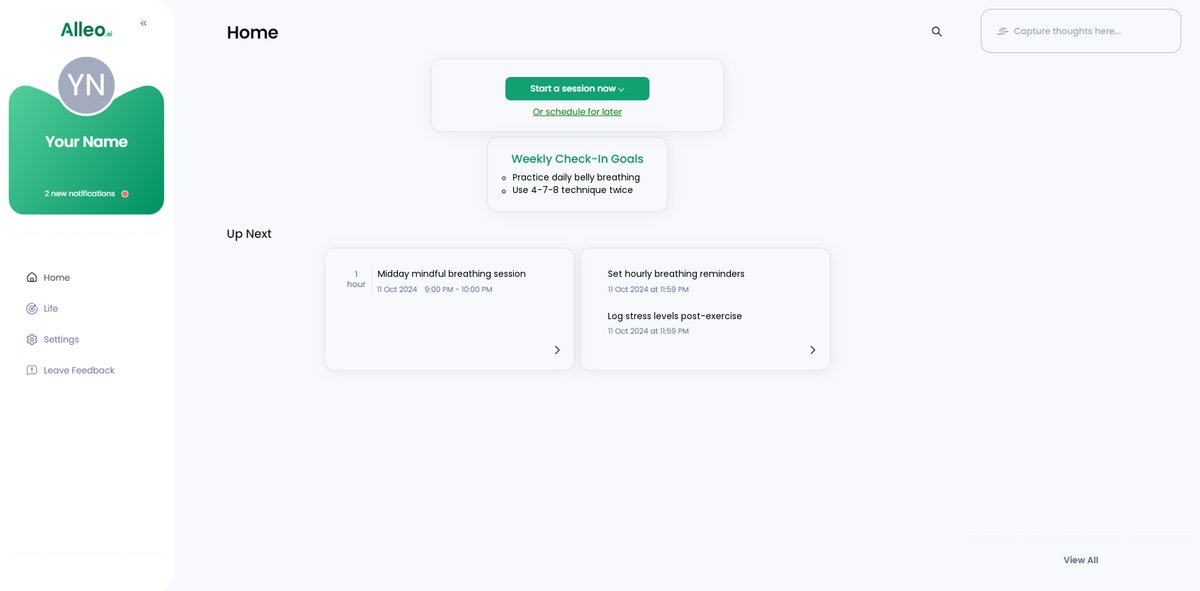
Step 5: Viewing and managing goals after the session
After your coaching session, open the Alleo app to find your discussed goals conveniently displayed on the home page, where you can easily view and manage them to stay on track with your workplace stress reduction plan.
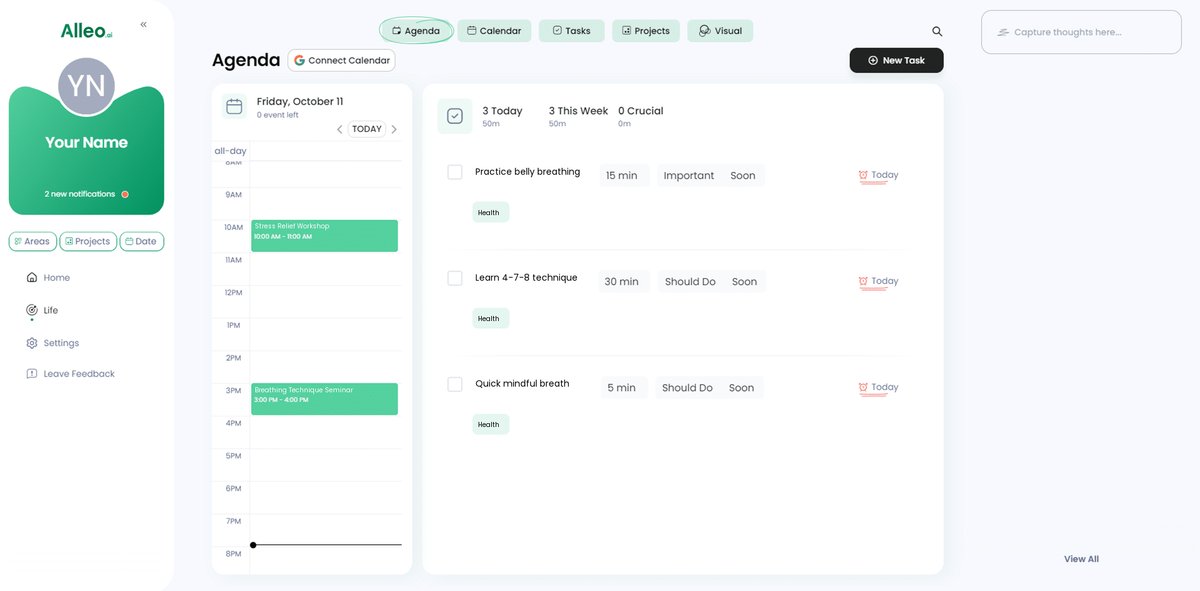
Step 6: Adding events to your calendar or app
Use the Alleo app’s calendar and task features to schedule your breathing exercises and track your progress in managing workplace stress, making it easy to integrate these stress-relief techniques into your daily routine.
Take Control of Your Workplace Stress Today
By now, you’ve learned how quick breathing exercises for stress can help manage workplace stress. Implementing these workplace stress management techniques can transform your daily routine.
Remember, small steps can make a big difference. Start incorporating belly breathing, the 4-7-8 method, and mindful breathing for office stress reduction into your workday.
Don’t let stress control your life. Take charge with these practical, easy-to-use techniques like deep breathing exercises for anxiety at work.
For additional support, consider partnering with Alleo. Our AI life coach can help integrate these desk-friendly breathing exercises into your day seamlessly.
You deserve a stress-free work environment. Start your journey with Alleo today, and take the first step towards better stress management through quick breathing exercises for stress.