Retirees: 5 Proven Steps to Find Mentors and Master New Skills
Imagine stepping into a new chapter of life, filled with opportunities to learn and grow. But how do you navigate this journey without a guide? Finding mentors after retirement can be a crucial step in this process.
As a life coach, I’ve helped many professionals navigate similar challenges. I often see retirees seeking guidance to master new skills and explore second career opportunities. Retirement mentorship programs and intergenerational mentoring can be invaluable resources for those in career transition after retirement.
In this article, you will discover actionable strategies to find mentors after retirement and unlock new opportunities. Together, we will explore community resources, networking tips for retirees, and practical steps for lifelong learning and skill development in retirement.
Let’s dive into senior learning opportunities and online mentoring for seniors.

The Struggles of Finding Mentors After Retirement
Starting a new chapter without established networks can be daunting. Many retirees face the challenge of entering new fields without a support system when finding mentors after retirement.
This lack of connections makes skill development in retirement and career transitions for retirees even tougher.
Mentorship is crucial for retirees, yet finding mentors after retirement isn’t easy. I often see clients struggle to find guidance, feeling isolated and unsure of where to start with retirement mentorship programs.
For example, several clients report difficulty navigating new industries alone. Without mentors, they miss out on valuable advice and feedback, highlighting the need for senior learning opportunities.
This gap can be frustrating and demotivating for those seeking second career guidance for retirees.
Retirees need structured approaches to connect with experienced practitioners through intergenerational mentoring or online mentoring for seniors. Otherwise, they risk stagnating in their new endeavors, missing out on lifelong learning for older adults.
Practical Steps to Find Mentors for New Skills
Overcoming this challenge of finding mentors after retirement requires a few key steps. Here are the main areas to focus on to make progress in your retirement skills networking.
- Join United Way NEXT for retiree mentorship: Sign up, attend orientation sessions, and participate in retirement mentorship programs.
- Attend industry networking events and workshops: Research, register, and actively network at relevant events for senior learning opportunities.
- Use LinkedIn to connect with potential mentors: Optimize your profile, join groups, and reach out to industry leaders for intergenerational mentoring.
- Volunteer in a new field to gain experience: Identify retiree volunteer opportunities, network with volunteers, and document skills learned.
- Enroll in online courses with mentorship programs: Find courses for lifelong learning for older adults, engage with mentors, and apply knowledge to real-world projects.
Let’s dive into these strategies for finding mentors after retirement!
1: Join United Way NEXT for retiree mentorship
Joining United Way NEXT can significantly ease the process of finding mentors after retirement and enhancing your skills through retirement mentorship programs.
Actionable Steps:
- Register online and read through the orientation materials for senior learning opportunities.
- Attend at least two orientation sessions within the first month to explore career transition for retirees.
- Reach out to at least three potential mentors within the network and schedule initial meetings for skill development in retirement.
Explanation: These steps help you integrate into the United Way NEXT community, connecting you with experienced mentors who can guide your journey in finding mentors after retirement.
Orientation sessions provide crucial insights into intergenerational mentoring, while actively engaging with mentors offers personalized advice and support through online mentoring for seniors.
For more information, visit United Way NEXT.
This approach provides a strong foundation for retiree volunteer opportunities, making your transition smoother and more rewarding through lifelong learning for older adults.
2: Attend industry networking events and workshops
Attending industry networking events and workshops is essential for retirees to connect with potential mentors and expand their professional circles when finding mentors after retirement.
Actionable Steps:
- Research and register for relevant events: Use online platforms like Eventbrite and industry-specific websites to find events that match your interests. Attend at least two networking events in the next three months to explore senior learning opportunities.
- Prepare and practice your networking pitch: Develop a concise introduction and practice with friends or family. Use your pitch to engage with at least five new contacts at each event, focusing on retirement mentorship programs.
- Follow up with connections made at events: Send personalized follow-up emails or LinkedIn messages. Schedule follow-up meetings with at least three contacts to discuss career transition for retirees.
Key benefits of attending industry events:
- Gain insights into current industry trends and skill development in retirement
- Meet potential mentors face-to-face for intergenerational mentoring
- Practice networking skills in a supportive environment
- Discover new opportunities for growth and collaboration, including retiree volunteer opportunities
Explanation: These steps ensure you make the most of networking opportunities, enhancing your chances of finding mentors after retirement.
Engaging in industry events helps you stay current and meet influential professionals, supporting lifelong learning for older adults.
According to LinkedIn, networking is a vital tool for career changes and professional growth, particularly for those seeking second career guidance for retirees.
Transitioning to the next section, let’s explore how leveraging LinkedIn can further connect you with potential mentors and online mentoring for seniors.

3: Use LinkedIn to connect with potential mentors
Leveraging LinkedIn can significantly aid retirees in finding mentors after retirement and expanding their professional network for career transition.
Actionable Steps:
- Optimize your LinkedIn profile: Update your profile picture, headline, and summary to reflect your new goals. Aim for a profile completeness score of 100% to enhance visibility for retirement mentorship programs.
- Join relevant LinkedIn groups: Actively participate in group discussions and share content related to senior learning opportunities. Contribute to at least one discussion per week to engage in lifelong learning for older adults.
- Reach out to potential mentors: Send personalized connection requests and messages to industry leaders for intergenerational mentoring. Secure informational interviews with at least three mentors to explore skill development in retirement.
Explanation: These steps will help you create a strong LinkedIn presence, making it easier to find mentors after retirement and connect with potential mentors for second career guidance.
Engaging in group discussions and reaching out directly to leaders can open doors to valuable advice and opportunities for online mentoring for seniors.
For more tips on leveraging LinkedIn for career changes, visit LinkedIn.
Next, let’s explore how volunteering in a new field can also provide valuable mentorship opportunities and retiree volunteer opportunities.
4: Volunteer in new field to gain experience
Volunteering in a new field is a practical way for retirees to gain hands-on experience and connect with potential mentors, aiding in finding mentors after retirement.
Actionable Steps:
- Identify volunteer opportunities: Use platforms like VolunteerMatch to find retiree volunteer opportunities that align with your new skills. Apply for and start volunteering at one organization within the next month.
- Network with fellow volunteers and staff: Engage actively with others during volunteer events, exploring potential retirement mentorship programs. Attend at least two volunteer events and document your experiences.
- Reflect and apply new skills: Keep a journal of new skills and insights gained, focusing on skill development in retirement. Identify and apply at least three new skills to personal projects or hobbies.
Top reasons to volunteer in retirement:
- Gain practical experience in a new field
- Build a network of like-minded individuals for senior learning opportunities
- Contribute to meaningful causes while learning
Explanation: Volunteering helps you build connections and gain practical experience. It also offers a chance to apply new skills in real-world settings, supporting career transition for retirees.
Engaging with fellow volunteers can lead to valuable mentorship opportunities, including intergenerational mentoring. For more information on the benefits of volunteering in retirement, visit CCR Wealth.
Next, let’s explore how enrolling in online courses with mentorship programs can further enhance your skills, providing additional avenues for finding mentors after retirement.

5: Enroll in online courses with mentorship programs
Enrolling in online courses with mentorship programs is a practical way for retirees to gain new skills and receive expert guidance, especially when finding mentors after retirement.
Actionable Steps:
- Research and enroll in online courses: Use platforms like Coursera, Udemy, or edX to find retirement mentorship programs. Enroll in at least one course within the next month.
- Actively engage with course mentors and peers: Participate in discussion forums and virtual meetups. Post questions and responses at least twice a week to enhance senior learning opportunities.
- Apply the knowledge gained from courses: Start a personal project or join a collaborative one. Complete and present at least one project by the end of the course, focusing on skill development in retirement.
Benefits of online courses with mentorship:
- Flexible learning schedule suited for retirees seeking career transition
- Direct access to industry experts and mentors, facilitating intergenerational mentoring
- Opportunity to build a portfolio of work and explore second career guidance for retirees
Explanation: These steps help you make the most of online mentoring for seniors, ensuring you gain practical skills and valuable feedback.
Engaging with mentors and peers can enhance your learning experience and provide networking opportunities, crucial for finding mentors after retirement.
For more information on continuing education and lifelong learning for older adults, visit RKY Careers.
In the final section, let’s explore how using our product, Alleo, can help you set and track your mentorship goals.

Partner with Alleo on Your Mentorship Journey
We’ve explored the challenges retirees face in finding mentors after retirement for new skills and practical steps to overcome them. But did you know you can work with Alleo to make this retirement mentorship journey easier and faster?
Setting Up with Alleo:
- Create Your Account: Start by signing up on Alleo’s platform for senior learning opportunities. It’s quick and user-friendly.
- Personalized Plan: Alleo tailors a mentorship plan based on your unique goals and interests, perfect for career transition for retirees.
- Expert Guidance: Receive full coaching sessions and actionable advice from Alleo’s AI coach, supporting skill development in retirement.
Tracking Progress with Alleo:
- Consistent Follow-Ups: Alleo keeps you on track with regular text and push notifications, enhancing your lifelong learning for older adults experience.
- Adapt and Adjust: Your AI coach responds to your progress, offering adjustments and new strategies as needed, ideal for second career guidance for retirees.
- Accountability: Stay motivated with Alleo’s continuous support and reminders, crucial when finding mentors after retirement.
Get Started Today:
Alleo offers a free 14-day trial with no credit card required, perfect for exploring online mentoring for seniors.
Ready to get started for free? Let me show you how to begin your journey of finding mentors after retirement!
Step 1: Log In or Create Your Account
To begin your mentorship journey with Alleo, simply log in to your existing account or create a new one to access personalized guidance and support for finding mentors in your new field.

Step 2: Choose Your Focus Area
Select “Setting and achieving personal or professional goals” to align your mentorship journey with specific objectives, helping you make the most of your new skills and connections in retirement.

Step 3: Select “Career” as Your Focus Area
Choose “Career” as your focus area in Alleo to access tailored mentorship guidance and resources specifically designed to help retirees navigate new skill acquisition and professional transitions, aligning perfectly with your goal of finding mentors in your post-retirement journey.

Step 4: Starting a coaching session
Begin your journey with Alleo by scheduling an initial intake session, where you’ll discuss your retirement goals and create a personalized plan for finding mentors and developing new skills.

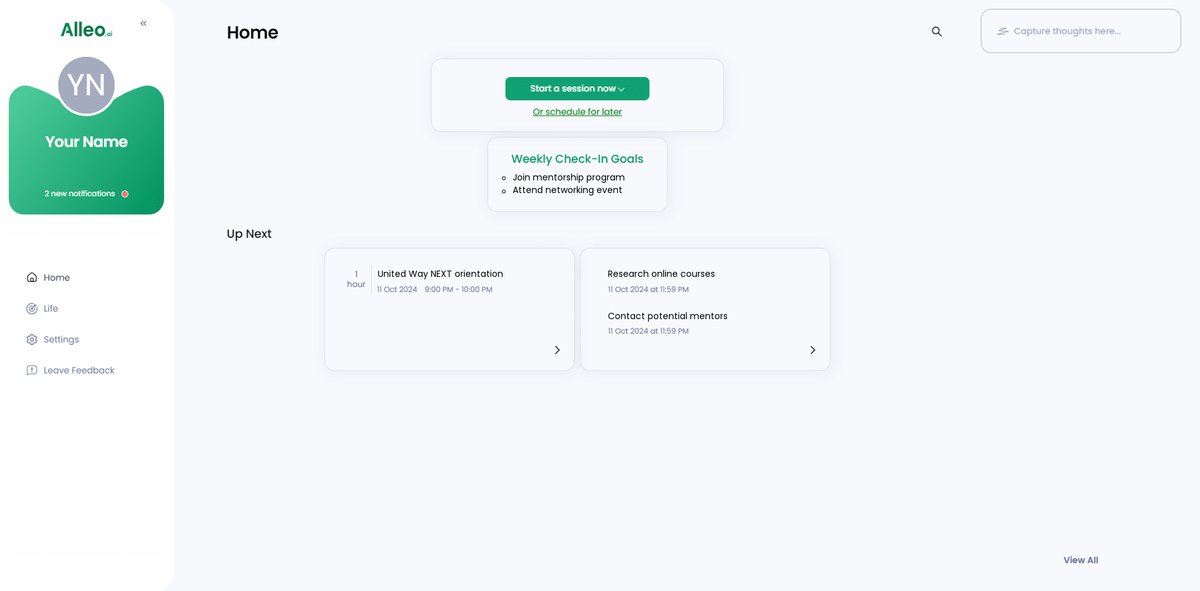
Step 5: Viewing and managing goals after the session
After your coaching session, open the Alleo app to find your discussed goals displayed on the home page, allowing you to easily track and manage your progress towards mastering new skills and finding mentors in your post-retirement journey.
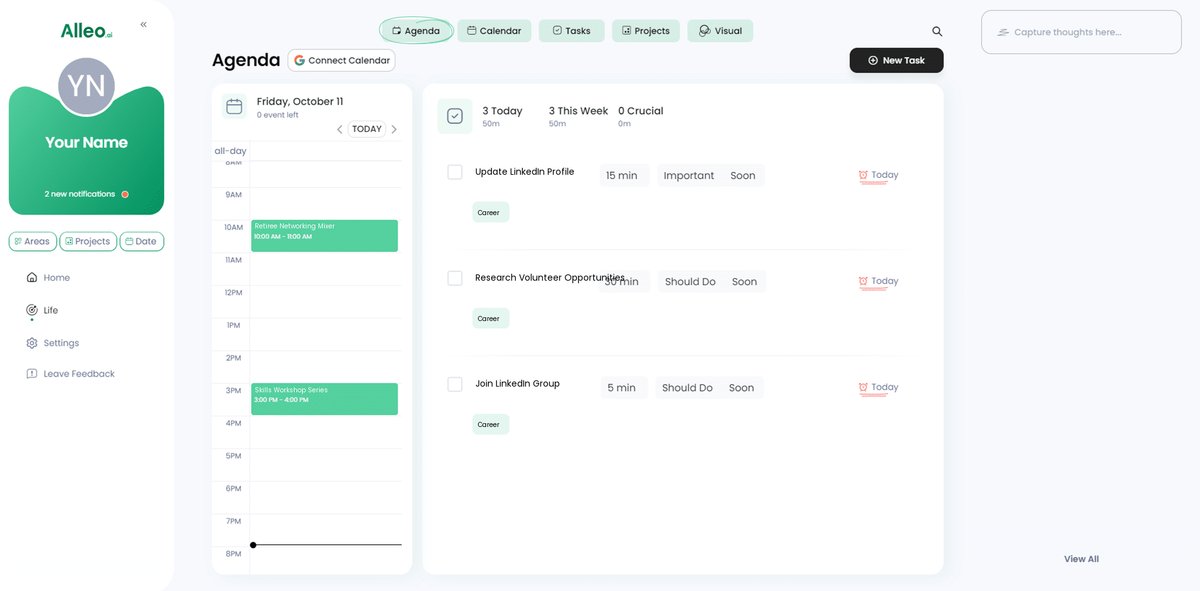
6: Adding events to your calendar or app
Use Alleo’s calendar and task features to add and track mentorship events, meetings, and goals, ensuring you stay organized and accountable on your journey to mastering new skills in retirement.
Embrace Your New Chapter with Confidence
Stepping into this new chapter of life can be challenging, but you’re not alone. Finding mentors after retirement is a crucial step in your journey.
Remember, finding mentors is key to mastering new skills and navigating career transitions for retirees. You’ve learned practical steps to connect with mentors, from joining United Way NEXT to leveraging LinkedIn and exploring retiree volunteer opportunities.
Now, take action. Start by signing up for those events, reaching out on LinkedIn, and enrolling in courses that offer senior learning opportunities.
Each step brings you closer to your goals in retirement skills networking.
Finally, consider using Alleo to set and track your mentorship goals. It offers a personalized plan and expert guidance to support your journey in lifelong learning for older adults.
You’ve got this! Embrace the opportunities ahead in intergenerational mentoring and start today.