The Ultimate Guide: Best Learning Methods for Retirees to Maintain Cognitive Health
Are you unsure about the best cognitive health activities for retirees to keep your mind sharp and engaged during retirement?
As a life coach, I’ve helped many retirees navigate the overwhelming array of mental stimulation strategies for aging brains and brain training activities for retirees.
In this article, you’ll discover effective strategies to maintain your mental agility. We’ll explore daily cognitive exercises for seniors, language learning apps, and more lifelong learning opportunities for seniors.
Let’s dive into these memory improvement techniques for older adults.

Understanding the Cognitive Challenges Retirees Face
Navigating the vast array of cognitive health activities for retirees can be daunting. Retirees often struggle with memory decline and reduced mental sharpness, making it hard to know where to start with brain training activities for retirees.
In my experience, many clients feel overwhelmed by the numerous options for cognitive exercises for seniors.
They often ask, “Which activity will truly help me stay sharp?”
The lack of clear guidance adds to this confusion. Without a structured approach to mental stimulation strategies for aging brains, it’s easy to feel lost.
Imagine having countless choices but no clear direction. This can be frustrating and discouraging for those seeking memory improvement techniques for older adults.
That’s why it’s crucial to find effective strategies. Let’s explore some cognitive health activities for retirees that can make a real difference.

Your Roadmap to Staying Mentally Sharp
Overcoming this challenge requires a few key steps. Here are the main areas to focus on for cognitive health activities for retirees to make progress.
- Engage in daily brain training puzzles and games: Simple puzzles boost brain health and are excellent cognitive exercises for seniors.
- Learn a new language using apps like Duolingo: Daily language practice enhances cognitive skills, promoting lifelong learning opportunities for seniors.
- Practice mindfulness and meditation regularly: Mindfulness improves mental clarity and supports neuroplasticity and aging.
- Join a book club or discussion group: Reading and discussing books stimulates the mind and provides social engagement for cognitive health in retirement.
- Take up a creative hobby like painting or writing: Creative activities keep the brain active and are effective mental stimulation strategies for aging brains.
- Participate in physical exercise routines: Regular exercise supports cognitive function and offers physical exercise benefits for senior cognitive function.
Let’s dive into these cognitive health activities for retirees!

1: Engage in daily brain training puzzles and games
Engaging in brain training puzzles and games is essential for maintaining cognitive health during retirement. These cognitive health activities for retirees can significantly contribute to mental stimulation strategies for aging brains.
Actionable Steps:
- Start with simple puzzles like Sudoku or crossword puzzles. Set a goal to complete one puzzle each day as part of your cognitive exercises for seniors routine.
- Gradually increase the complexity of the puzzles to challenge your brain. Track your progress and improvement over time, utilizing brain training activities for retirees.
- Join online puzzle communities or local puzzle clubs to add a social element and keep the activity engaging, promoting social engagement for cognitive health in retirement.
Explanation: These steps matter because they provide a structured approach to cognitive stimulation, which is crucial for maintaining mental sharpness and supporting neuroplasticity and aging.
Regularly engaging in puzzles can enhance memory and problem-solving skills, serving as effective memory improvement techniques for older adults.
According to Human Care NY, mentally stimulating activities can reduce the risk of mild cognitive impairment in seniors, underlining the importance of cognitive health activities for retirees.
Next, we’ll explore how learning a new language can further enhance cognitive abilities as part of lifelong learning opportunities for seniors.

2: Learn a new language using apps like Duolingo
Learning a new language is one of the most effective cognitive health activities for retirees, as it can significantly enhance cognitive abilities and keep your mind engaged.
Actionable Steps:
- Download a language learning app like Duolingo and set a daily practice goal of 15-30 minutes, utilizing technology-based learning tools for retirees.
- Join language learning groups or forums to practice speaking and improve fluency, promoting social engagement for cognitive health in retirement.
- Use the language in real-life situations, such as speaking with native speakers or traveling to a country where the language is spoken, enhancing brain training activities for retirees.
Here are some benefits of learning a new language, which serves as one of the effective cognitive exercises for seniors:
- Improves memory and recall abilities, supporting memory improvement techniques for older adults
- Enhances problem-solving skills, contributing to mental stimulation strategies for aging brains
- Increases cultural awareness and empathy
Explanation: These steps are vital for maintaining cognitive health as they provide consistent mental stimulation, supporting neuroplasticity and aging.
According to Senior Brain Health, continuous mental stimulation through lifelong learning opportunities for seniors can help preserve cognitive functions and delay age-related decline.
This structured approach ensures you’re regularly challenging your brain, which is crucial for cognitive health activities for retirees.
Next, we’ll explore the benefits of practicing mindfulness and meditation.

3: Practice mindfulness and meditation regularly
Practicing mindfulness and meditation regularly can greatly enhance cognitive health and mental clarity for retirees.
Actionable Steps:
- Set aside 10-20 minutes each day for mindfulness or meditation practice, an effective cognitive health activity for retirees. Use guided meditation apps or online resources.
- Attend local meditation workshops or retreats to deepen your practice and connect with other practitioners, promoting social engagement for cognitive health in retirement.
- Incorporate mindfulness into daily activities, such as mindful eating or mindful walking, to maintain a continuous state of mental clarity and support neuroplasticity and aging.
Explanation: These steps matter because they help maintain cognitive health through consistent mental relaxation and focus.
Regular mindfulness practice can improve mental clarity and reduce stress, serving as one of many cognitive exercises for seniors.
According to Harvard Health, mindfulness and meditation are beneficial for cognitive health and overall well-being.
Consistently practicing these techniques can lead to lasting mental benefits, making them valuable memory improvement techniques for older adults.
Next, we’ll explore the benefits of joining a book club or discussion group.

4: Join a book club or discussion group
Joining a book club or discussion group can significantly enhance cognitive health and mental engagement for retirees, serving as one of the most effective cognitive health activities for retirees.
Actionable Steps:
- Find a local or online book club that matches your interests. Commit to reading one book per month and participating in discussions, which can be an excellent cognitive exercise for seniors.
- Take notes while reading to enhance comprehension and retention, then share your insights during club meetings, promoting memory improvement techniques for older adults.
- Rotate hosting responsibilities within the group to develop organizational and leadership skills, contributing to brain training activities for retirees.
Key benefits of joining a book club include:
- Expanding your knowledge and perspectives, supporting lifelong learning opportunities for seniors
- Improving verbal communication skills
- Building social connections and support networks, enhancing social engagement for cognitive health in retirement
Explanation: These steps matter because they promote mental stimulation and social interaction, essential for cognitive health activities for retirees.
Consistently reading and discussing books can enhance memory and critical thinking skills, serving as effective mental stimulation strategies for aging brains.
According to Harvard Health, engaging in social activities can improve cognitive functions and provide emotional support, highlighting the importance of social engagement for cognitive health in retirement.
Next, we’ll explore the benefits of taking up a creative hobby like painting or writing.

5: Take up a creative hobby like painting or writing
Taking up a creative hobby like painting or writing can significantly boost your cognitive health and mental well-being, making it an excellent cognitive health activity for retirees.
Actionable Steps:
- Choose a creative hobby that interests you: Select painting, writing, or playing a musical instrument as brain training activities for retirees. Dedicate specific times each week to practice.
- Enroll in classes or workshops: Learn new techniques and receive feedback from instructors. This helps in keeping the hobby engaging and educational, providing lifelong learning opportunities for seniors.
- Share your creations: Share your work with friends, family, or local art groups. This can boost confidence and provide motivation, enhancing social engagement for cognitive health in retirement.
Explanation: These steps matter because engaging in creative activities stimulates various parts of the brain, enhancing cognitive functions and supporting neuroplasticity and aging.
According to Harvard Health, creative outlets like painting or writing can serve as effective cognitive exercises for seniors.
Consistently practicing and sharing your creative work can lead to improved mental agility and emotional well-being, serving as excellent memory improvement techniques for older adults.
Next, we’ll explore the benefits of participating in physical exercise routines, which are crucial for senior cognitive function.
Partner with Alleo to Stay Mentally Sharp
We’ve explored effective cognitive health activities for retirees. But did you know Alleo can make this journey even easier for seniors seeking mental stimulation strategies for aging brains?
Alleo offers personalized coaching to help you stay mentally sharp through brain training activities for retirees. Set up an account, create a customized plan for memory improvement techniques for older adults, and start working with our AI coach.
Alleo provides tailored recommendations for cognitive exercises for seniors, tracks your progress, and keeps you accountable with reminders and notifications to support your cognitive health in retirement.
Ready to get started for free? Let me show you how to begin your journey of lifelong learning opportunities for seniors!
Step 1: Log In or Create Your Account
To begin your journey towards better cognitive health, log in to your existing Alleo account or create a new one to access personalized coaching and tracking tools.

Step 2: Choose Your Focus – Building Better Habits and Routines
Select “Building better habits and routines” from the goals list to begin your journey towards improved cognitive health, as consistent daily practices are key to maintaining mental sharpness in retirement.

Step 3: Select “Health” as Your Focus Area
Choose “Health” as your focus area in Alleo to receive personalized guidance on cognitive activities, brain training exercises, and lifestyle habits that will help maintain your mental sharpness during retirement.

Step 4: Starting a coaching session
Begin your cognitive health journey by scheduling an intake session with Alleo’s AI coach to create a personalized plan tailored to your retirement goals and interests.

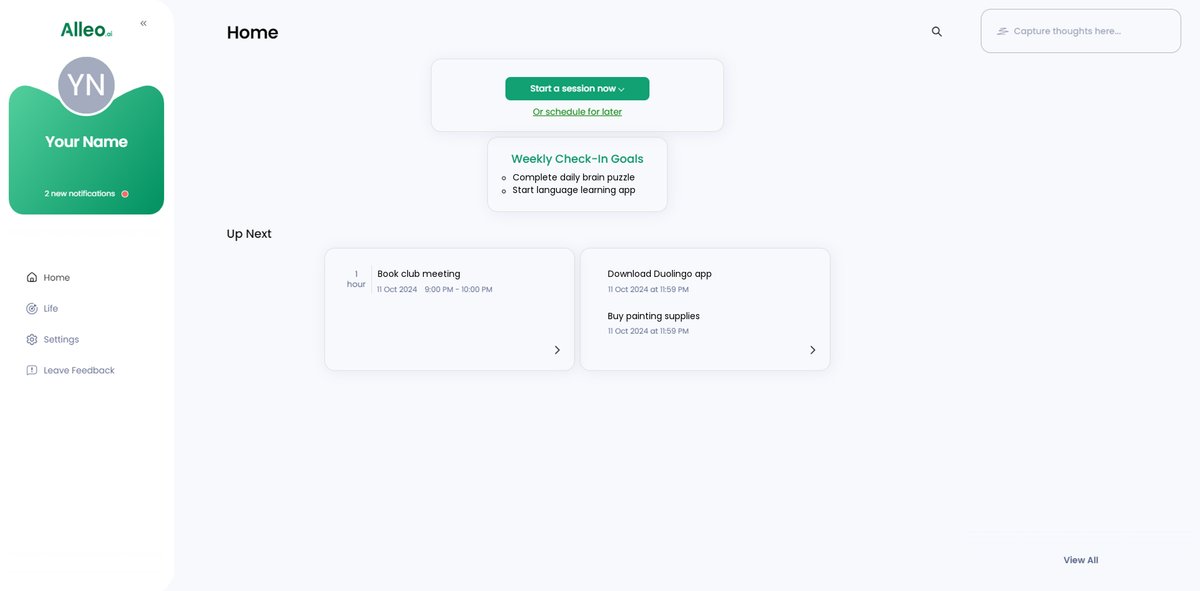
Step 5: Viewing and managing goals after the session
After your coaching session, check the Alleo app’s home page to find the cognitive health goals you discussed, allowing you to easily track and manage your progress towards staying mentally sharp in retirement.
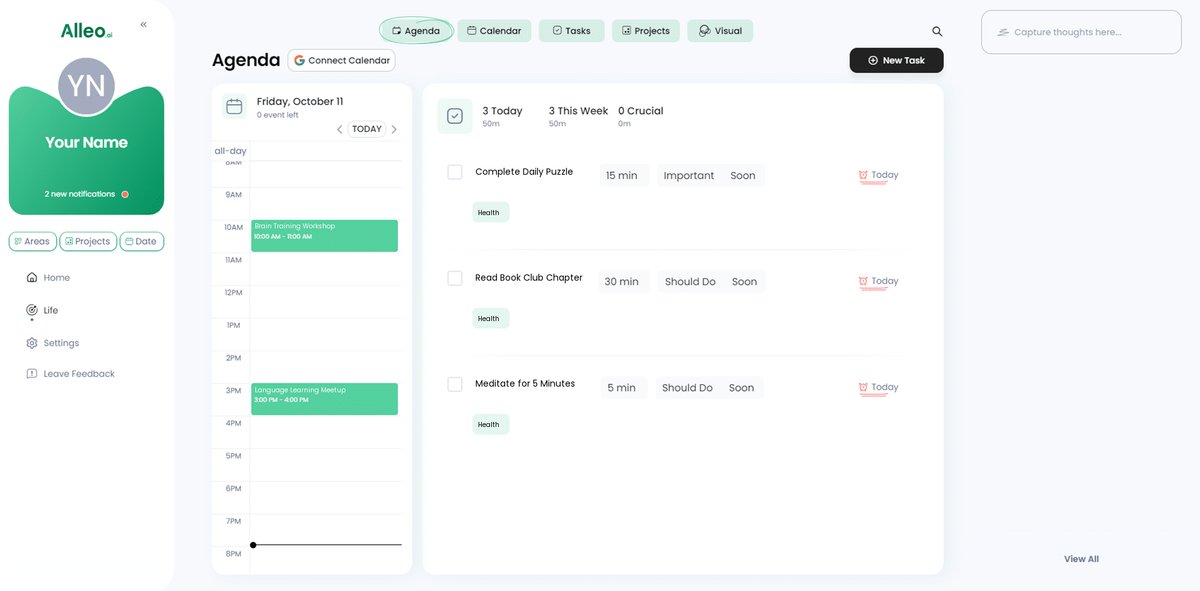
Step 6: Adding events to your calendar or app
Use Alleo’s calendar and task features to schedule your cognitive activities and track your progress, helping you stay consistent with brain training, language learning, mindfulness practice, book club meetings, creative hobbies, and exercise routines.
Embrace Your Journey to Cognitive Health
You’ve learned valuable cognitive health activities for retirees to stay mentally sharp in retirement. Each activity offers unique benefits for your cognitive health, including brain training activities for retirees and memory improvement techniques for older adults.
Remember, it’s essential to choose activities that genuinely engage you. Consistency and variety are key for mental stimulation strategies for aging brains.
Perhaps you feel ready to dive into these cognitive exercises for seniors. Or maybe you need a bit more structure and guidance for lifelong learning opportunities for seniors.
That’s where Alleo comes in. Our AI life coach can provide the support you need for cognitive health activities for retirees.
Give it a try for free and see how it can make a difference in your neuroplasticity and aging journey.
Stay active, stay engaged, and keep your mind sharp through social engagement for cognitive health in retirement. Let’s make this journey together.