6 Powerful Strategies for Setting Boundaries Without Anxiety: A Guide for Anxious People
Are you finding it tough to set boundaries without feeling overwhelmed by anxiety? Setting personal boundaries can be challenging, especially for those dealing with anxiety.
As a life coach, I’ve seen many single men struggle with this very issue. It’s a common challenge, but one we can tackle together using effective anxiety management techniques.
In this article, I’ll share strategies to set healthy boundaries without anxiety, helping improve your personal well-being and relationships. These tips will incorporate elements of assertiveness training for anxious individuals.
You’ll learn practical steps and tools for clear communication, self-care, and more. We’ll explore how mindfulness and boundary establishment can work hand in hand to overcome people-pleasing tendencies.
Let’s dive in and discover how setting boundaries without anxiety can lead to healthier relationships and improved self-care for people with anxiety.

Understanding the Anxiety Behind Boundary Setting
Setting boundaries without anxiety can be challenging, especially for single men who often experience tension in relationships. Many clients initially struggle with the fear of rejection or conflict when they attempt to establish even small personal boundaries.
This fear can lead to feelings of frustration and helplessness.
In my experience, weak boundaries often result in resentment and burnout. Without clear limits, you may find yourself overcommitted and emotionally drained, hindering your self-care and anxiety management.
This can negatively impact your personal well-being and relationship dynamics.
Many people report that their anxiety spikes when they think about setting boundaries. It’s a common issue, but one that can be addressed effectively through assertiveness training and communication skills.
Understanding and addressing the root of this anxiety is the first step toward healthier relationships and overcoming people-pleasing tendencies.
Strategic Steps to Setting Boundaries Without Anxiety
Overcoming the challenge of setting boundaries without anxiety requires a few key steps. Here are the main areas to focus on to make progress in establishing healthy relationships and boundaries:
- Identify personal values to guide boundary-setting: Reflect on experiences to identify core values and align personal boundaries accordingly.
- Practice clear, concise communication techniques: Learn and use “I” statements, and practice boundary-setting conversations to improve communication skills for boundary setting.
- Start with small, manageable boundary requests: Begin with simple boundaries and adjust based on outcomes, helping to overcome people-pleasing tendencies.
- Use “I” statements to express needs assertively: Craft and implement “I” statements in real conversations as part of assertiveness training for anxious individuals.
- Develop self-care routines to manage anxiety: Create a daily self-care schedule and experiment with relaxation techniques, incorporating mindfulness and boundary establishment practices.
- Seek support from friends or a therapist: Identify a supportive network or professional for guidance on therapy approaches for boundary issues.
Let’s dive into these strategies for setting boundaries without anxiety!
1: Identify personal values to guide boundary-setting
Understanding your core values is crucial for setting meaningful boundaries that feel authentic, especially when setting boundaries without anxiety.
Actionable Steps:
- Reflect on past experiences to identify core values. Spend 30 minutes journaling about times you felt disrespected or uncomfortable, which can help in setting personal boundaries.
- Create a list of top 5 core values and prioritize them. Use a values worksheet or an online tool to help rank your values, which is essential for healthy relationships and boundaries.
- Align your boundaries with these values. Write down specific boundaries that reflect your top values, incorporating mindfulness and boundary establishment techniques.
Key benefits of value-based boundaries:
- Increased self-awareness and confidence
- Improved relationship quality
- Enhanced personal well-being and self-care for people with anxiety
Explanation: Identifying and prioritizing your core values helps guide boundary-setting without anxiety and ensures they align with what matters most to you. This approach not only enhances your personal well-being but also strengthens your relationships by fostering mutual respect and improving communication skills for boundary setting.
According to Verywell Health, setting boundaries based on personal values can prevent burnout and reduce resentment in relationships, which is particularly beneficial for overcoming people-pleasing tendencies.
Taking time to understand your values is the first step toward creating boundaries that support your well-being and relationship health, serving as an effective anxiety management technique.
2: Practice clear, concise communication techniques
Effective communication is essential for setting boundaries without anxiety and reducing stress.
Actionable Steps:
- Practice using “I” statements regularly for setting personal boundaries.
- Attend a communication skills workshop or practice with a friend to improve assertiveness training for anxious individuals.
- Role-play boundary-setting conversations in a safe environment.
- Use a trusted friend or therapist to practice different scenarios for overcoming people-pleasing tendencies.
- Record and review yourself practicing these conversations.
- Utilize your phone’s recording feature to self-assess and improve clarity and tone in communication skills for boundary setting.
Explanation: Practicing these techniques helps you express your needs assertively and reduces misunderstandings when setting boundaries without anxiety.
Clear communication is crucial for setting boundaries that others respect and understand, promoting healthy relationships and boundaries.
According to Therapy in a Nutshell, clear, concise communication can help maintain healthy relationships and personal well-being, which is essential for self-care for people with anxiety.
These steps will help you communicate effectively, setting a strong foundation for healthy boundaries and anxiety management techniques.
3: Start with small, manageable boundary requests
Starting with small, manageable boundary requests is crucial in setting boundaries without anxiety and building confidence.
Actionable Steps:
- Identify one small boundary to set this week.
- Focus on areas like personal space or time management for setting personal boundaries.
- Communicate this boundary to a close friend or family member.
- Use a simple and direct approach to convey your boundary, a key part of assertiveness training for anxious individuals.
- Reflect on the outcome and adjust as needed.
- Keep a journal of your experiences and feelings after setting boundaries, which can aid in anxiety management techniques.
Explanation: Starting small helps you gradually build the confidence needed for larger boundary-setting tasks without anxiety.
By focusing on manageable requests, you avoid feeling overwhelmed and can make adjustments based on your experiences, which is essential for healthy relationships and boundaries.
This approach aligns with expert advice from Verywell Health, which suggests starting small and practicing to prevent burnout and reduce resentment in relationships, supporting self-care for people with anxiety.
Taking these small steps will help you build momentum and make setting boundaries without anxiety a natural part of your life, aiding in overcoming people-pleasing tendencies.
4: Use “I” statements to express needs assertively
Expressing your needs assertively is essential for setting boundaries without anxiety and reducing stress in relationships.
Actionable Steps:
- Craft specific “I” statements for common scenarios.
- For example, “I feel stressed when plans change last minute, so I need more notice.”
- Practice these statements in hypothetical situations.
- Role-play with a friend or mentor to build confidence in setting personal boundaries.
- Use “I” statements in real conversations and seek feedback.
- Ask for feedback from the person you spoke with to improve your communication skills for boundary setting.
Examples of effective “I” statements for setting boundaries without anxiety:
- “I feel overwhelmed when I’m interrupted during work hours.”
- “I need some alone time to recharge after social events.”
- “I appreciate when plans are communicated clearly in advance.”
Explanation: Using “I” statements helps you express needs clearly and reduces misunderstandings. This fosters healthier relationships and personal well-being, essential for anxiety management techniques.
According to Therapy in a Nutshell, clear communication is crucial for maintaining healthy relationships and boundaries.
These steps will help you communicate assertively, making boundary-setting more effective and less stressful, which is crucial for assertiveness training for anxious individuals.

5: Develop self-care routines to manage anxiety
Creating self-care routines is essential for managing anxiety effectively and setting boundaries without anxiety.
Actionable Steps:
- Establish a daily self-care schedule for setting personal boundaries.
- Include activities like exercise, meditation, or hobbies as anxiety management techniques.
- Try different relaxation techniques to find what works best for overcoming people-pleasing tendencies.
- Experiment with yoga, deep breathing exercises, or progressive muscle relaxation as part of mindfulness and boundary establishment.
Explanation: Developing self-care routines helps reduce anxiety and supports overall well-being, promoting healthy relationships and boundaries.
Regular self-care practices allow you to recharge and maintain emotional balance, essential for setting boundaries without anxiety.
According to Time, prioritizing relaxation and self-care activities is vital during stressful periods, especially for people with anxiety.
These steps will ensure you have a solid foundation for managing anxiety while setting boundaries and improving communication skills for boundary setting.

6: Seek support from friends or a therapist
Having a supportive network can significantly ease the anxiety associated with setting boundaries without anxiety.
Actionable Steps:
- Identify and reach out to a supportive person or group.
- Join a support group or find a mentor to share your journey in setting personal boundaries.
- Schedule regular check-ins with your support network.
- Plan bi-weekly meetings or calls to discuss progress and challenges in boundary setting.
- Consider professional therapy for additional guidance.
- Find a therapist specializing in anxiety management techniques and boundary-setting.
Benefits of seeking support:
- Gain new perspectives on your challenges with setting boundaries without anxiety
- Learn from others’ experiences and strategies for assertiveness training for anxious individuals
- Build a network of encouragement and accountability for maintaining healthy relationships and boundaries
Explanation: Seeking support helps you feel understood and less alone in your struggles with setting boundaries without anxiety.
Regular check-ins provide accountability and encouragement. Professional therapy offers expert guidance tailored to your needs, including self-care for people with anxiety and communication skills for boundary setting.
According to Aspire Counseling, seeking outside support and finding other sources of help is beneficial.
Remember, building a supportive network is a key step in managing anxiety while setting healthy boundaries and overcoming people-pleasing tendencies.

Partner with Alleo to Set Healthy Boundaries
We’ve explored how to set boundaries without anxiety and improve your well-being. Did you know you can work directly with Alleo to make this journey easier and faster, especially when it comes to setting personal boundaries and overcoming people-pleasing tendencies?
Alleo, the AI life coach, offers personalized coaching sessions focused on anxiety management techniques and assertiveness training for anxious individuals. It’s like having a human coach but more affordable and accessible for those looking to establish healthy relationships and boundaries.
With a free 14-day trial, you can start without a credit card and begin your journey towards setting boundaries without anxiety.
Setting up an account is simple. Once you sign up, Alleo helps you create a personalized boundary-setting plan, incorporating mindfulness and boundary establishment strategies.
The coach follows up on your progress, handles changes, and keeps you accountable via text and push notifications, supporting your self-care for anxiety and enhancing your communication skills for boundary setting.
Ready to get started for free and explore therapy approaches for boundary issues?
Let me show you how!
Step 1: Logging in or Creating an Account
To start your boundary-setting journey with Alleo, Log in to your account or create a new one to begin your free 14-day trial and access personalized coaching support.

Step 2: Choose “Improve Overall Well-being and Life Satisfaction”
Click on “Improve Overall Well-being and Life Satisfaction” to address your boundary-setting challenges and reduce anxiety, as this goal directly aligns with developing healthier relationships and enhancing your personal life.

Step 3: Select “Personal” as Your Focus Area
Choose the “Personal” life area to address boundary-setting challenges, as it directly impacts your self-esteem, relationships, and overall well-being, helping you develop stronger personal boundaries and reduce anxiety in social interactions.

Step 4: Starting a coaching session
Begin your journey with Alleo by scheduling an intake session, where you’ll discuss your boundary-setting goals and create a personalized plan to guide your future coaching sessions.

Step 5: Viewing and managing goals after the session
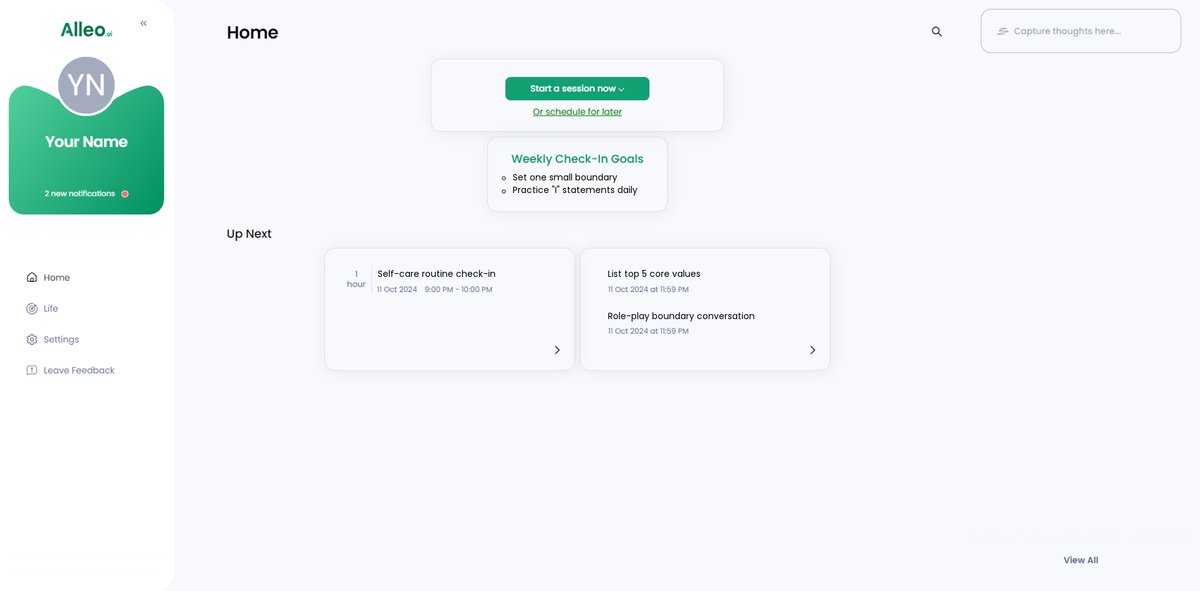
After your coaching session on setting boundaries without anxiety, you’ll find the goals you discussed conveniently displayed on the home page of the Alleo app, allowing you to easily review and manage your progress towards healthier relationships and personal well-being.
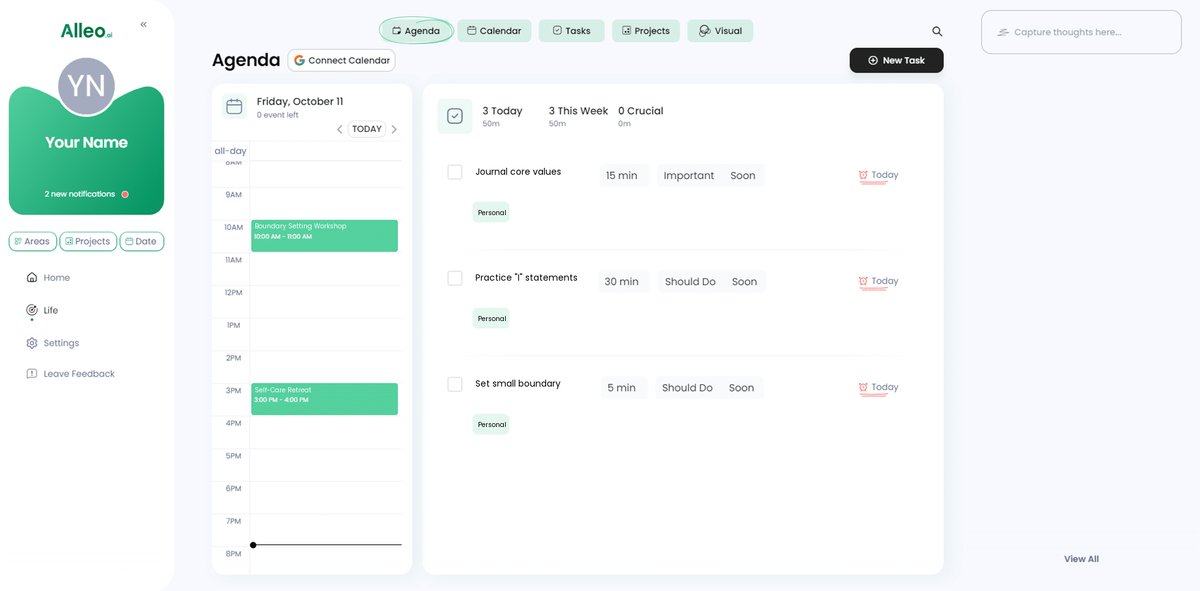
Step 6: Adding events to your calendar or app
Use Alleo’s calendar and task features to schedule and track your boundary-setting activities, helping you stay accountable and monitor your progress as you work on managing anxiety and improving your relationships.
Empowering Your Boundary-Setting Journey
By now, you’ve learned practical strategies for setting boundaries without anxiety and managing personal relationships effectively.
Remember, it’s all about taking small, manageable steps and reflecting on your core values to overcome people-pleasing tendencies.
You can do this.
Try to communicate clearly and assertively, practice self-care, and seek support when needed – these are essential anxiety management techniques.
You’re not alone in this journey of setting personal boundaries.
Alleo can guide you every step of the way, making the process of setting boundaries without anxiety smoother and more effective.
Start your free 14-day trial with Alleo today, and take the first step toward a healthier, happier you through mindfulness and boundary establishment.
You’ve got this!