How to Say No Without Guilt: The Ultimate Guide for People Pleasers
Have you ever found yourself agreeing to help a friend move, despite being swamped with work, just because you couldn’t say no confidently? This is a common struggle for those dealing with people-pleasing behavior.
Meet John, a man who struggles to set boundaries and often feels overwhelmed by others’ requests, showcasing a clear need for assertiveness training.
As a life coach, I’ve assisted many individuals like John in overcoming these challenges. I’ve seen firsthand how difficult it can be to assert oneself without feeling guilty, which often stems from fear of rejection and social anxiety.
Today, we’ll explore practical strategies to help you say no without guilt. You’ll learn actionable steps to confidently set boundaries and prioritize your well-being, focusing on effective communication skills and self-care techniques.
Let’s dive in and discover how to say no confidently while managing guilt and shame, and developing self-confidence.
Understanding the Problem: Why Saying No Feels Impossible
Let’s face it: societal expectations often pressure you to be agreeable and accommodating. For many single men, this leads to overwhelming stress and social anxiety, making it difficult to learn how to say no confidently.
Constantly saying yes can result in burnout and emotional exhaustion. I’ve seen several clients struggle with setting boundaries, fearing negative reactions and dealing with guilt and shame.
Consider a common scenario: you’re asked to stay late at work, even though you’re exhausted. The guilt of saying no can make it easier to cave in, but at what cost to your well-being and prioritizing personal needs?
Understanding the emotional toll is crucial. By recognizing these patterns, you can start to break free from the cycle of constant people-pleasing behavior and focus on developing self-confidence and effective communication skills.

Roadmap to Saying No Without Guilt
Overcoming this challenge requires a few key steps. Here are the main areas to focus on to make progress in learning how to say no confidently:
- Recognize your right to say no without guilt: Affirmations and self-reflection can build confidence and aid in overcoming fear of rejection.
- Practice saying no in low-stakes situations: Role-playing and starting small help ease into it, improving assertiveness and effective communication skills.
- Use short, polite scripts for declining requests: Develop and practice go-to responses to manage social anxiety and set boundaries.
- Focus on your priorities when making decisions: Identify top priorities and align commitments, prioritizing personal needs and self-care techniques.
- Reflect on past successes in setting boundaries: Keep a success journal and seek mentorship to overcome people-pleasing behavior and develop self-confidence.
Let’s dive in!
1: Recognize your right to say no without guilt
Understanding your right to decline requests is crucial in setting healthy boundaries and maintaining your well-being. Learning how to say no confidently is an essential skill for managing social anxiety and prioritizing personal needs.
Actionable Steps:
- Write affirmations that reinforce your right to say no (e.g., “I have the right to prioritize my needs”).
- Reflect daily on situations where you felt compelled to say yes. Journal your thoughts to identify patterns of people-pleasing behavior.
- Practice self-compassion by acknowledging that saying no is a form of self-care technique.
Key benefits of recognizing your right to say no:
- Improved self-esteem and confidence
- Reduced stress and anxiety
- Better work-life balance
Explanation: Recognizing your right to say no is the first step towards alleviating guilt and shame and overcoming fear of rejection. Affirmations and self-reflection help build confidence and identify triggers for people-pleasing behavior.
According to Verywell Mind, practicing saying no can lead to unexpected positive outcomes, such as personal relief and understanding from others. This approach aligns with current trends in self-care and mental health.
Recognizing your right to say no is just the beginning of your journey towards assertiveness and emotional well-being. Developing effective communication skills and learning how to say no confidently are crucial aspects of assertiveness training.

2: Practice saying no in low-stakes situations
Practicing saying no confidently in low-stakes situations helps build confidence and ease into setting boundaries, which is crucial for overcoming people-pleasing behavior.
Actionable Steps:
- Role-play with a friend: Engage in hypothetical scenarios where you practice how to say no confidently with a trusted friend. Exchange constructive feedback to refine your approach and improve your assertiveness training.
- Start small: Begin by declining minor requests, such as turning down a casual coffee date if you’re busy. Gradually progress to more significant requests as your confidence increases, helping you prioritize personal needs.
Explanation: Practicing saying no in low-stakes situations is essential for building the confidence needed to set boundaries in more challenging scenarios, which is a key aspect of effective communication skills.
By starting small, you can develop this skill without overwhelming yourself, aiding in managing social anxiety.
According to Harvard researchers, addressing small matters with trusted individuals can enhance conflict resolution skills. This approach aligns with current trends in self-improvement and assertiveness training, helping individuals overcome fear of rejection.
Transition into the next section by gradually incorporating these steps into your daily routine as part of your self-care techniques.

3: Use short, polite scripts for declining requests
Using short, polite scripts for declining requests can help you learn how to say no confidently and set boundaries without feeling guilty.
Actionable Steps:
- Develop a script bank: Create a collection of go-to phrases for different scenarios to aid in setting boundaries. For example, “Thank you for thinking of me, but I can’t commit to that right now.”
- Practice these scripts: Rehearse your responses until they feel natural. This makes it easier to use them in real situations and helps in overcoming fear of rejection.
- Apply in real life: Use these scripts when declining requests at work or in social settings. Note any improvements in your comfort level and self-confidence.
Examples of polite scripts for declining requests and prioritizing personal needs:
- “I appreciate the offer, but I’ll have to pass this time.”
- “Unfortunately, my schedule is full at the moment.”
- “That sounds interesting, but it doesn’t align with my current priorities.”
Explanation: Having a set of polite scripts makes saying no easier and reduces the anxiety associated with declining requests, which is crucial for managing social anxiety and dealing with guilt and shame.
According to LinkedIn, keeping responses short and sincere is effective in maintaining boundaries. This approach supports the growing focus on assertiveness and emotional well-being.
These steps will help you confidently say no and maintain your well-being through effective communication skills and self-care techniques.

4: Focus on your priorities when making decisions
Focusing on your priorities is essential for making decisions that align with your values and well-being, especially when learning how to say no confidently.
Actionable Steps:
- Identify your top priorities: List your top three priorities (e.g., career, health, family). Use this list to guide your decisions and practice setting boundaries.
- Time-blocking: Allocate specific times in your schedule for your priorities. Ensure new commitments align with these blocks, which helps in prioritizing personal needs.
Explanation: Prioritizing helps you make decisions that support your goals. This approach reduces overcommitment and stress, aiding in overcoming fear of rejection and managing social anxiety.
According to The Vibe with Ky, managing your time effectively is vital for emotional well-being.
By focusing on your priorities, you’ll find it easier to say no without guilt, enhancing your assertiveness and effective communication skills.

5: Reflect on past successes in setting boundaries
Reflecting on past successes in setting boundaries is crucial for building confidence and reinforcing positive behavior, especially when learning how to say no confidently.
Actionable Steps:
- Keep a success journal: Document instances where you successfully set boundaries and the positive outcomes. Review this journal regularly to reinforce your capability in overcoming fear of rejection.
- Seek mentorship: Find a mentor who excels in boundary-setting and assertiveness training. Ask for advice or feedback on your progress and learn from their experiences in effective communication skills.
Benefits of reflecting on past successes:
- Increased self-confidence in setting boundaries and saying no confidently
- Motivation to continue assertive behavior and prioritize personal needs
- Better understanding of effective strategies for managing social anxiety
Explanation: Reflecting on your past successes helps you recognize your ability to set boundaries effectively. This builds confidence and reinforces positive behavior, reducing people-pleasing tendencies.
According to Verywell Mind, practicing saying no can lead to unexpected positive outcomes, such as personal relief and understanding from others.
By acknowledging your past successes, you’ll gain the confidence to continue setting healthy boundaries and improve your self-care techniques.

Partner with Alleo on Your Journey to Assertiveness
We’ve explored the challenges of learning how to say no confidently without guilt. Solving this can enhance your well-being and help in setting boundaries.
Did you know you can work directly with Alleo to make this journey easier and faster, focusing on overcoming fear of rejection and managing social anxiety?
Set up an Alleo account for personalized coaching on assertiveness training. Create a tailored plan to overcome your challenges, including people-pleasing behavior.
Alleo’s AI coach provides full coaching sessions, just like a human coach, teaching effective communication skills. The coach follows up on your progress and handles changes, supporting your self-care techniques.
Stay accountable via text and push notifications, helping you in prioritizing personal needs.
Ready to get started for free and begin developing self-confidence? Let me show you how to say no confidently!
Step 1: Log In or Create Your Account
To start your journey towards assertive boundary-setting, log in to your existing Alleo account or create a new one to access personalized coaching tailored to help you say no without guilt.

Step 2: Choose “Improving overall well-being and life satisfaction”
Select “Improving overall well-being and life satisfaction” as your goal to address the root cause of your difficulty in saying no. This choice will help you develop assertiveness skills, set healthy boundaries, and prioritize your needs, ultimately leading to reduced stress and increased happiness in various aspects of your life.

Step 3: Select “Personal” as Your Focus Area
Choose “Personal” as your life area to address boundary-setting and assertiveness, aligning with the article’s focus on overcoming guilt when saying no and prioritizing your well-being.

Step 4: Starting a coaching session
Begin your journey with Alleo by initiating an intake session, where you’ll discuss your challenges with saying no and collaborate on creating a personalized plan to build your assertiveness skills.

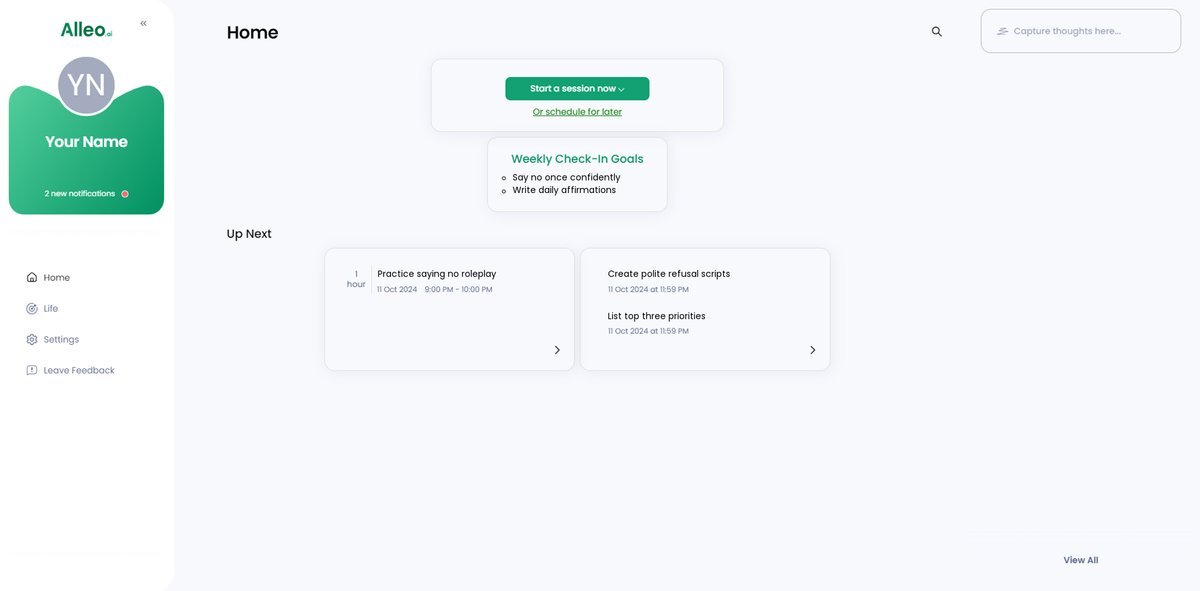
Step 5: Viewing and Managing Goals After the Session
After your coaching session on setting boundaries, check the Alleo app’s home page to view and manage the goals you discussed, helping you stay accountable in your journey to say no without guilt.
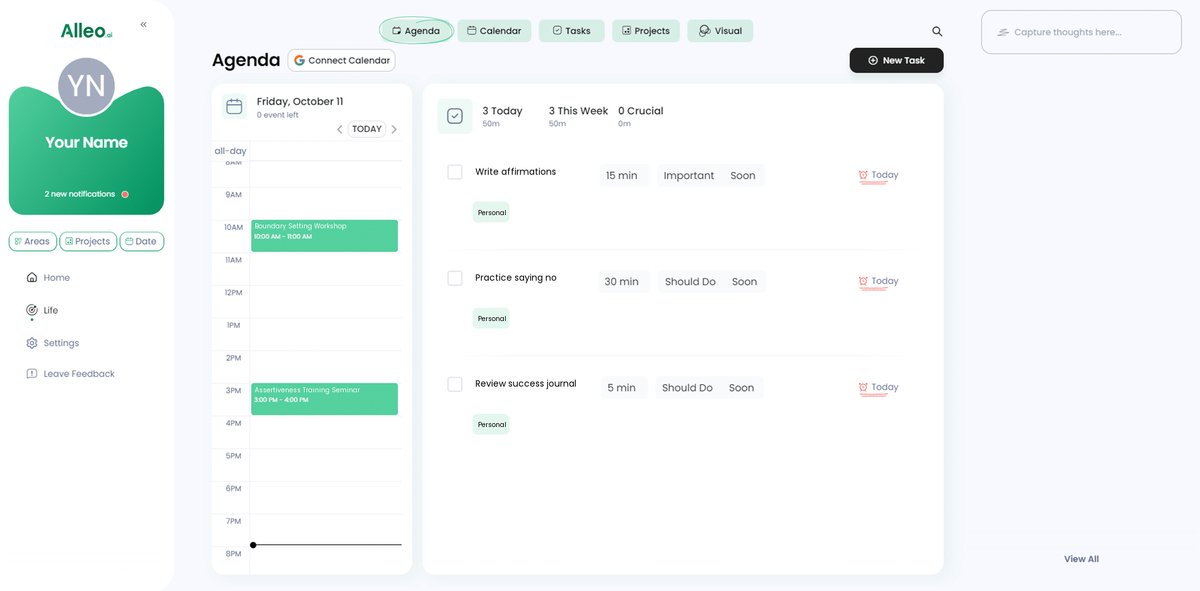
Step 6: Adding events to your calendar or app
Use the Alleo app’s calendar and task features to schedule and track your boundary-setting practices, allowing you to monitor your progress in overcoming the challenge of saying no without guilt.
Embrace Your Right to Say No Without Guilt
You’ve learned the essential steps to confidently say no without guilt and set boundaries. By recognizing your right to prioritize your personal needs, you’re on the path to better emotional well-being and managing social anxiety.
Practicing assertiveness training in low-stakes situations and using polite scripts can make this process smoother. Focusing on your priorities helps ensure you’re making decisions that truly benefit you, which is crucial for overcoming fear of rejection.
Reflecting on past successes also reinforces your ability to set healthy boundaries and develop self-confidence. Remember, it’s okay to say no; your well-being is important. This is a key aspect of effective communication skills and self-care techniques.
With Alleo, you have a supportive partner in learning how to say no confidently. Try Alleo for free and start your journey toward assertiveness and a fulfilling life. Prioritize your well-being today and leave behind people-pleasing behavior.