7 Essential Ways to Overcome Boundary Guilt as a People-Pleaser
Have you ever set a boundary only to feel overwhelmed with guilt afterward? This is a common experience for people pleasers who are learning about setting healthy boundaries.
As a life coach, I often see single women struggle with overcoming people-pleaser boundary guilt. This type of guilt can be a heavy burden, impacting your emotional well-being and personal growth, especially when you’re trying to practice self-care for people pleasers.
In this article, you’ll learn practical strategies to overcome boundary guilt, boost your self-esteem, and set healthier boundaries. We’ll explore actionable steps, from recognizing guilt as part of growth to using affirmations for self-worth. You’ll discover techniques for saying no without guilt and developing assertiveness, which are crucial for codependency recovery.
Let’s dive into these boundary setting techniques and learn how to manage guilt and anxiety while establishing emotional boundaries.

Understanding the Impact of Boundary Guilt
Setting healthy boundaries can be a daunting task, especially when you fear the guilt that follows. Many single women experience this, struggling to balance their personal needs with societal expectations and overcome people-pleaser boundary guilt.
Society often teaches us to prioritize others, leading to anxiety and low self-esteem when we try to set boundaries. In my experience, people often find themselves overwhelmed by the emotional toll of constant people-pleasing behavior.
This constant people-pleasing can result in burnout and emotional exhaustion. It’s a painful cycle, but recognizing this guilt as a natural part of personal growth and assertiveness training is crucial.
You deserve to put yourself first and practice self-care for people pleasers.
Overcoming Boundary Guilt: A Step-by-Step Guide
Overcoming people-pleaser boundary guilt requires a few key steps. Here are the main areas to focus on to make progress in setting healthy boundaries:
- Recognize guilt as a normal part of growth: Reflect on past experiences and identify patterns of people-pleasing behavior.
- Practice self-affirmations to boost self-worth: Incorporate affirmations into your daily routine to support self-care for people pleasers.
- Start with small, achievable boundary-setting goals: Begin with low-stakes situations and build confidence in saying no without guilt.
- Use “I” statements to communicate boundaries clearly: Practice expressing your needs assertively, an essential part of assertiveness training.
- Seek support from a therapist or support group: Engage in professional guidance and group discussions for codependency recovery.
- Reframe guilt as a sign of positive change: View guilt as an indicator of growth in managing emotional boundaries.
- Journal about boundary experiences and emotions: Maintain a journal to track progress and reflect on self-esteem and boundaries.
Let’s dive in to explore these boundary setting techniques for overcoming people-pleaser boundary guilt!
1: Recognize guilt as a normal part of growth
Understanding that guilt is a normal part of growth is essential for overcoming people-pleaser boundary guilt.
Actionable Steps:
- Reflect on past experiences where setting healthy boundaries led to guilt. Write down specific instances and the emotions you felt.
- Identify patterns and triggers that cause guilt when setting boundaries. This helps you understand and anticipate these feelings.
- Practice self-care for people pleasers by acknowledging that guilt is a natural part of the growth process. Remind yourself that you are not alone in feeling this way.
Explanation:
Recognizing and documenting past experiences helps you see that guilt is a common and natural feeling. This understanding reduces its power over you.
For example, reflecting on patterns can reveal how societal expectations contribute to your feelings. According to Greater Public, setting boundaries is essential for personal growth and emotional well-being.
By seeing guilt as a sign of positive change, you can shift your perspective and embrace growth, helping you overcome people-pleaser boundary guilt.
Common sources of boundary guilt include:
- Fear of disappointing others
- Cultural or family expectations
- Low self-esteem or self-worth
Taking these steps will help you transition smoothly into the next phase of overcoming boundary guilt and managing guilt and anxiety.

2: Practice self-affirmations to boost self-worth
Practicing self-affirmations is crucial for boosting your self-worth and overcoming people-pleaser boundary guilt.
Actionable Steps:
- Create a list of positive affirmations that resonate with you, focusing on setting healthy boundaries. Keep it handy and refer to it daily.
- Incorporate these affirmations into your daily routine, such as during your morning or evening rituals. Consistency is key for managing guilt and anxiety.
- Use a mirror to practice saying affirmations out loud. This reinforces your self-esteem and boundaries, boosting confidence.
Explanation:
Practicing self-affirmations helps rewire your brain to focus on positive beliefs about yourself. This practice is essential for overcoming feelings of guilt and low self-esteem, especially when dealing with people-pleasing behavior.
According to Wondermind, affirmations can boost your confidence and emotional well-being. By consistently integrating affirmations into your routine, you’ll gradually shift your mindset towards self-empowerment and assertiveness training.
Taking these steps will build a strong foundation for setting healthier boundaries and overcoming people-pleaser boundary guilt.

3: Start with small, achievable boundary-setting goals
Starting with small, achievable boundary-setting goals is crucial for building confidence and reducing guilt when overcoming people-pleaser boundary guilt.
Actionable Steps:
- Identify one minor boundary you can set in a non-stressful situation, like politely declining a small favor, as a step towards setting healthy boundaries.
- Gradually increase the complexity of boundaries as you become more comfortable and confident in your ability to set them, helping to manage guilt and anxiety.
Explanation:
These steps are essential because they help you build confidence without overwhelming yourself. By starting small, you can gradually develop the skills needed for more challenging situations and overcome people-pleaser boundary guilt.
According to Wondermind, setting and maintaining boundaries is a process that requires patience and practice. This method allows you to grow at your own pace while reinforcing your self-worth and improving self-esteem and boundaries.
Examples of small boundary-setting goals for people-pleasing behavior:
- Saying “no” to an extra work task as part of assertiveness training
- Asking for alone time from family as a form of self-care for people pleasers
- Expressing a personal preference in a group setting to practice emotional boundaries
Taking these small steps will help you transition smoothly into more complex boundary-setting techniques and support codependency recovery.

4: Use “I” statements to communicate boundaries clearly
Communicating boundaries clearly is essential for reducing misunderstandings and asserting your needs confidently, especially when overcoming people-pleaser boundary guilt.
Actionable Steps:
- Practice using “I” statements: Say phrases like “I need time for myself” to express your needs directly and assertively, a key technique in setting healthy boundaries.
- Role-play boundary-setting conversations: Practice with a friend or in front of a mirror to build confidence in real situations, improving your assertiveness training skills.
Explanation:
These steps matter because they help you express your needs without sounding accusatory, leading to healthier interactions and aiding in codependency recovery.
Practicing “I” statements can reduce conflict and enhance mutual understanding, crucial for managing guilt and anxiety associated with people-pleasing behavior.
According to LinkedIn, using clear communication techniques can significantly improve boundary-setting experiences and help in saying no without guilt.
This approach nurtures respect and clarity in your relationships, empowering you to maintain personal and emotional boundaries confidently while overcoming people-pleaser boundary guilt.
Transition to the next step by continuing to build on these foundational skills for self-care for people pleasers.

5: Seek support from a therapist or support group
Seeking support from a therapist or support group can be instrumental in overcoming people-pleaser boundary guilt and building healthier relationships.
Actionable Steps:
- Research and join local or online support groups focused on boundary-setting techniques and personal growth. Participate in discussions and share your experiences with setting healthy boundaries.
- Schedule regular sessions with a therapist to discuss your boundary-setting experiences and receive professional guidance tailored to your needs, including assertiveness training and codependency recovery.
- Share your journey with a trusted friend or mentor for additional support and accountability. Open communication helps in gaining perspective on self-care for people pleasers.
Explanation:
These steps matter because they provide a structured and supportive environment to navigate boundary guilt. Professional help and peer support can offer valuable insights and coping strategies for managing guilt and anxiety related to people-pleasing behavior.
According to Greater Public, setting boundaries is critical for personal growth and emotional well-being. Engaging with a community that understands your struggles with saying no without guilt can be reassuring and empowering.
Taking these steps will help you build a solid support system, essential for overcoming people-pleaser boundary guilt and fostering personal growth while strengthening your self-esteem and boundaries.

6: Reframe guilt as a sign of positive change
Reframing guilt as a sign of positive change is vital for overcoming people-pleaser boundary guilt and enhancing your personal growth and emotional well-being.
Actionable Steps:
- Journal about instances where setting healthy boundaries caused guilt but led to positive outcomes. This helps you see the benefits of your actions in codependency recovery.
- Remind yourself that guilt indicates breaking old people-pleasing behavior and embracing healthier self-care for people pleasers. This shift in mindset is crucial for assertiveness training.
- Visualize future scenarios where you set boundaries confidently and without guilt. Use this technique to build your confidence in saying no without guilt.
Explanation:
These steps matter because they help you understand that guilt is part of the growth process when overcoming people-pleaser boundary guilt. Journaling and visualization techniques make this transition smoother and support emotional boundaries.
According to Wondermind, seeing guilt as a sign of positive change can empower you to set healthier boundaries. By reframing guilt, you can embrace personal growth with confidence and improve self-esteem and boundaries.
Benefits of reframing guilt:
- Increased self-awareness in managing guilt and anxiety
- Reduced emotional stress through boundary setting techniques
- Enhanced personal growth in overcoming people-pleaser boundary guilt
Reframing guilt as a positive change builds the foundation for a healthier mindset and supports self-care for people pleasers.
7: Journal about boundary experiences and emotions
Journaling about boundary experiences and emotions is a powerful tool for self-reflection and growth, especially when overcoming people-pleaser boundary guilt.
Actionable Steps:
- Write daily entries: Document each boundary you set and the emotions you felt. This practice helps track your progress in setting healthy boundaries and identify patterns in people-pleasing behavior.
- Reflect weekly: Review your journal entries every week to see improvements and challenges in your assertiveness training. This helps you adjust your approach to saying no without guilt as needed.
- Use prompts: Start your journaling session with prompts like “What boundary did I set today, and how did it make me feel?” to guide your writing and explore emotional boundaries.
Explanation:
These steps matter because they provide a structured way to understand your emotions and progress in overcoming people-pleaser boundary guilt. Journaling helps you gain insights into your boundary-setting journey and supports self-care for people pleasers.
According to Wondermind, documenting your experiences can significantly improve self-awareness and emotional well-being. This practice supports continuous growth and reinforces the importance of maintaining healthy boundaries in codependency recovery.
Consistency in journaling will help you develop a deeper understanding of your emotions and their impact on your boundary-setting efforts, strengthening self-esteem and boundaries while managing guilt and anxiety.

Partner with Alleo to Overcome Boundary Guilt
We’ve explored overcoming people-pleaser boundary guilt and the steps to achieve it. Did you know you can work with Alleo to make this journey easier and faster?
Set up an account easily, and create a personalized plan with Alleo for setting healthy boundaries. The AI life coach will guide you through boundary-setting techniques, offering tailored support for self-care and tracking your progress in managing guilt and anxiety.
Alleo will send reminders and follow-ups via text and push notifications to keep you accountable in your codependency recovery and assertiveness training.
Ready to get started for free and boost your self-esteem and boundaries? Let me show you how!
Step 1: Log In or Create Your Account
To begin your journey of overcoming boundary guilt with Alleo, simply Log in to your account or create a new one to access personalized guidance and support.

Step 2: Choose “Improving overall well-being and life satisfaction”
Click on “Improving overall well-being and life satisfaction” to address boundary guilt and enhance your personal growth – this goal directly targets the emotional challenges discussed in the article and sets you on a path to healthier relationships and improved self-esteem.

Step 3: Select “Personal” as Your Focus Area
Choose the “Personal” life area to target boundary-setting and overcome guilt, aligning perfectly with your journey to establish healthier relationships and boost self-esteem.

Step 4: Starting a Coaching Session
Begin your journey with Alleo by scheduling an initial intake session, where you’ll discuss your boundary-setting goals and create a personalized plan to overcome guilt and build confidence in maintaining healthy relationships.

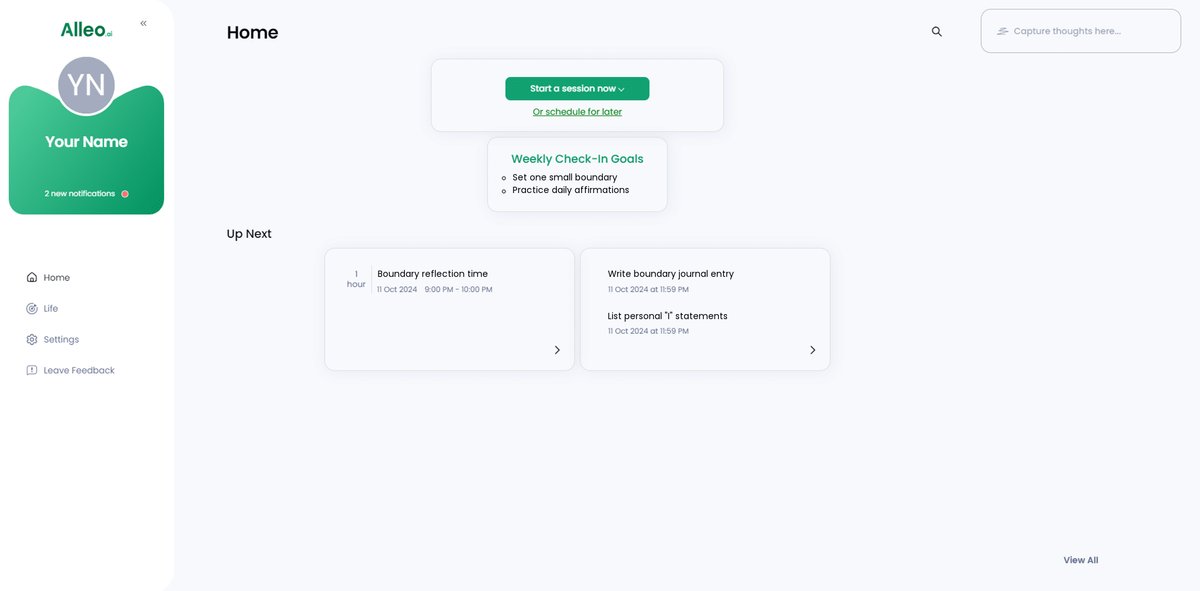
Step 5: Viewing and Managing Goals After the Session
After your coaching session on overcoming boundary guilt, check the home page of the Alleo app to view and manage the personalized goals you discussed, allowing you to track your progress and stay accountable in your journey towards healthier boundaries.
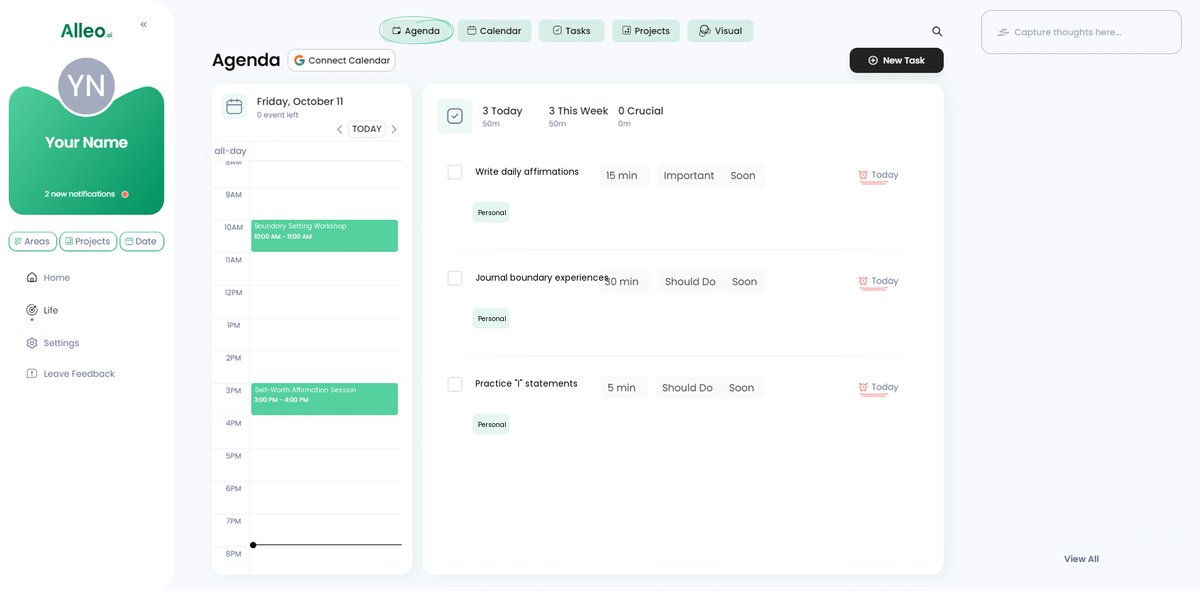
Step 6: Adding events to your calendar or app
Use the calendar and task features in Alleo to schedule your boundary-setting exercises and track your progress overcoming guilt, helping you stay accountable and visualize your growth journey.
Wrapping Up Your Journey to Overcoming Boundary Guilt
Taking the first step to overcome people-pleaser boundary guilt is empowering. By understanding guilt as a natural part of growth, you can start to reclaim your personal space and emotional boundaries for better self-care.
Remember, self-affirmations and setting small, achievable goals are key to overcoming people-pleaser boundary guilt. Communicating clearly with “I” statements and seeking support in assertiveness training can make a world of difference.
Journaling about your experiences with setting healthy boundaries and reframing guilt as positive change are powerful tools. These steps will help you build a healthier relationship with yourself and others, improving your self-esteem and boundaries.
You don’t have to do it alone in your codependency recovery. Alleo is here to support you every step of the way as you learn boundary setting techniques.
Ready to transform your life and practice saying no without guilt? Try Alleo for free today and start your journey towards healthier boundaries and managing guilt and anxiety. You deserve it.