Mastering the Balance: A Manager’s Guide to Employee Well-Being and Productivity
Imagine a workplace where employees are both highly productive and genuinely happy. Sounds like a dream, right? This is the essence of balancing employee wellbeing and productivity.
As a life coach, I’ve helped many small business owners navigate these challenges. In my experience, balancing employee wellbeing and productivity is not only possible but essential for creating a thriving workplace culture and satisfaction.
In this article, you’ll discover actionable strategies to achieve this balance, including:
- Flexible work arrangements that support work-life balance
- Wellness programs to boost team morale and efficiency
- Clear communication channels for effective performance management
Let’s dive into these productivity optimization techniques and stress reduction at work strategies.

The Complexity of Balancing Employee Well-Being and Productivity
Balancing employee well-being and productivity can be daunting. Many small business owners find that stress reduction at work activities often clash with maintaining productivity and performance management goals.
In my experience, several clients initially struggle to integrate employee wellness programs without disrupting their operations. For small businesses, the stakes are even higher due to limited resources and the crucial need for every team member to contribute effectively to workplace culture and satisfaction.
Furthermore, stress relief activities, while essential for mental health in the workplace, can sometimes appear to interfere with work schedules. This creates a tension between ensuring employees are happy through work-life balance strategies and maintaining the productivity necessary for business success.
Ultimately, finding this balance between employee well-being and productivity is not just challenging—it’s essential for long-term success and team morale and efficiency.
Strategic Solutions to Balance Employee Well-Being and Productivity
Overcoming this challenge of balancing employee wellbeing and productivity requires a few key steps. Here are the main areas to focus on to make progress:
- Implement flexible work arrangements: Offer remote work and part-time options to reduce stress and improve work-life balance.
- Establish clear communication channels: Use tools like Slack for transparent, real-time updates to optimize productivity.
- Create a wellness program with manageable activities: Introduce on-site wellness activities and mental health support in the workplace.
- Set realistic workload expectations: Regularly review workloads to prevent burnout and enhance employee wellbeing and productivity.
- Recognize and reward employee achievements: Implement recognition programs to celebrate accomplishments and boost team morale and efficiency.
Let’s dive in!
1: Implement flexible work arrangements
Flexible work arrangements can significantly enhance employee well-being and productivity, playing a crucial role in balancing employee wellbeing and productivity.
Actionable Steps:
- Pilot a flexible work schedule: Set up a trial period for flexible work hours to gauge effectiveness and address any workflow complications, improving work-life balance strategies.
- Offer remote work options: Identify roles suitable for remote work and establish guidelines for remote work productivity.
- Create part-time opportunities: Allow employees to opt for part-time work if it suits their personal needs and business operations, contributing to workplace culture and satisfaction.
Explanation: By implementing flexible work arrangements, you cater to employees’ personal needs while maintaining business operations and optimizing productivity techniques.
Studies show that flexible work options can improve employee satisfaction and retention. For instance, Cornell University emphasizes the importance of these arrangements in fostering a positive work environment.
This approach helps reduce stress and promotes a healthy work-life balance, essential for long-term success and balancing employee wellbeing and productivity.

2: Establish clear communication channels
Effective communication is key to balancing employee well-being and productivity.
Actionable Steps:
- Schedule regular check-ins: Conduct weekly one-on-one meetings to discuss workloads, challenges, and employee wellness programs.
- Implement transparent communication tools: Use tools like Slack or Microsoft Teams for real-time updates and project statuses, supporting remote work productivity.
- Encourage an open-door policy: Foster an environment where employees feel comfortable discussing work-life balance strategies without fear of retribution.
Explanation: Clear communication helps ensure that everyone is on the same page and can address issues promptly, contributing to balancing employee well-being and productivity.
For instance, using tools like Microsoft Teams facilitates real-time updates, reducing misunderstandings and promoting transparency. This approach also allows for timely support and feedback, which is vital for maintaining a healthy work environment and optimizing productivity.
By establishing clear communication channels, you can help your team stay connected and engaged. Consider these key benefits of effective communication in balancing employee well-being and productivity:
- Improves team collaboration and problem-solving, enhancing workplace culture and satisfaction
- Reduces workplace stress and misunderstandings, supporting mental health in the workplace
- Enhances overall employee satisfaction and engagement, boosting team morale and efficiency

3: Create a wellness program with manageable activities
Creating a wellness program with manageable activities is crucial for balancing employee wellbeing and productivity in the workplace.
Actionable Steps:
- Introduce on-site wellness activities: Integrate yoga sessions or meditation breaks into the workday to reduce stress at work.
- Provide mental health in the workplace support: Offer access to counseling or stress management workshops for employees.
- Encourage physical activity: Organize team sports events or offer gym memberships to promote physical health as part of employee wellness programs.
Explanation: By offering wellness activities, you help employees manage stress and improve their overall well-being, which is essential for work-life balance strategies.
This approach aligns with industry trends showing that wellness programs enhance productivity and reduce burnout, contributing to performance management and team morale and efficiency.
For instance, research highlights the positive impact of such programs on employee engagement and productivity.
Implementing these steps fosters a supportive work environment, crucial for long-term success in balancing employee wellbeing and productivity.

4: Set realistic workload expectations
Setting realistic workload expectations is vital for balancing employee wellbeing and productivity. This approach helps in optimizing productivity while maintaining work-life balance.
Actionable Steps:
- Analyze workloads regularly: Review employee workloads to ensure they are manageable and balanced, contributing to overall workplace culture and satisfaction.
- Prioritize tasks effectively: Help employees prioritize their tasks based on urgency and importance, which is crucial for performance management.
- Provide ongoing training: Offer training sessions to improve efficiency and reduce the need for constant supervision, enhancing team morale and efficiency.
Explanation: By setting realistic workload expectations, you prevent burnout and enhance productivity. This approach aligns with current trends showing that manageable workloads are crucial for maintaining employee wellbeing and implementing effective stress reduction at work strategies.
For instance, research highlights the importance of continuous workload evaluation to ensure realistic expectations.
These steps will help create a supportive work environment, essential for your team’s long-term success. To effectively manage workloads, consider these strategies:
- Use project management tools to track and distribute tasks, especially for remote work productivity
- Encourage open communication about workload challenges, which is key to mental health in the workplace
- Regularly reassess team capacity and adjust assignments accordingly, incorporating flexible work arrangements when possible
5: Recognize and reward employee achievements
Recognizing and rewarding employee achievements is crucial for balancing employee wellbeing and productivity while maintaining high morale and efficiency.
Actionable Steps:
- Implement a recognition program: Regularly acknowledge and celebrate employee accomplishments in team meetings and through private acknowledgments, enhancing workplace culture and satisfaction.
- Introduce incentive programs: Reward employees for achieving specific goals or milestones with meaningful incentives aligned with their interests, contributing to performance management.
- Offer career development opportunities: Provide mentorship programs and career advancement options as a form of recognition, supporting work-life balance strategies.
Explanation: Recognizing and rewarding achievements boosts employee motivation and retention. This approach aligns with industry trends showing that recognition programs enhance engagement and are essential for balancing employee wellbeing and productivity.
For instance, the research highlights the positive impact of recognition on employee engagement and productivity. Implementing these steps fosters a supportive work environment, essential for long-term success and team morale and efficiency.
Key elements of an effective employee recognition program include:
- Timely and specific praise for accomplishments, contributing to stress reduction at work
- Personalized rewards that cater to individual preferences, supporting mental health in the workplace
- Peer-to-peer recognition opportunities to foster team spirit and enhance remote work productivity
Work with Alleo to Balance Well-Being and Productivity
We’ve explored how to balance employee well-being and productivity. But did you know you can work with Alleo to make this journey easier? Our employee wellness programs are designed to help you achieve work-life balance and optimize productivity.
Set up an account, create a personalized plan, and get tailored coaching support for balancing employee wellbeing and productivity. Alleo follows up on your progress, handles changes, and keeps you accountable with text and push notifications. Our performance management system helps you implement effective stress reduction at work strategies.
Ready to get started for free? Let me show you how to improve workplace culture and satisfaction while maintaining team morale and efficiency!
Step 1: Log In or Create Your Account
To start balancing employee well-being and productivity with Alleo, Log in to your account or create a new one to access personalized coaching and support.

Step 2: Choose Your Focus: Improving Overall Well-being and Life Satisfaction
Select “Improving overall well-being and life satisfaction” as your goal to address the challenge of balancing employee well-being with productivity, aligning with the strategies discussed in the article for creating a happier, more productive workplace.

Step 3: Select “Career” as Your Focus Area
Choose “Career” as your focus area to address workplace challenges and improve both your well-being and productivity, aligning with the strategies discussed in the article for creating a balanced and successful work environment.

Step 4: Starting a Coaching Session
Begin with an intake session to discuss your workplace challenges and set up a personalized plan for balancing employee well-being and productivity, aligning with the strategies outlined in the article.

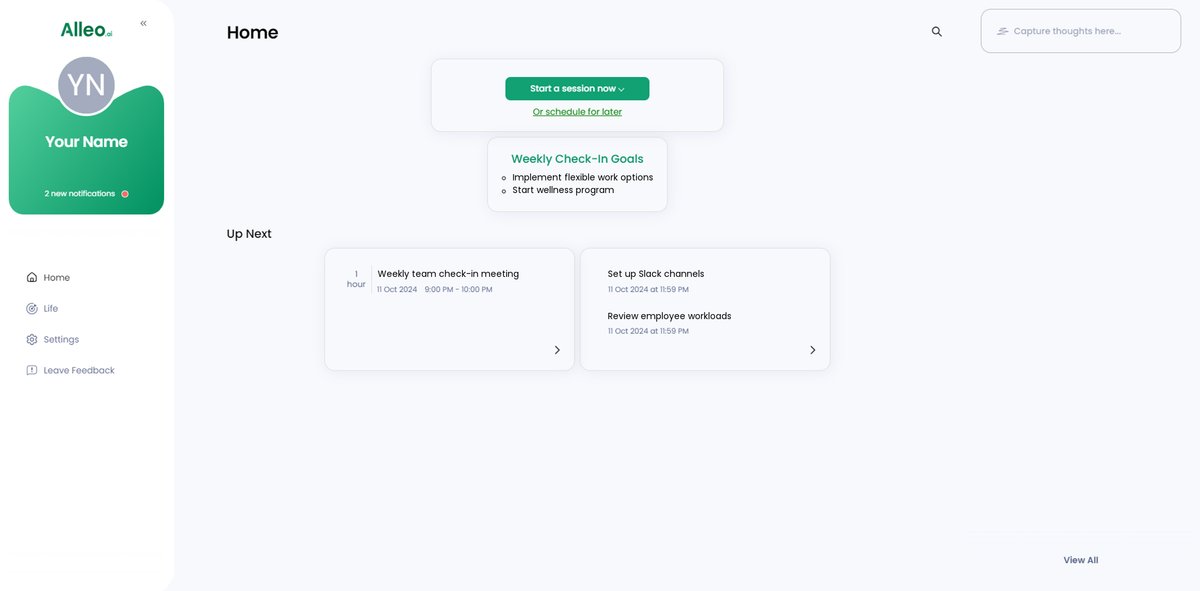
Step 5: Viewing and managing goals after the session
After your coaching session, check the Alleo app’s home page to view and manage the goals you discussed, helping you stay on track with balancing employee well-being and productivity.
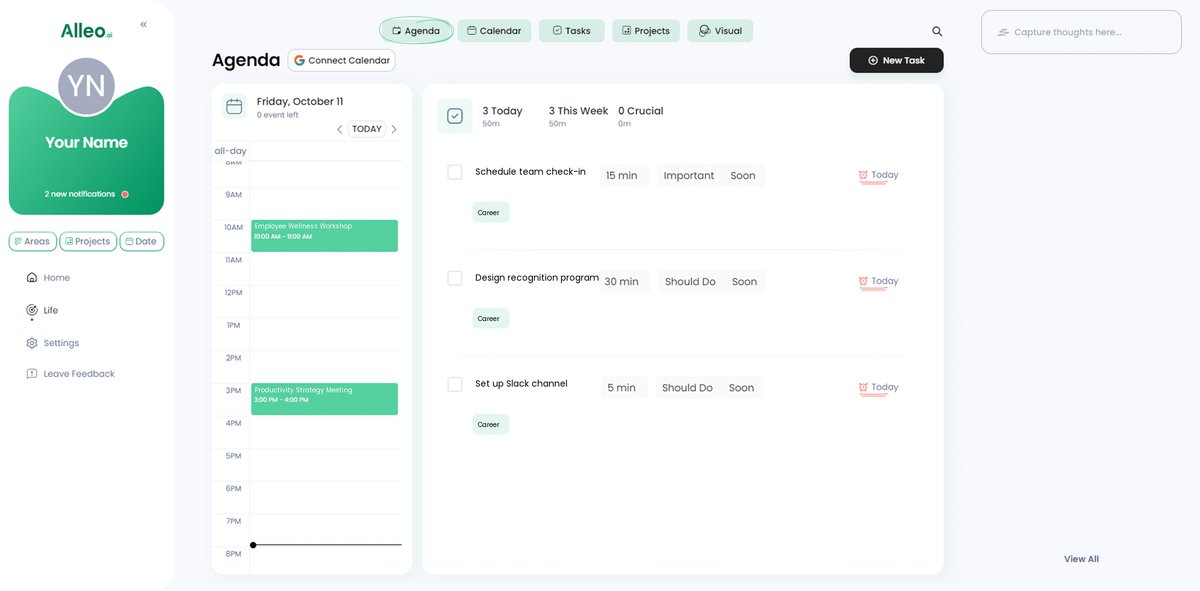
Step 6: Adding events to your calendar or app
To track your progress in balancing employee well-being and productivity, use the app’s calendar and task features to add important events, wellness activities, and deadlines, ensuring you stay on top of your goals and maintain accountability.
Bringing It All Together
Balancing employee wellbeing and productivity is a journey, not a destination. Small business owners often face unique challenges, but with the right work-life balance strategies, it is achievable.
Remember, implementing flexible work arrangements, clear communication channels, and employee wellness programs can make a big difference. Setting realistic workload expectations and recognizing achievements also play crucial roles in productivity optimization techniques.
You are not alone in this. As a life coach, I’ve seen these strategies work wonders for mental health in the workplace.
So, why wait? Start prioritizing employee wellbeing and productivity today.
And don’t forget, Alleo is here to help you every step of the way with performance management. Ready to see the change? Try it for free and make your workplace a happier, more productive space that enhances team morale and efficiency.