6 Essential Strategies for Social Media Managers to Adapt to Changing FTC Regulations
Are you struggling to keep up with the ever-changing FTC regulations for social media compliance? Adapting to FTC social media regulations can be challenging for many professionals.
As a life coach, I’ve helped many professionals navigate these complex challenges, including FTC compliance for social media. I often see the frustration and confusion that come with staying compliant, especially when it comes to influencer marketing regulations and disclosure requirements for sponsored content.
In this article, you’ll discover practical strategies to adapt to the evolving regulatory landscape. We’ll cover everything from clear disclosures to crisis management plans, ensuring you’re always a step ahead of social media advertising guidelines and updated FTC endorsement rules.
Let’s dive into digital marketing compliance strategies and social media disclosure best practices.

Understanding the Regulatory Maze
Navigating the evolving regulatory landscape is challenging. Under the new administration, the FTC’s priorities are shifting, causing uncertainty for social media managers adapting to FTC social media regulations.
Non-compliance with FTC compliance for social media can lead to hefty fines and damaged reputations. For example, several clients report significant penalties due to minor compliance oversights in influencer marketing regulations.
The stakes are incredibly high. Imagine facing a substantial fine because of a forgotten disclosure on a single post, violating disclosure requirements for sponsored content.
In my experience, clients often find it tough to stay updated with frequent changes in social media advertising guidelines. It’s essential to adapt to FTC social media regulations and implement consistent compliance practices, including updated FTC endorsement rules.

Navigating Social Media Compliance: A Strategic Approach
Overcoming this challenge requires a few key steps. Here are the main areas to focus on to make progress in adapting to FTC social media regulations:
- Stay Updated on FTC Guideline Changes: Subscribe to newsletters and join industry forums to keep abreast of updated FTC endorsement rules.
- Implement Clear Disclosure Practices: Use standardized templates and platform-specific tools to meet disclosure requirements for sponsored content.
- Educate Influencers on Regulatory Requirements: Create guides and host training workshops on influencer marketing regulations.
- Conduct Regular Compliance Audits: Schedule audits and use monitoring tools to ensure FTC compliance for social media.
- Create a Compliance Checklist for Campaigns: Develop and integrate checklists into project management tools, incorporating social media advertising guidelines.
- Develop a Crisis Management Plan for Violations: Draft communication plans and train your team on legal considerations for social media campaigns.
Let’s dive in!
1: Stay updated on FTC guideline changes
Keeping up with FTC guideline changes is crucial for adapting to FTC social media regulations and ensuring compliance while avoiding penalties.
Actionable Steps:
- Subscribe to FTC newsletters and alerts.
- Receive regular updates to stay informed about new regulations and FTC compliance for social media.
- Join industry forums and groups.
- Engage in discussions and gain insights from peers and experts on influencer marketing regulations.
- Attend webinars and training sessions.
- Deep dives into recent changes and best practices for disclosure requirements for sponsored content will keep you well-informed.
Explanation: Staying updated on FTC guideline changes ensures that you remain compliant with social media advertising guidelines and can quickly adapt to new rules.
This is essential for maintaining trust and avoiding fines while navigating FTC regulations on social platforms.
For more information on FTC guidelines, consider visiting Sprout Social’s insights on FTC influencer guidelines.
These steps will help you navigate the evolving regulatory landscape and maintain compliance effectively with updated FTC endorsement rules.
2: Implement clear disclosure practices
Clear disclosure practices are essential for maintaining transparency and trust with your audience while adapting to FTC social media regulations.
Actionable Steps:
- Develop a standardized disclosure template.
- Ensure consistency across all social media posts and platforms, adhering to FTC compliance for social media.
- Use platform-specific disclosure tools.
- Leverage built-in features on platforms like Instagram and Facebook to meet disclosure requirements for sponsored content.
- Regularly review and update disclosure policies.
- Adapt to changes in FTC guidelines and platform requirements, staying current with updated FTC endorsement rules.
Key benefits of clear disclosure practices include:
- Enhanced transparency with your audience
- Reduced risk of FTC penalties
- Improved brand credibility and trust
Explanation: Clear disclosure practices are vital to avoid penalties and maintain credibility. Consistent and transparent disclosures help build trust with your audience and are crucial when navigating FTC regulations on social platforms.
For more details on disclosure requirements, visit Sprout Social’s insights on FTC influencer guidelines.
Implementing these steps ensures your social media campaigns remain compliant and credible, aligning with social media advertising guidelines and legal considerations for social media campaigns.
3: Educate influencers on regulatory requirements
Educating influencers on regulatory requirements is vital for maintaining compliance and trust, especially when adapting to FTC social media regulations.
Actionable Steps:
- Create educational materials and guides.
- Provide influencers with clear, concise information on FTC compliance for social media.
- Host training workshops.
- Interactive sessions help influencers understand and implement social media advertising guidelines.
- Set up a mentorship program.
- Pair new influencers with experienced ones to share knowledge and best practices for navigating FTC regulations on social platforms.
Explanation: Educating influencers ensures they understand and follow regulatory requirements, reducing the risk of non-compliance. This is especially important as updated FTC endorsement rules evolve.
For more insights on compliance, check out this LinkedIn article on legal and ethical considerations in influencer marketing.
Empowering influencers with knowledge helps maintain compliance and builds credibility, particularly regarding disclosure requirements for sponsored content and transparency in social media promotions.
4: Conduct regular compliance audits
Regular compliance audits are essential to ensure ongoing adherence to FTC regulations and avoid potential penalties when adapting to FTC social media regulations.
Actionable Steps:
- Schedule quarterly audits.
- Regular reviews help identify and rectify FTC compliance for social media issues early.
- Use compliance monitoring tools.
- Automate the process to ensure thorough and consistent checks of influencer marketing regulations.
- Hire external auditors for an unbiased review.
- External experts provide a fresh perspective and identify overlooked areas in social media advertising guidelines.
Key elements to focus on during compliance audits:
- Disclosure requirements for sponsored content accuracy and placement
- Adherence to platform-specific guidelines and updated FTC endorsement rules
- Documentation of influencer agreements and digital marketing compliance strategies
Explanation: Conducting regular compliance audits keeps your campaigns in line with FTC guidelines and helps prevent costly violations when adapting to FTC social media regulations. This practice also reinforces your commitment to ethical marketing and social media disclosure best practices.
For more insights on maintaining legal and ethical standards, visit this LinkedIn article on legal and ethical considerations in influencer marketing.
Regular audits safeguard your brand and build trust with your audience while navigating FTC regulations on social platforms and ensuring transparency in social media promotions.

5: Create a compliance checklist for campaigns
Creating a compliance checklist for campaigns is crucial to ensure all elements meet FTC guidelines and avoid penalties when adapting to FTC social media regulations.
Actionable Steps:
- Develop a comprehensive checklist covering all FTC requirements.
- Include every aspect of compliance relevant to your campaigns, considering FTC compliance for social media.
- Integrate the checklist into your project management tool.
- Streamline the process to ensure consistency and thoroughness in meeting influencer marketing regulations.
- Assign a compliance officer to oversee checklist completion.
- Ensure accountability and thorough review of all campaign elements, including disclosure requirements for sponsored content.
Explanation: Having a detailed compliance checklist helps you systematically manage and verify all regulatory requirements, including social media advertising guidelines.
This proactive approach minimizes the risk of non-compliance and penalties while adapting to FTC social media regulations.
For more insights on maintaining compliance in influencer marketing, check out this LinkedIn article.
A thorough checklist ensures your campaigns stay compliant and credible, adhering to updated FTC endorsement rules.
6: Develop a crisis management plan for violations
Having a crisis management plan is crucial for swiftly addressing compliance violations and mitigating their impact when adapting to FTC social media regulations.
Actionable Steps:
- Draft a crisis communication plan.
- Prepare statements and responses for potential compliance breaches related to FTC compliance for social media.
- Train your team on crisis response protocols.
- Ensure everyone knows their role and responsibilities during a crisis involving influencer marketing regulations.
- Conduct regular crisis simulations.
- Practice your response to refine and improve your plan for handling disclosure requirements for sponsored content.
Essential components of an effective crisis management plan for adapting to FTC social media regulations:
- Clear communication channels and hierarchy for addressing social media advertising guidelines
- Pre-approved response templates aligned with updated FTC endorsement rules
- Designated spokesperson for media interactions on digital marketing compliance strategies
Explanation: A well-prepared crisis management plan helps minimize damage to your brand and ensures a swift, coordinated response to violations of social media disclosure best practices.
According to BBB Programs, effective crisis management can significantly reduce the fallout from compliance issues and maintain trust with your audience while navigating FTC regulations on social platforms.
Preparing for potential crises ensures you can handle violations efficiently and maintain your brand’s integrity in the context of legal considerations for social media campaigns and transparency in social media promotions.
Partner with Alleo for Social Media Compliance
We’ve explored the challenges social media managers face with adapting to FTC social media regulations and how to address them. But did you know you can work directly with Alleo to streamline this process of navigating FTC regulations on social platforms?
Setting up an account with Alleo is simple. Create a personalized compliance plan for FTC social media regulations with ease.
Alleo’s AI coach provides tailored support for digital marketing compliance strategies, mimicking human coaching sessions. Enjoy a free 14-day trial with no credit card required.
Alleo helps you stay updated with FTC changes, including updated FTC endorsement rules. Receive reminders, organize training sessions on social media disclosure best practices, and track audit schedules.
The AI coach follows up on your progress in adapting to FTC social media regulations, manages changes in influencer marketing regulations, and ensures accountability via text and push notifications.
Ready to get started for free? Let me show you how to improve your FTC compliance for social media!
Step 1: Logging in or Creating an Account
To begin your compliance journey with Alleo, simply Log in to your account or create a new one to access personalized FTC compliance guidance and support.

Step 2: Choose “Building better habits and routines”
Select “Building better habits and routines” to establish consistent compliance practices, helping you stay ahead of FTC regulations and integrate them seamlessly into your daily workflow.

Step 3: Select “Career” as Your Focus Area
Choose “Career” as your focus area to tackle FTC compliance challenges head-on, aligning your professional growth with evolving social media regulations and enhancing your expertise in maintaining ethical marketing practices.

Step 4: Starting a Coaching Session
Begin your journey with Alleo by scheduling an intake session, where our AI coach will help you create a personalized compliance plan tailored to your social media needs and FTC regulatory challenges.

Step 5: Viewing and Managing Goals After the Session
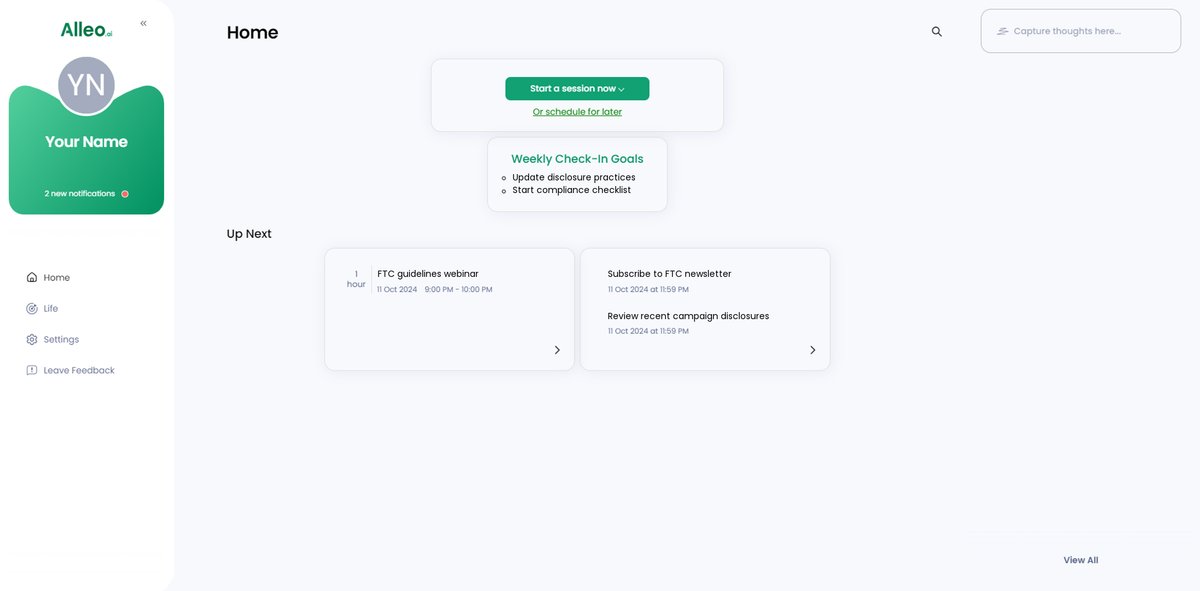
After your coaching session with Alleo’s AI coach, easily access and manage the compliance goals you discussed by checking the home page of the app, where they’ll be prominently displayed for your reference and tracking.
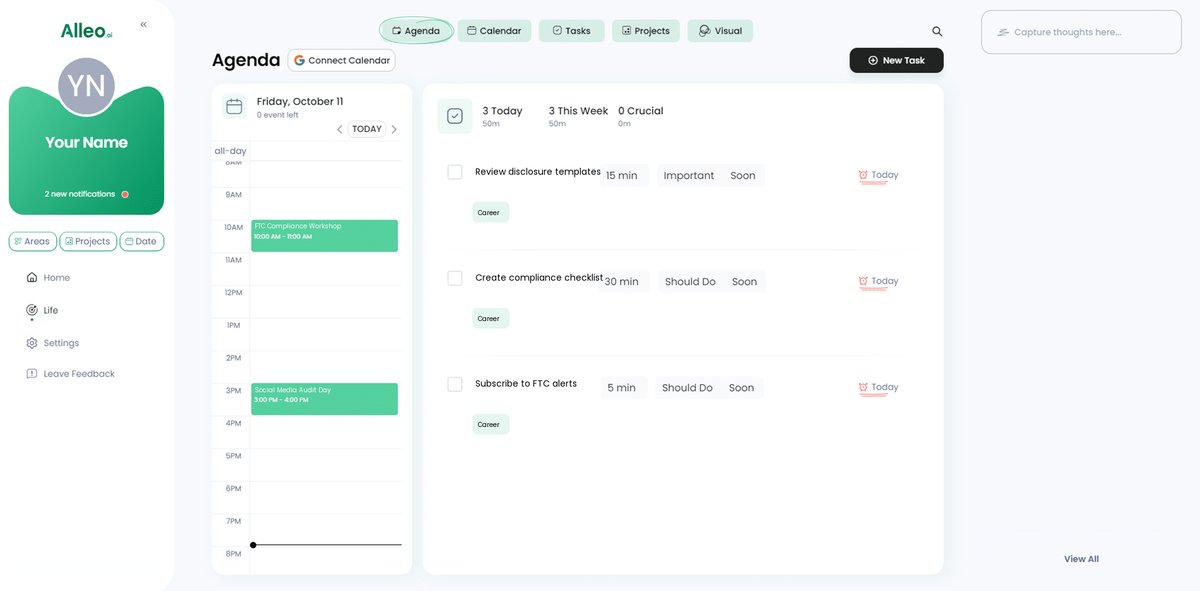
Step 6: Adding events to your calendar or app
Use the AI coach’s calendar and task features to schedule and track your compliance-related events, such as audits, training sessions, and guideline updates, ensuring you stay on top of your FTC regulation compliance journey.
Wrapping Up Your Compliance Journey
We’ve covered a lot of ground in this article. Staying compliant with FTC regulations is crucial for your social media success and adapting to FTC social media regulations is an ongoing process.
Remember, clear disclosure practices, regular audits, and educating influencers on FTC compliance for social media are key steps in navigating FTC regulations on social platforms.
I know it can be overwhelming to keep up with updated FTC endorsement rules. But, you’ve got this.
Alleo can help streamline your compliance process and support your digital marketing compliance strategies.
It’s like having a personal coach to keep you on track with social media advertising guidelines.
Try Alleo for free and see the difference it makes in maintaining transparency in social media promotions.
Stay ahead, stay compliant with influencer marketing regulations, and keep building trust with your audience through proper disclosure requirements for sponsored content.