How to Explain Tech Trends to Non-Technical Stakeholders: Master the Art of Communication
Are you struggling with explaining tech trends to stakeholders, especially when it comes to complex topics like AI, 3D printing, and virtual reality? Demystifying emerging technologies for your non-technical audience can be challenging.
As a life coach, I’ve helped many professionals navigate similar challenges when translating technical benefits to business value. In my experience, effective communication is key to bridging the gap between tech teams and stakeholders, particularly when simplifying complex concepts.
In this article, you’ll discover specific strategies to explain tech trends to stakeholders, including data visualization techniques, using visual aids, and tailoring your messages to highlight the business impact of tech trends. These approaches can help with tech adoption strategies for businesses.
Let’s dive into jargon-free technology explanations and real-world examples of tech applications that can showcase the ROI of new tech investments for decision-makers.

Understanding the Communication Barriers
Explaining tech trends to stakeholders can feel like speaking different languages. Many of my clients initially struggle with this, leading to misunderstandings and frustration when explaining complex technological concepts to non-technical stakeholders.
For instance, AI, 3D printing, and virtual reality often sound like buzzwords rather than tangible tools. Demystifying emerging technologies is crucial for effective communication.
These misunderstandings can severely impact project success and stakeholder trust. Poor communication can result in misaligned expectations and missed opportunities when explaining tech trends to stakeholders.
Several clients report that miscommunication about tech trends has led to project delays and budget overruns, highlighting the importance of translating technical benefits to business value.
In my experience, clear communication is crucial. It’s not just about simplifying the jargon; it’s about making the information relevant and engaging through jargon-free technology explanations.
The goal is to bridge the gap and ensure everyone is on the same page when explaining tech trends to stakeholders.

Key Strategies to Communicate Tech Trends Effectively
Explaining tech trends to stakeholders can be challenging. Overcoming this challenge requires a few key steps. Here are the main areas to focus on to make progress.
- Use Analogies to Relate Tech Concepts to Daily Life: Relate complex technology to everyday experiences, simplifying complex concepts for better understanding.
- Create Visual Aids to Illustrate Complex Ideas: Use charts and infographics to simplify concepts, leveraging data visualization techniques.
- Focus on Business Outcomes, Not Technical Details: Highlight benefits and impacts on business goals, emphasizing the business impact of tech trends.
- Tailor Explanations to Stakeholder Backgrounds: Customize messages based on audience knowledge, using jargon-free technology explanations.
- Employ Storytelling Techniques for Engagement: Use narratives to make information relatable, incorporating real-world examples of tech applications.
- Designate a Tech-to-Business Liaison: Have a communicator bridge the gap between teams, aiding in translating technical benefits to business value.
- Hold Regular Q&A Sessions for Clarification: Encourage open dialogue and address queries, supporting tech adoption strategies for businesses.
Let’s dive into these strategies for explaining tech trends to stakeholders!
1: Use analogies to relate tech concepts to daily life
Using analogies to relate tech concepts to daily life can make complex ideas more understandable when explaining tech trends to stakeholders. This approach helps in simplifying complex concepts for non-technical audiences.
Actionable Steps:
- Identify familiar experiences: Compare AI to a personal assistant that learns over time, providing jargon-free technology explanations.
- Practice explanations: Role-play scenarios with team members to refine your analogies for demystifying emerging technologies.
- Test clarity: Share your analogies with non-technical friends or family members for feedback on your tech adoption strategies for businesses.
Explanation: Analogies bridge the gap between technical jargon and everyday understanding, making it easier for stakeholders to grasp complex ideas and understand the business impact of tech trends.
This approach aligns with current industry trends that emphasize the importance of clear communication when explaining tech trends to stakeholders. For more insights, check out this resource on effective communication techniques.
Key benefits of using analogies include:
- Simplified understanding of complex concepts
- Increased engagement from non-technical stakeholders
- Better retention of information about tech trends for decision-makers
By using analogies, you can build a stronger connection with your audience and ensure they understand the technology’s value, effectively translating technical benefits to business value.
Next, we’ll explore using visual aids to illustrate complex ideas, incorporating data visualization techniques.

2: Create visual aids to illustrate complex ideas
Creating visual aids can significantly enhance the understanding of complex ideas when explaining tech trends to stakeholders, especially non-technical ones.
Actionable Steps:
- Design simple and focused visuals: Use tools like Canva or PowerPoint to create charts, graphs, and infographics that emphasize key points, employing data visualization techniques to simplify complex concepts.
- Integrate visuals into presentations: Incorporate these visuals into your presentations and reports to complement your verbal explanations, helping to demystify emerging technologies for stakeholders.
- Collect feedback: Gather feedback from stakeholders to assess the effectiveness of your visual aids and make necessary adjustments, ensuring your tech trend explanations resonate with decision-makers.
Explanation: Visual aids can make abstract concepts more tangible and easier to understand, enhancing stakeholder engagement when explaining tech trends to stakeholders.
This approach aligns with current trends in data visualization and storytelling. For more insights on effective communication techniques, check out this resource on data visualization.
Using visual aids can bridge the gap between technical details and stakeholder understanding, paving the way for clearer communication and helping translate technical benefits to business value.
Next, we’ll explore focusing on business outcomes instead of technical details when explaining tech trends to stakeholders.

3: Focus on business outcomes, not technical details
When explaining tech trends to stakeholders, highlighting business outcomes instead of diving into technical specifics can help non-technical stakeholders see the practical value of technology.
Actionable Steps:
- Identify business goals: Determine the key business objectives the technology aims to achieve, such as increased efficiency or cost savings when explaining tech trends to stakeholders.
- Frame explanations around outcomes: Use metrics and KPIs to emphasize the benefits and impacts on business goals, focusing on the ROI of new tech investments.
- Avoid jargon: Simplify your language and focus on how the technology translates into business success, using jargon-free technology explanations.
Explanation: Focusing on business outcomes makes the information more relevant and engaging for stakeholders, helping them understand the practical benefits and the business impact of tech trends.
This approach aligns with the trend of emphasizing data-driven insights in communication. For more insights, check out this resource on effective communication techniques.
By framing your explanations around business outcomes when explaining tech trends to stakeholders, you can build a stronger connection with your audience and ensure they see the technology’s value.
Next, we’ll explore how to tailor explanations to stakeholder backgrounds.

4: Tailor explanations to stakeholder backgrounds
Tailoring explanations to stakeholder backgrounds ensures your message resonates when explaining tech trends to stakeholders from diverse audiences.
Actionable Steps:
- Research stakeholder backgrounds: Review LinkedIn profiles and internal bios to understand their expertise and interests in emerging technologies.
- Customize communication style: Use financial metrics for finance teams and user experience stories for customer service teams, employing jargon-free technology explanations.
- Create personalized summaries: Prepare cheat sheets or summaries tailored to each stakeholder’s knowledge level, focusing on simplifying complex concepts.
Explanation: By tailoring explanations, you make the information more engaging and relevant to each stakeholder, effectively translating technical benefits to business value.
This approach aligns with the trend of increasing focus on effective communication between technical teams and non-technical stakeholders, aiding in tech adoption strategies for businesses.
For more insights, check out this resource on communication techniques.
Next, we’ll explore how to employ storytelling techniques for better engagement when explaining tech trends to stakeholders.
5: Employ storytelling techniques for engagement
Employing storytelling techniques can make your tech presentations more engaging and relatable when explaining tech trends to stakeholders, especially non-technical ones.
Actionable Steps:
- Develop a narrative: Create a storyline around your technology’s journey, including challenges, milestones, and successes, focusing on the business impact of tech trends.
- Use real-world examples: Share case studies and real-world examples of tech applications from similar industries to make the story relatable and demonstrate tech adoption strategies for businesses.
- Incorporate emotional elements: Add personal anecdotes or customer testimonials to connect on a deeper level, helping in demystifying emerging technologies.
Explanation: Using storytelling techniques helps make complex concepts more relatable and memorable. This approach aligns with industry trends in effective communication and aids in translating technical benefits to business value.
For more insights, check out this resource on storytelling in business communication.
Effective storytelling techniques can:
- Enhance audience engagement and retention when explaining tech trends to stakeholders
- Make complex ideas more accessible, supporting jargon-free technology explanations
- Create emotional connections with stakeholders, aiding in conveying the ROI of new tech investments
Storytelling can transform how stakeholders perceive and understand your technology, paving the way for better engagement and support, crucial when explaining tech trends to decision-makers.
Next, we’ll explore how to designate a tech-to-business liaison.

6: Designate a tech-to-business liaison
Designating a tech-to-business liaison is crucial for explaining tech trends to stakeholders and ensuring clear communication between technical teams and non-technical stakeholders.
Actionable Steps:
- Identify a qualified team member: Select someone with strong communication skills and technical knowledge. Provide additional training if necessary, focusing on jargon-free technology explanations.
- Establish regular check-ins: Schedule consistent meetings between the liaison and stakeholders to address questions and concerns about emerging technologies and their business impact.
- Empower the liaison: Give them the authority to act as a bridge, ensuring consistent and clear communication when explaining tech trends to stakeholders.
Explanation:
A designated liaison can bridge the gap between technical and non-technical teams, ensuring everyone stays informed and aligned on tech adoption strategies for businesses. This approach aligns with current industry trends emphasizing effective communication and translating technical benefits to business value.
For more insights, check out this resource on the importance of communication in tech projects.
A well-chosen liaison can transform stakeholder engagement, paving the way for successful project outcomes and helping decision-makers understand the ROI of new tech investments.
Next, we’ll explore the importance of holding regular Q&A sessions for clarification.
7: Hold regular Q&A sessions for clarification
Holding regular Q&A sessions can ensure that non-technical stakeholders have a clear understanding of complex technological concepts when explaining tech trends to stakeholders.
Actionable Steps:
- Schedule monthly Q&A sessions: Set a recurring date for Q&A sessions to address ongoing questions and updates on tech trends for decision-makers.
- Encourage an open environment: Foster a space where stakeholders feel comfortable asking any question, regardless of its complexity, promoting jargon-free technology explanations.
- Document and share FAQs: Keep a record of frequently asked questions and circulate them among all stakeholders for reference, helping in demystifying emerging technologies.
Explanation: Regular Q&A sessions promote transparency and continuous dialogue, helping to clarify any confusion and align expectations when explaining tech trends to stakeholders.
This approach aligns with industry trends emphasizing effective communication. For further insights, check out this resource on the importance of communication in tech projects.
Key benefits of regular Q&A sessions include:
- Addressing misconceptions in real-time when explaining tech trends to stakeholders
- Building trust through open communication about business impact of tech trends
- Ensuring ongoing alignment between tech teams and stakeholders on tech adoption strategies for businesses
By maintaining these sessions, you can ensure all stakeholders are informed and engaged, paving the way for successful project outcomes and understanding the ROI of new tech investments.
Next, we’ll explore how to effectively use storytelling techniques for better engagement.
Partner with Alleo to Master Tech Communication
We’ve explored the challenges of explaining tech trends to stakeholders, discussed solutions, and their benefits. But did you know you can work directly with Alleo to make this journey easier and faster, especially when it comes to demystifying emerging technologies?
Step 1: Set Up an Account
Creating an account is quick and easy. Sign up on Alleo’s website and start your free 14-day trial to begin mastering jargon-free technology explanations. No credit card required.
Step 2: Create a Personalized Plan
Work with Alleo’s AI coach to develop a tailored communication plan for explaining tech trends to stakeholders. Identify your specific challenges and goals, including simplifying complex concepts and translating technical benefits to business value.
The AI coach provides full coaching sessions, just like a human coach, helping you with tech adoption strategies for businesses.
Step 3: Ongoing Support and Accountability
Alleo’s AI coach follows up on your progress in explaining tech trends to stakeholders. Expect text and push notifications to keep you on track with data visualization techniques and real-world examples of tech applications.
Adjust your plan as needed and stay accountable, ensuring you effectively communicate the business impact of tech trends and ROI of new tech investments.
Ready to get started for free and improve your skills in explaining tech trends to stakeholders?
Let me show you how!
Step 1: Log In or Create Your Account
To start mastering tech communication with our AI coach, log in to your existing account or create a new one in just a few clicks.

Step 2: Choose “Building better habits and routines”
Select “Building better habits and routines” to develop consistent practices for explaining tech trends, which will help you communicate complex concepts more effectively to non-technical stakeholders.

Step 3: Select “Career” as Your Focus Area
Choose “Career” as your focus area in Alleo to receive tailored guidance on improving your tech communication skills, which will help you explain complex concepts to non-technical stakeholders more effectively and advance your professional growth.

Step 4: Starting a coaching session
Begin your journey with Alleo by scheduling an initial intake session, where you’ll work with the AI coach to assess your communication challenges and create a personalized plan for improving your tech explanations to non-technical stakeholders.

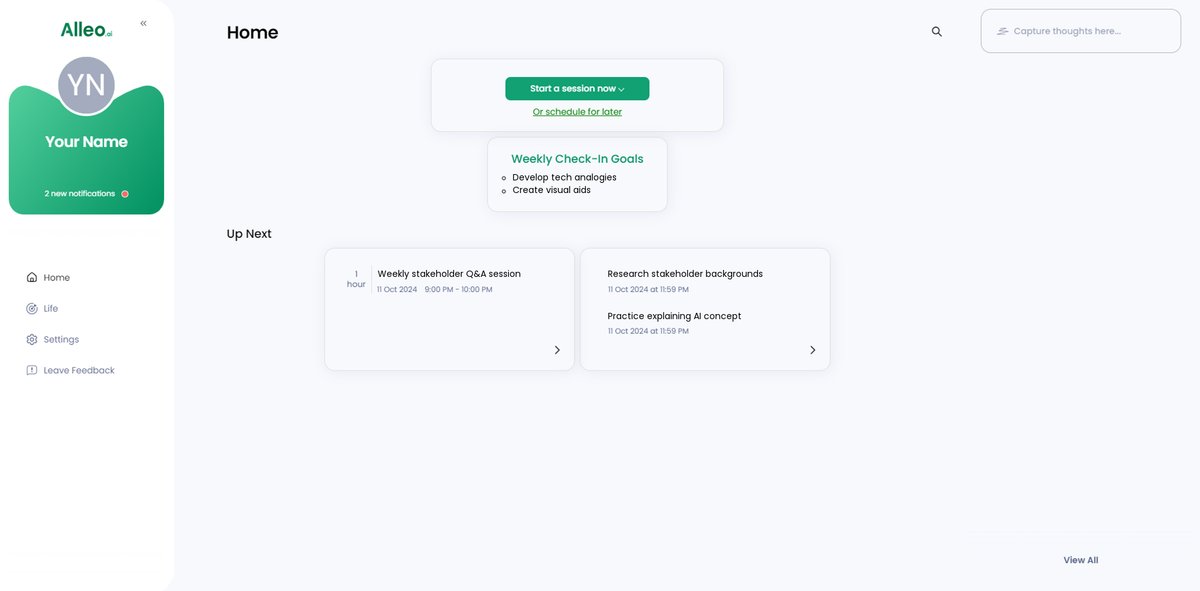
Step 5: Viewing and managing goals after the session
After your coaching session, you’ll find the goals you discussed displayed on the home page of the Alleo app, allowing you to easily track and manage your progress in improving your tech communication skills.
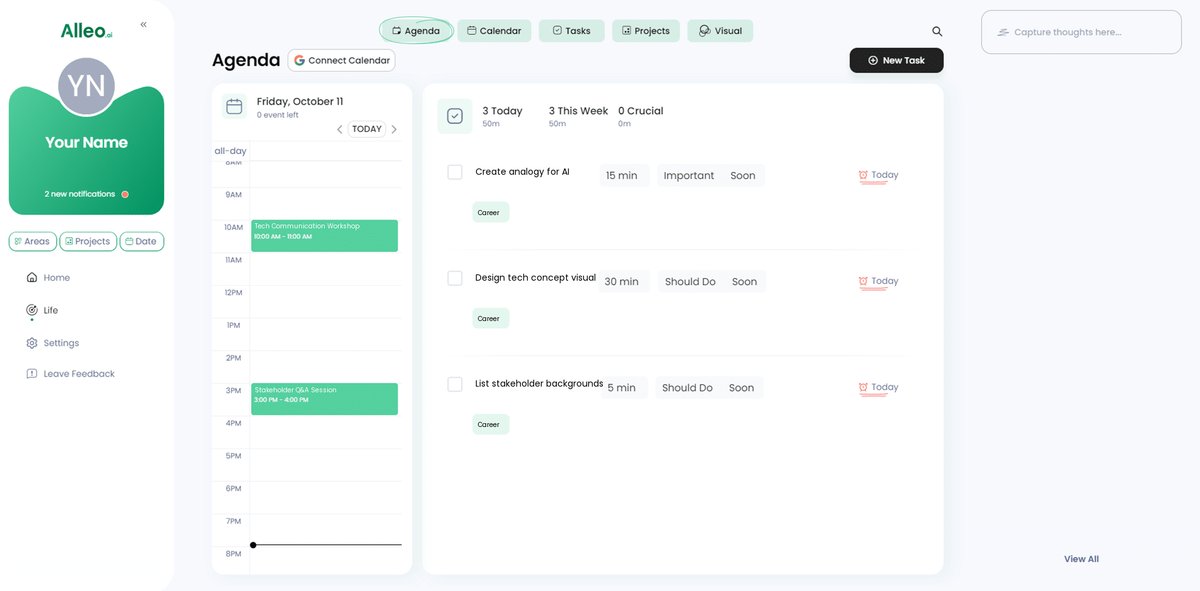
Step 6: Adding events to your calendar or app
Use the calendar and task features in the Alleo app to schedule and track your progress in implementing these communication strategies, ensuring you stay on top of your goals and deadlines.
Bringing It All Together: Master Tech Communication
We’ve covered a lot of ground on explaining tech trends to stakeholders and how to bridge the gap between tech teams and non-technical stakeholders. Simplifying complex concepts is essential.
Remember, analogies and data visualization techniques can make a world of difference when demystifying emerging technologies.
Focus on business outcomes and tailor your explanations to highlight the ROI of new tech investments.
Storytelling can captivate your audience, especially when using real-world examples of tech applications.
Don’t forget the importance of regular Q&A sessions and having a tech-to-business liaison to provide jargon-free technology explanations.
You can master these skills for explaining tech trends to stakeholders with practice and dedication.
Alleo can help you on this journey of translating technical benefits to business value.
Start your free trial today and transform your communication skills for explaining tech trends to stakeholders.
You’ve got this!