7 Essential Steps to Address Performance Issues with a Shared Manager as a Team Leader
Are you struggling with addressing shared manager performance issues, particularly when it comes to an underperforming employee who continues to be retained, making team dynamics challenging?
As a life coach, I’ve helped many professionals navigate these workplace hierarchy issues and team leadership challenges. I understand the frustration and uncertainty you may be feeling when addressing conflicts with superiors.
In this article, you’ll discover structured strategies for addressing shared manager performance issues effectively. We’ll explore actionable steps, from documenting issues to proposing performance improvement strategies, all while balancing team and manager expectations.
Let’s dive into these collaborative problem-solving techniques.
Navigating the Complexities of Team Dynamics and Underperformance
Addressing shared manager performance issues can be daunting. Many clients initially struggle with the emotional and professional toll this situation can take when navigating complex reporting structures.
Underperformance affects everyone. It can lead to decreased morale, increased stress, and even resentment among team members, creating significant team leadership challenges.
In my experience, tech managers with imposter syndrome find addressing conflicts with superiors especially challenging. They often doubt their ability to resolve these issues effectively, highlighting the importance of managing up in the workplace.
The problem isn’t just about performance. It’s about maintaining harmony and trust within the team through effective communication with shared managers.
When a shared manager retains an underperforming employee, it complicates things further. It can feel like an uphill battle, but with the right approach and collaborative problem-solving techniques, you can turn the situation around and implement performance improvement strategies.

Structured Steps to Address Performance Issues as a Team Leader
Overcoming this challenge of addressing shared manager performance issues requires a few key steps. Here are the main areas to focus on to make progress in managing up in the workplace.
- Document performance issues objectively: Keep a log with specific instances and data to address conflicts with superiors.
- Schedule private meeting with shared manager: Request a focused, private discussion to navigate complex reporting structures.
- Prepare specific examples of underperformance: Gather concrete examples with dates and outcomes to address workplace hierarchy issues.
- Focus on team impact, not personal criticism: Frame feedback around team goals for effective communication with shared managers.
- Propose collaborative performance improvement plan: Develop and monitor a plan with clear goals using collaborative problem-solving techniques.
- Seek feedback on your leadership approach: Ask your team for constructive feedback to improve feedback loops in team management.
- Establish clear expectations and follow-up timeline: Communicate standards and set review meetings to balance team and manager expectations.
Let’s dive in to these performance improvement strategies for addressing shared manager performance issues!
1: Document performance issues objectively
Documenting performance issues objectively is crucial for addressing shared manager performance issues effectively.
Actionable Steps:
- Maintain a detailed performance log: Record specific instances of underperformance with dates and tasks, focusing on workplace hierarchy issues.
- Use objective metrics: Support your observations with tangible data and measurable outcomes to aid in managing up in the workplace.
- Update the log regularly: Reflect ongoing issues and any improvements noted over time, establishing effective feedback loops in team management.
Explanation: These steps ensure you have a clear and unbiased record of performance issues. This documentation is vital when addressing conflicts with superiors and discussing concerns with your shared manager.
According to Deel, objective feedback helps managers make informed decisions and align with organizational goals.
Accurate records will help you present a compelling case, fostering a productive dialogue with your manager and navigating complex reporting structures.
2: Schedule private meeting with shared manager
Scheduling a private meeting with your shared manager is essential to addressing shared manager performance issues effectively and build a focused dialogue.
Actionable Steps:
- Request a private meeting: Contact your shared manager to set up a one-on-one meeting to discuss your concerns and navigate workplace hierarchy issues.
- Prepare an agenda: Draft a clear agenda to guide the conversation and ensure all key points are covered when addressing conflicts with superiors.
- Choose a neutral location: Select a comfortable and neutral setting to encourage open and constructive discussion, facilitating effective communication with shared managers.
Explanation: These steps help create a structured and supportive environment for discussing performance issues and managing up in the workplace.
A well-prepared agenda keeps the meeting focused and productive, while a neutral location fosters open communication and collaborative problem-solving techniques.
According to Coursera, effective communication is crucial for successful leadership and conflict resolution.
A focused meeting sets the stage for a productive conversation about performance improvement strategies and addressing shared manager performance issues.

3: Prepare specific examples of underperformance
Preparing specific examples of underperformance is vital for a clear discussion when addressing shared manager performance issues.
Actionable Steps:
- Compile concrete examples: Gather specific instances of underperformance, including dates, tasks, and outcomes, to effectively manage up in the workplace.
- Highlight team impact: Show how these instances have negatively affected team performance and morale, addressing conflicts with superiors.
- Organize your examples: Present your examples in a clear, non-confrontational manner for better understanding and effective communication with shared managers.
Explanation: These steps provide a solid foundation for a constructive conversation when addressing shared manager performance issues. Clear examples help illustrate the team leadership challenges and their impact on the team.
According to Coursera, structured feedback is essential for effective leadership and conflict resolution. This approach ensures your concerns are well-documented and easier to address, aiding in navigating complex reporting structures.
Key benefits of preparing specific examples:
- Provides concrete evidence of performance issues
- Helps identify patterns in underperformance
- Facilitates a fact-based discussion with your manager
Addressing shared manager performance issues with specific examples fosters a productive dialogue, setting the stage for meaningful improvements and balancing team and manager expectations.

4: Focus on team impact, not personal criticism
When addressing shared manager performance issues, focusing on team impact rather than personal criticism helps maintain a positive and constructive environment while navigating complex reporting structures.
Actionable Steps:
- Frame feedback around team goals: Emphasize how underperformance affects team objectives rather than targeting the individual, addressing conflicts with superiors in a constructive manner.
- Highlight specific behaviors: Point out actions that need improvement, avoiding any personal attributes and focusing on effective communication with shared managers.
- Show potential benefits: Discuss how addressing these issues can enhance overall team success and morale, implementing performance improvement strategies.
Explanation: These steps ensure your feedback is constructive and encourages positive change. By focusing on team goals, you avoid personal attacks and foster a collaborative atmosphere, essential for managing up in the workplace.
According to Coursera, effective communication is essential for successful leadership and conflict resolution. This approach helps build trust and motivates employees to improve, addressing team leadership challenges.
This strategy ensures a supportive environment, enhancing team cohesion and performance while balancing team and manager expectations.
5: Propose collaborative performance improvement plan
Proposing a collaborative performance improvement plan (PIP) is crucial for addressing shared manager performance issues and fostering team development.
Actionable Steps:
- Develop clear goals and timelines: Work with the underperforming employee to set specific, achievable goals and deadlines for improvement, considering team leadership challenges.
- Involve the employee in the PIP creation: Ensure the employee’s input is considered to increase their commitment and accountability, promoting effective communication with shared managers.
- Schedule regular check-ins: Plan frequent meetings to review progress, provide feedback, and make necessary adjustments, addressing conflicts with superiors if needed.
Explanation: These steps foster a collaborative environment, helping the employee feel invested in their improvement. By involving them in the process, you increase their motivation and accountability while navigating complex reporting structures.
Regular check-ins ensure continuous support and adjustments as needed. According to CultureMonkey, effective feedback and clear expectations are vital for aligning employees with organizational goals and addressing shared manager performance issues.
A collaborative PIP enhances team cohesion and drives positive change, balancing team and manager expectations through collaborative problem-solving techniques.

6: Seek feedback on your leadership approach
Seeking feedback on your leadership approach is essential for continuous improvement and fostering a positive team environment, especially when addressing shared manager performance issues.
Actionable Steps:
- Solicit honest feedback: Ask your team members for candid insights into your leadership style and areas where you can improve, focusing on managing up in the workplace and addressing conflicts with superiors.
- Implement constructive suggestions: Act on the feedback you receive by making tangible changes to your leadership practices, including effective communication with shared managers.
- Engage in professional development: Participate in leadership workshops or mentoring programs to refine your skills in navigating complex reporting structures and workplace hierarchy issues.
Explanation: These steps ensure you stay attuned to your team’s needs and continuously evolve as a leader. Honest feedback helps you identify blind spots and areas for growth, particularly in addressing shared manager performance issues and team leadership challenges.
According to CultureMonkey, regular feedback is crucial for aligning leadership practices with organizational goals. By embracing feedback, you enhance your effectiveness and build a stronger, more cohesive team, improving performance and fostering collaborative problem-solving techniques.
Consider these strategies to support your leadership development and foster team success while balancing team and manager expectations.

7: Establish clear expectations and follow-up timeline
Establishing clear expectations and a follow-up timeline is crucial for addressing shared manager performance issues and ensuring accountability and continuous improvement.
Actionable Steps:
- Communicate performance expectations clearly: Define specific performance standards and share them with your team, addressing conflicts with superiors as needed.
- Set regular follow-up meetings: Schedule consistent check-ins to review progress and provide feedback, fostering effective communication with shared managers.
- Outline consequences and support: Explain the potential outcomes of not meeting expectations and offer necessary support for improvement, utilizing collaborative problem-solving techniques.
Explanation: These steps help ensure everyone understands their responsibilities and the importance of meeting performance standards when addressing shared manager performance issues. Regular follow-ups keep the team on track and allow for timely adjustments, helping navigate complex reporting structures.
According to Deel, clear communication and consistent feedback are essential for effective performance management and managing up in the workplace.
Benefits of establishing clear expectations:
- Reduces misunderstandings and confusion in workplace hierarchy issues
- Increases employee motivation and engagement, balancing team and manager expectations
- Facilitates fair and objective performance evaluations and performance improvement strategies
This structured approach ensures ongoing progress and team alignment, addressing team leadership challenges and enhancing feedback loops in team management.
Partner with Alleo to Address Performance Issues Effectively
We’ve explored the challenges of addressing shared manager performance issues. Solving these problems can benefit your team leadership and career, especially when managing up in the workplace.
But did you know Alleo can make this journey easier and faster, helping you navigate complex reporting structures?
Alleo is an AI life coach and organizer designed to support tech managers like you. It provides tailored coaching to help you address conflicts with superiors and improve team dynamics through effective communication with shared managers.
With Alleo, you’ll get the support you need to navigate workplace hierarchy issues confidently.
Setting up an account with Alleo is simple. Start by signing up for a free 14-day trial—no credit card required.
Once you’re in, Alleo will guide you through creating a personalized plan. This plan includes setting clear, measurable goals for you and your team, incorporating performance improvement strategies.
Alleo’s AI coach will follow up on your progress, handle changes, and keep you accountable. You’ll receive text and push notifications to ensure you stay on track with collaborative problem-solving techniques.
With Alleo, you’re never alone in tackling performance challenges and balancing team and manager expectations.
Ready to get started for free? Let me show you how to enhance feedback loops in team management!
Step 1: Log In or Create Your Account
To start addressing performance issues with Alleo’s AI coach, log in to your existing account or create a new one for personalized guidance and support.

Step 2: Choose Your Focus Area
Click on “Setting and achieving personal or professional goals” to align Alleo’s coaching with your team leadership challenges, helping you develop strategies to address performance issues and improve team dynamics effectively.

Step 3: Select “Career” as Your Focus Area
Choose “Career” as your focus area in Alleo to receive tailored guidance on addressing performance issues, improving team dynamics, and enhancing your leadership skills, directly aligning with the challenges discussed in the article.

Step 4: Starting a coaching session
Begin your journey with Alleo by participating in an initial intake session, where you’ll discuss your performance management challenges and set up a tailored plan to address team dynamics and underperformance issues.

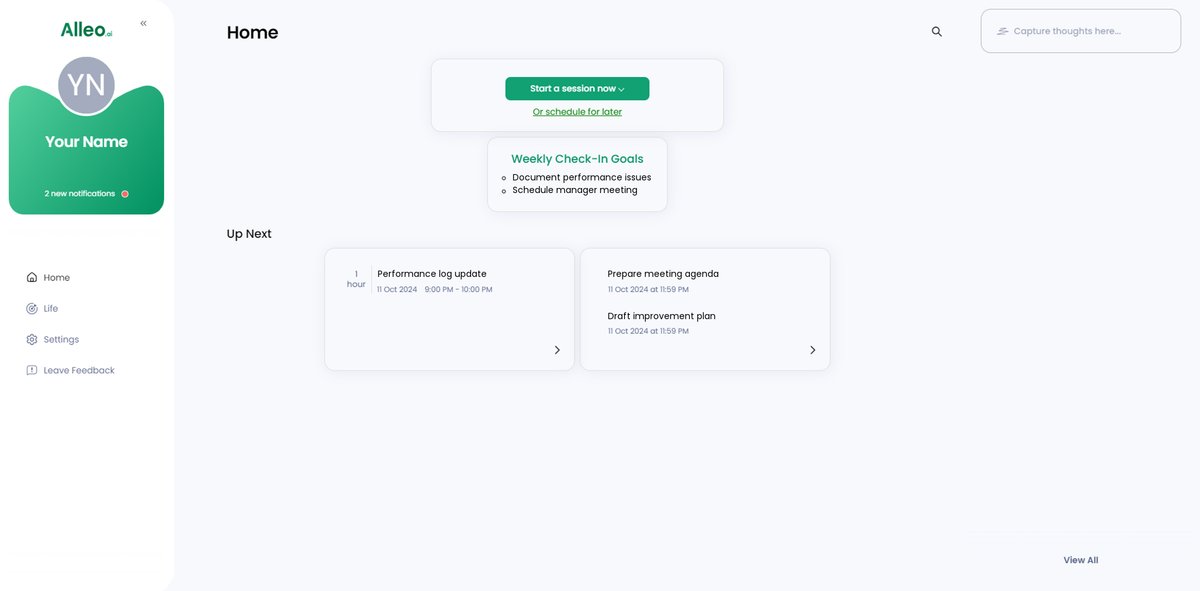
Step 5: Viewing and managing goals after the session
After your coaching session, open the Alleo app to see the goals you discussed displayed on the home page, allowing you to easily track and manage your progress towards addressing performance issues and improving team dynamics.
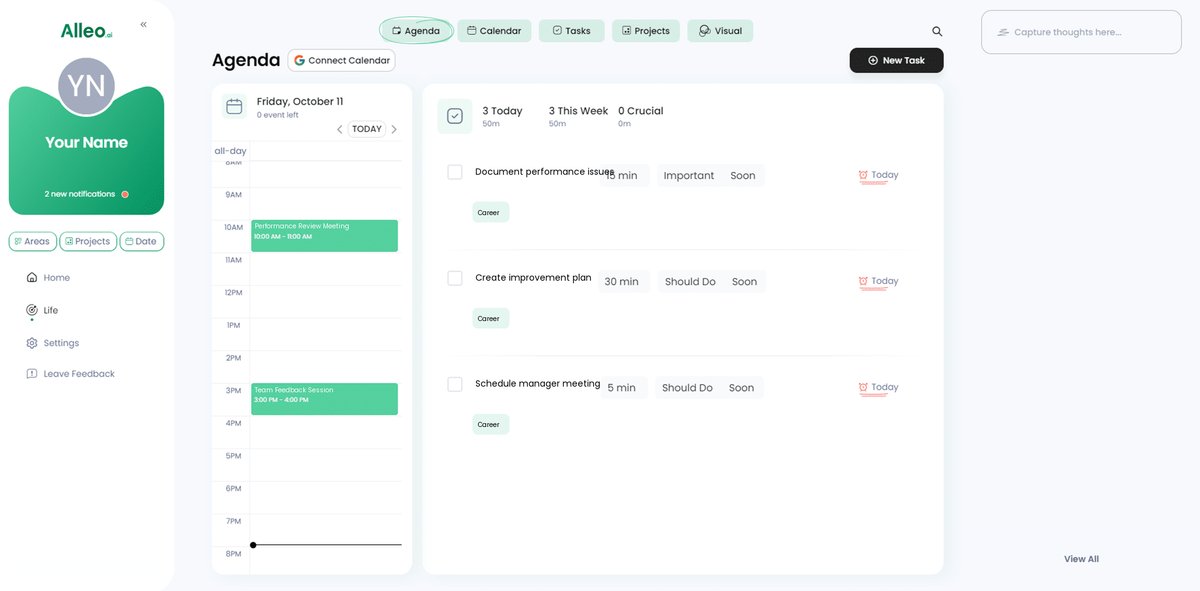
Step 6: Adding events to your calendar or app
Use Alleo’s calendar and task features to schedule and track your progress in addressing performance issues, allowing you to stay organized and accountable as you implement your improvement strategies.
Bringing It All Together: Your Path to Effective Team Leadership
You’ve taken significant steps to address performance issues with a shared manager. This journey can transform your team’s dynamics and boost morale while navigating complex reporting structures.
Remember, documenting issues objectively, preparing for focused meetings, and proposing collaborative problem-solving techniques are essential. Each step builds a stronger, more cohesive team and helps in addressing conflicts with superiors.
You’re not alone in addressing shared manager performance issues. Your efforts in managing up in the workplace matter.
Alleo can support you every step of the way in overcoming team leadership challenges. With AI-driven tools and personalized coaching, Alleo helps you navigate these workplace hierarchy issues confidently.
Try Alleo for free and see the difference in addressing shared manager performance issues. Your team will thank you for implementing effective communication with shared managers.