How to Politely Decline Low-Priority Work Requests: 3 Essential Strategies for Busy Professionals
Imagine you’re juggling multiple high-priority tasks and suddenly, a colleague asks for help with a minor request. How do you manage it without harming your relationship? This situation often requires declining low-priority work requests while maintaining professional relationships.
As a life coach, I’ve helped many professionals navigate these challenges. In my experience, effective communication is key to maintaining positive relationships while managing your workload. Assertive communication in the workplace can help you set boundaries with colleagues without damaging relationships.
In this article, you’ll discover strategies like using the Eisenhower Matrix for prioritizing tasks at work, communicating clearly with “I” statements, and offering alternative solutions or resources. These tools will help you with effective workload management strategies and maintaining work-life balance.
Let’s dive in to explore diplomatic ways to refuse non-essential tasks and productivity tips for busy professionals.

The Challenge of Low-Priority Requests
Low-priority tasks can significantly impact your overall productivity and stress levels when it comes to declining low-priority work requests. They often disrupt your focus, making it difficult to complete high-priority work efficiently and maintain effective workload management strategies.
Maintaining positive relationships while managing these requests is crucial for prioritizing tasks at work. Several clients initially struggle with saying no without feeling guilty or damaging professional relationships, which is essential for setting boundaries with colleagues.
For example, tech managers frequently face these issues, and it can lead to burnout if not managed well, affecting their ability to maintain work-life balance.
In my experience, people often find themselves overwhelmed, unable to focus on their most important tasks. This not only affects their work quality but also their overall well-being, highlighting the importance of time management for professionals and learning diplomatic ways to refuse non-essential tasks.
Key Strategies for Declining Low-Priority Requests
Overcoming this challenge of declining low-priority work requests requires a few key steps. Here are the main areas to focus on to make progress in effective workload management strategies:
- Use the Eisenhower Matrix to prioritize tasks: Categorize and focus on high-priority tasks, a crucial aspect of time management for professionals.
- Communicate clearly with “I” statements: Use clear language to explain your workload, employing assertive communication in the workplace.
- Offer alternative solutions or resources: Provide helpful alternatives to maintain positive relationships, a diplomatic way to refuse non-essential tasks.
Let’s dive into these strategies for declining low-priority work requests!
1: Use the Eisenhower Matrix to prioritize tasks
Utilizing the Eisenhower Matrix is vital for tech managers to manage their workload effectively and practice declining low-priority work requests.
Actionable Steps:
- Categorize your tasks: List all current tasks and sort them into the four quadrants: urgent and important, important but not urgent, urgent but not important, and neither urgent nor important. This is key for prioritizing tasks at work.
- Focus on priorities: Concentrate on tasks that fall into the urgent and important quadrant first, then schedule important but not urgent tasks. This aids in effective workload management strategies.
- Review regularly: Periodically review your task list to adjust priorities and ensure you stay on track with time management for professionals.
Explanation:
These steps are crucial for maintaining productivity and reducing stress. The Eisenhower Matrix helps you focus on what truly matters, preventing low-priority tasks from overwhelming your schedule and assisting in setting boundaries with colleagues.
For more insights on this method, check out the Eisenhower Matrix guide.
Benefits of using the Eisenhower Matrix include:
- Improved time management
- Reduced stress levels
- Enhanced focus on high-impact tasks
By prioritizing effectively, you not only achieve your goals but also maintain a balanced workload that promotes well-being and work-life balance.
Next, we’ll explore how clear communication can help in managing requests and declining low-priority work requests.

2: Communicate clearly with “I” statements
Effective communication is crucial for maintaining relationships while managing your workload and declining low-priority work requests.
Actionable Steps:
- Frame your refusal: Use “I” statements to explain your current workload and why you can’t take on the low-priority task. For example, “I am currently focused on meeting the deadline for Project X,” which demonstrates effective workload management strategies.
- Offer a timeline: If possible, provide an alternative timeline when you might be able to assist. For example, “I can revisit this request next week after completing my current tasks,” which helps in prioritizing tasks at work.
- Set boundaries: Clearly communicate your boundaries to avoid future misunderstandings. For example, “I need to prioritize tasks that align with our team’s goals,” which is essential for setting boundaries with colleagues.
Explanation:
These steps are essential for maintaining productivity and reducing stress. By using “I” statements, you convey your current commitments and manage expectations without damaging relationships, which is crucial when declining low-priority work requests.
This approach is supported by the insights provided by Integrative Psych on setting boundaries at work. Clear communication allows you to maintain a balanced workload and focus on high-priority tasks, which is key to time management for professionals.
Next, we’ll explore how offering alternative solutions can help you manage requests effectively and maintain work-life balance.

3: Offer alternative solutions or resources
Offering alternative solutions or resources is key to maintaining positive relationships while managing your workload and effectively declining low-priority work requests.
Actionable Steps:
- Suggest resources: Direct the requester to other resources, such as documentation or a colleague who might be available. For example, “You might find the answer in the project documentation or ask Jane, who has experience with this.” This approach aids in prioritizing tasks at work.
- Recommend tools: Suggest tools or software that can help the requester complete the task independently. For example, “Using tool X could help you manage this task more efficiently.” This is an effective workload management strategy.
- Propose a training session: Offer to set up a brief training session to empower the requester to handle similar tasks in the future. For example, “Let’s schedule a quick training session on Friday to go over this process.” This helps in setting boundaries with colleagues.
Explanation:
These steps matter because they ensure you maintain productivity while supporting your team. By offering alternatives, you help others become more self-sufficient, which aligns with current industry trends of fostering teamwork and efficiency. This approach is crucial for time management for professionals.
For more insights, visit the Maestro Labs guide on politely saying no.
Key benefits of offering alternatives:
- Empowers team members
- Preserves positive relationships
- Promotes knowledge sharing
By recommending resources and tools, you empower your colleagues without compromising your priorities, which is essential for maintaining work-life balance and saying no without damaging relationships.
Next, we’ll explore how Alleo can help manage these tasks effectively.

Partner with Alleo to Manage Low-Priority Requests
We’ve explored the challenges of handling low-priority requests and the strategies to manage them, including declining low-priority work requests. But did you know Alleo can make this easier for busy professionals seeking effective workload management strategies?
Set up an account and create a personalized plan with Alleo’s AI coach. Alleo helps you set goals, provides tailored communication templates for assertive communication in the workplace, and offers a resource library on prioritizing tasks at work and setting boundaries with colleagues.
The coach follows up on progress, handles changes, and keeps you accountable via text and push notifications, helping you maintain work-life balance and manage expectations in a professional setting.
Ready to get started for free? Let me show you how to improve your time management for professionals and learn diplomatic ways to refuse non-essential tasks!
Step 1: Log In or Create Your Alleo Account
To start managing your priorities effectively, log in to your existing Alleo account or create a new one if you’re a first-time user.

Step 2: Choose “Building better habits and routines”
Click on “Building better habits and routines” to start developing effective strategies for managing your time, prioritizing tasks, and maintaining a healthy work-life balance, which will help you handle low-priority requests more efficiently.

Step 3: Select “Career” as Your Focus Area
Choose “Career” as your focus area to tackle workplace challenges like managing low-priority requests, improving productivity, and maintaining positive professional relationships.

Step 4: Starting a coaching session
Begin your journey with Alleo by scheduling an initial intake session, where you’ll discuss your goals and challenges related to managing low-priority requests, allowing the AI coach to create a personalized plan tailored to your specific needs.

Step 5: Viewing and managing goals after the session
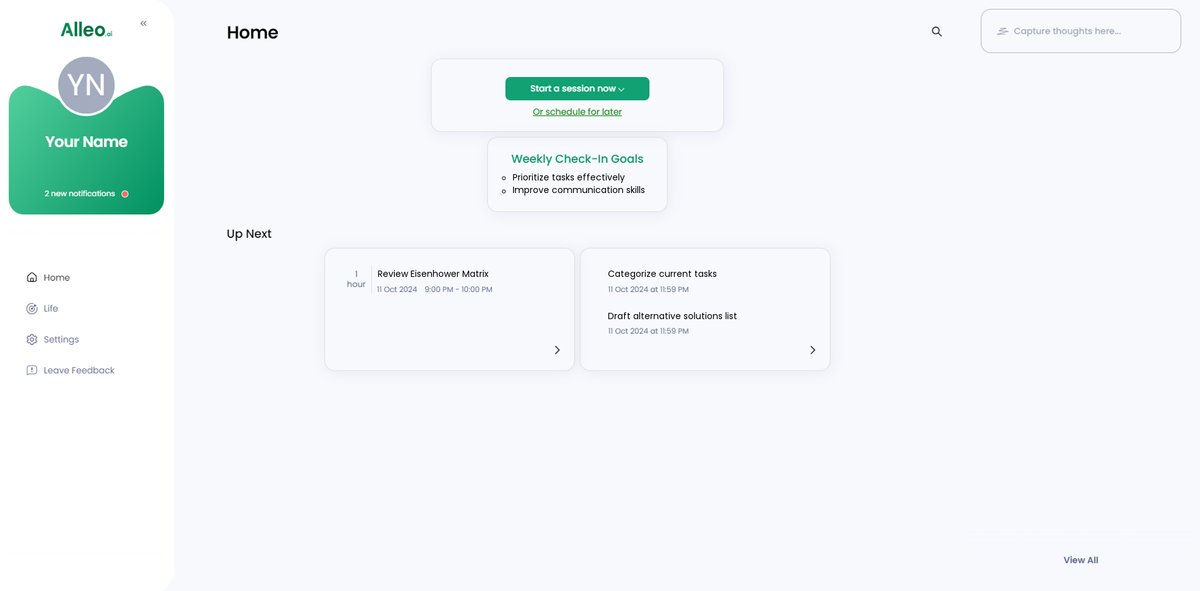
After your coaching session, open the Alleo app and check your home page to view and manage the goals you discussed, allowing you to easily track your progress in handling low-priority requests and maintaining productivity.
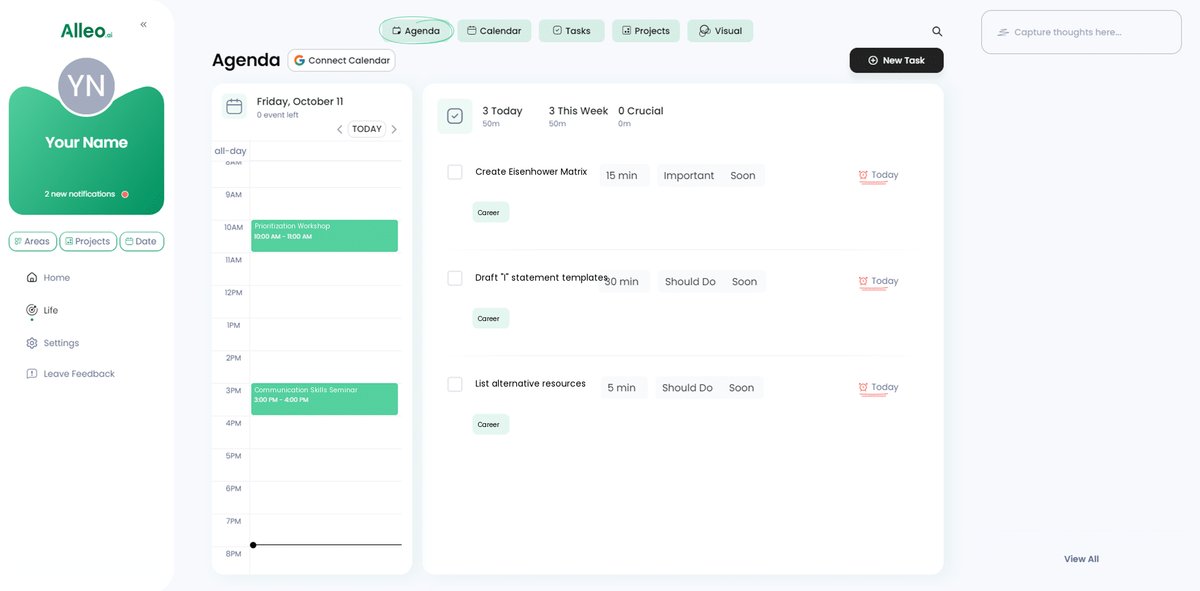
Step 6: Adding events to your calendar or app
Use Alleo’s calendar and task features to schedule and track your progress on handling low-priority requests, ensuring you stay focused on high-priority tasks while maintaining positive relationships with colleagues.
Wrapping Up: Mastering the Art of Saying No
Handling low-priority requests can be tricky, but it’s essential for your productivity and well-being when declining low-priority work requests.
By using the Eisenhower Matrix, communicating clearly with “I” statements, and offering alternative solutions, you can manage your workload effectively and practice assertive communication in the workplace.
Empathize with yourself and understand it’s okay to say no when prioritizing tasks at work.
These strategies will help you prioritize what’s truly important and maintain positive relationships, setting boundaries with colleagues while saying no without damaging relationships.
Remember, Alleo can support you in this journey with personalized plans and communication templates for effective workload management strategies.
Give it a try to improve your time management for professionals.
Achieve more by managing your priorities effectively and maintaining work-life balance.