Transform Your Classroom: 6 Fundamental Principles for Using Streaming and VR in Engaging Lessons
Imagine your students exploring ancient Rome through virtual reality or conducting science experiments via live 3D visualizations. This is the power of streaming and VR classroom engagement.
As a life coach, I’ve guided many educators through the challenges of modern teaching methods, including integrating streaming and VR in lesson plans. I often see the struggle to keep students engaged in immersive learning environments.
In this post, you’ll discover how to transform your classroom using streaming technology for teachers and VR/AR tools. We’ll explore strategies to boost engagement, comprehension, and collaboration through interactive VR classroom experiences and live streaming for remote learning.
Let’s dive into the benefits of VR in teaching and how to create engaging virtual field trips for your students.

Understanding the Engagement Struggle in Modern Classrooms
Keeping students engaged with traditional teaching methods is a significant challenge. Many educators find that students are disengaged and bored, leading to poor comprehension and participation. Streaming and VR classroom engagement offers innovative solutions to this problem.
In my experience, several clients report that even the most well-prepared lessons fail to captivate their students. This can be incredibly frustrating and demotivating for both teachers and students. Integrating streaming technology for teachers and virtual reality in education can help address these issues.
The potential of streaming services and VR classroom engagement to overcome these challenges is immense. However, the barriers to implementation, such as costs and technical skills required for VR educational content creation, can be daunting.
Consider a teacher who struggled with disengaged students. By integrating VR field trips and live streaming for remote learning, they transformed their classroom into an exciting, interactive environment.
The result was a notable increase in student engagement and enthusiasm, demonstrating the benefits of VR in teaching.
Using these technologies can make learning more dynamic and relatable. You can create immersive learning environments that resonate with students, making complex subjects easier to understand and more enjoyable to learn through interactive VR classroom experiences.

Key Strategies to Transform Classroom Engagement with Streaming and VR
Overcoming this challenge requires a few key steps. Here are the main areas to focus on to make progress in streaming and VR classroom engagement:
- Integrate live streaming into lesson plans: Use platforms like YouTube Live and Zoom for guest lectures and Q&A sessions, enhancing streaming technology for teachers.
- Create virtual field trips using VR platforms: Explore VR platforms like Google Expeditions for immersive learning environments and engaging students with virtual field trips.
- Use AR apps for interactive 3D visualizations: Employ AR apps to help students grasp complex concepts through 3D visualizations, leveraging virtual reality in education.
- Implement gamified VR quizzes and assessments: Design engaging interactive VR classroom experiences with platforms like Kahoot.
- Collaborate in virtual environments with ENGAGE: Set up virtual classrooms for interactive learning sessions using ENGAGE, showcasing the benefits of VR in teaching.
- Develop multimodal assignments using VR/AR tools: Encourage students to use VR/AR tools for creative assignments, promoting VR educational content creation.
Let’s dive into these strategies for integrating streaming and VR in lesson plans!
1: Integrate live streaming into lesson plans
Integrating live streaming into your lesson plans can significantly enhance student engagement and provide dynamic learning experiences, especially when combined with streaming and VR classroom engagement techniques.
Actionable Steps:
- Identify suitable live streaming platforms like YouTube Live and Zoom for virtual guest lectures, interactive Q&A sessions, and streaming technology for teachers.
- Plan and schedule regular live streaming sessions with experts in various fields to offer students real-world insights and create immersive learning environments.
- Use streaming to collaborate with other classrooms globally, fostering a sense of community and peer learning through interactive VR classroom experiences.
Explanation: These steps matter because they make learning more interactive and engaging, allowing students to connect with real-world experiences and experts through virtual reality in education.
This approach helps bridge the gap between traditional teaching methods and modern educational technologies. According to a recent study, integrating live streaming can significantly boost student engagement and comprehension, especially when combined with VR educational content creation.
For more insights on effective strategies, visit this source.
Key benefits of live streaming in education:
- Increases student engagement and interaction through streaming and VR classroom engagement
- Provides access to real-world experts and experiences via live streaming for remote learning
- Enhances global collaboration opportunities and enables engaging students with virtual field trips
By following these steps, you can create a more engaging and interactive learning environment for your students by integrating streaming and VR in lesson plans.
2: Create virtual field trips using VR platforms
Creating virtual field trips using VR platforms can significantly enrich students’ learning experiences by providing immersive learning environments and engaging students with virtual field trips.
Actionable Steps:
- Research and select VR platforms like Google Expeditions or Nearpod VR that offer educational virtual reality in education content.
- Develop a curriculum that integrates these virtual field trips, ensuring they align with your learning objectives and enhance streaming and VR classroom engagement.
- Plan pre- and post-trip activities to ensure students reflect on and discuss their interactive VR classroom experiences.
Explanation: These steps matter because they transform traditional learning into dynamic, interactive experiences that can deeply engage students through streaming and VR classroom engagement.
According to a recent study, using VR in education can enhance engagement and understanding of complex subjects. For more insights on the benefits of VR in teaching, visit this source.
Creating virtual field trips opens up new worlds for students, making learning both fun and impactful through immersive learning environments and VR educational content creation.

3: Use AR apps for interactive 3D visualizations
Using AR apps for interactive 3D visualizations can make complex concepts more tangible and engaging for students, similar to how streaming and VR classroom engagement techniques enhance learning experiences.
Actionable Steps:
- Identify AR apps that align with your subject matter, such as Anatomy 4D for biology or Civilizations AR for history, which can complement virtual reality in education.
- Create lesson plans that incorporate interactive 3D visualizations to help students understand complex concepts, similar to integrating streaming and VR in lesson plans.
- Encourage students to use AR apps for individual or group projects, fostering collaboration and creativity, much like engaging students with virtual field trips.
Explanation: These steps matter because they transform traditional learning into dynamic, interactive experiences that can deeply engage students, similar to the benefits of VR in teaching.
For instance, using AR in education can enhance understanding and retention of complex subjects, much like interactive VR classroom experiences. For more insights, visit this source.
Top AR apps for education:
- Anatomy 4D for biology studies
- Civilizations AR for history lessons
- Merge Cube for interactive STEM learning
Incorporating AR apps into your lessons can revolutionize the way students learn and interact with educational content, similar to how streaming technology for teachers enhances remote learning experiences.

4: Implement gamified VR quizzes and assessments
Implementing gamified VR quizzes and assessments can transform learning by making it more interactive and fun for students, enhancing streaming and VR classroom engagement.
Actionable Steps:
- Design interactive VR quizzes using platforms like Quizizz or Kahoot integrated with VR elements, creating immersive learning environments.
- Use gamification techniques to make assessments more engaging and competitive, tracking student progress in real-time through streaming technology for teachers.
- Provide immediate feedback and rewards to motivate students and enhance their learning experience in virtual reality in education.
Explanation: These steps matter because they make assessments exciting and interactive, helping to improve student engagement and learning outcomes in streaming and VR classroom environments.
According to a recent study, gamification in education significantly enhances student motivation and performance. For more insights, visit this source.
Using gamified VR assessments can make learning enjoyable and impactful for students, showcasing the benefits of VR in teaching and interactive VR classroom experiences.
5: Collaborate in virtual environments with ENGAGE
Collaborating in virtual environments with ENGAGE can significantly enhance interactive and immersive learning experiences, especially when it comes to streaming and VR classroom engagement.
Actionable Steps:
- Set up virtual classrooms and meeting spaces using ENGAGE to facilitate interactive VR classroom experiences and live streaming for remote learning.
- Plan collaborative projects where students can work together in VR, simulating real-world problem-solving scenarios and creating immersive learning environments.
- Host virtual office hours and study groups in ENGAGE to provide additional support and foster a sense of community, utilizing streaming platforms for online classes.
Explanation: These steps matter because they transform traditional learning into dynamic, immersive experiences that deeply engage students through virtual reality in education and streaming technology for teachers.
According to a recent study, using VR in education can significantly enhance student engagement and understanding of complex subjects. For more insights on the benefits of VR in teaching, visit this source.
Using ENGAGE for virtual collaboration can revolutionize the way students interact and learn, offering opportunities for engaging students with virtual field trips and integrating streaming and VR in lesson plans.
6: Develop multimodal assignments using VR/AR tools
Developing multimodal assignments using VR/AR tools can enhance creativity and streaming and VR classroom engagement.
Actionable Steps:
- Create assignments that require VR/AR presentations: Design projects where students use VR/AR tools to create 3D models or virtual presentations, promoting interactive VR classroom experiences.
- Provide training sessions for students: Offer workshops and resources to help students become proficient with VR/AR technology and streaming technology for teachers.
- Assess assignments based on creativity and technical skills: Evaluate student work on the use of VR/AR tools, encouraging exploration of different modes of expression in immersive learning environments.
Explanation: These steps matter because they promote innovative thinking and technical proficiency. Incorporating VR/AR tools can make assignments more engaging and relevant, leveraging virtual reality in education.
Moreover, this approach aligns with current educational trends, enhancing the learning experience. For more insights, visit this source.
Benefits of multimodal VR/AR assignments:
- Enhances student creativity and problem-solving skills
- Prepares students for future tech-driven workplaces
- Encourages diverse modes of expression and learning, including engaging students with virtual field trips
By following these steps, you can significantly enhance the streaming and VR classroom engagement in your educational setting.
Partner with Alleo on Your Classroom Transformation Journey
We’ve explored how streaming and VR classroom engagement can revolutionize education. But did you know you can work with Alleo to make this journey into virtual reality in education easier and faster?
Start by setting up a free account. Alleo helps you create a personalized plan tailored to your classroom needs, including integrating streaming and VR in lesson plans.
Alleo’s AI coach provides affordable support for implementing streaming technology for teachers, like a human coach. Get full coaching sessions on creating interactive VR classroom experiences and a free 14-day trial, no credit card needed.
The coach will follow up on your progress with immersive learning environments and help with changes. Stay accountable with text and push notifications as you explore the benefits of VR in teaching.
Ready to get started for free? Let me show you how to enhance your streaming and VR classroom engagement!
Step 1: Log in or Create Your Account
To begin your journey with our AI coach and transform your classroom, simply log in to your account or create a new one to access personalized guidance and innovative teaching tools.

Step 2: Choose “Building better habits and routines”
Click on “Building better habits and routines” to develop consistent practices for integrating streaming and VR technologies into your teaching, helping you overcome engagement challenges and create more dynamic lessons for your students.

Step 3: Selecting the life area you want to focus on
Choose “Career” as your focus area to get personalized guidance on integrating streaming and VR/AR technologies into your teaching methods, enhancing your professional skills and classroom engagement.

Step 4: Starting a Coaching Session
Begin your journey with an initial intake session where you’ll discuss your classroom goals and create a personalized plan to integrate streaming and VR technologies into your lessons.

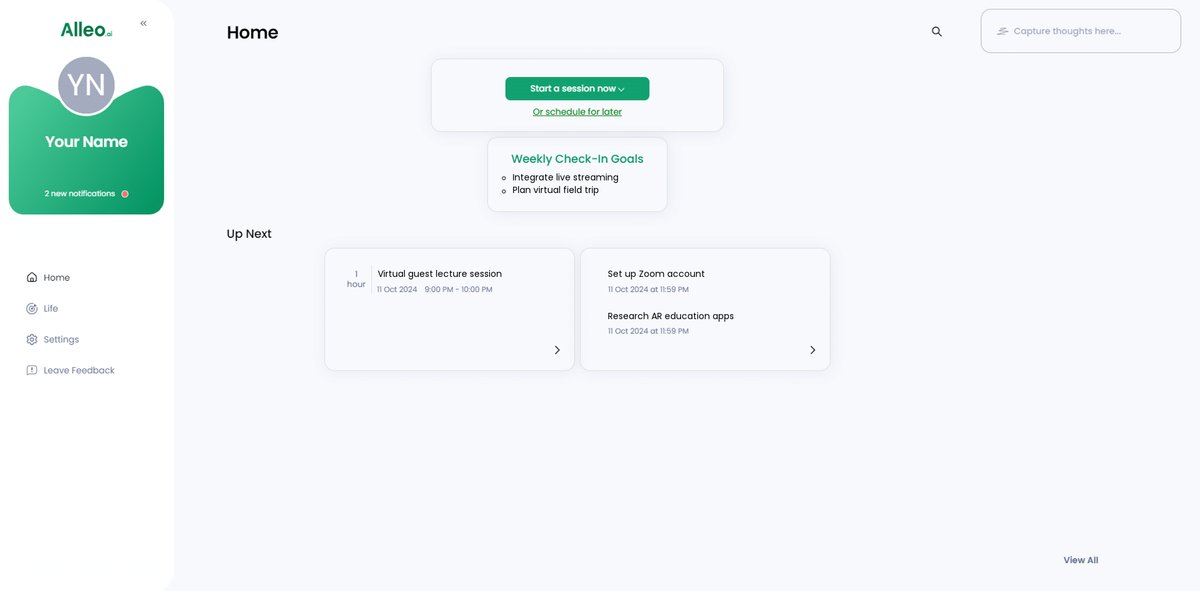
Step 5: Viewing and Managing Goals After the Session
After your coaching session on integrating streaming and VR into your classroom, check the Alleo app’s home page to review and manage the goals you discussed, helping you track your progress in transforming your teaching methods.
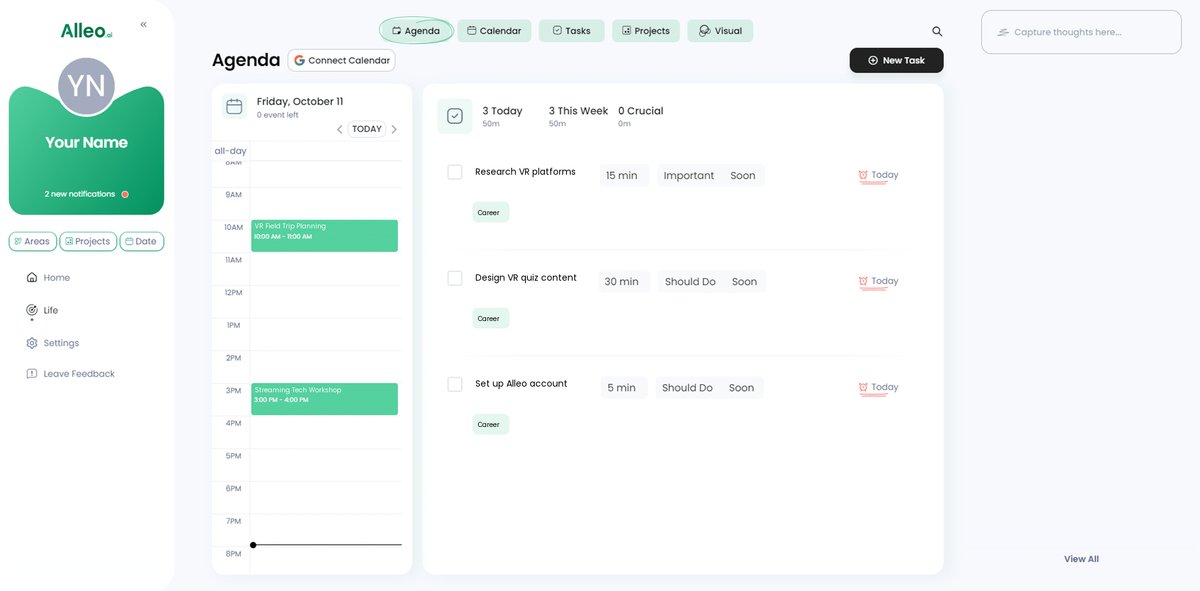
Step 6: Adding events to your calendar or app
Use the AI coach’s calendar and task features to schedule and track your progress in implementing streaming and VR technologies in your classroom, helping you stay organized and motivated throughout your transformation journey.
Bringing It All Together: Creating Engaging Lessons with Streaming and VR
So, there you have it.
We’ve explored how streaming and VR classroom engagement can transform your classroom into an engaging learning environment. These tools can boost student engagement, comprehension, and collaboration through interactive VR classroom experiences.
As educators, we face many challenges in keeping students interested. By integrating streaming technology for teachers and virtual reality in education, you can overcome these hurdles and create dynamic lessons.
Remember, you’re not alone in this journey. Alleo can help you plan and implement these innovative strategies for immersive learning environments.
Ready to revolutionize your teaching methods? Try Alleo for free today and start creating immersive learning experiences with streaming and VR classroom engagement.
Your students will thank you.