3 Powerful Strategies for MBA Graduates to Balance Ambitious Goals with Realistic Expectations
Are you feeling overwhelmed by the gap between your MBA career goals and realistic expectations?
As a life coach, I’ve helped many professionals, including MBA graduates, navigate these challenges. In my experience assisting clients in competitive industries, I often encounter individuals struggling to balance ambitious goals with realistic expectations, especially when it comes to career planning for MBA graduates and work-life balance in corporate careers.
In this post, you’ll learn how to set SMART goals after your MBA, leverage strategic networking for professional growth, and develop a flexible career plan that adapts to changing business environments. These strategies will help you align your aspirations with achievable outcomes, considering MBA job market trends and realistic salary expectations post-MBA.
Let’s dive in and explore how to apply your MBA skills in real-world scenarios while managing time effectively as ambitious professionals.

Understanding the Struggle Between Ambitious Goals and Realistic Expectations
It’s common for MBA graduates to set lofty career goals without a practical plan, leading to disillusionment. Several clients report setting ambitious targets, like becoming a CEO within five years, but feel stuck when reality doesn’t align with their MBA career goals’ realistic expectations. This mismatch often occurs due to a lack of strategic career planning for MBA graduates.
This disparity between expectations and reality can be disheartening. Unrealistic goals often lead to burnout, frustration, and career stagnation. Understanding MBA job market trends and setting SMART goals after MBA can help bridge this gap.
In my experience, people often find that without a clear, achievable plan, their career ambitions can feel like a burden rather than a motivator. This can make you feel overwhelmed and lost, risking disappointment and setbacks. Focusing on MBA skills application in real-world scenarios and adopting effective time management for ambitious professionals can help in achieving a better work-life balance in corporate careers.

Roadmap to Balancing Ambitious Goals with Realistic Expectations
Overcoming this challenge requires a few key steps for MBA career goals and realistic expectations. Here are the main areas to focus on to make progress in career planning for MBA graduates.
- Set SMART goals aligned with employment reports: Understand your MBA program’s employment trends and MBA job market trends to set realistic and achievable goals.
- Network strategically with alumni and mentors: Build meaningful relationships to gain valuable insights and opportunities, utilizing professional networking strategies.
- Develop a flexible career plan with milestones: Create a roadmap that allows for adjustments as you progress, considering realistic salary expectations post-MBA and work-life balance in corporate careers.
Let’s dive in to explore how to balance MBA career goals with realistic expectations!
1: Set SMART goals aligned with employment reports
Setting SMART goals based on employment reports helps align your MBA career goals with realistic expectations and outcomes.
Actionable Steps:
- Analyze employment reports: Review your MBA program’s employment reports to understand common career trajectories. Identify at least three achievable job roles within six months, considering MBA job market trends.
- Break down long-term goals: Divide your ultimate career goal into smaller, manageable milestones. Set quarterly check-ins to evaluate progress and adjust your strategy based on these evaluations, focusing on career planning for MBA graduates.
- Utilize feedback: Seek feedback from mentors or career coaches on your goal-setting process. Incorporate at least two pieces of actionable advice and refine your goals based on this feedback, considering realistic salary expectations post-MBA.
Key benefits of SMART goal-setting:
- Increases motivation and focus
- Provides clear direction and measurable outcomes
- Enhances accountability and progress tracking
Explanation: Aligning your goals with industry employment reports ensures you set realistic targets, reducing the risk of disappointment. For instance, reviewing your program’s employment trends can provide insights into achievable career paths and help with setting SMART goals after MBA.
According to a post by London Business School, understanding typical outcomes can help you set practical goals and navigate your career effectively.
With a clear plan, you’ll feel more confident and motivated to achieve your ambitions while maintaining work-life balance in corporate careers.

2: Network strategically with alumni and mentors
Building a robust professional network with alumni and mentors is crucial for navigating your career trajectory effectively and setting realistic MBA career goals and expectations.
Actionable Steps:
- Attend alumni events: Participate in at least one alumni event per month, aiming to connect with three new professionals at each event. Follow up with these connections within a week to build genuine relationships and explore MBA job market trends.
- Find a mentor: Identify and approach a potential mentor within your industry. Schedule monthly check-ins to discuss career planning for MBA graduates and set specific SMART goals for each mentoring session. Choose a mentor who aligns with your career aspirations and can provide insights on realistic salary expectations post-MBA.
- Join professional groups: Join at least two professional groups or associations related to your field. Participate in group discussions and events regularly, and volunteer for leadership roles or projects within these groups to enhance your professional networking strategies.
Explanation: Building a network of supportive alumni and mentors offers valuable insights and opens doors to new opportunities, helping you apply MBA skills in real-world scenarios.
According to Pepperdine Business School, alumni networks provide mentorship and career advancement resources that are invaluable for professional growth. Engaging with these networks can significantly enhance your career prospects and help you set realistic MBA career goals and expectations.
Investing time in these relationships ensures you have a strong support system as you navigate your career path and adapt to changing business environments.
3: Develop a flexible career plan with milestones
Creating a flexible career plan with milestones is essential for adapting to changes and seizing opportunities as they arise, especially when setting MBA career goals with realistic expectations.
Actionable Steps:
- Create a career roadmap: Outline a five-year career plan with key milestones for MBA graduates. Review and adjust the plan every six months to stay on track and align with MBA job market trends.
- Embrace continuous learning: Commit to ongoing professional development through courses or certifications. Complete at least one new course or certification each year and apply new MBA skills in real-world scenarios.
- Adapt to industry changes: Stay informed about industry trends and shifts. Attend at least two industry conferences or webinars annually and incorporate new knowledge into your career strategy, focusing on adapting to changing business environments.
Essential elements of a flexible career plan:
- Clear short-term and long-term objectives, including setting SMART goals after MBA
- Regular review and adjustment periods
- Strategies for skill development and professional networking
Explanation: Developing a flexible career plan helps you stay adaptable and responsive to industry changes. For example, understanding current trends can guide you in adjusting your career path effectively, including realistic salary expectations post-MBA.
According to AACSB insights, flexibility and adaptability are critical skills valued by employers in the post-pandemic era. Regularly revisiting your plan ensures it remains relevant and achievable, balancing work-life balance in corporate careers.
By staying proactive and adaptable, you’ll be better equipped to navigate your career path successfully, applying time management strategies for ambitious professionals.
Partner with Alleo to Achieve Your MBA Career Goals
We’ve explored the challenges of balancing ambitious MBA career goals with realistic expectations. But did you know you can work directly with Alleo to make this journey easier and faster, especially when it comes to career planning for MBA graduates?
Setting up an account with Alleo is simple. Create a personalized plan for setting SMART goals after MBA, and start working with your AI coach to navigate MBA job market trends.
Alleo provides tailored coaching support just like a human coach, helping you with professional networking strategies and time management for ambitious professionals.
Your coach will follow up on your progress and handle changes in your MBA career goals. They keep you accountable via text and push notifications, ensuring you maintain a work-life balance in corporate careers.
You’ll receive actionable advice and practical experience on MBA skills application in real-world scenarios and adapting to changing business environments.
Ready to get started for free and explore realistic salary expectations post-MBA? Let me show you how!
Step 1: Log In or Create Your Account
To start your journey towards balancing ambitious goals with realistic expectations, log in to your Alleo account or create a new one if you haven’t already.

Step 2: Choose Your Focus Area
Select “Setting and achieving personal or professional goals” to align your ambitions with realistic expectations, helping you create a clear roadmap for success in your career journey.

Step 3: Select “Career” as Your Focus Area
Choose “Career” as your focus area to align with your ambitious professional goals while developing realistic expectations, helping you create a balanced and achievable career plan that addresses the challenges discussed in the article.

Step 4: Starting a coaching session
Begin your journey with Alleo by scheduling an initial intake session, where you’ll collaborate with your AI coach to establish your personalized career plan and set the foundation for achieving your balanced goals.

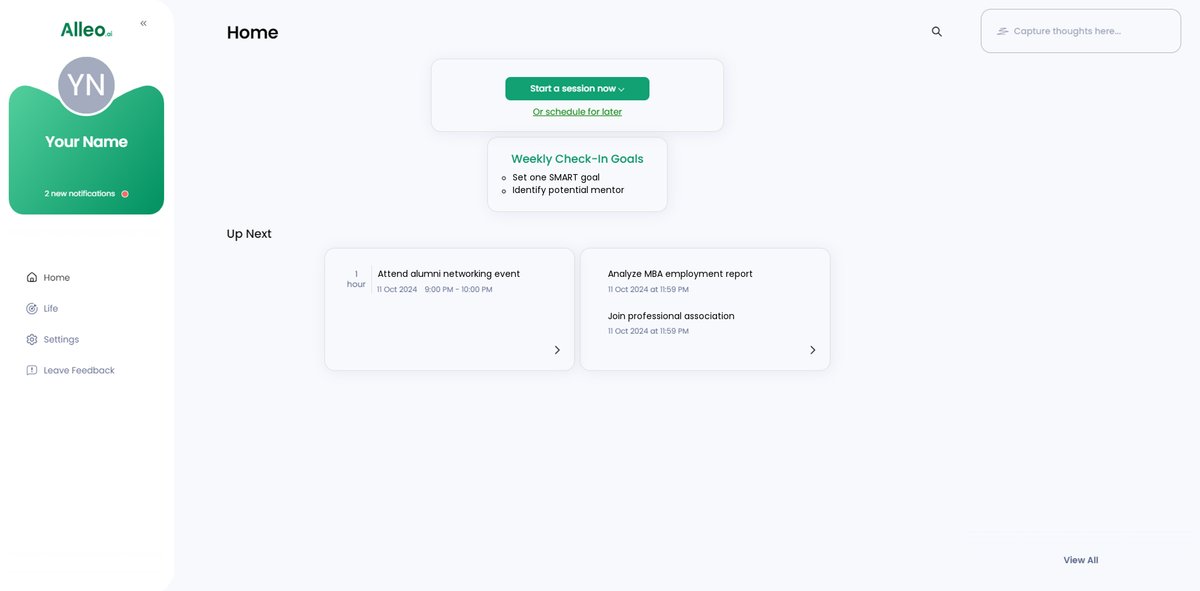
Step 5: Viewing and Managing Goals After the Session
After your coaching session, you’ll find the goals you discussed conveniently displayed on the home page of the Alleo app, allowing you to easily track and manage your progress toward balancing ambitious career goals with realistic expectations.
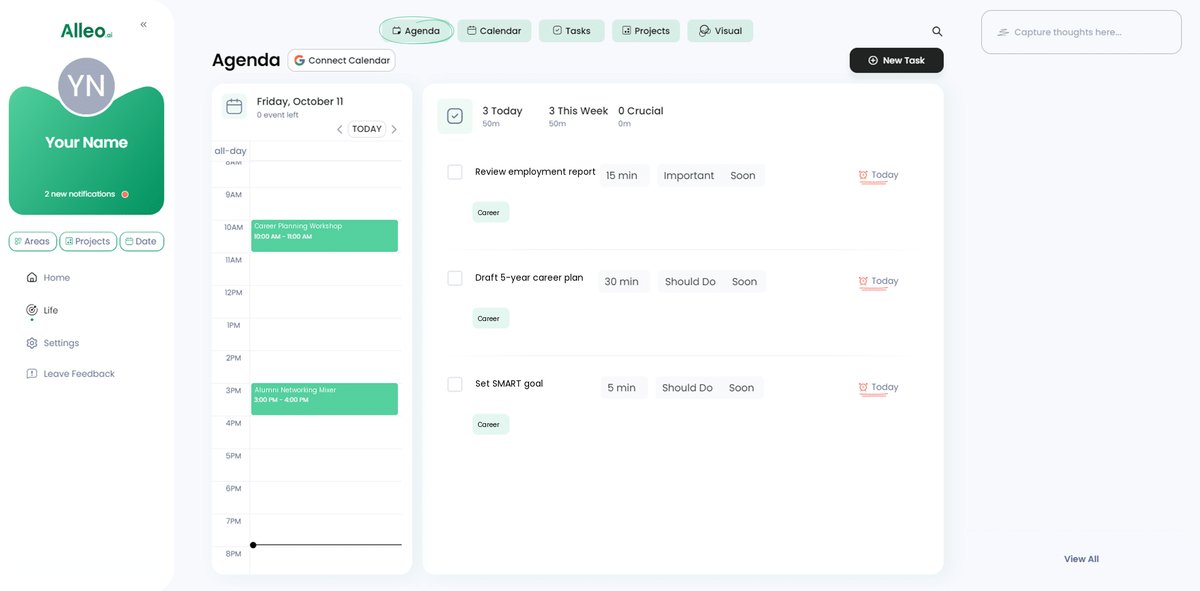
Step 6: Adding events to your calendar or app
Schedule key milestones and networking events in your calendar or app to track your progress towards balancing ambitious goals with realistic expectations, allowing you to easily monitor your journey and stay accountable using the app’s calendar and task features.
Taking the Next Step: Balancing Ambitious Goals with Realistic Expectations
Reflecting on your MBA career goals and realistic expectations, it’s clear that balancing ambition with realism is crucial for career planning for MBA graduates.
Setting SMART goals, networking strategically, and developing a flexible career plan will help you stay on track in the MBA job market.
Remember, it’s okay to adjust your goals as needed. Flexibility is key to success in adapting to changing business environments.
An AI coach like Alleo can support you through this journey. It offers personalized guidance and keeps you accountable, helping with time management for ambitious professionals.
You don’t have to do this alone in applying MBA skills to real-world scenarios.
Take the first step with Alleo today. Start creating a balanced and achievable career plan that considers work-life balance in corporate careers.
You’ve got this!