Overcome Social Anxiety: 7 Fundamental Principles for Young Professionals Starting New Jobs
Are you feeling overwhelmed by the thought of starting a new job and meeting new colleagues? Overcoming social anxiety at work can be a challenge for many professionals.
As a life coach, I’ve helped many professionals navigate these challenges. In my experience supporting clients in building confidence, I often see the impact of social anxiety in the workplace on career growth.
In this article, you’ll find actionable strategies to overcome social anxiety at work and build confidence in your new role. We’ll explore practical tips, mental techniques for dealing with workplace social situations, and the benefits of using tools like Alleo. These strategies can help with first day at work anxiety management and developing professional communication skills.
Let’s dive in and discover how to tackle social anxiety at work while boosting your career development.

Understanding the Impact of Social Anxiety on Young Professionals
Starting a new job is challenging, especially when social anxiety intensifies the stress. Many young professionals face overwhelming anxiety, impacting their job performance and well-being. Overcoming social anxiety at work is crucial for success in these situations.
In my experience, people often find it hard to focus due to constant worry about being judged. This social anxiety in the workplace can manifest as physical symptoms, such as sweating or a racing heart, making it even harder to interact confidently and build relationships with coworkers.
Common triggers include meeting new colleagues, attending meetings, and participating in team activities. These workplace social situations can feel daunting, leading to avoidance behavior and missed opportunities for career growth. First day at work anxiety management is particularly important for those struggling with social anxiety.
Overcoming social anxiety at work is crucial for thriving in a new role. Let’s explore actionable strategies to help you build confidence and improve your professional communication skills.

A Step-by-Step Roadmap to Overcoming Social Anxiety at Work in Your New Job
Overcoming social anxiety in the workplace requires a few key steps. Here are the main areas to focus on to make progress in dealing with workplace social situations.
- Practice self-introduction and small talk: Rehearse introducing yourself and making small talk to build confidence and improve professional communication skills.
- Identify and challenge negative thought patterns: Track and reframe negative thoughts with positive affirmations to help overcome imposter syndrome.
- Start with small, manageable social interactions: Begin with brief conversations and gradually increase interaction time, a useful networking tip for introverts.
- Use relaxation techniques before work events: Practice deep breathing and visualization to calm nerves, incorporating mindfulness techniques for stress reduction.
- Seek support from a mentor or trusted colleague: Find someone who can offer guidance and feedback, aiding in career development for socially anxious individuals.
- Set realistic social goals and track progress: Define measurable goals and celebrate small wins to boost confidence in the workplace.
- Focus on active listening in conversations: Practice maintaining eye contact and asking open-ended questions to improve building relationships with coworkers.
Let’s dive in to explore these strategies for overcoming social anxiety at work!
1: Practice self-introduction and small talk
Practicing self-introduction and small talk is essential for easing into new professional environments and overcoming social anxiety at work.
Actionable Steps:
- Write and rehearse a self-introduction that includes your name, role, and a personal interest to build confidence and manage first day at work anxiety.
- Practice small talk topics such as recent news, weather, and common interests to improve professional communication skills.
- Use a mirror or record yourself to improve your delivery and body language, aiding in dealing with workplace social situations.
Explanation:
These steps help you feel more prepared and confident in social situations. By rehearsing and refining your self-introduction and small talk, you reduce anxiety and make a positive first impression, which is crucial for overcoming social anxiety in the workplace.
According to SAGE Scholars, practice and patience are key in overcoming social anxiety in networking.
Key benefits of practicing self-introduction and small talk:
- Boosts confidence in social situations and aids in overcoming imposter syndrome
- Reduces anxiety through preparation, acting as a confidence building exercise
- Improves first impressions with colleagues, essential for building relationships with coworkers
Starting with these foundational skills, you’ll be better equipped to navigate social interactions and overcome social anxiety at work.

2: Identify and challenge negative thought patterns
Identifying and challenging negative thought patterns is crucial for overcoming social anxiety at work and building confidence.
Actionable Steps:
- Track negative thoughts and their triggers: Keep a journal to note when these thoughts occur and what triggered them, especially in workplace social situations.
- Challenge and replace negative thoughts: Use cognitive-behavioral techniques to reframe these thoughts with positive affirmations, helping to overcome imposter syndrome.
- Practice mindfulness: Stay present to reduce overthinking and focus on the current moment, which can aid in first day at work anxiety management.
Explanation:
These steps help you gain awareness of negative thought patterns and actively counter them, essential for dealing with social anxiety in the workplace.
By journaling and using cognitive-behavioral techniques, you can reframe your mindset and reduce anxiety, improving your professional communication skills.
According to Healthline, identifying triggers and practicing mindfulness can significantly improve your mental well-being and aid in career development for socially anxious individuals.
Taking these steps will help you build a more positive outlook and manage social anxiety effectively, enhancing your ability to build relationships with coworkers.

3: Start with small, manageable social interactions
Starting with small, manageable social interactions is key to building confidence in new professional environments and overcoming social anxiety at work.
Actionable Steps:
- Initiate brief conversations: Begin with short chats with colleagues during coffee breaks or while waiting for meetings to start, helping to manage first day at work anxiety.
- Attend informal gatherings: Join team lunches or casual outings to get more comfortable in social settings, which can be valuable networking tips for introverts.
- Gradually increase interaction time: Extend the duration and depth of your interactions as you become more confident, improving your professional communication skills.
Explanation:
These steps help you ease into social interactions without overwhelming yourself. By starting small and gradually increasing interaction time, you build confidence and reduce anxiety, effectively dealing with workplace social situations.
According to Anchor Therapy, small steps and consistent practice are essential for managing social anxiety in the workplace.
Taking these manageable steps will pave the way for more meaningful connections and professional success, contributing to career development for socially anxious individuals.

4: Use relaxation techniques before work events
Using relaxation techniques before work events can help you manage anxiety and feel more at ease in social situations, which is crucial for overcoming social anxiety at work.
Actionable Steps:
- Practice deep breathing exercises: Take slow, deep breaths to calm your nerves and reduce stress before interacting with colleagues, helping with first day at work anxiety management.
- Use progressive muscle relaxation: Tense and release different muscle groups to relieve physical tension and promote relaxation, aiding in dealing with workplace social situations.
- Visualize positive outcomes: Picture yourself succeeding in social interactions to build confidence and reduce anxiety, which is especially helpful for networking tips for introverts.
Explanation:
These steps are crucial for reducing anxiety and preparing you for social interactions at work. By practicing deep breathing and muscle relaxation, you can lower your stress levels and feel more composed, which is essential for overcoming social anxiety at work.
Visualization techniques help you create a positive mental image, boosting your confidence. According to Healthline, these relaxation techniques are effective in managing social anxiety in the workplace.
Benefits of relaxation techniques for work events:
- Reduces physical symptoms of anxiety
- Improves mental focus and clarity, enhancing professional communication skills
- Enhances overall performance in social situations, supporting career development for socially anxious individuals
Taking these steps will help you feel more relaxed and ready for work events, paving the way for meaningful connections and building relationships with coworkers.
5: Seek support from a mentor or trusted colleague
Having a mentor or trusted colleague can provide invaluable guidance and support as you work on overcoming social anxiety at work. This approach is especially helpful for those dealing with workplace social situations.
Actionable Steps:
- Identify a mentor: Find someone within your organization who has experience and is willing to provide advice and support for managing social anxiety in the workplace.
- Schedule regular check-ins: Meet regularly with your mentor to discuss progress, challenges, and strategies for improvement in professional communication skills.
- Attend meetings together: Participate in meetings or events with your mentor to build confidence through their support and feedback, which can help in overcoming imposter syndrome.
Explanation:
These steps are vital for gaining external perspectives and constructive feedback. A mentor can offer practical advice and emotional support, helping you navigate social challenges and develop networking tips for introverts.
According to Anchor Therapy, having a support system is crucial for managing social anxiety and building confidence. Regular check-ins and shared experiences can significantly boost your self-assurance and aid in career development for socially anxious individuals.
Building a strong support network will help solidify your progress and provide ongoing encouragement in overcoming social anxiety at work.

6: Set realistic social goals and track progress
Setting realistic social goals and tracking progress is pivotal for overcoming social anxiety at work and building confidence in new professional environments.
Actionable Steps:
- Define specific, measurable goals: Start by setting clear goals, such as greeting three new colleagues each week, to improve networking skills for introverts.
- Use a goal-tracking tool: Select an app or journal to monitor your progress and celebrate small achievements, aiding in confidence building exercises.
- Adjust goals as you grow: Modify your goals as you become more comfortable, gradually increasing their complexity to enhance professional communication skills.
Explanation:
These steps matter because they provide a structured approach to overcoming social anxiety at work. By setting and tracking goals, you can measure your progress and stay motivated in dealing with workplace social situations.
According to Anchor Therapy, celebrating small wins is crucial for building confidence and reducing anxiety, especially when managing first day at work anxiety.
Tracking your progress ensures continuous improvement and highlights your achievements, helping in overcoming imposter syndrome and fostering career development for socially anxious individuals.
7: Focus on active listening in conversations
Active listening enhances communication and builds stronger connections in professional settings, helping in overcoming social anxiety at work.
Actionable Steps:
- Maintain eye contact and nod: Show engagement by keeping eye contact and nodding occasionally, a key aspect of professional communication skills.
- Ask open-ended questions: Encourage dialogue by asking questions that require more than a yes or no answer, useful for networking tips for introverts.
- Reflect on responses: Summarize what the other person says to show understanding and interest, aiding in building relationships with coworkers.
Explanation:
These steps are vital for improving communication skills and building rapport with colleagues. Active listening demonstrates respect and fosters an inclusive environment, helping to manage social anxiety in the workplace.
According to SAGE Scholars, practicing active listening can boost confidence in networking situations.
Key aspects of active listening:
- Shows genuine interest in others’ perspectives, aiding in overcoming imposter syndrome
- Builds trust and rapport with colleagues, essential for dealing with workplace social situations
- Enhances overall communication effectiveness, contributing to career development for socially anxious individuals
By focusing on these techniques, you will enhance your conversational skills and create positive professional relationships, crucial for overcoming social anxiety at work.

Partner with Alleo to Overcome Social Anxiety
We’ve explored the challenges of overcoming social anxiety at work for young professionals starting new jobs. Solving them can benefit your career and improve your professional communication skills.
But did you know you can work directly with Alleo to make this journey easier and faster, especially when dealing with workplace social situations?
Setting up an account with Alleo is simple. Start by signing up for a free 14-day trial, no credit card required. It’s perfect for those looking to manage first day at work anxiety.
Alleo’s AI life coach provides tailored coaching, just like a human coach. Create a personalized plan focused on your specific challenges, including networking tips for introverts and confidence building exercises.
Alleo’s coach will check in on your progress and provide actionable feedback. You’ll receive text and push notifications to keep you accountable, helping you in overcoming social anxiety at work.
Consistency and support are key.
Ready to get started for free? Let me show you how to begin your journey in overcoming imposter syndrome and building relationships with coworkers!
Step 1: Log In or Create Your Account
Log in to your existing Alleo account or create a new one to start your journey towards overcoming social anxiety and building confidence in your new job.

Step 2: Choose Your Focus Area
Select “Improving overall well-being and life satisfaction” as your goal to address social anxiety and boost confidence in your new job. This comprehensive focus will help you develop strategies to manage workplace stress, build positive relationships, and enhance your professional performance.

Step 3: Select “Career” as Your Focus Area
Choose “Career” as your focus area in Alleo to receive tailored guidance on overcoming social anxiety in your new job, helping you build confidence and excel professionally.

Step 4: Starting a coaching session
Begin your journey with Alleo by scheduling an initial intake session, where you’ll discuss your social anxiety challenges and set up a personalized plan to build confidence in your new job.

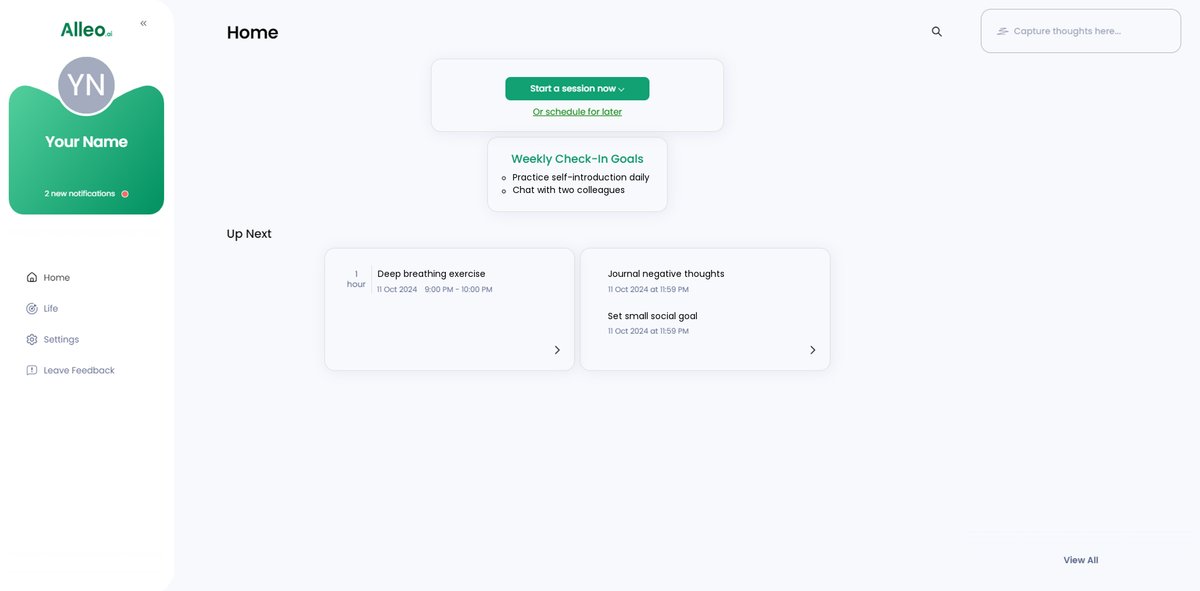
Step 5: Viewing and managing goals after the session
After your coaching session, check the Alleo app’s home page to view and manage the goals you discussed, helping you stay on track with overcoming social anxiety and building confidence in your new job.
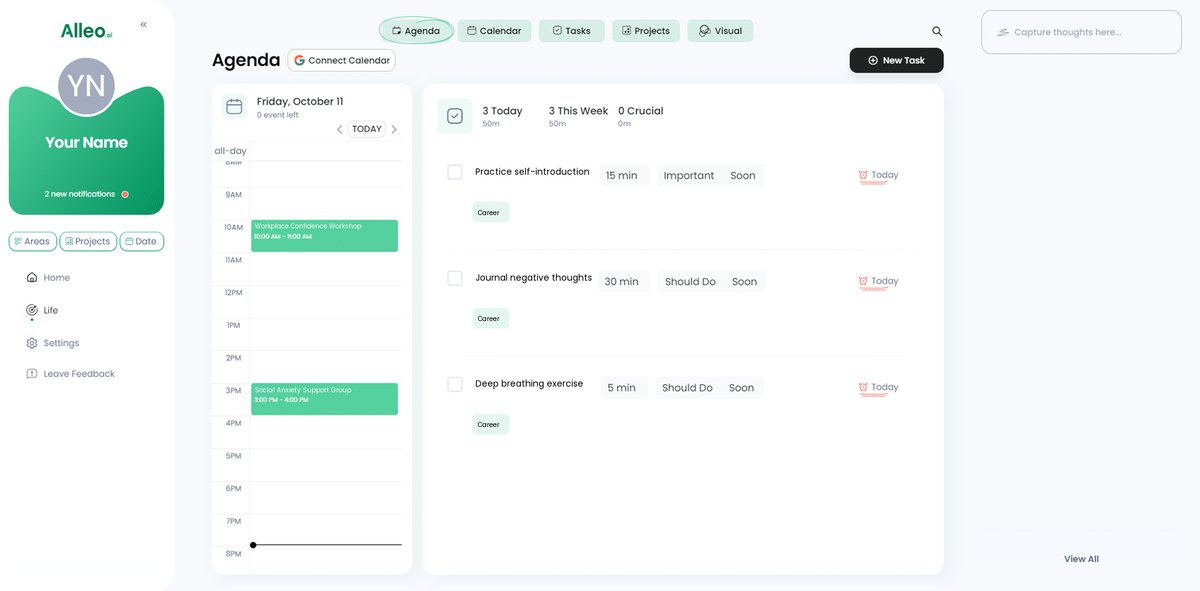
Step 6: Adding events to your calendar or app
Use the calendar and task features in the Alleo app to schedule and track your progress on social anxiety-related goals, such as planning small social interactions or practicing relaxation techniques before work events.
Embrace Your Journey to Confidence
As you start applying these strategies for overcoming social anxiety at work, remember that progress takes time. Social anxiety in the workplace can be challenging, but you are not alone.
Each small step you take will build your confidence. Keep practicing confidence building exercises, and don’t be afraid to seek support for dealing with workplace social situations.
Remember, Alleo is here to help. Our AI life coach offers personalized guidance and support to make your journey smoother, including networking tips for introverts and professional communication skills.
Sign up for a free 14-day trial and experience how Alleo can enhance your confidence and assist in overcoming imposter syndrome.
You’ve got this. Embrace the journey and watch your career thrive as you continue overcoming social anxiety at work.