Mastering the Balance: Assertive Leadership and Effective Management for Aspiring Executives
Are you ready to transition from leading a small team to managing a larger organization, balancing leadership and management skills? This shift requires mastering effective communication for leadership and honing executive decision-making strategies.
As a life coach, I’ve helped many professionals navigate these challenges. I often encounter young professionals struggling to find this balance between leadership and management skills, particularly in areas like emotional intelligence in management and conflict resolution techniques for leaders.
In this article, you’ll discover strategies to develop your leadership styles and adaptability, practice assertive communication, balance empathy with clear expectations, build cross-functional skills, and cultivate emotional intelligence. We’ll also touch on team motivation and empowerment, strategic planning for aspiring executives, and time management for high-level executives.
Let’s dive in and explore how to effectively balance leadership and management skills in your professional journey.
Understanding the Struggles of Aspiring Executives
Transitioning from leading a small team to managing a larger organization can be daunting. Many young professionals initially struggle to balance leadership and management skills effectively. This challenge often involves mastering effective communication for leadership and developing executive decision-making strategies.
When you don’t strike this balance between leadership and management skills, team morale and organizational performance can suffer. In my experience, people often find it challenging to assert authority without coming across as aggressive, or to manage empathetically without seeming passive. Emotional intelligence in management plays a crucial role in navigating these complexities.
This imbalance can lead to dissatisfaction among team members and missed opportunities for the organization. The stakes are high, and the consequences of not mastering these skills are significant. Aspiring executives must focus on strategic planning and adapting their leadership styles to effectively balance leadership and management skills.
Five Essential Steps to Balance Assertive Leadership and Management Skills
Overcoming this challenge requires a few key steps. Here are the main areas to focus on to balance leadership and management skills effectively:
- Develop a signature leadership style: Identify your unique strengths and refine your approach to balance leadership and management skills.
- Practice assertive communication techniques: Use role-playing and real-time practice to build confidence in effective communication for leadership.
- Balance empathy with clear expectations: Combine active listening with setting boundaries, enhancing emotional intelligence in management.
- Build cross-functional skills and influence: Engage in cross-department projects and mentorship programs to improve strategic planning for aspiring executives.
- Cultivate emotional intelligence in leadership: Develop self-awareness and empathy through regular exercises, focusing on leadership styles and adaptability.
Let’s dive in!
1: Develop a signature leadership style
Establishing a unique leadership style is vital for standing out and effectively managing your team while balancing leadership and management skills.
Actionable Steps:
- Conduct a personal SWOT analysis: Identify your strengths, weaknesses, opportunities, and threats. Reflect on past leadership experiences to uncover key lessons and improve executive decision-making strategies.
- Collect 360-degree feedback: Seek feedback from peers, subordinates, and supervisors. Use this input to refine and define your leadership style, enhancing emotional intelligence in management.
- Engage in continuous learning: Enroll in leadership development courses or workshops. Regularly read books and articles on leadership to stay updated with new strategies and leadership styles and adaptability.
Key elements of a strong leadership style include:
- Authenticity in actions and decisions
- Adaptability to different situations
- Consistency in values and behavior
Explanation: Developing a signature leadership style helps you lead authentically and effectively. By understanding your strengths and seeking feedback, you can tailor your approach to fit your team’s needs and balance leadership and management skills.
Continuous learning ensures that you stay informed about the latest leadership trends and techniques, including effective communication for leadership and team motivation and empowerment. For more on the importance of a unique leadership style, check out this Harvard blog.
Transitioning to the next part, let’s explore how to practice assertive communication techniques and conflict resolution techniques for leaders.

2: Practice assertive communication techniques
Practicing assertive communication techniques is crucial for balancing leadership and management skills effectively.
Actionable Steps:
- Participate in role-playing exercises: Organize sessions to practice assertive communication. Focus on using “I” statements and maintaining a clear, consistent, and courteous tone to balance leadership and management skills.
- Attend workshops on assertive communication: Implement techniques learned in real-life scenarios and seek feedback to improve effective communication for leadership.
- Set daily goals for assertive communication: Practice in meetings and one-on-one interactions. Gradually increase the complexity of scenarios to build confidence and proficiency in emotional intelligence in management.
Explanation: Practicing assertive communication helps you convey your thoughts clearly and respectfully, boosting team cooperation and performance, which is essential to balance leadership and management skills.
Role-playing and workshops provide hands-on experience, while daily practice ensures continuous improvement in conflict resolution techniques for leaders.
For more tips on assertive communication, check out this Coursera article.
Next, let’s explore how to balance empathy with clear expectations to further enhance your ability to balance leadership and management skills.

3: Balance empathy with clear expectations
Balancing empathy with clear expectations is crucial for effective leadership and maintaining team harmony. This balance is key to developing strong leadership and management skills.
Actionable Steps:
- Practice active listening: During team interactions, listen attentively to understand team members’ perspectives. Acknowledge their feelings and respond empathetically, demonstrating emotional intelligence in management.
- Set clear boundaries: Clearly define and communicate expectations and boundaries with your team. Use assertive communication for leadership to ensure everyone understands their roles and responsibilities.
- Schedule regular check-ins: Have regular one-on-one check-ins to discuss progress and challenges, and provide support. Use these sessions to reinforce expectations and offer empathy when needed, employing effective communication for leadership.
Key benefits of balancing empathy and expectations:
- Increased trust and team morale
- Improved productivity and goal alignment
- Enhanced conflict resolution techniques for leaders
Explanation: Balancing leadership and management skills fosters a supportive environment while maintaining productivity. Active listening builds trust and understanding, while setting boundaries ensures clarity.
Regular check-ins help address issues early and keep the team aligned. For more insights, you can read about the importance of effective management in this literature review.
Next, let’s explore how to build cross-functional skills and influence within your organization.
4: Build cross-functional skills and influence
Building cross-functional skills and influence is essential for effective leadership and career advancement, helping to balance leadership and management skills.
Actionable Steps:
- Volunteer for cross-department projects: Engage in initiatives that require collaboration with different departments. This helps you understand various functions within the organization and improve effective communication for leadership.
- Seek mentorship from leaders in other departments: Gain insights into different areas of the business by learning from experienced leaders. Offer to mentor junior employees to share knowledge and build influence, enhancing your emotional intelligence in management.
- Enroll in courses on cross-functional skills: Focus on areas like strategic thinking and project management. Apply the newly learned skills in real-world scenarios to enhance your organizational influence and develop executive decision-making strategies.
Explanation: Developing cross-functional skills and influence enables you to contribute strategically and build strong relationships across the organization, which is crucial to balance leadership and management skills.
It helps you understand different perspectives and align efforts towards common goals, improving team motivation and empowerment.
According to a Women in Leadership Program, this approach fosters comprehensive growth and prepares you for higher leadership roles, enhancing your strategic planning for aspiring executives.
Next, let’s explore how to cultivate emotional intelligence in leadership.

5: Cultivate emotional intelligence in leadership
Cultivating emotional intelligence is essential for effective leadership and fostering a positive team environment, helping to balance leadership and management skills.
Actionable Steps:
- Engage in self-awareness exercises: Practice regular self-reflection and mindfulness to understand your emotions. Keep a journal to track and analyze your emotional responses, enhancing emotional intelligence in management.
- Participate in empathy-building activities: Engage in team-building exercises and volunteer opportunities to enhance empathy. Encourage your team to share their experiences and perspectives, improving effective communication for leadership.
- Learn emotional regulation techniques: Practice deep breathing and cognitive reframing to manage stress. Implement these techniques in high-pressure situations to maintain composure, aiding in executive decision-making strategies.
Core components of emotional intelligence in leadership:
- Self-awareness and emotional recognition
- Empathy and interpersonal understanding
- Effective stress management and resilience
Explanation: Cultivating emotional intelligence helps leaders connect with their team and handle challenges with grace. Self-awareness and empathy build trust, while emotional regulation ensures rational decision-making, crucial for balancing leadership and management skills.
For more on the importance of emotional intelligence, check out this Hospitality Net article.
By focusing on emotional intelligence, you can lead more effectively and create a supportive work environment, enhancing your ability to balance leadership and management skills.

Partner with Alleo on Your Leadership Journey
We’ve explored the challenges of balancing leadership and management skills. Solving these challenges can benefit your career and enhance your ability to balance leadership and management skills effectively.
Did you know you can work directly with Alleo to make this journey easier and faster, improving your executive decision-making strategies and emotional intelligence in management?
Setting up an Alleo account is simple. Create a personalized plan tailored to your specific needs, focusing on effective communication for leadership and conflict resolution techniques for leaders.
Alleo’s AI coach provides affordable, tailored coaching support, just like a human coach. With full coaching sessions and a free 14-day trial, no credit card required, Alleo helps you stay accountable and develop strategic planning for aspiring executives.
Alleo follows up on your progress through text and push notifications. It handles changes and keeps you on track, supporting your journey to balance leadership and management skills while improving team motivation and empowerment.
Ready to get started for free? Let me show you how to enhance your leadership styles and adaptability!
Step 1: Log In or Create Your Account
Log in to your existing Alleo account or create a new one to begin your personalized leadership journey with our AI coach.

Step 2: Choose Your Leadership Development Focus
Select “Setting and achieving personal or professional goals” to address the leadership challenges discussed in the article, such as developing your signature style or improving assertive communication, and start your journey towards becoming a more effective leader and manager.

Step 3: Select “Career” as Your Focus Area
Choose “Career” as your life area to focus on in Alleo, as this aligns perfectly with your goal of balancing assertive leadership and management skills for professional growth and organizational success.

Step 4: Starting a Coaching Session
Begin your leadership development journey by scheduling an intake session with Alleo’s AI coach to create a personalized plan that addresses your specific challenges in balancing assertive leadership and effective management.

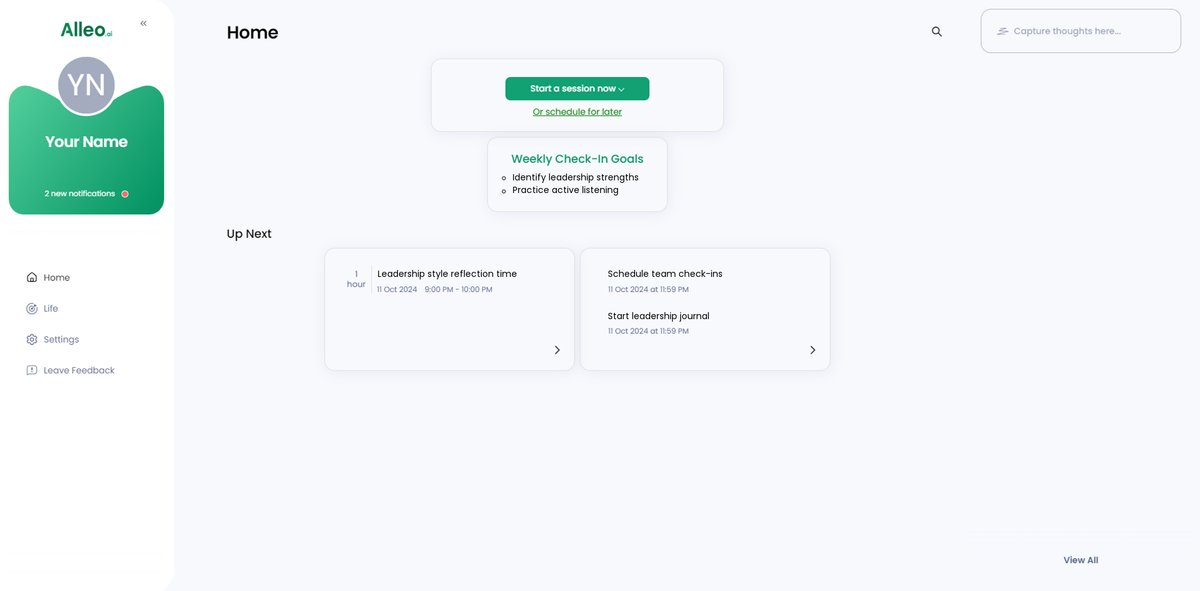
Step 5: Viewing and Managing Goals After the Session
After your coaching session, access the goals you discussed by opening the Alleo app and checking your home page, where you can easily view and manage your leadership development objectives.
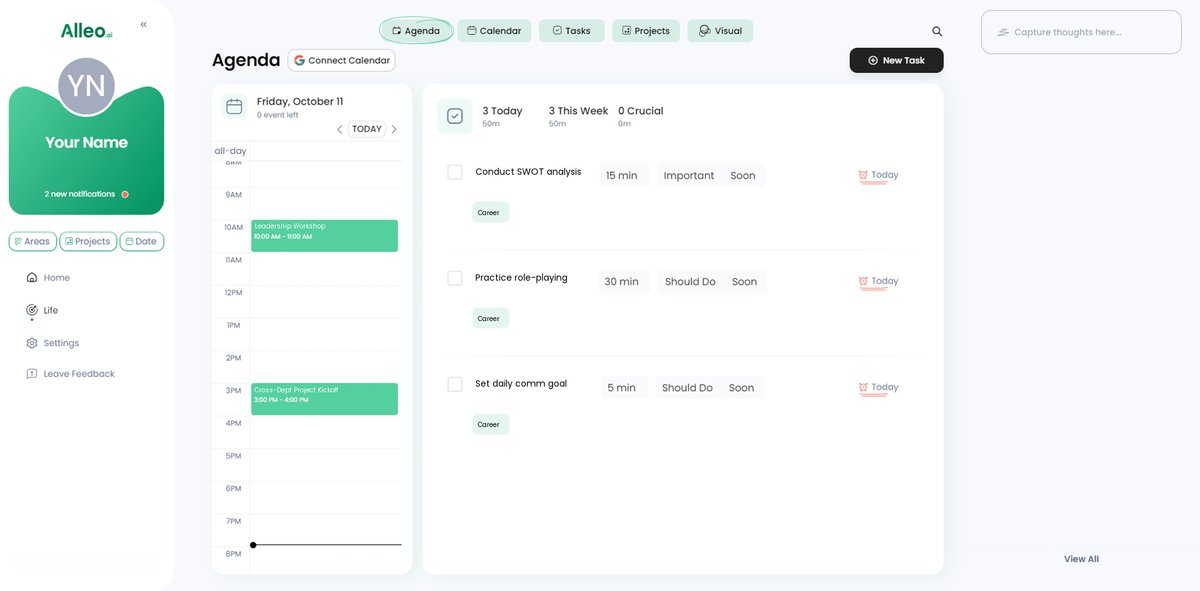
Step 6: Adding events to your calendar or app
To track your progress in balancing assertive leadership with effective management, use Alleo’s calendar and task features to add key events, deadlines, and milestones related to your leadership development journey.
Take the Next Step in Your Leadership Journey
As we wrap up, remember the importance of balancing leadership and management skills. This balance is crucial for effective communication in leadership and strategic planning for aspiring executives.
It’s a challenging transition, but you’re not alone in developing executive decision-making strategies.
By developing a unique leadership style, practicing assertive communication, balancing empathy with clear expectations, building cross-functional skills, and cultivating emotional intelligence in management, you can achieve this balance between leadership and management skills.
I know it’s not easy, but you can do it. Mastering conflict resolution techniques for leaders is part of the journey.
Alleo is here to support you on this journey of balancing leadership and management skills.
Set up your account, create a personalized plan, and let Alleo’s AI coach guide you in team motivation and empowerment.
Take advantage of the free 14-day trial and start making progress today in building professional relationships in leadership.